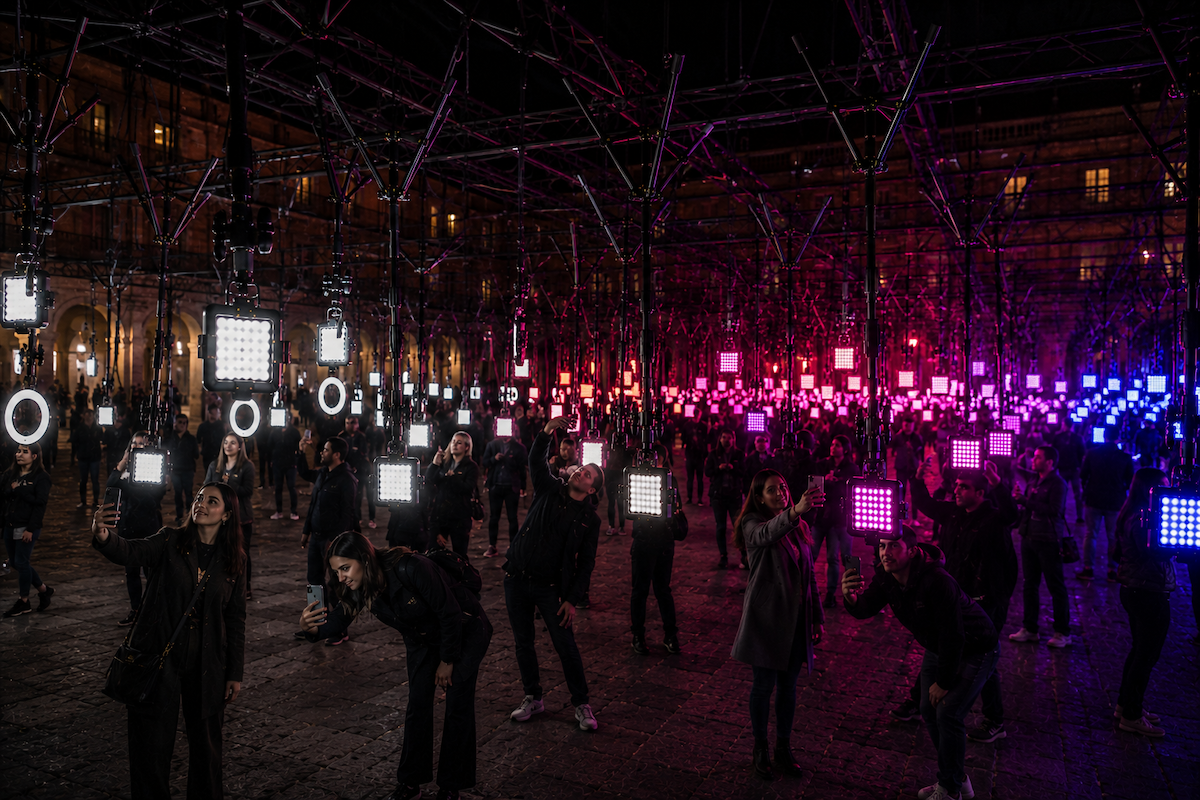
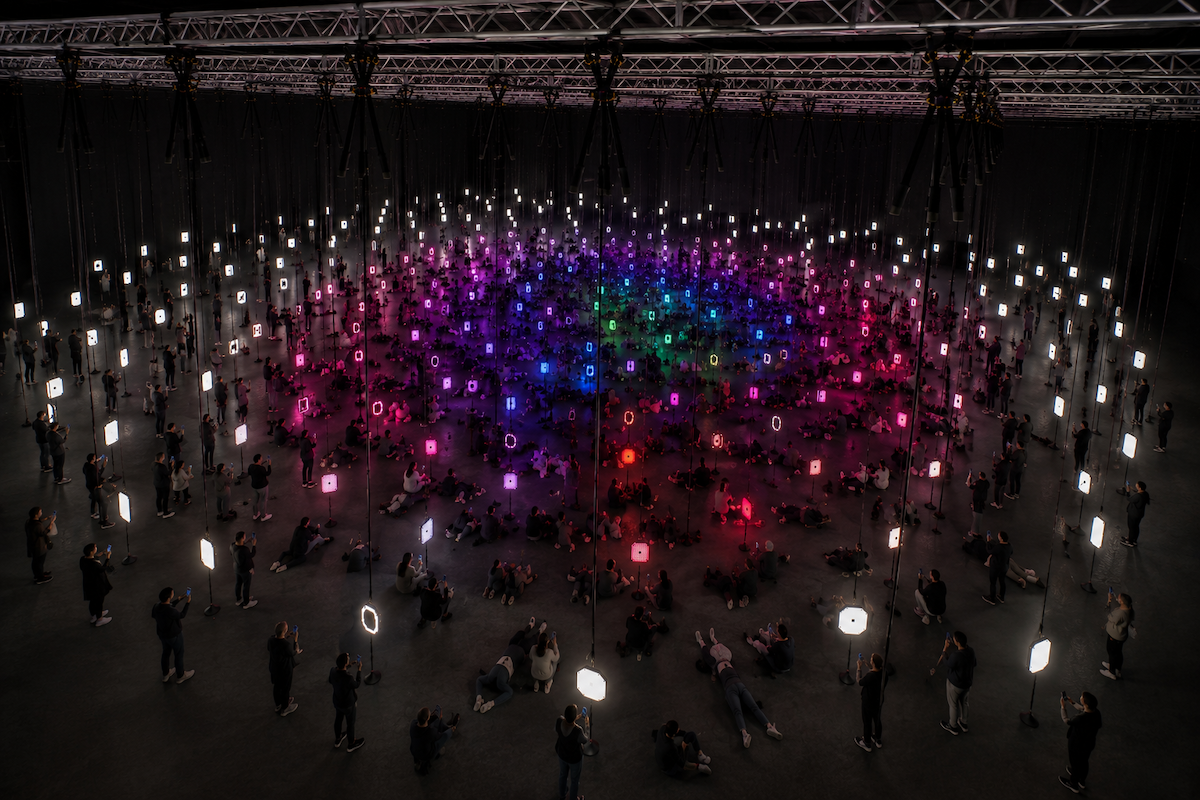
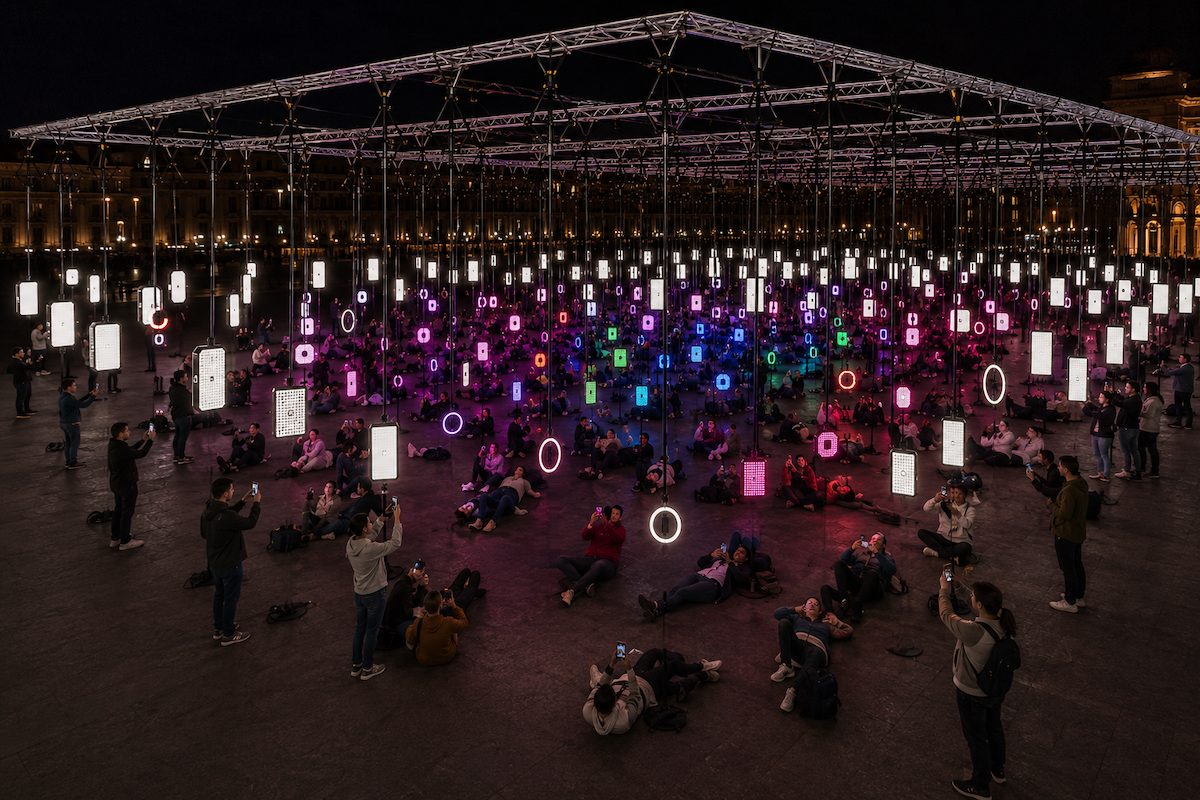
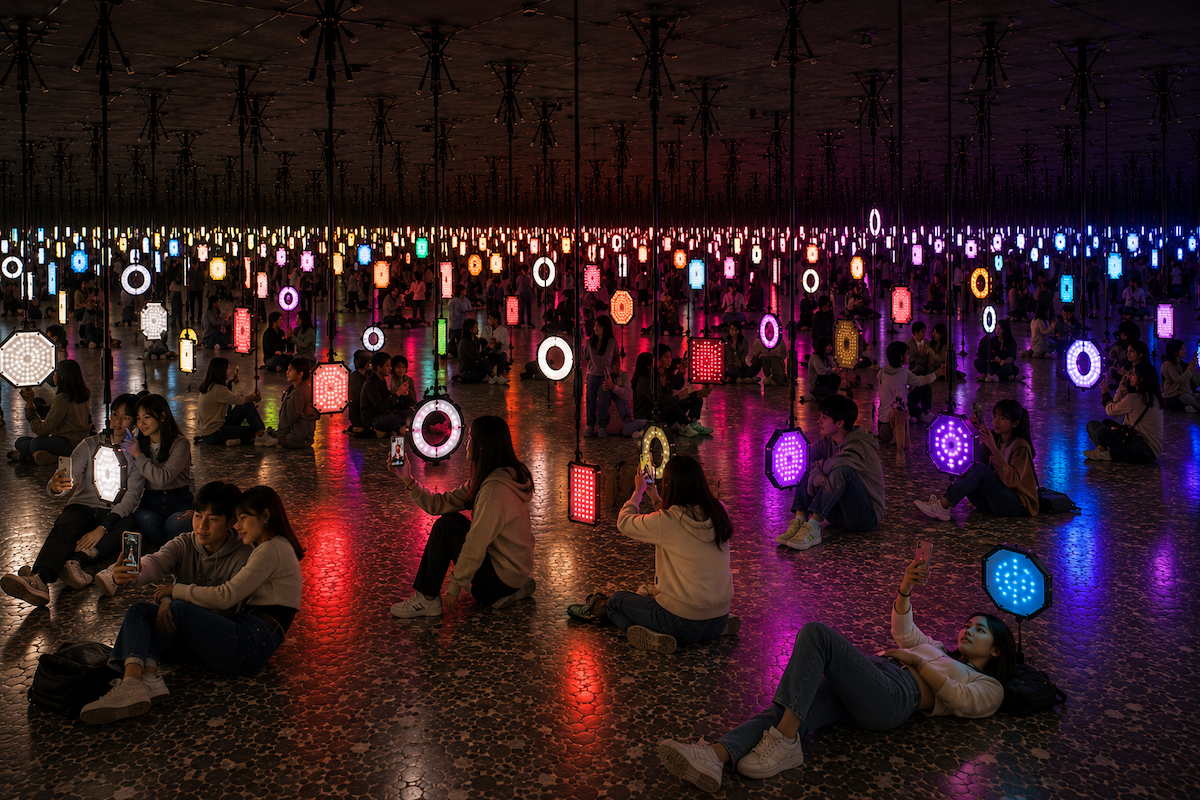
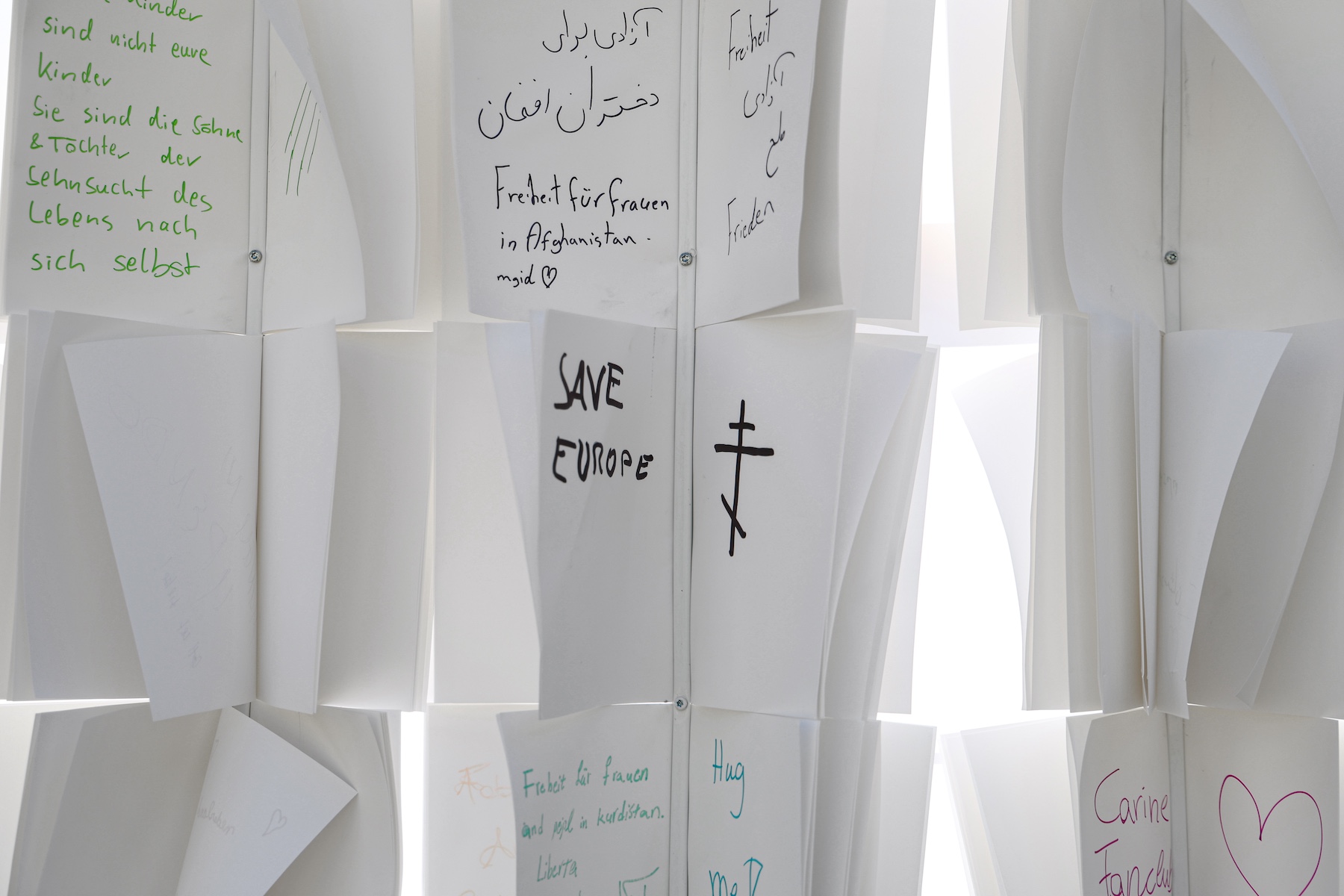
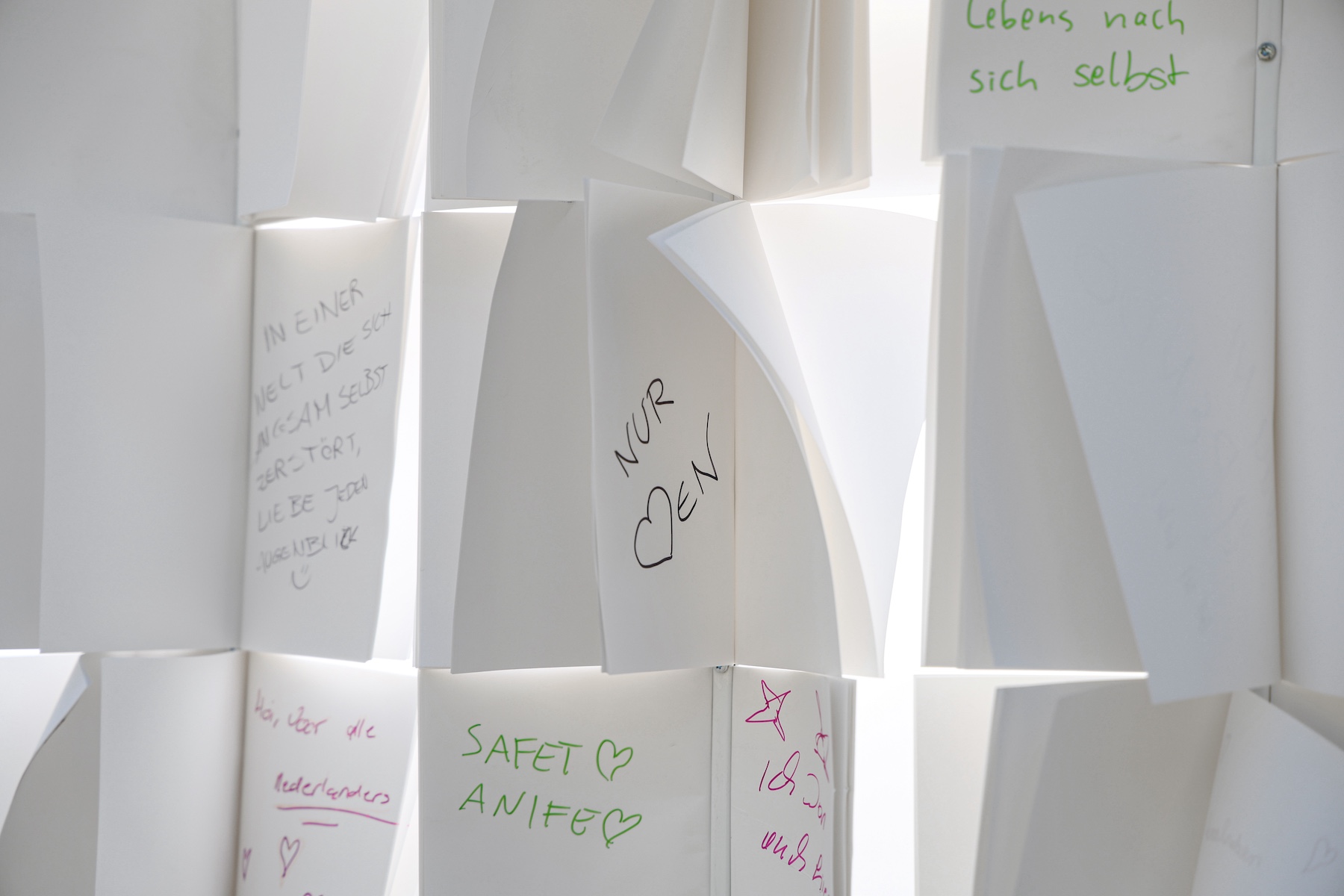
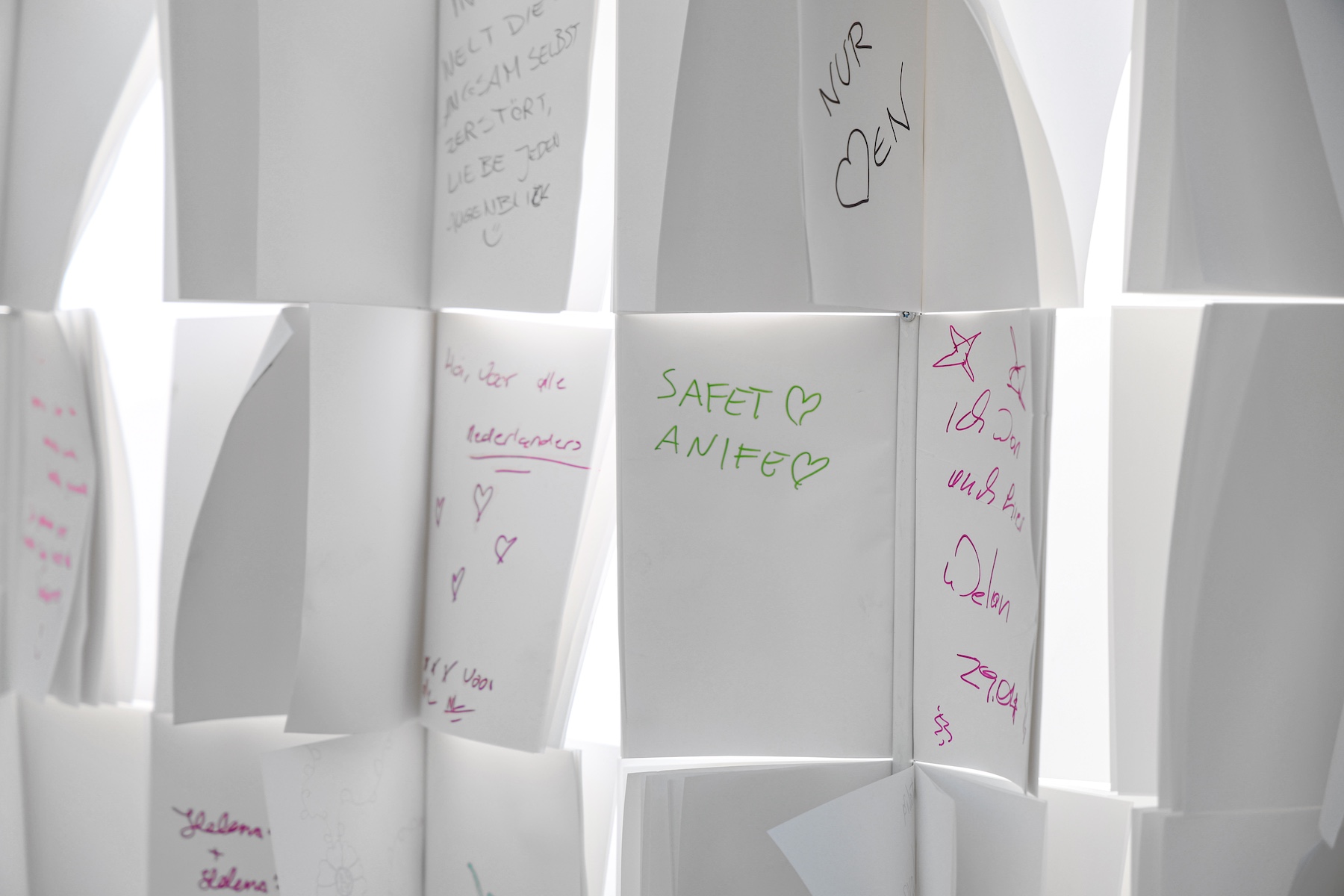
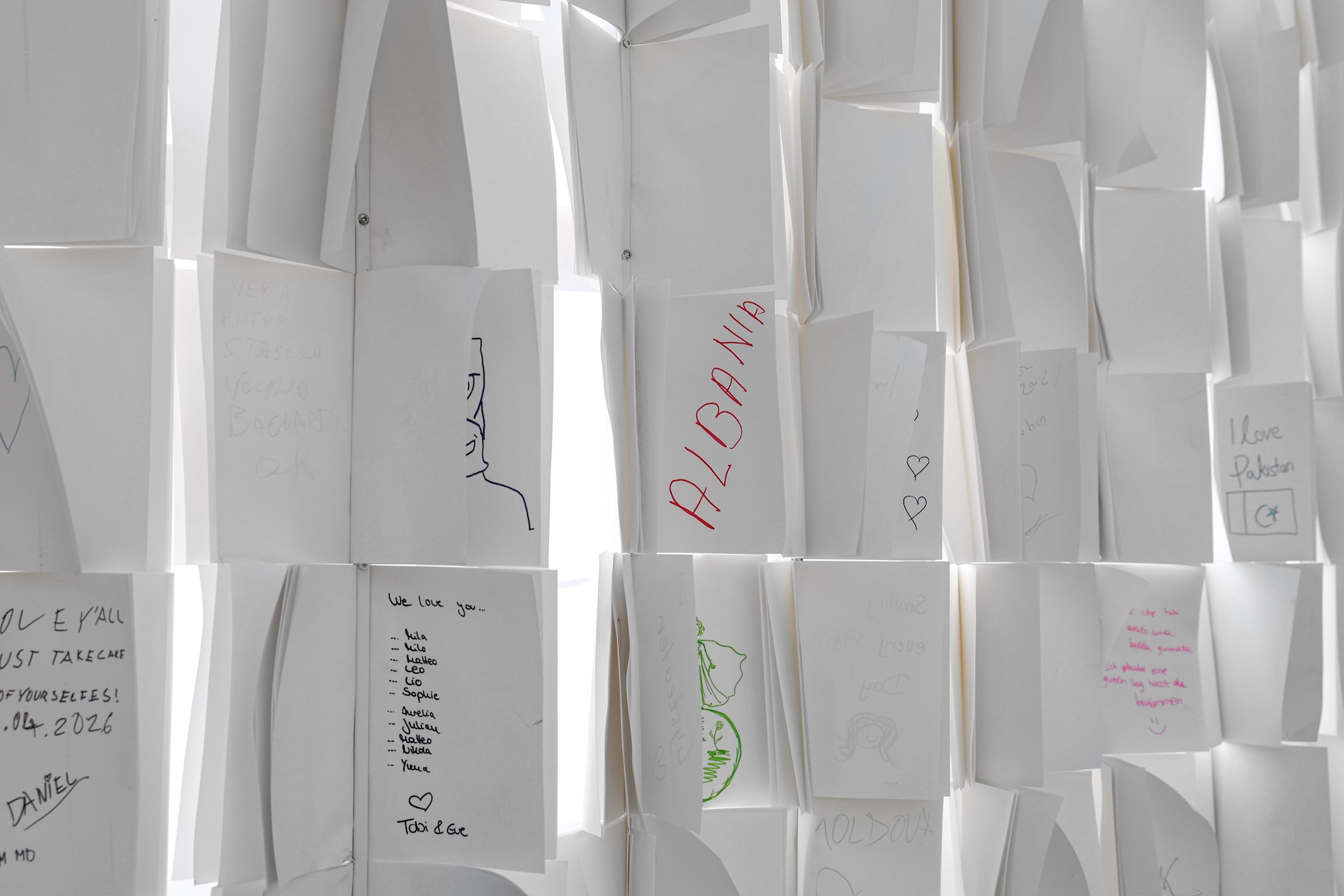
On Blank Pages / En hojas blancas. Brixen 2026


ç

ç

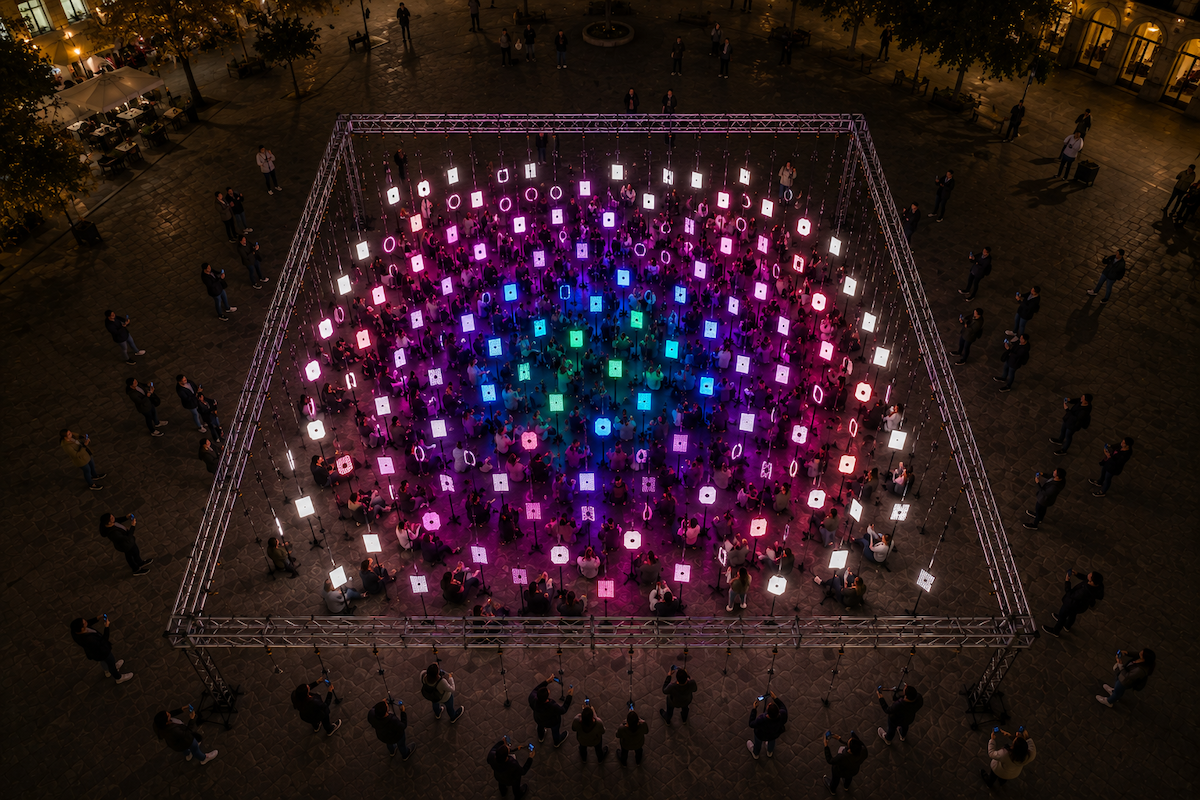
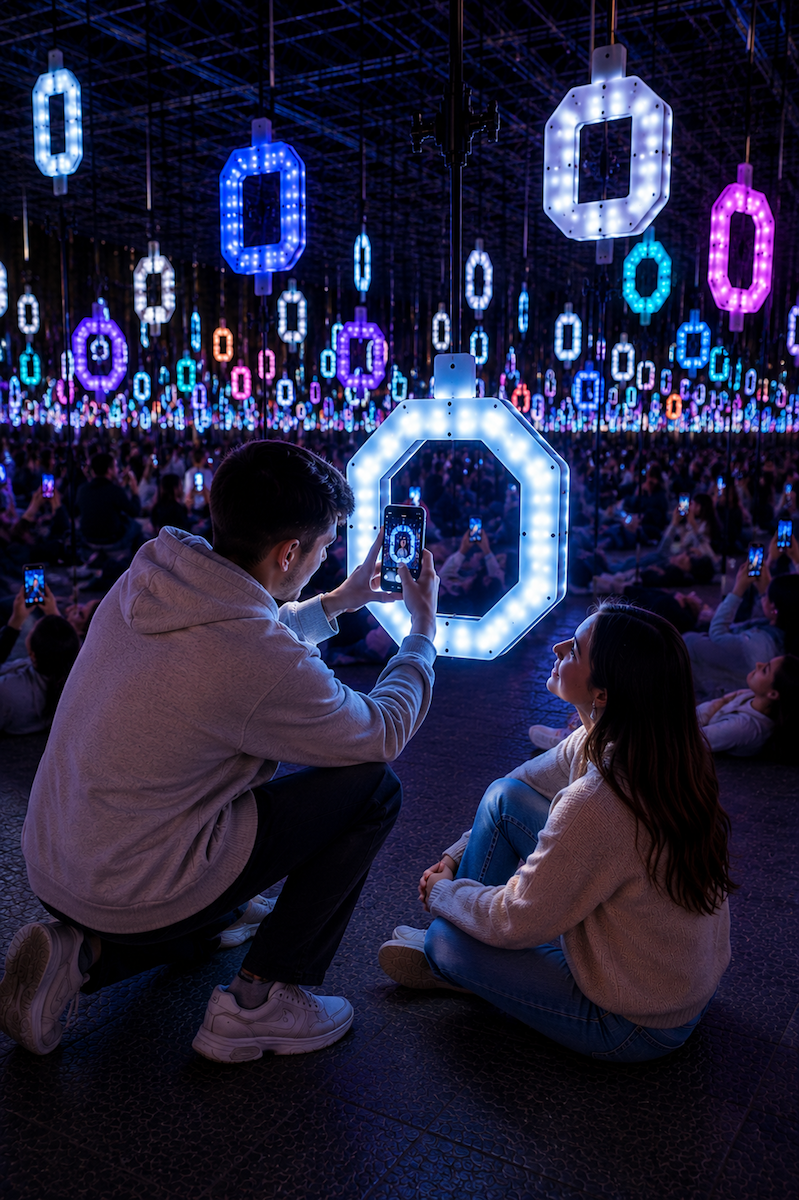
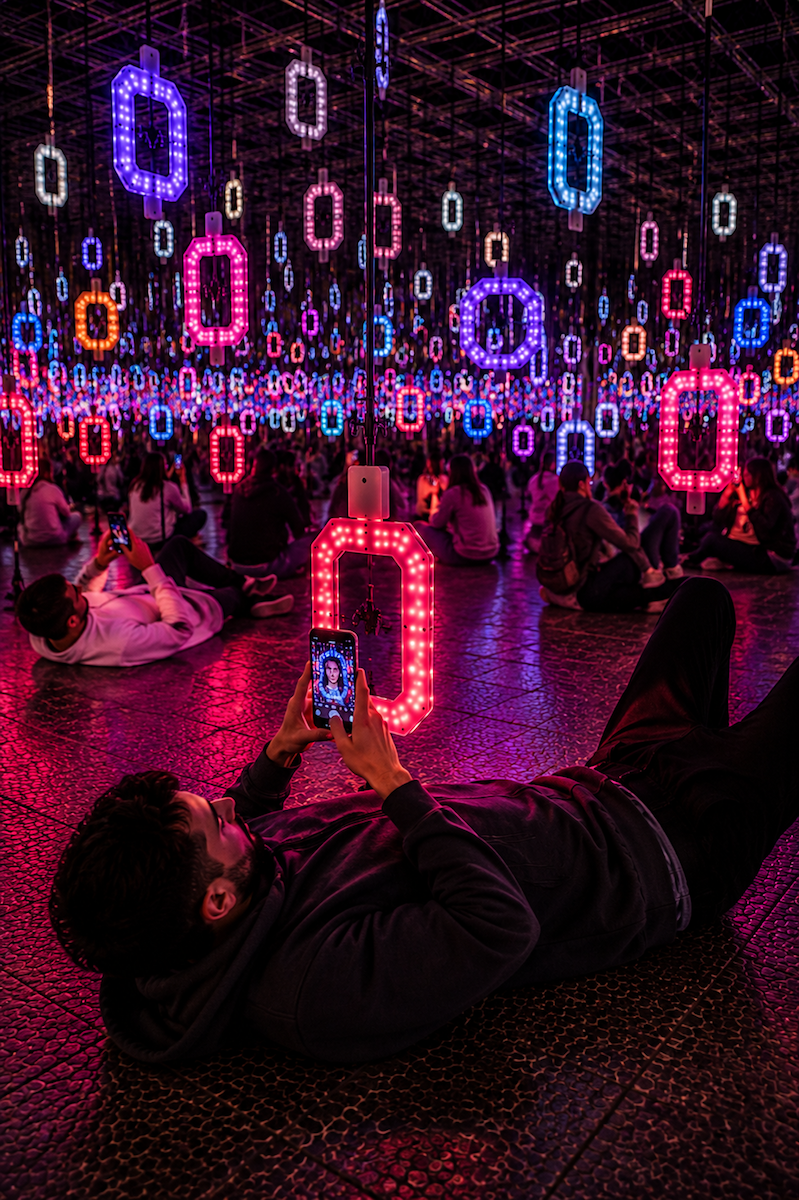
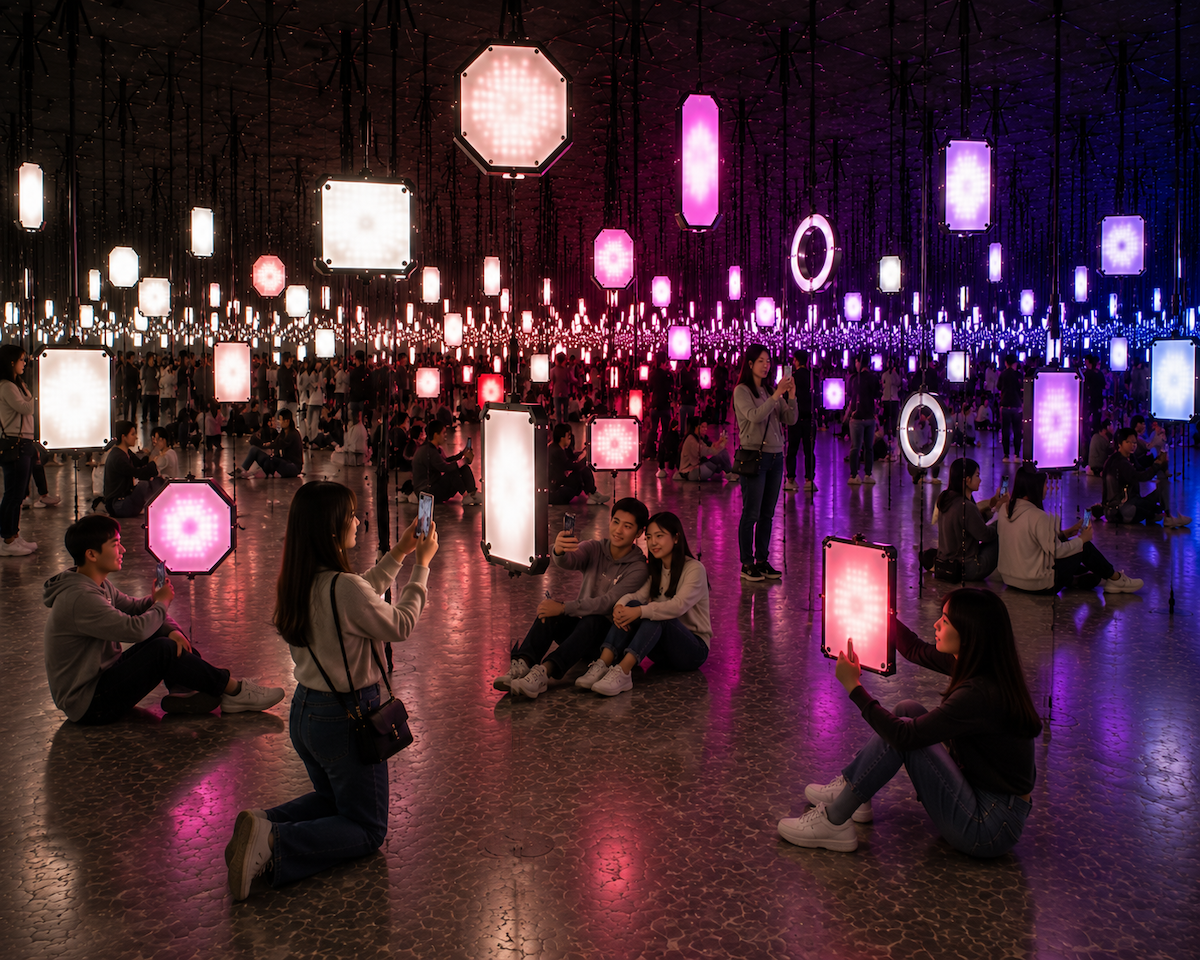
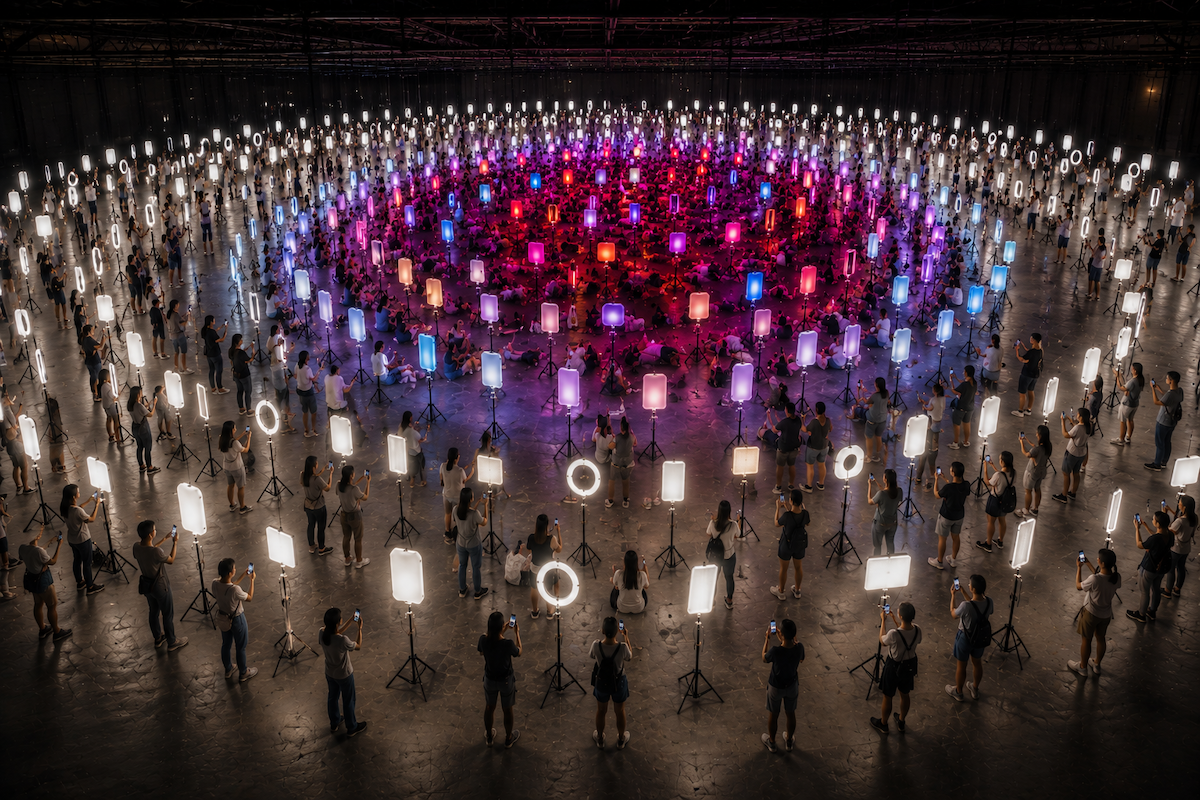
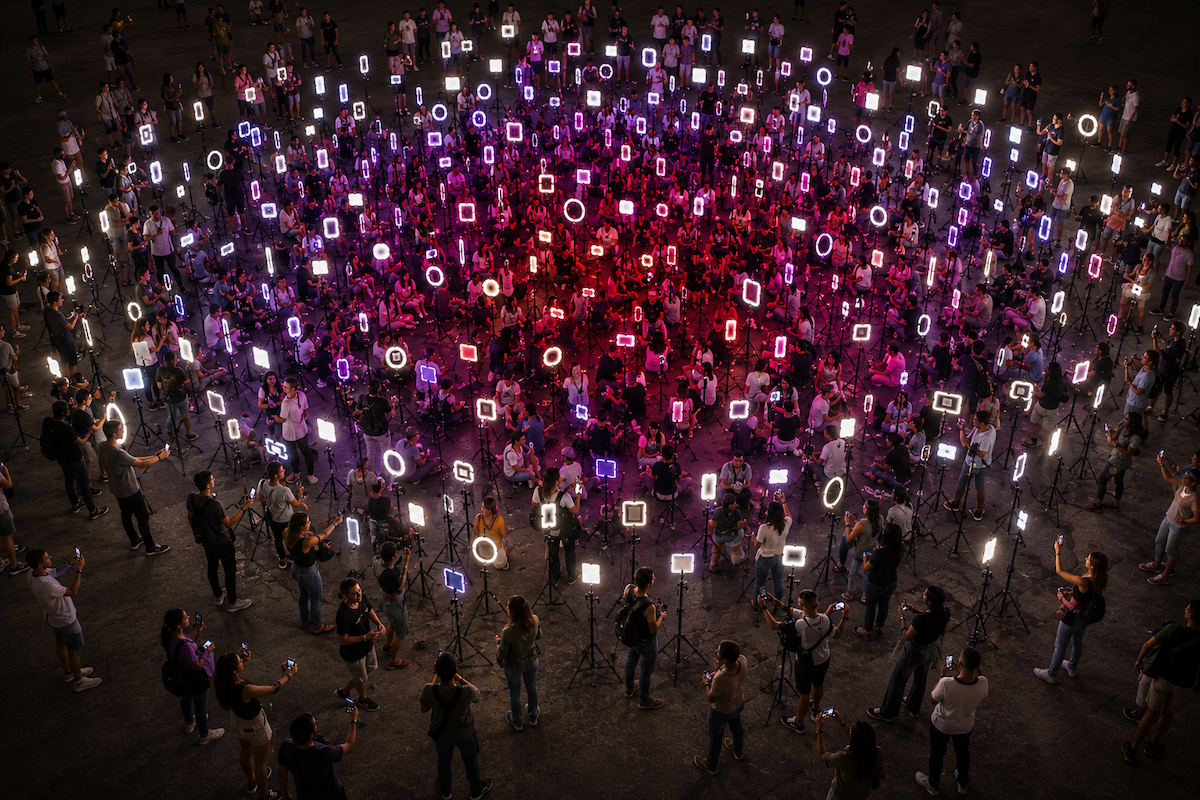
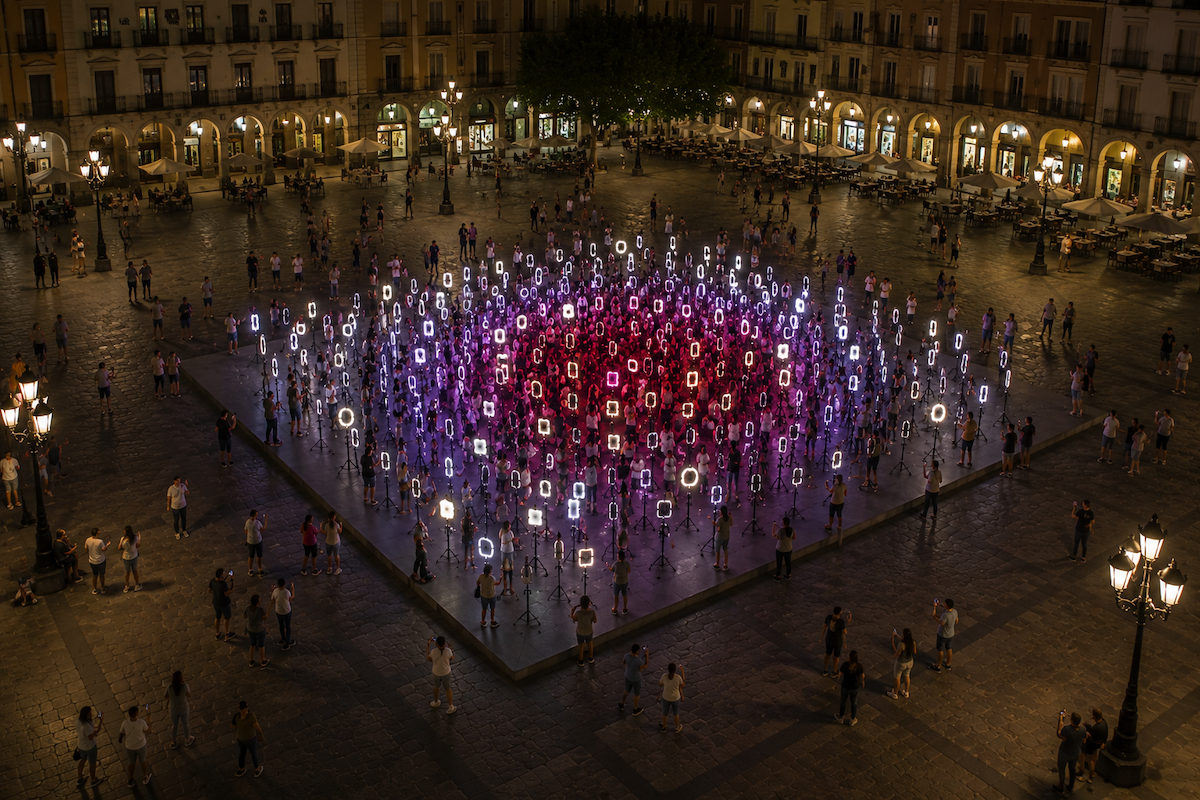
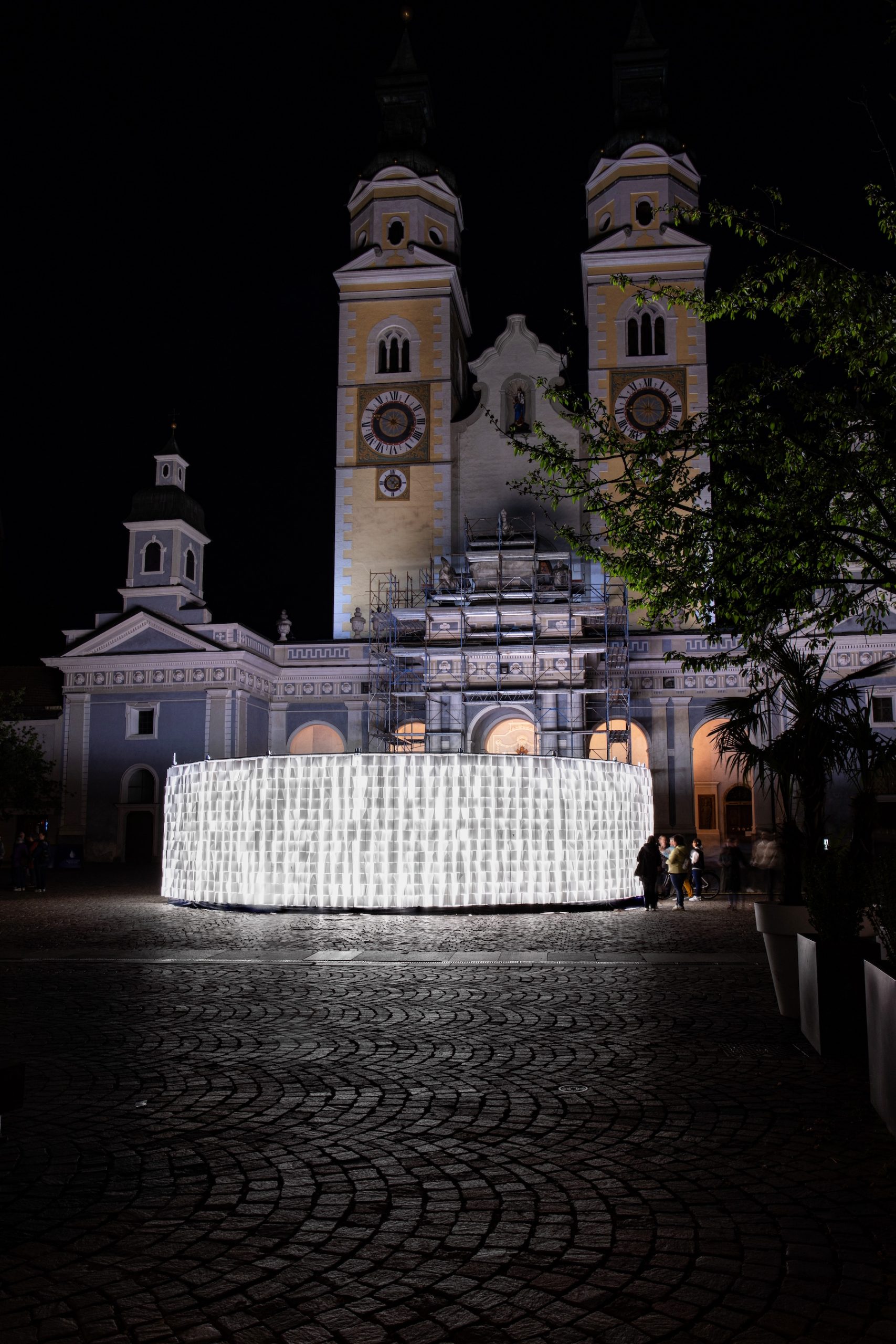
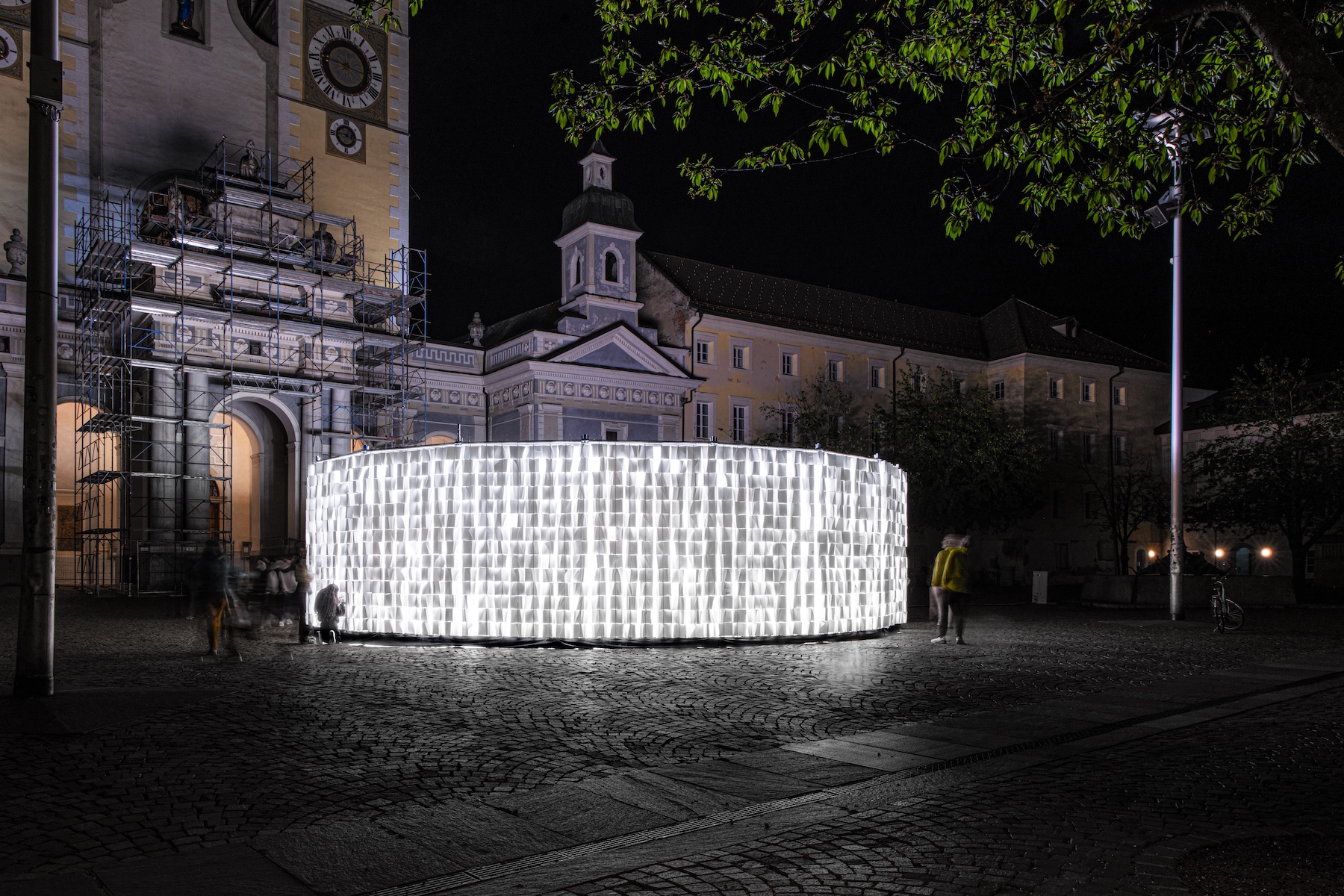
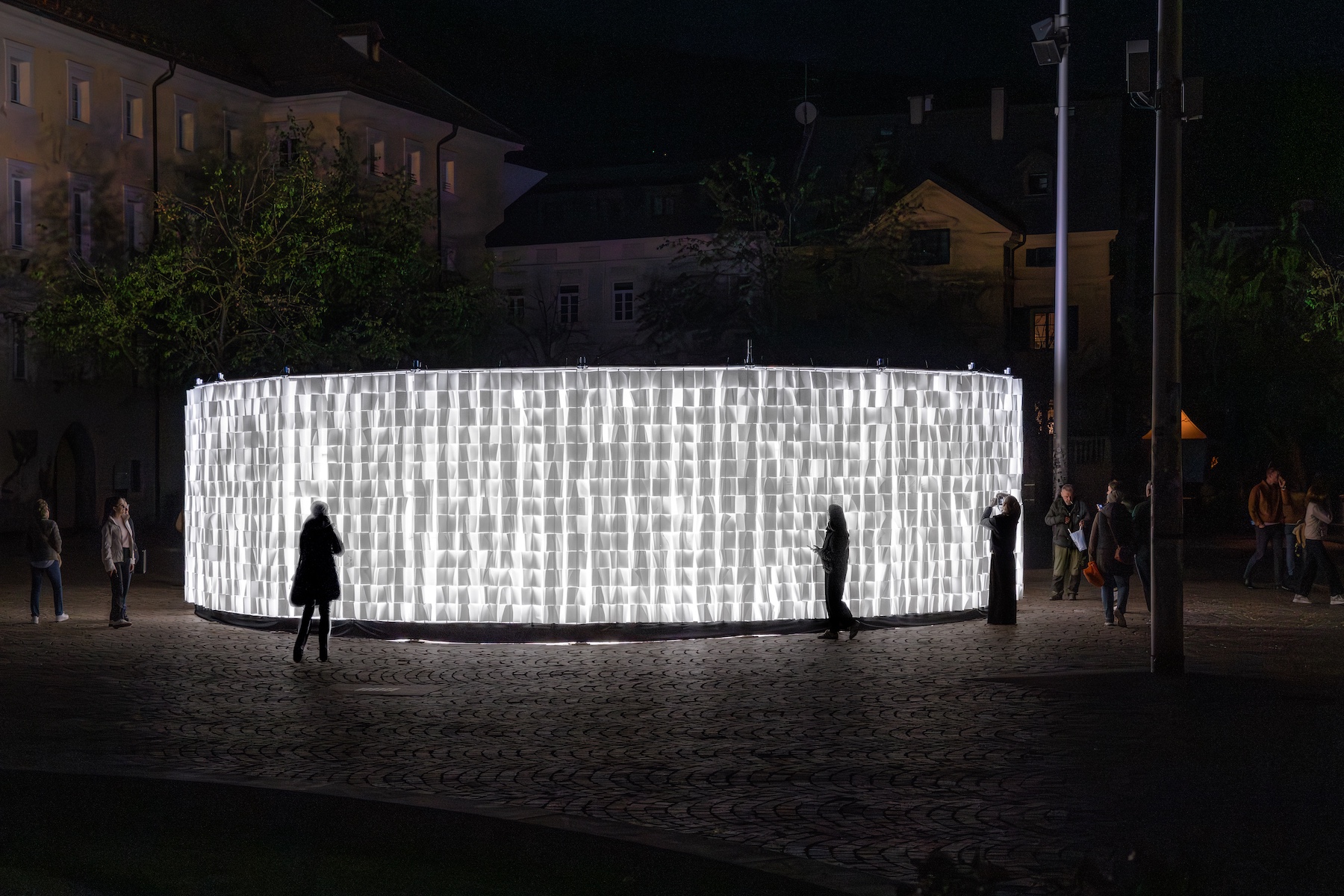
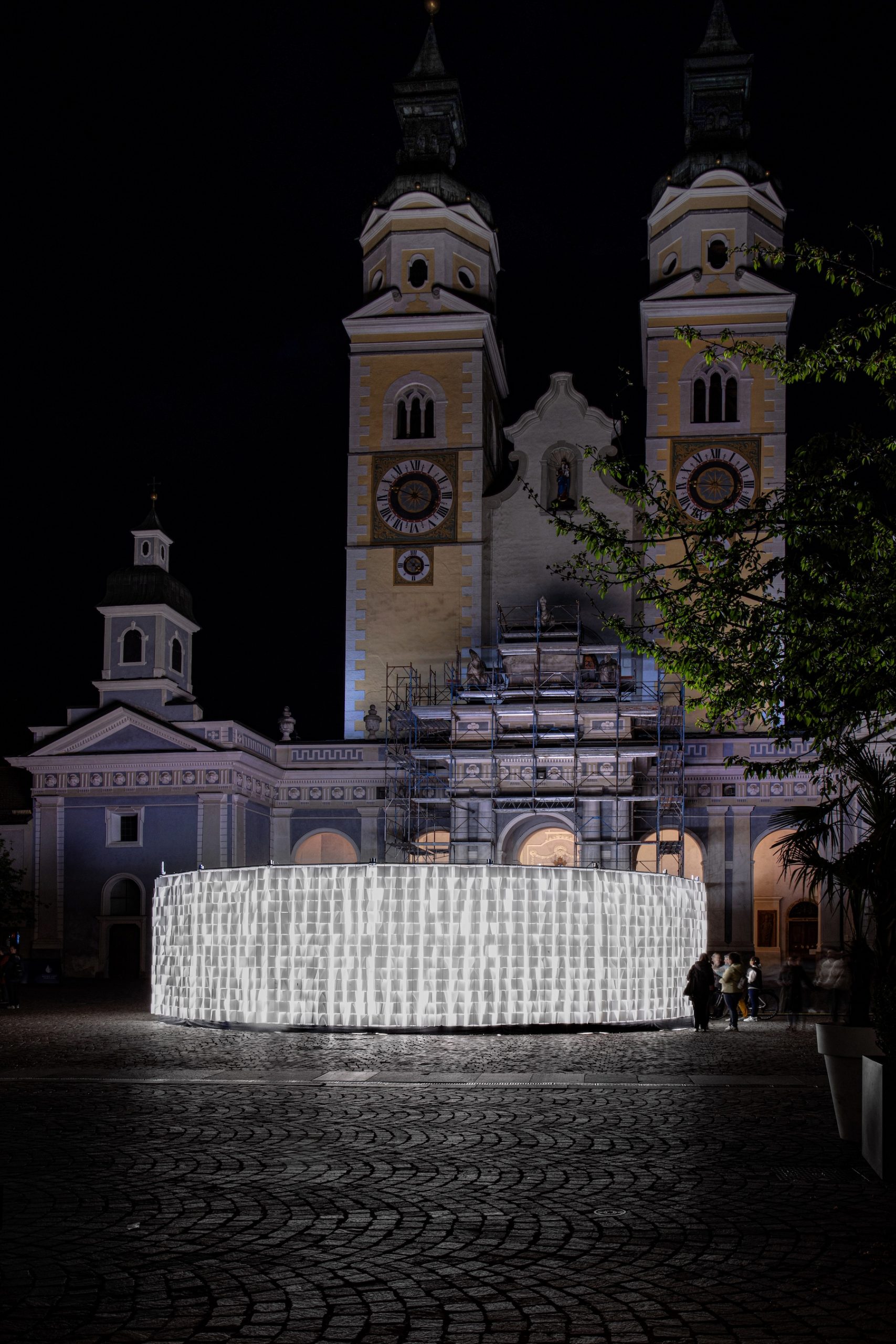
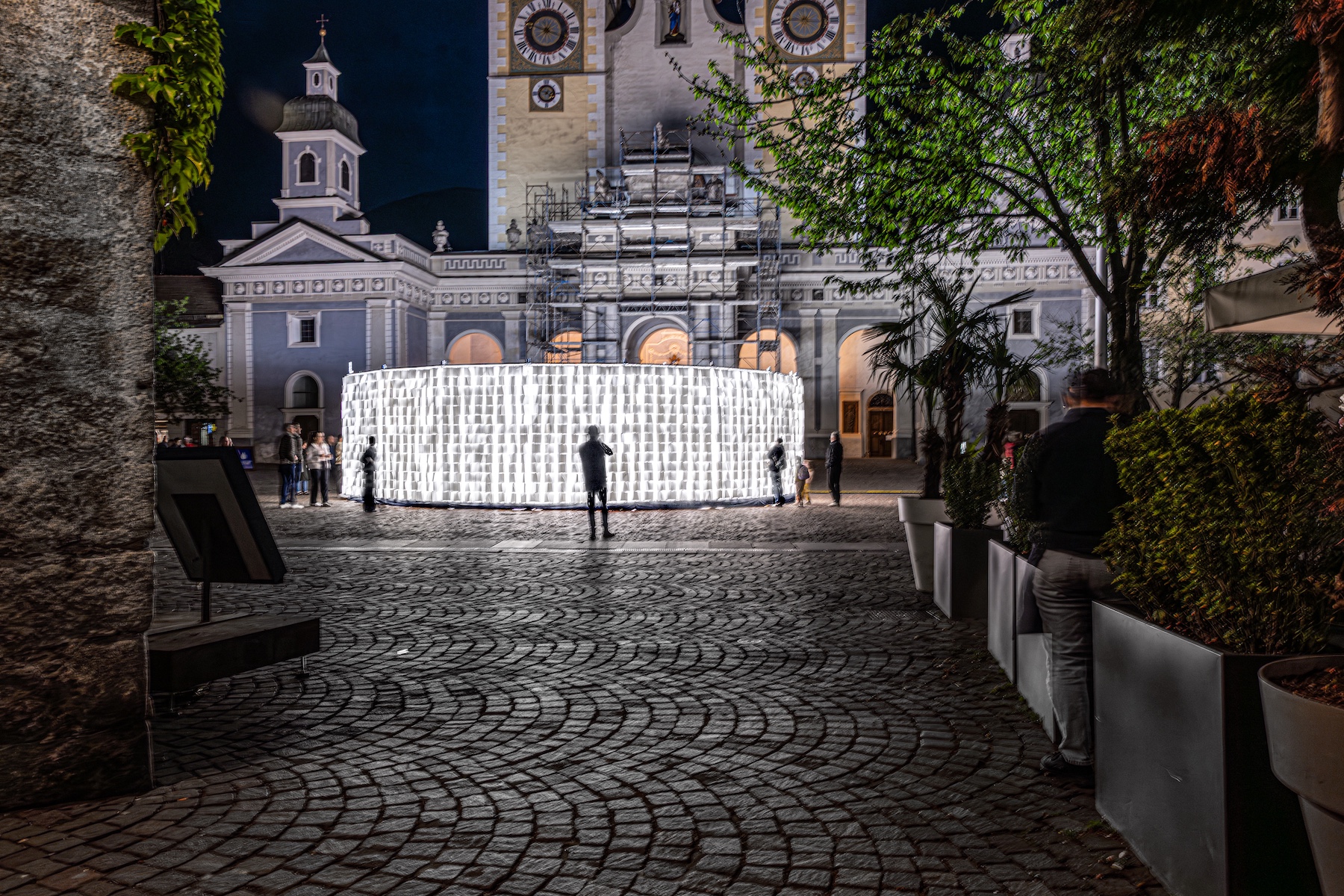
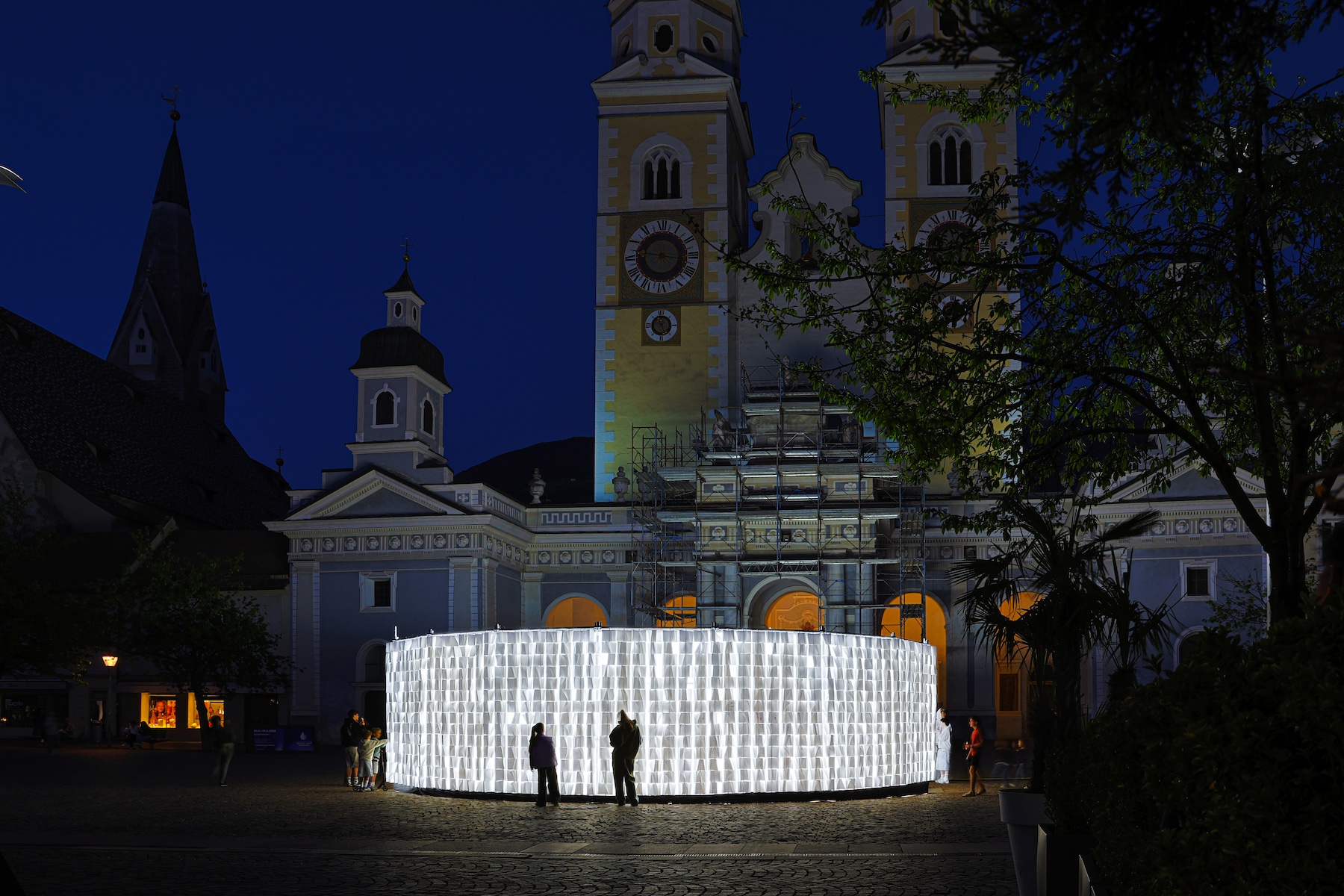
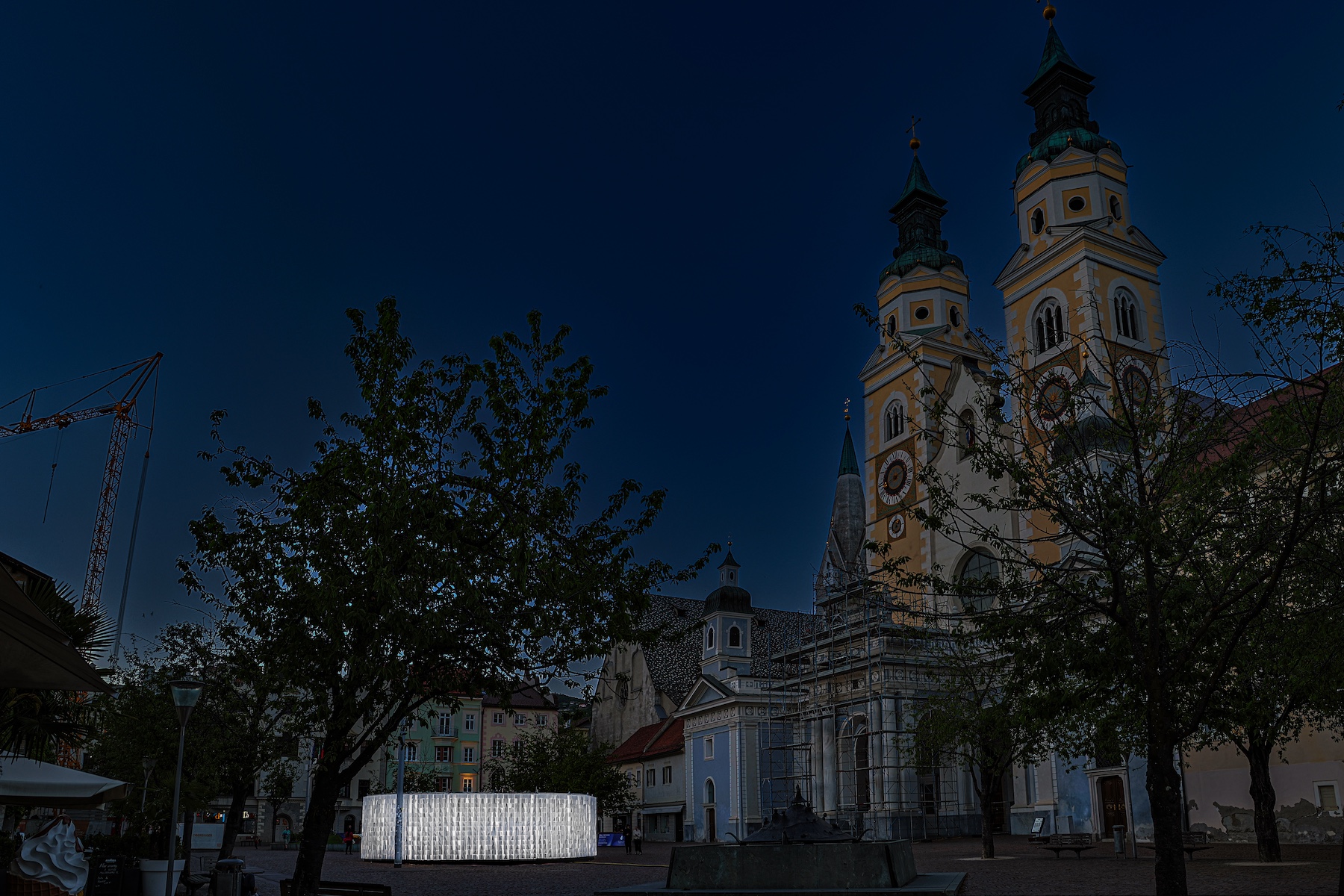
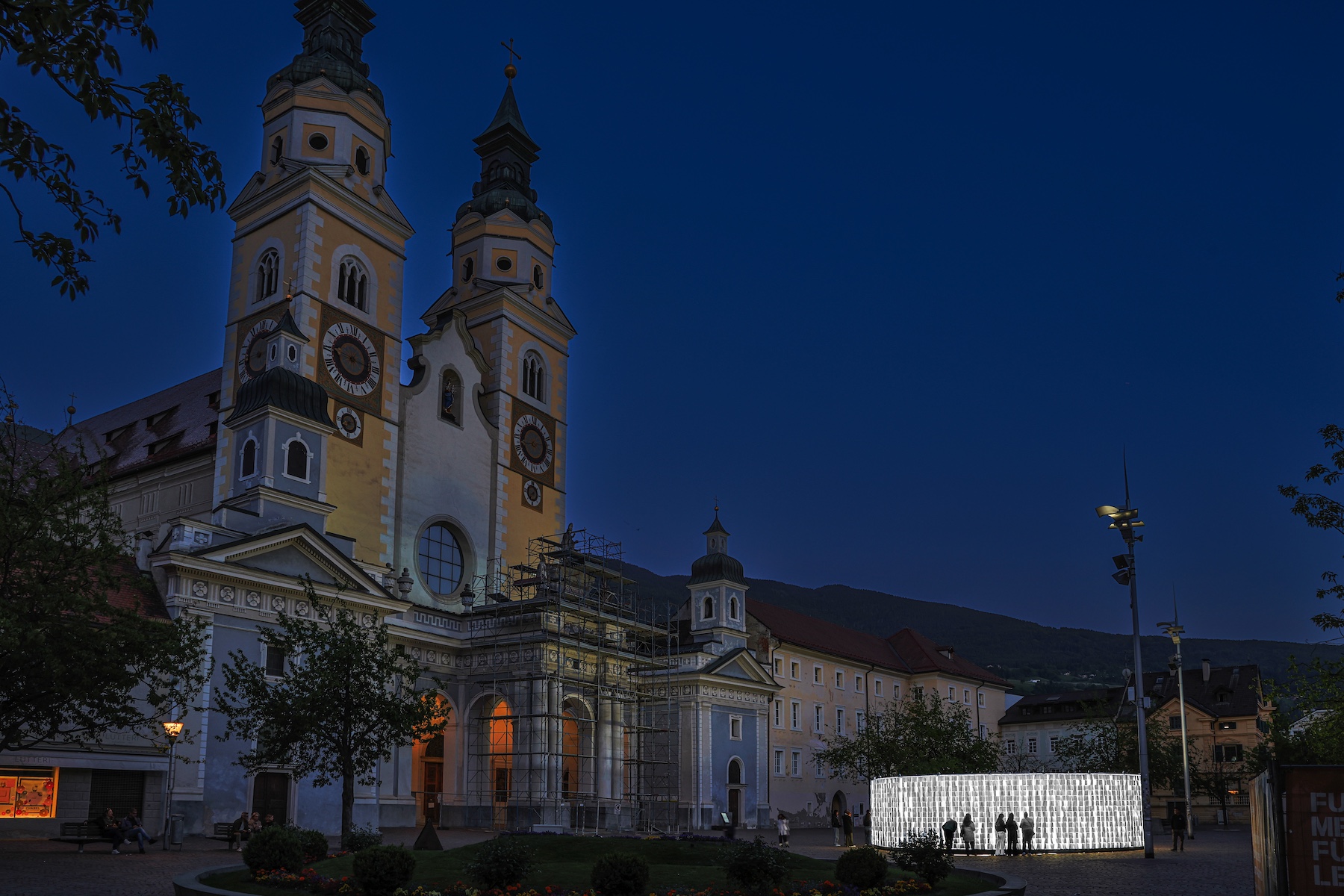
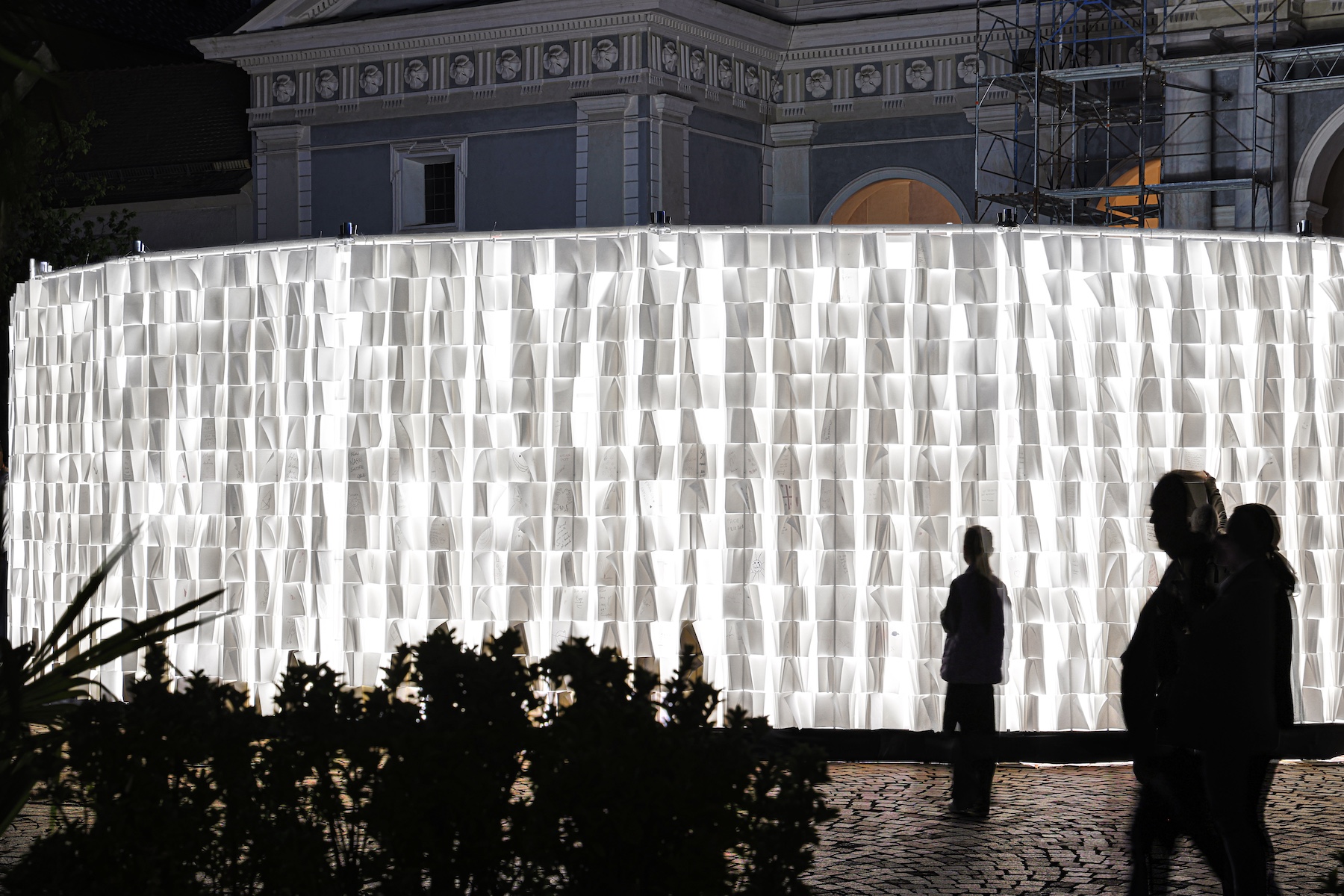
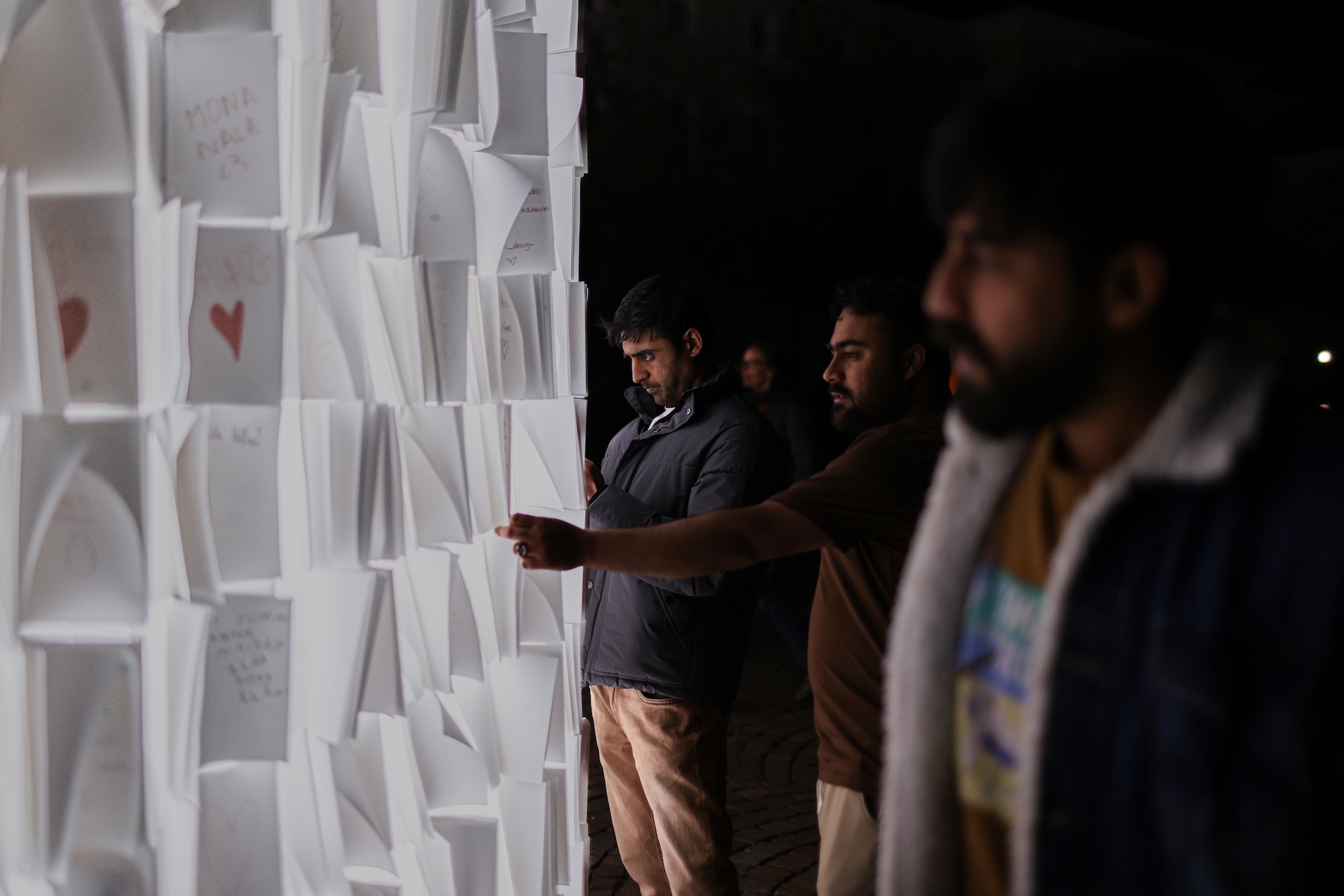
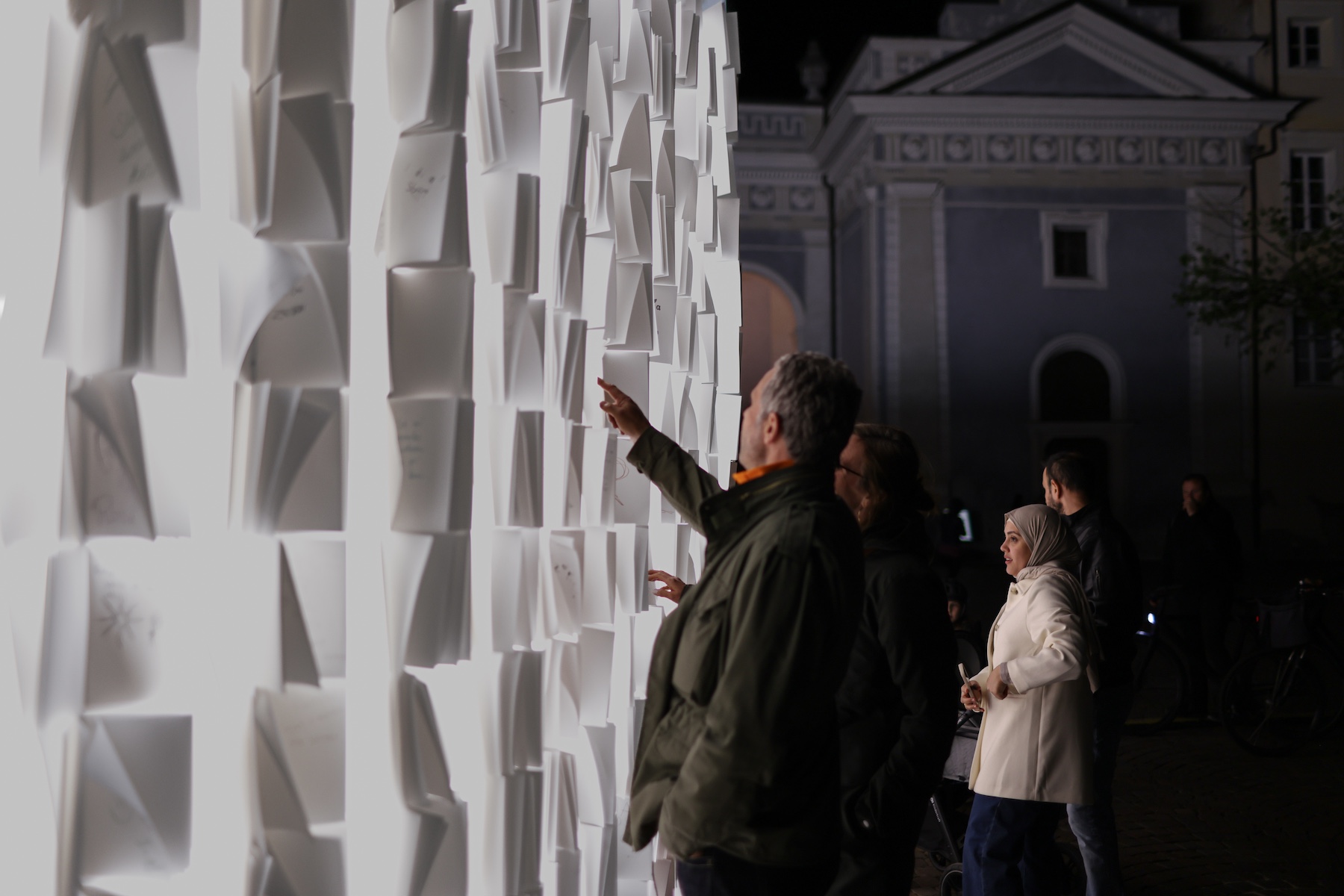
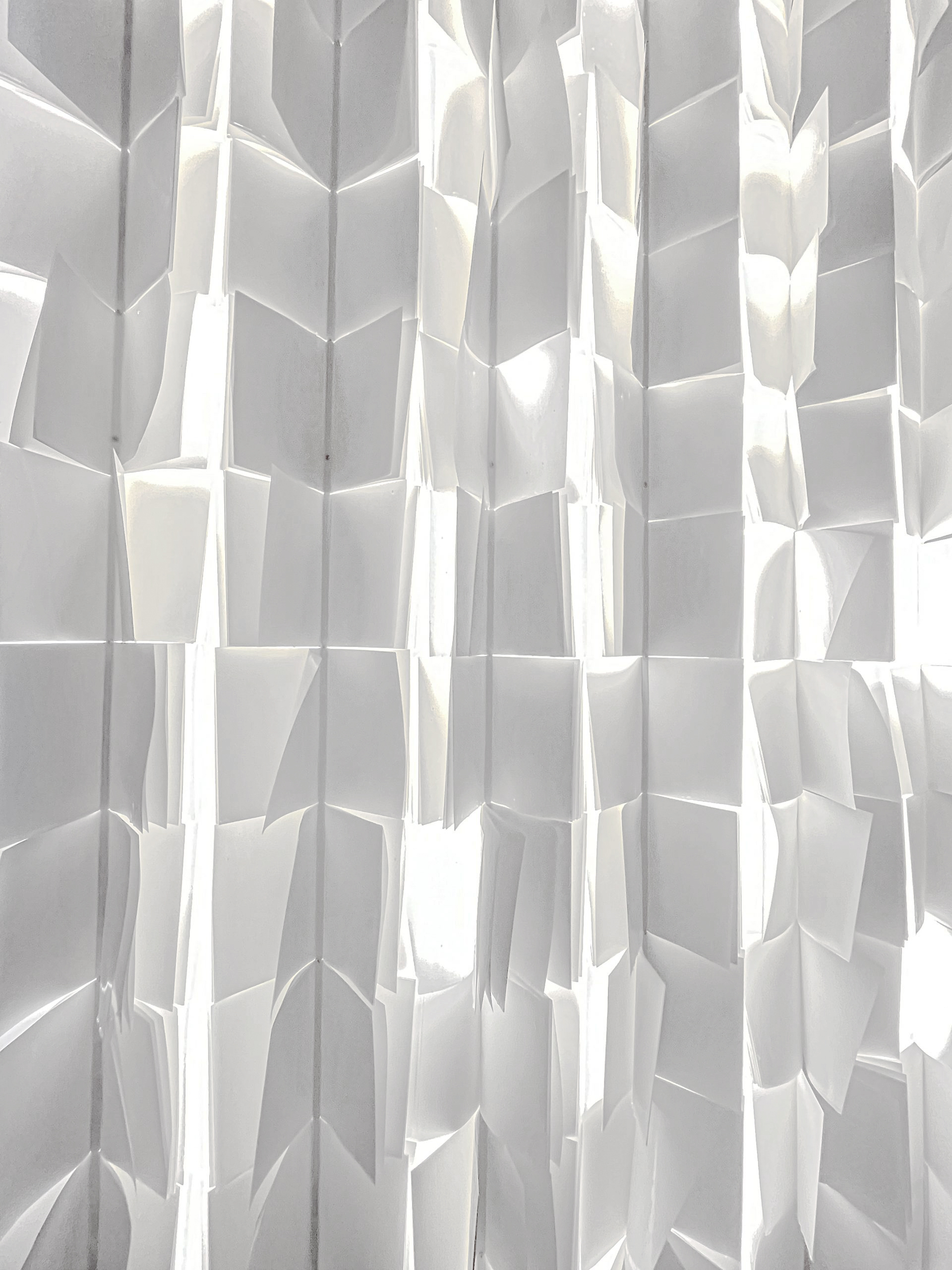
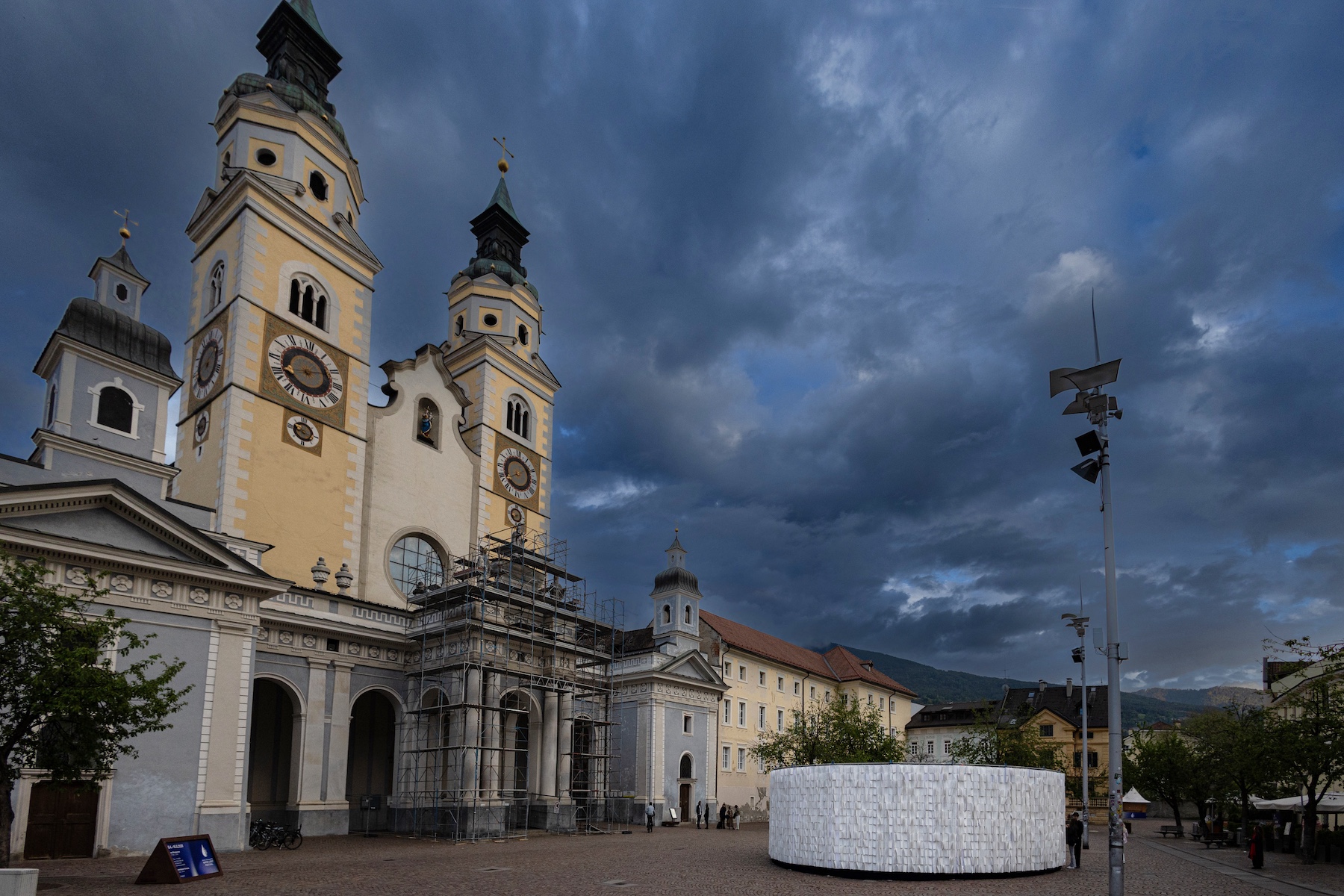
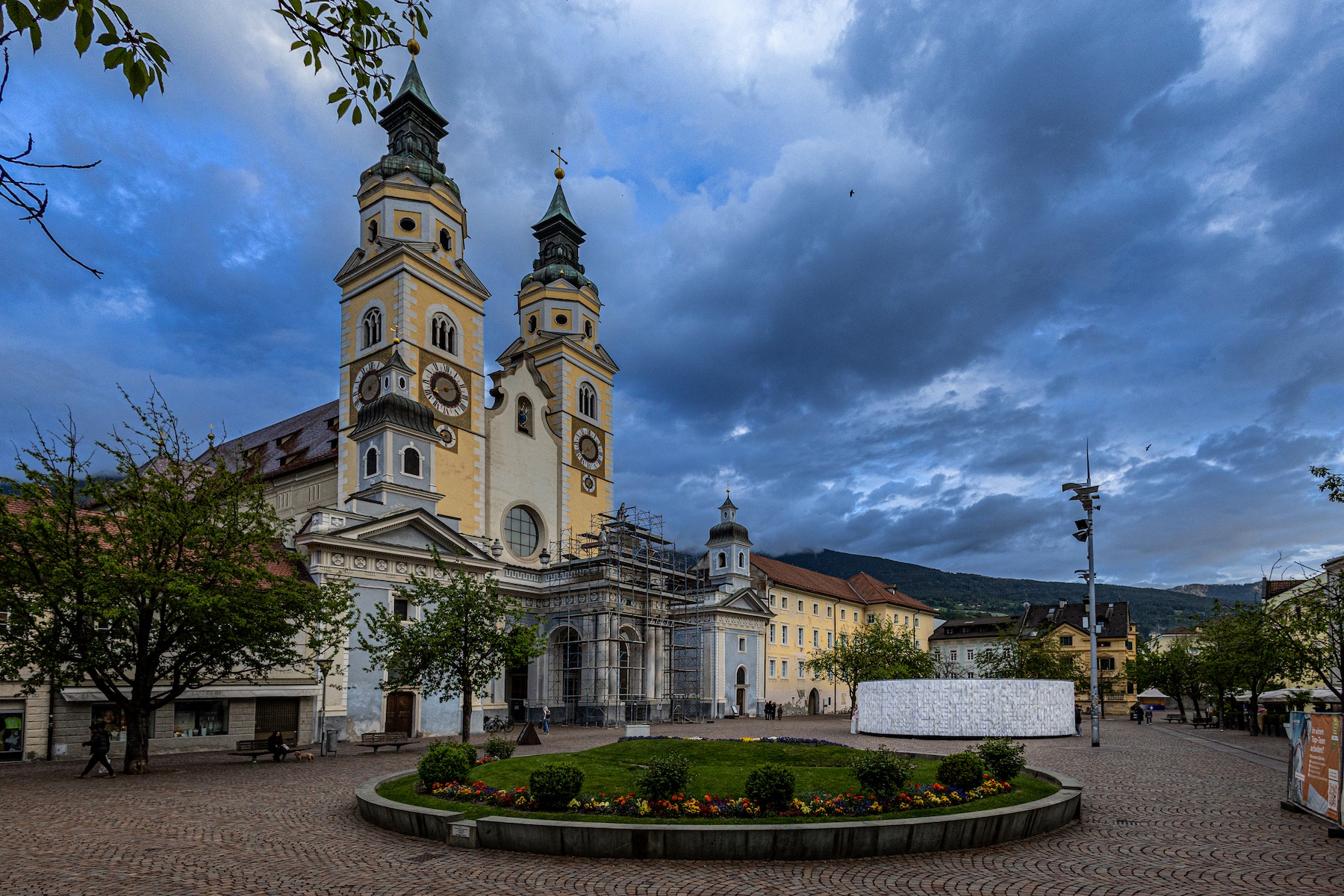
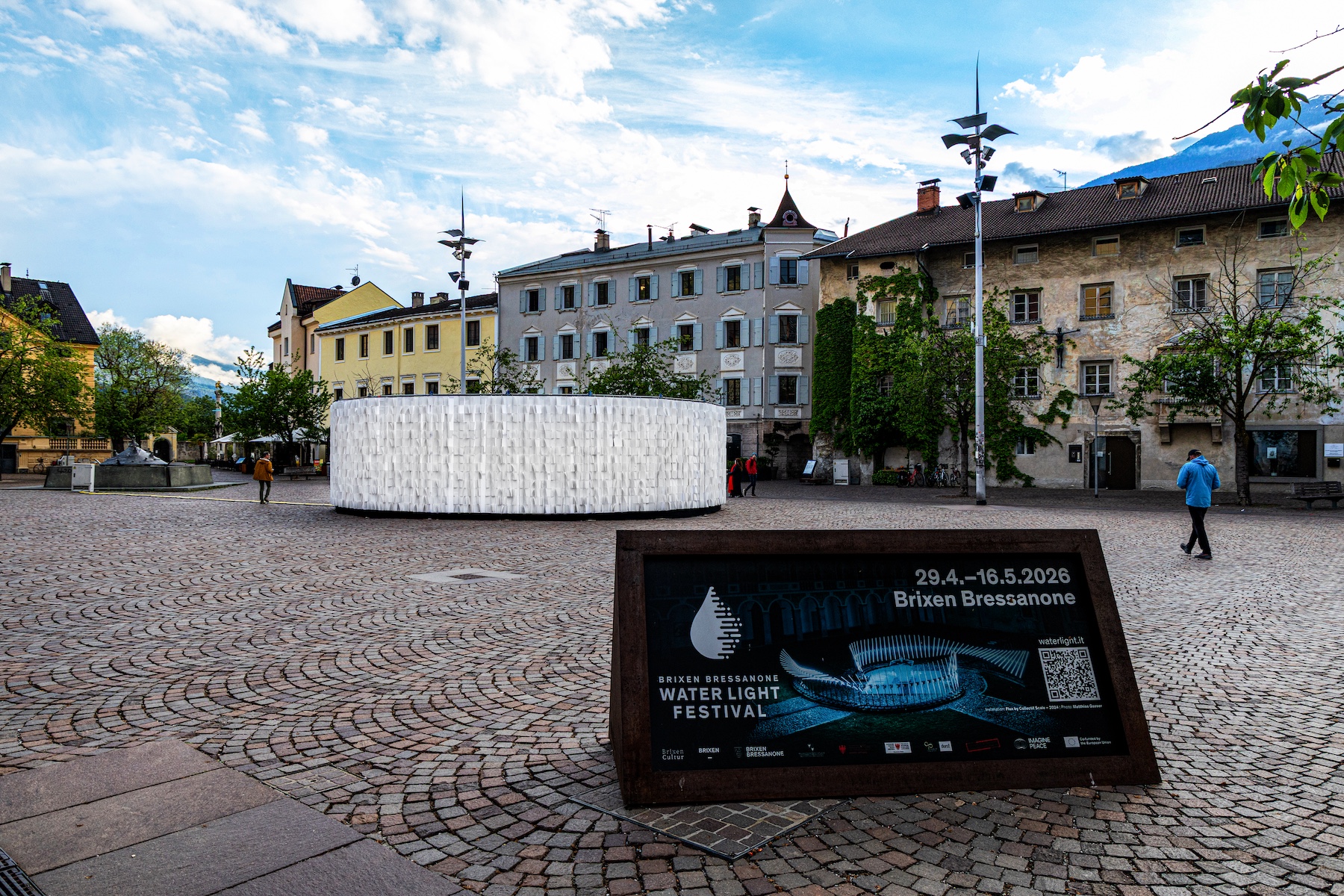
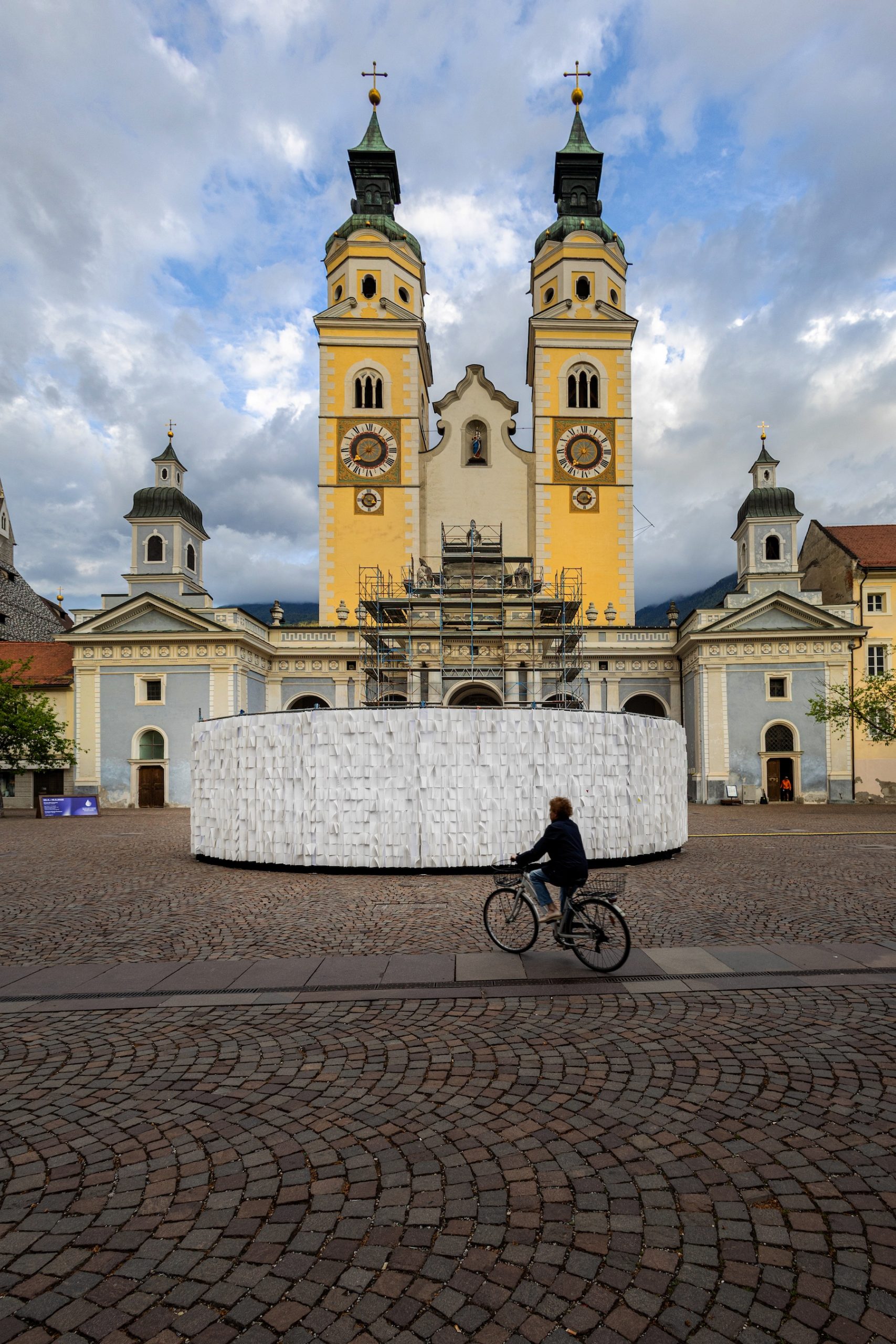
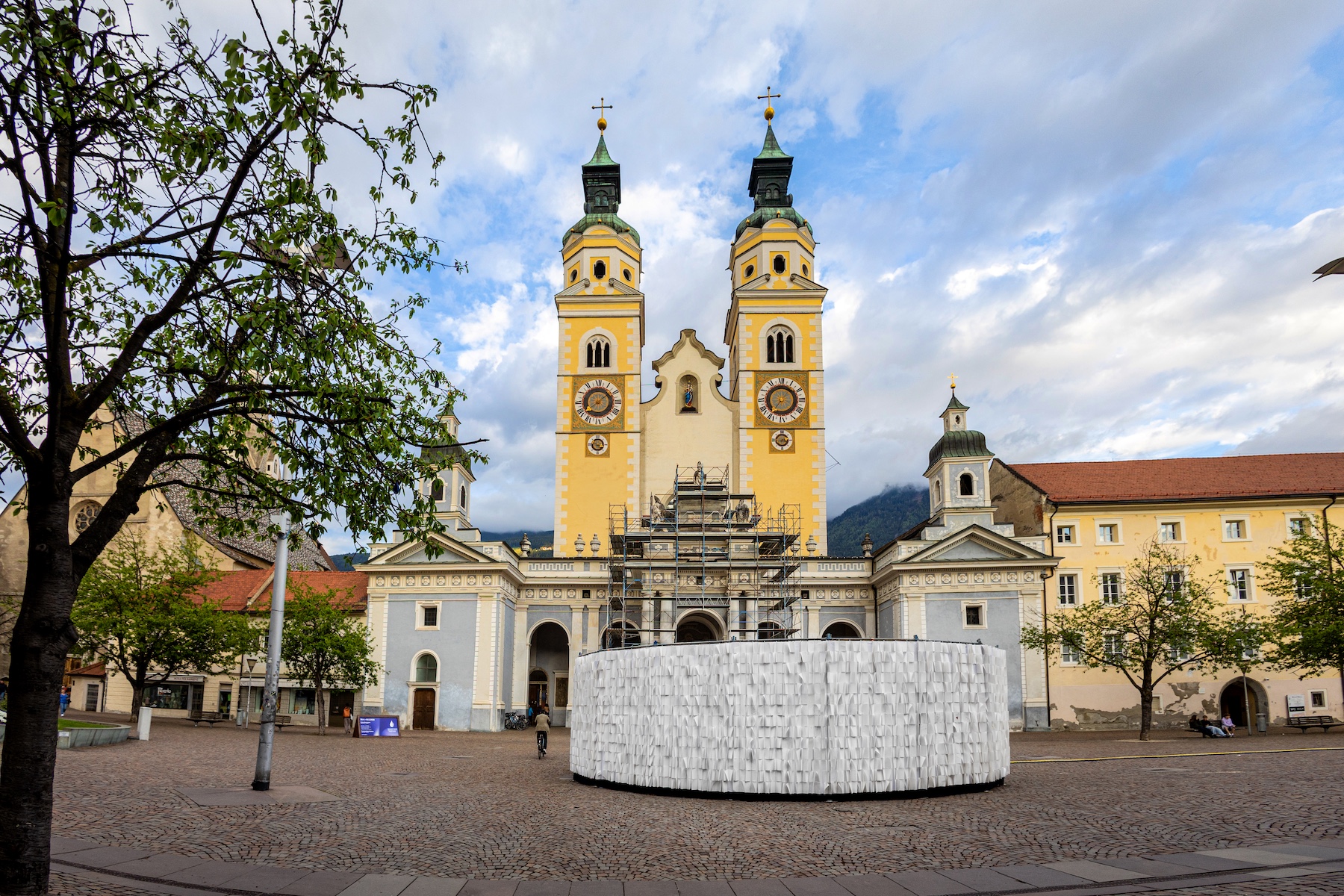
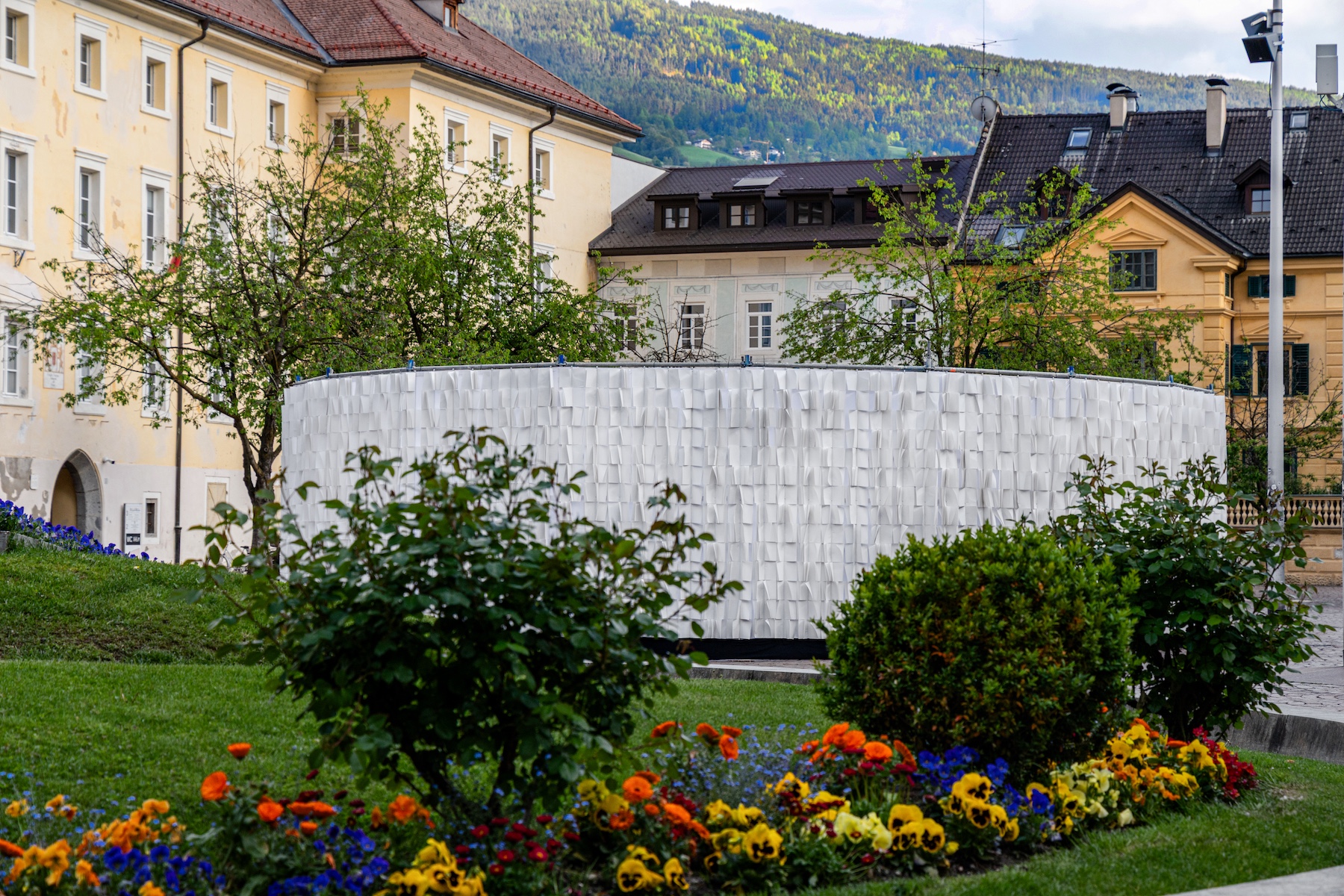
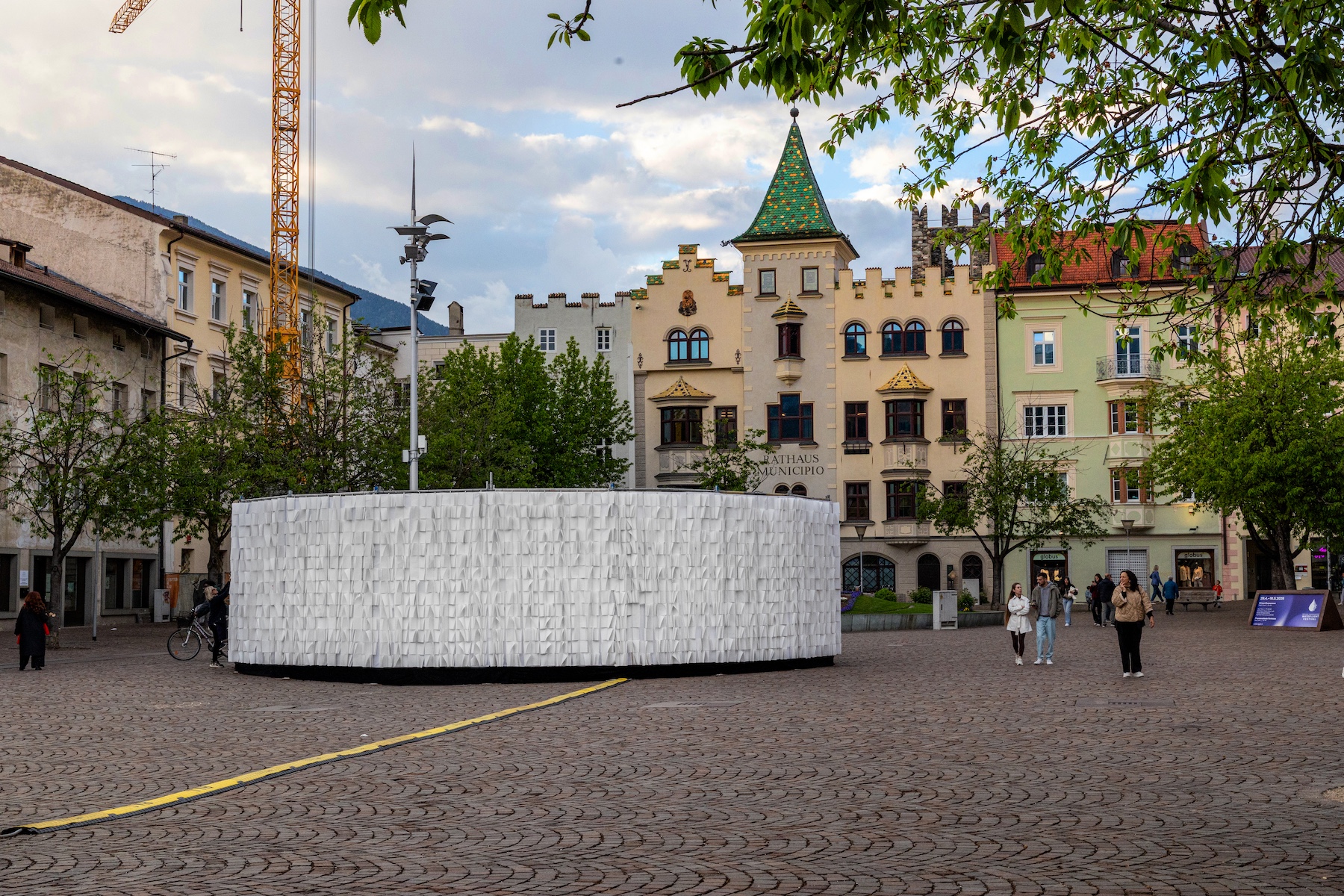
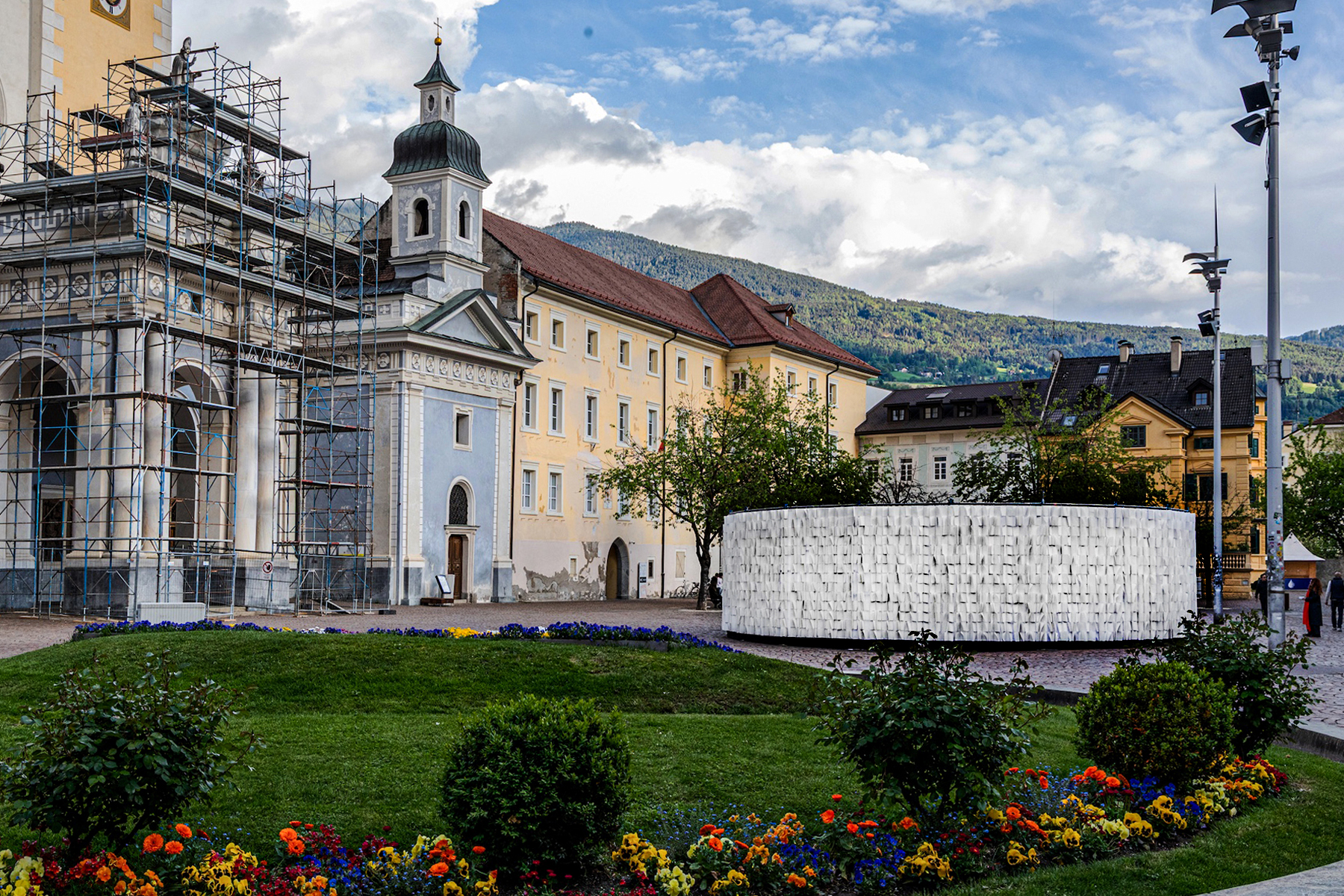
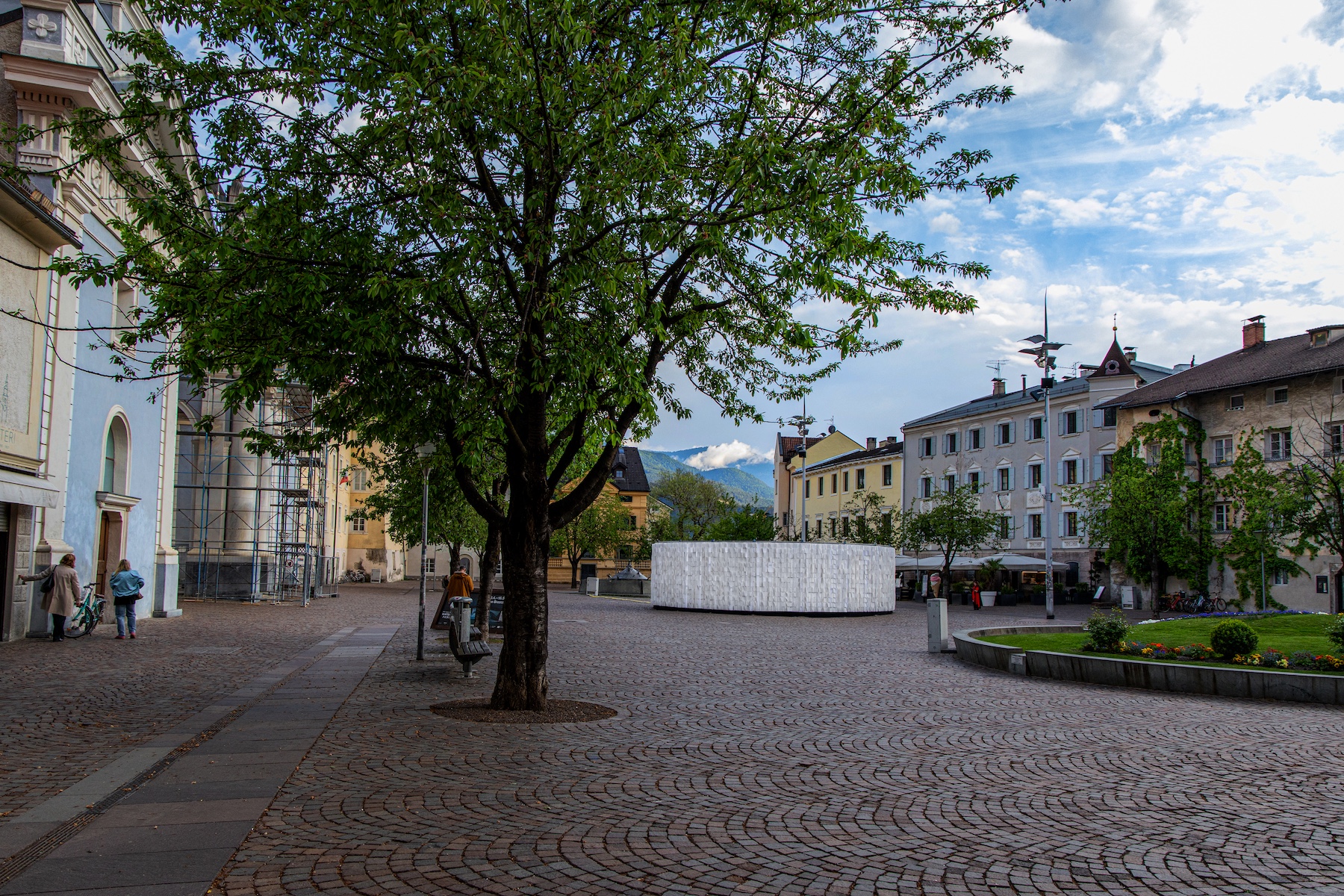
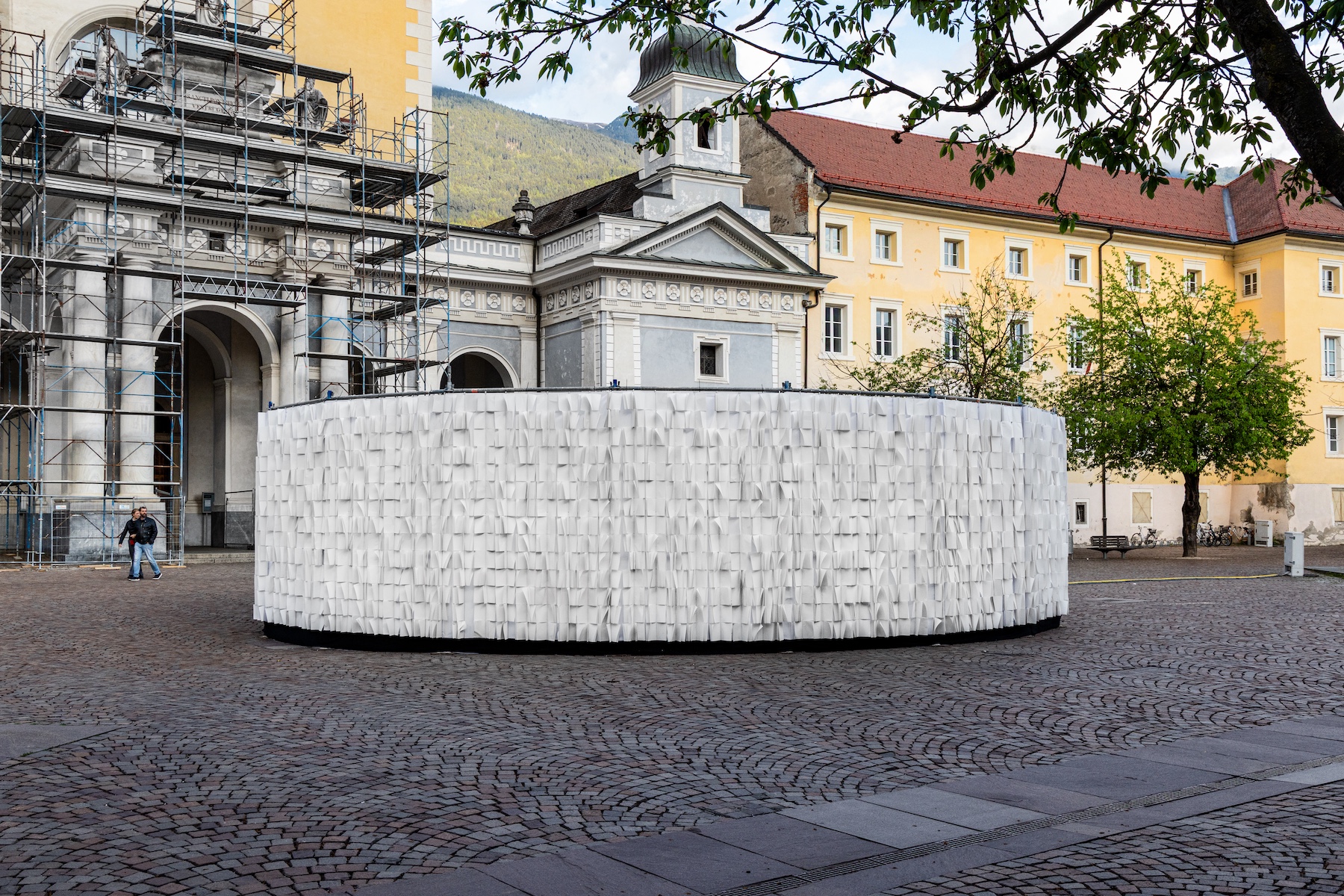
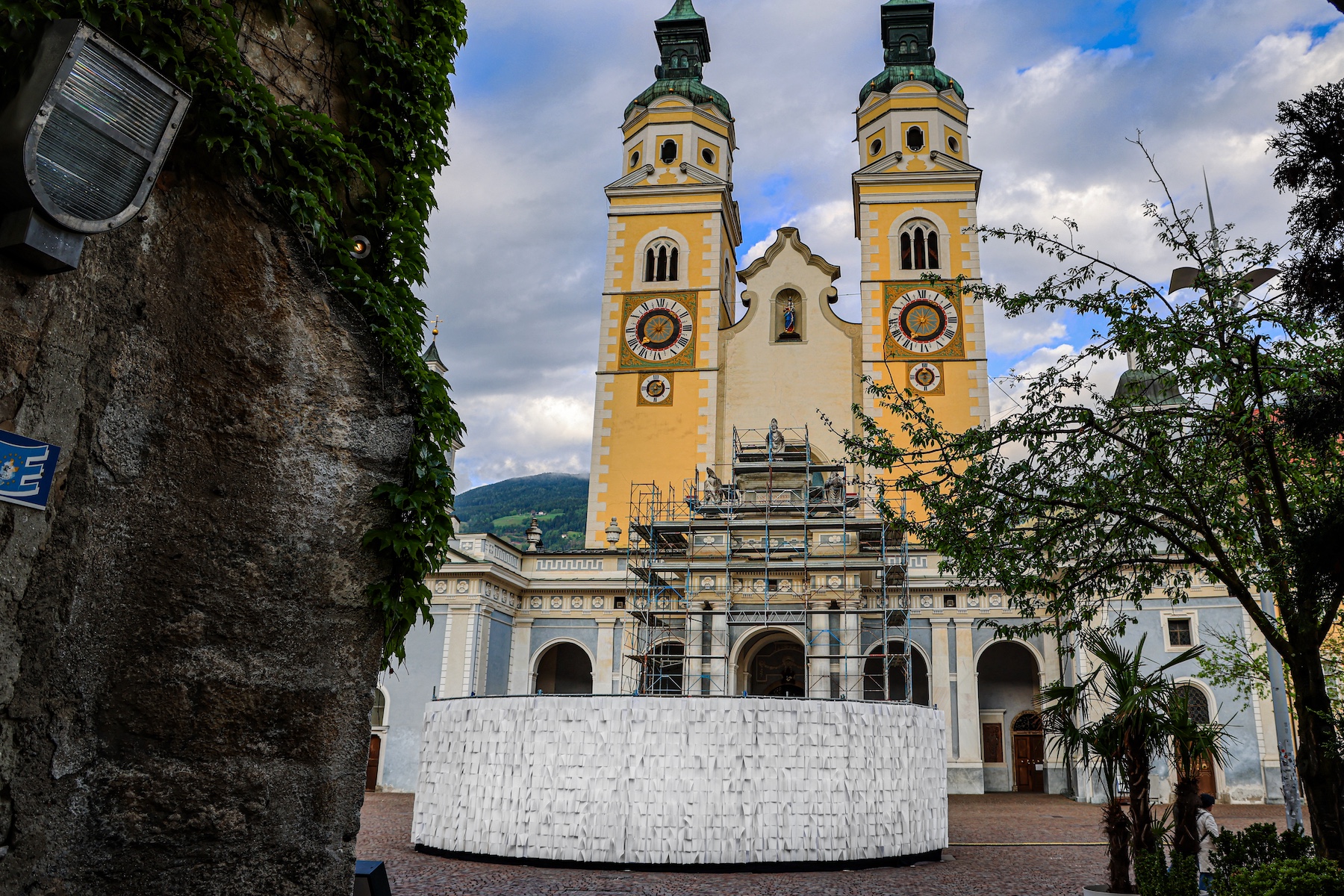
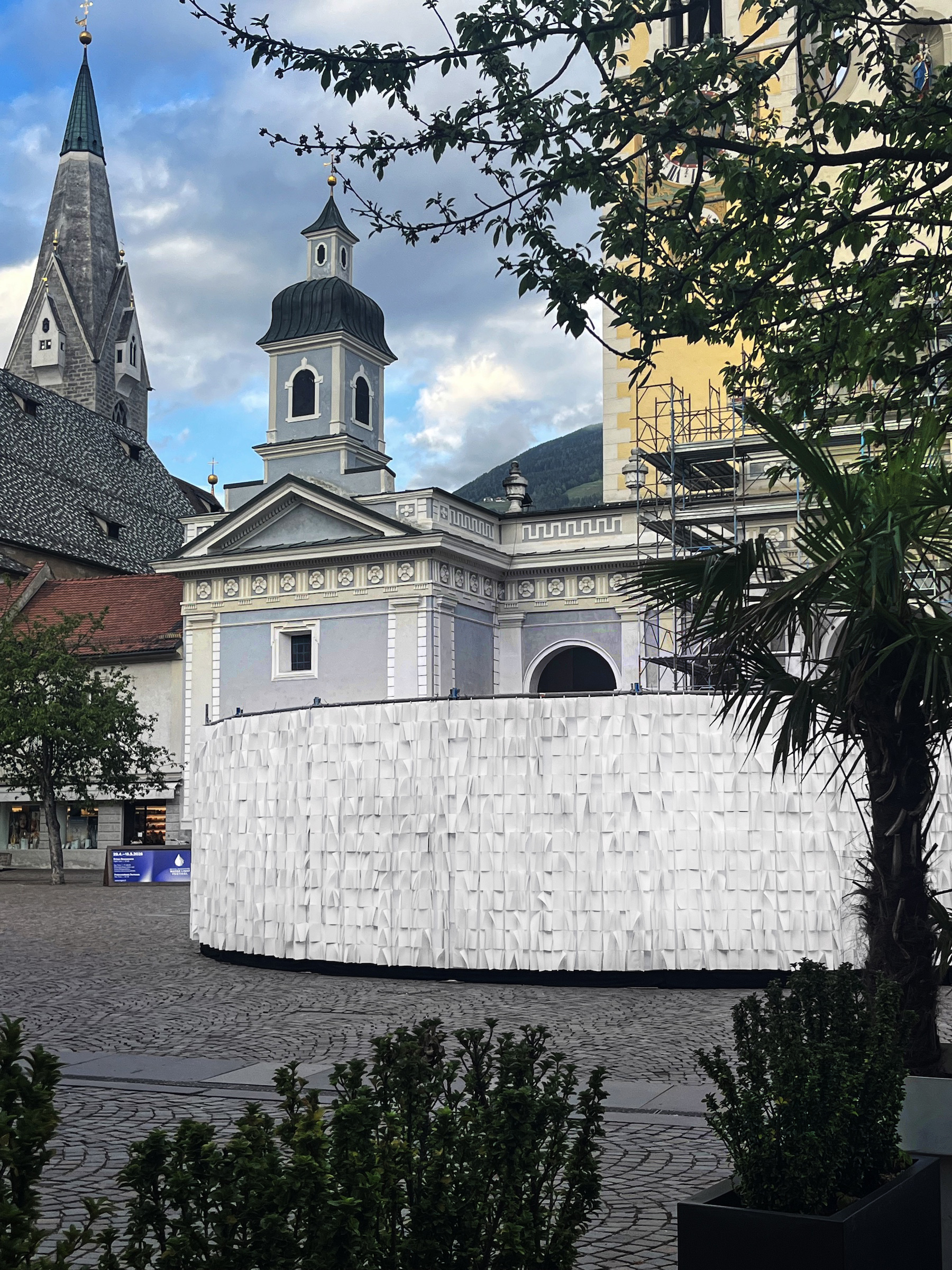
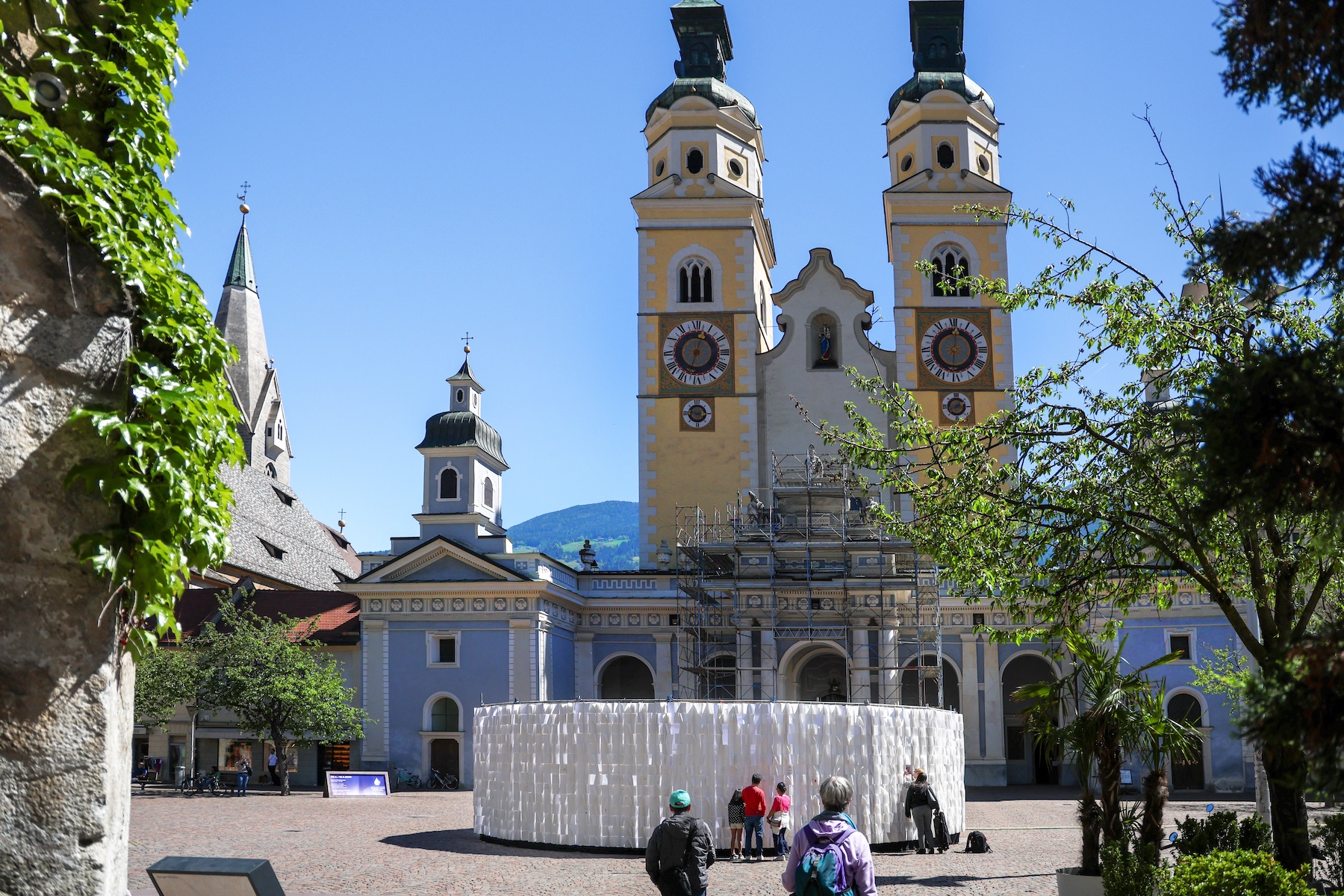
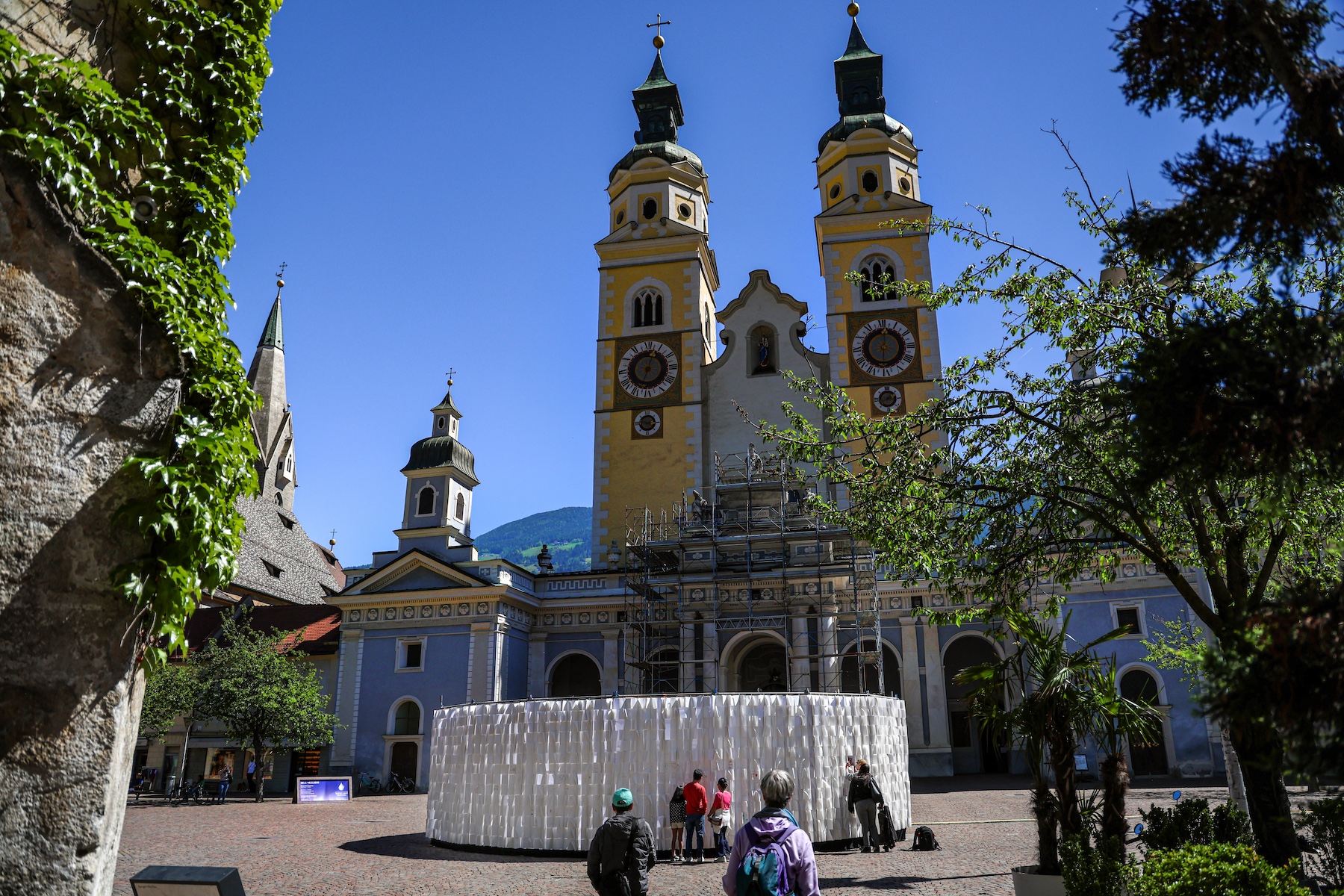
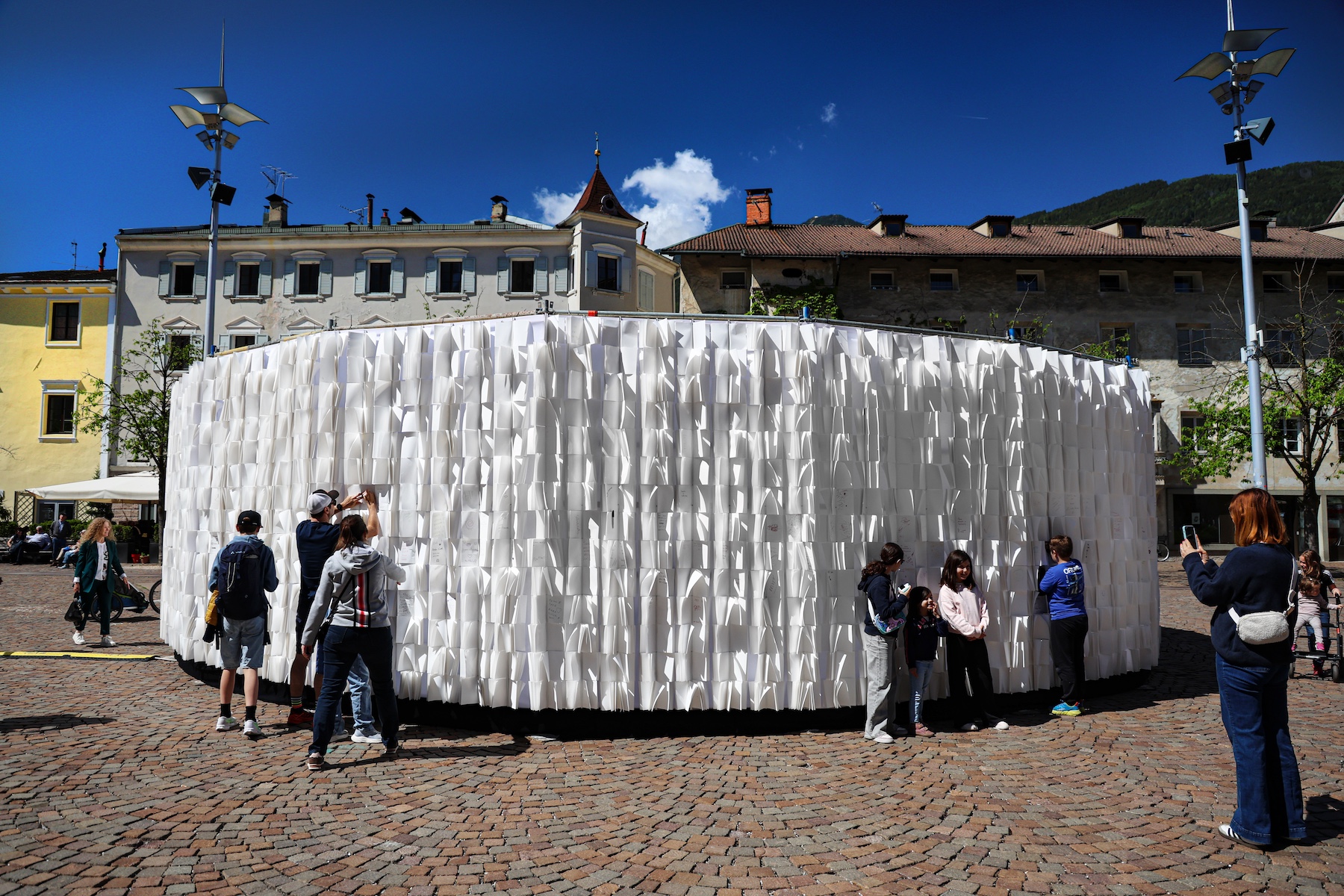
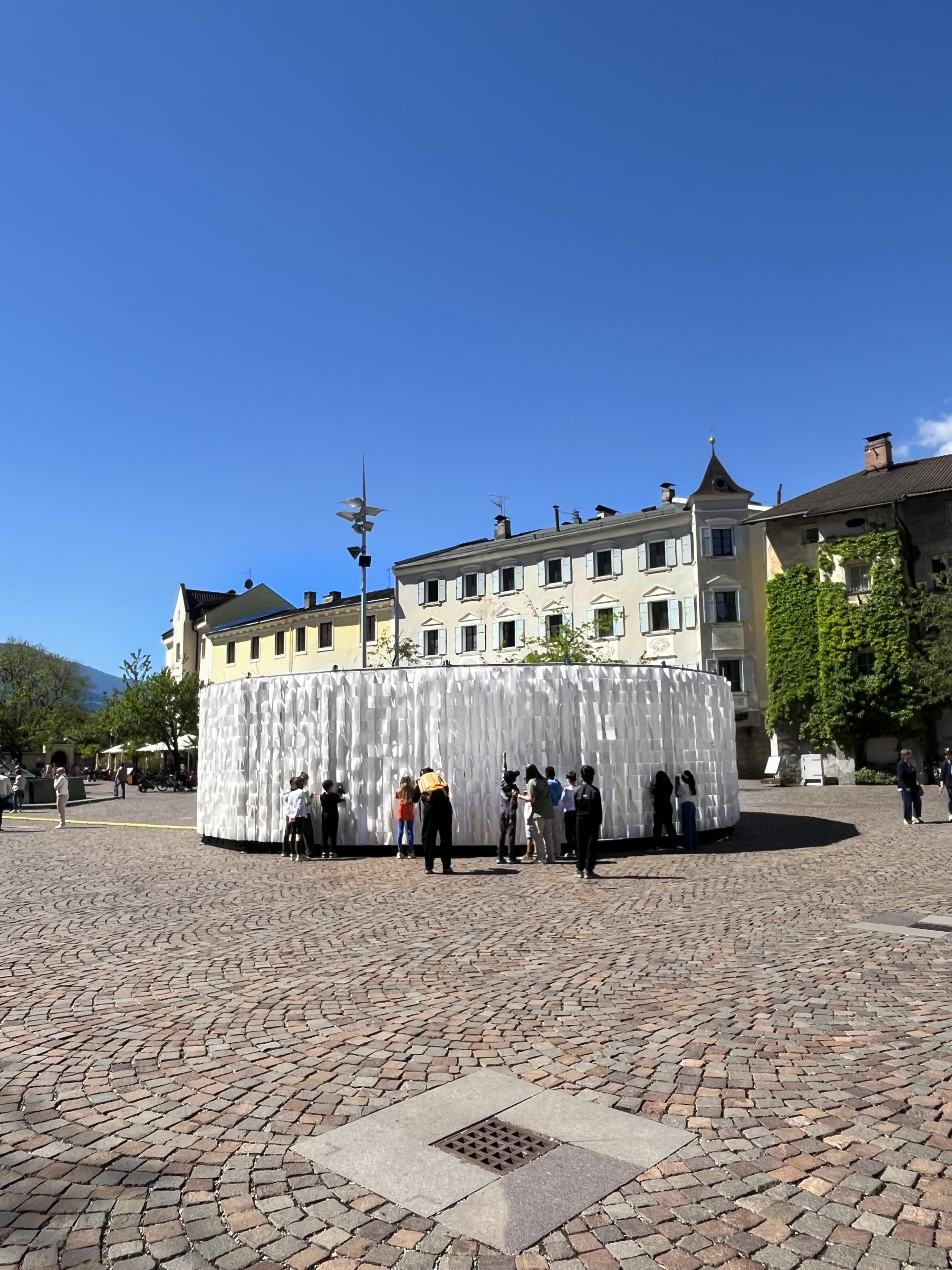
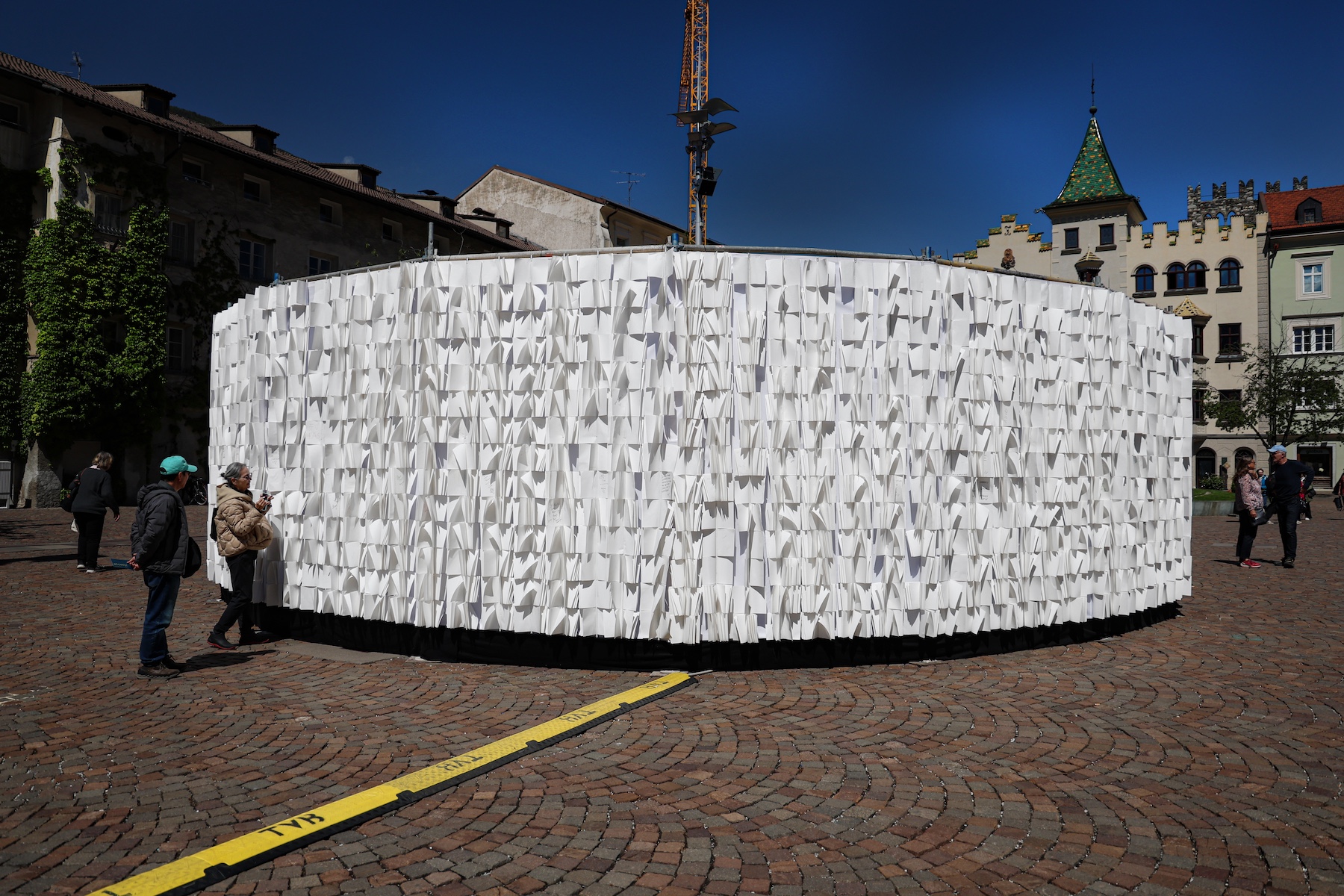
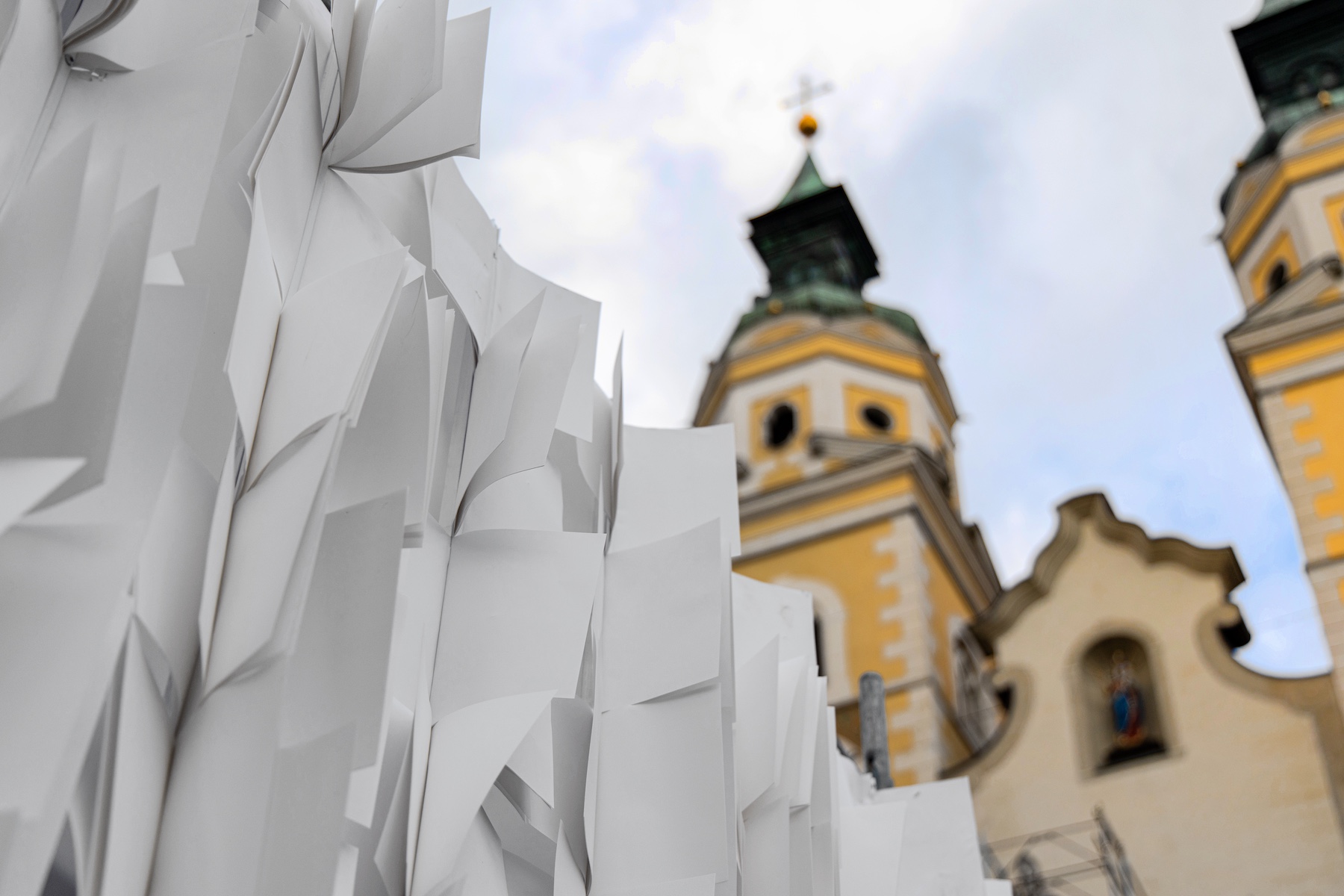
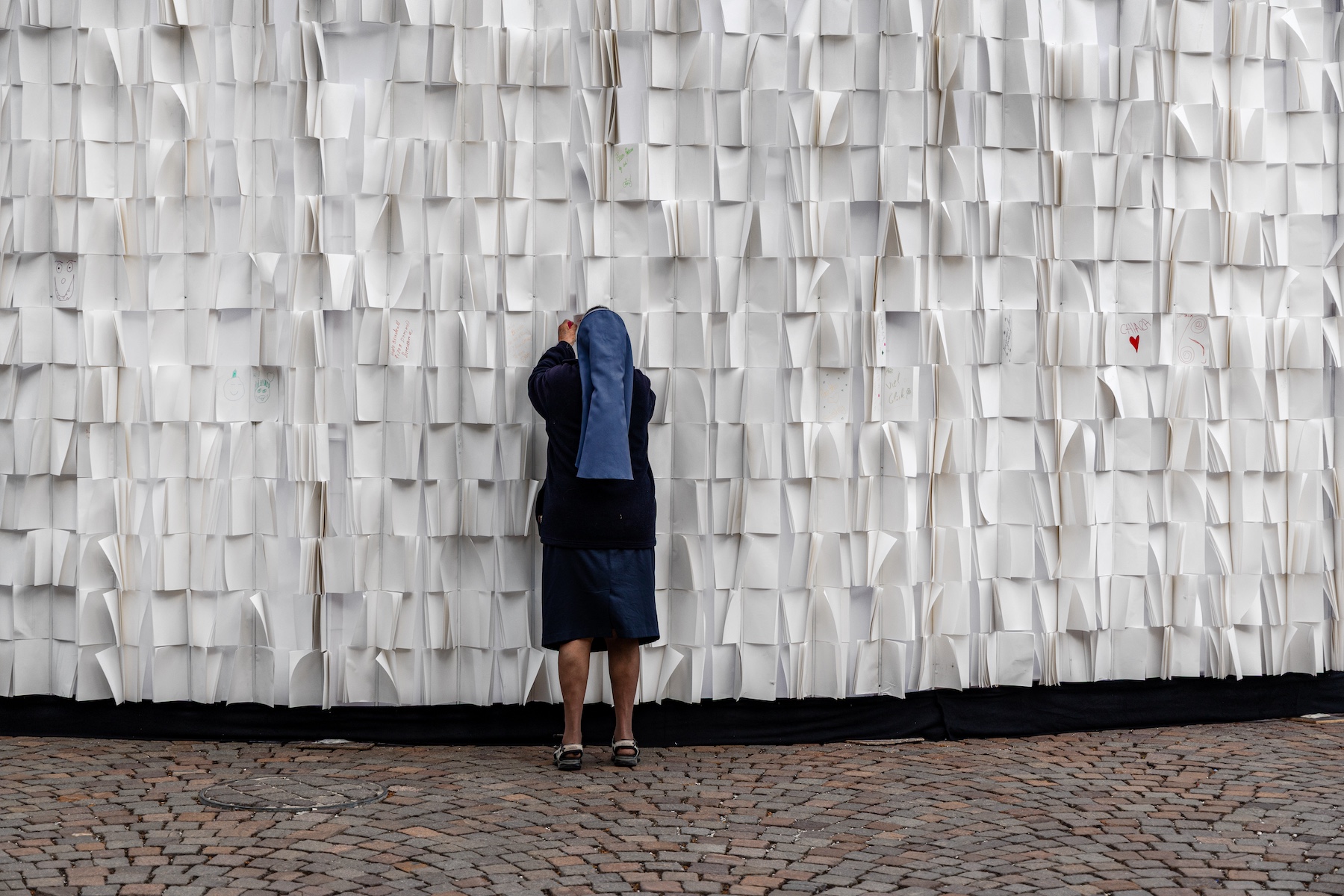
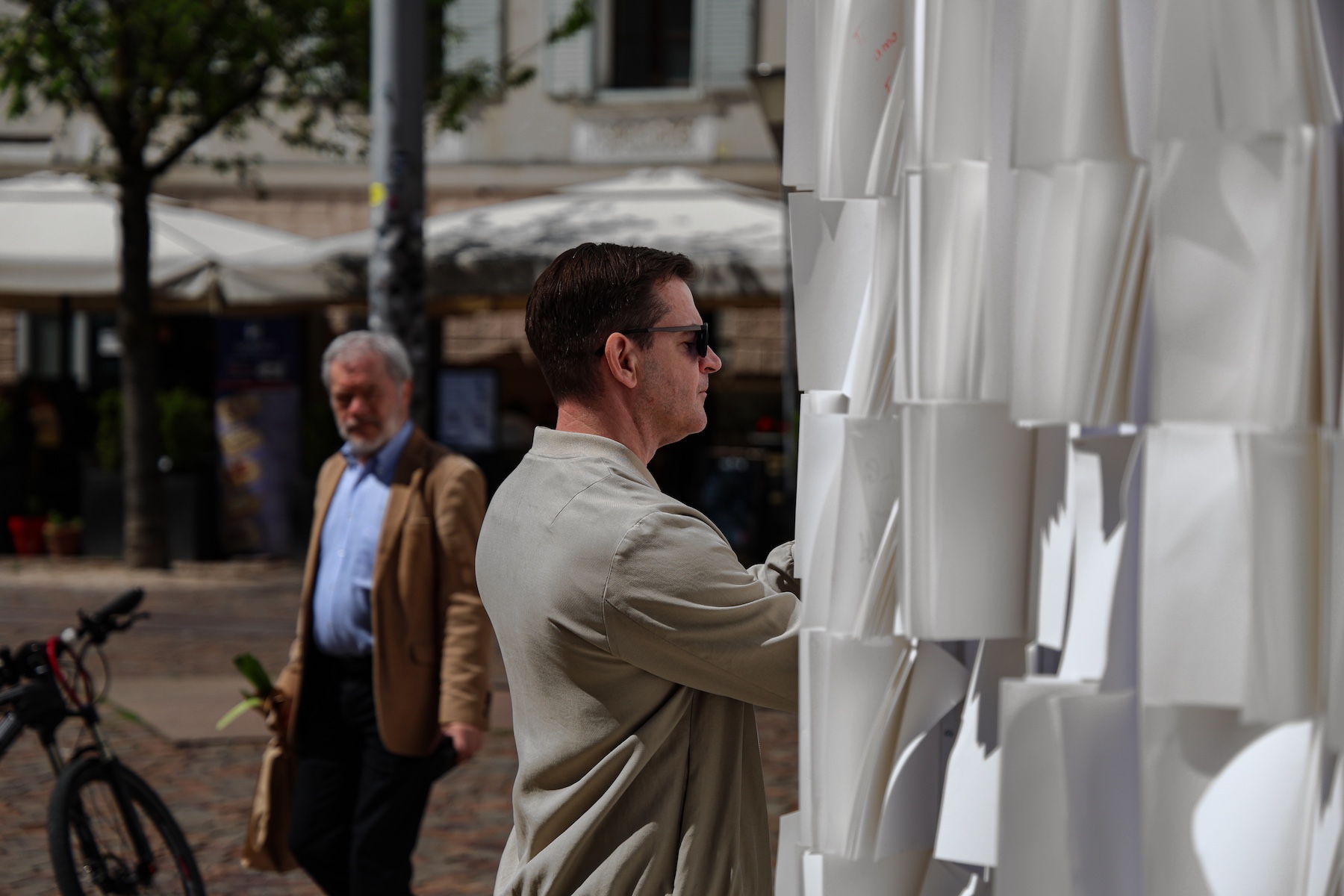
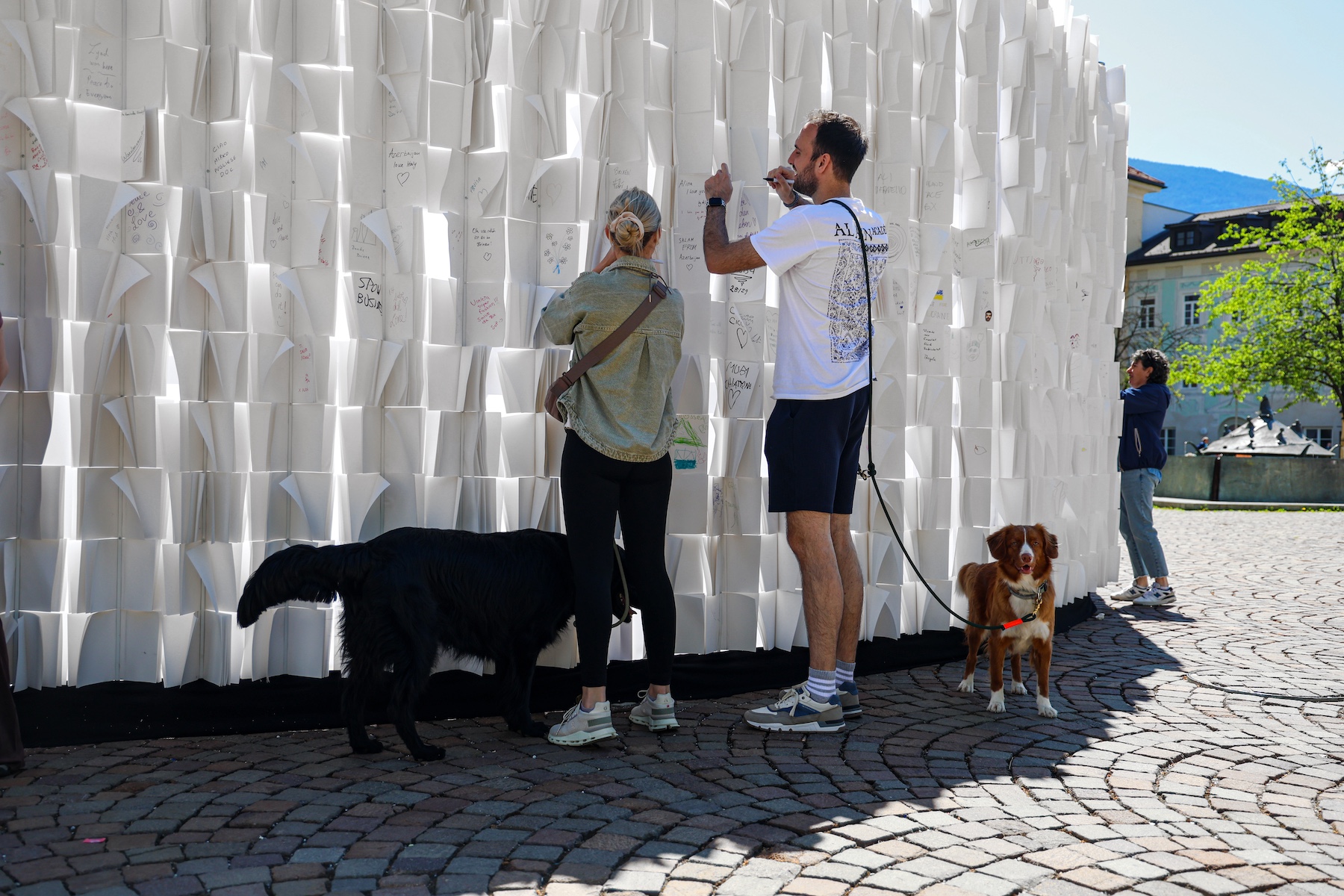
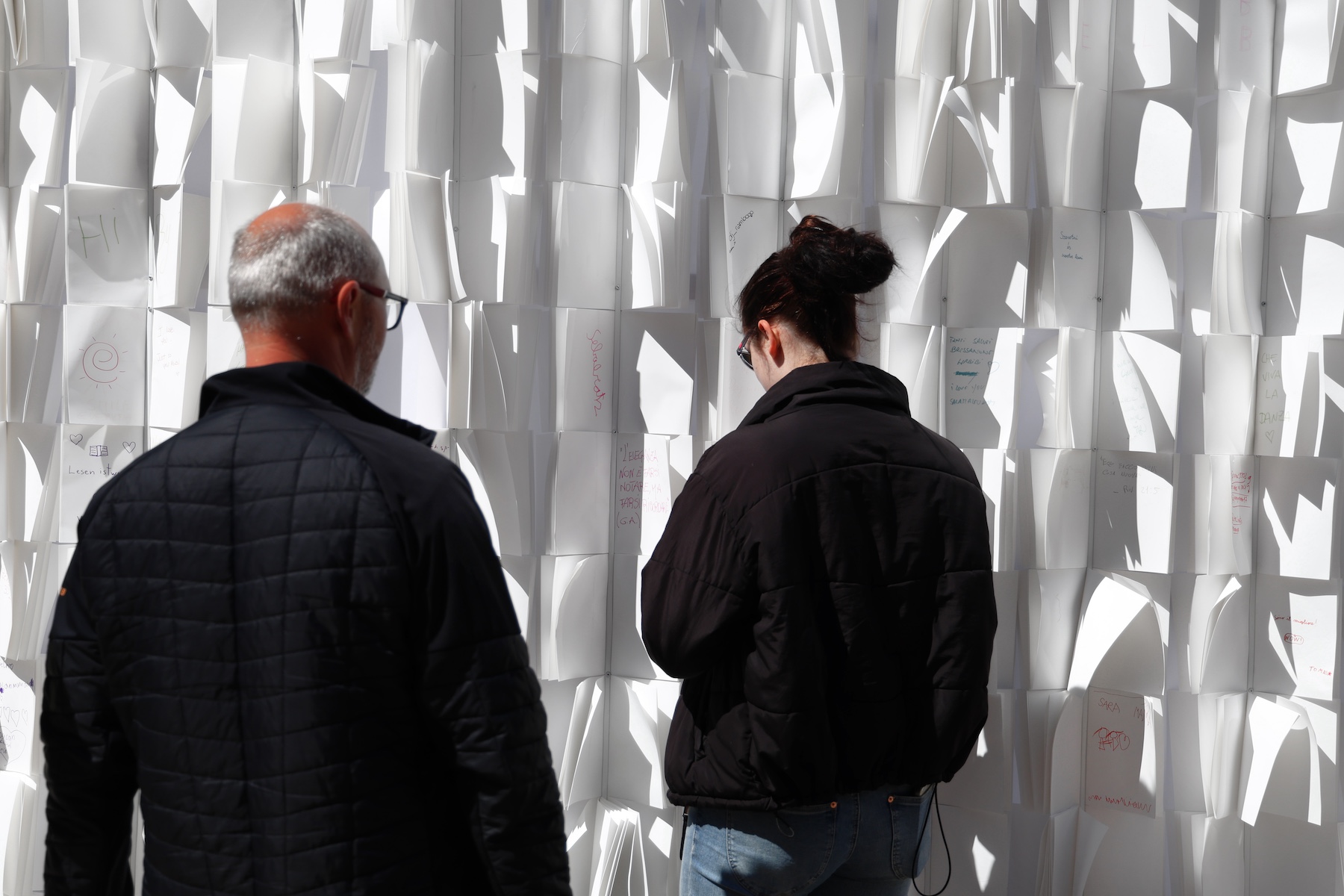
Last May we participated in the Water Light Festival 2026 in Brixen (Italy) with our piece On Blank Pages.
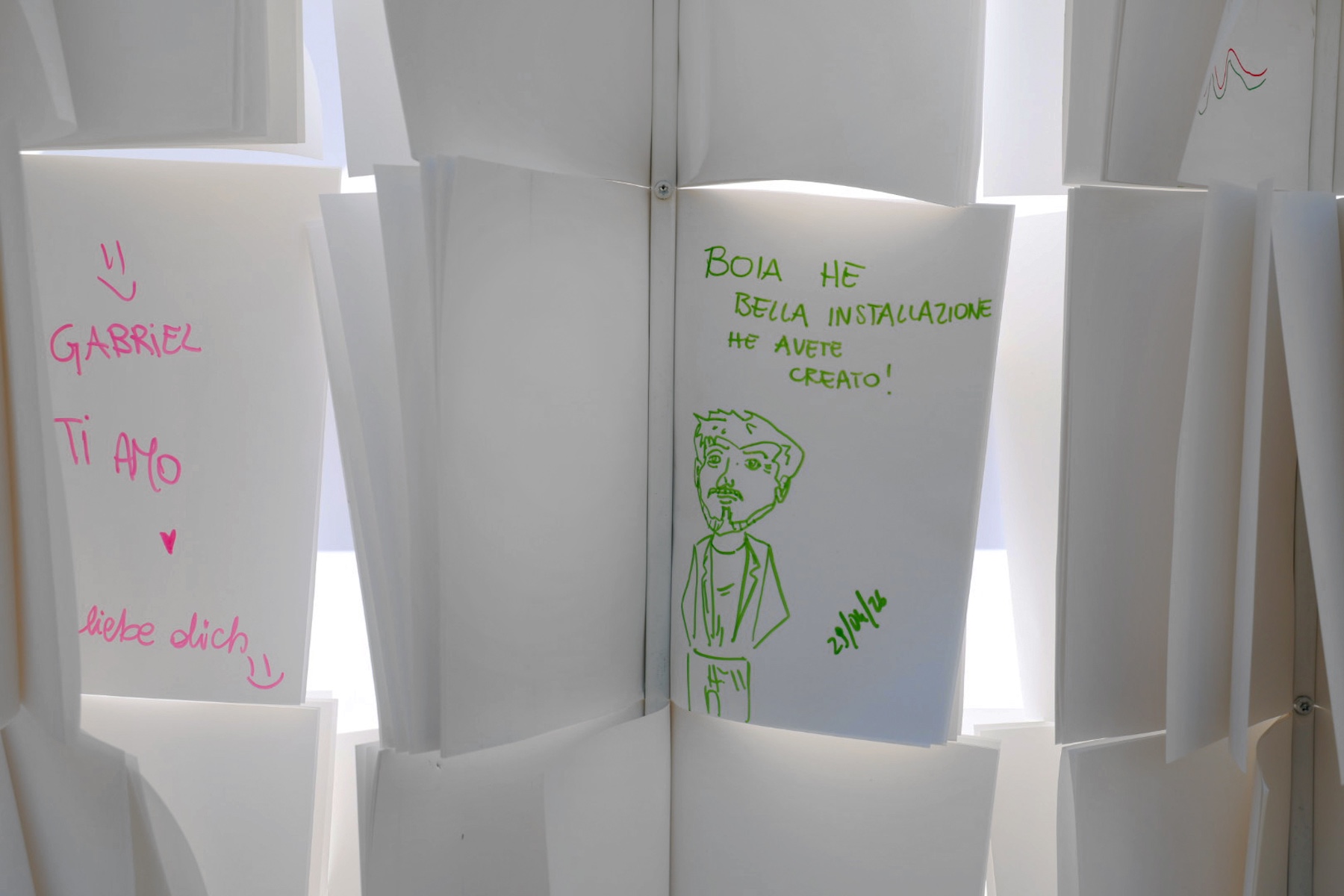
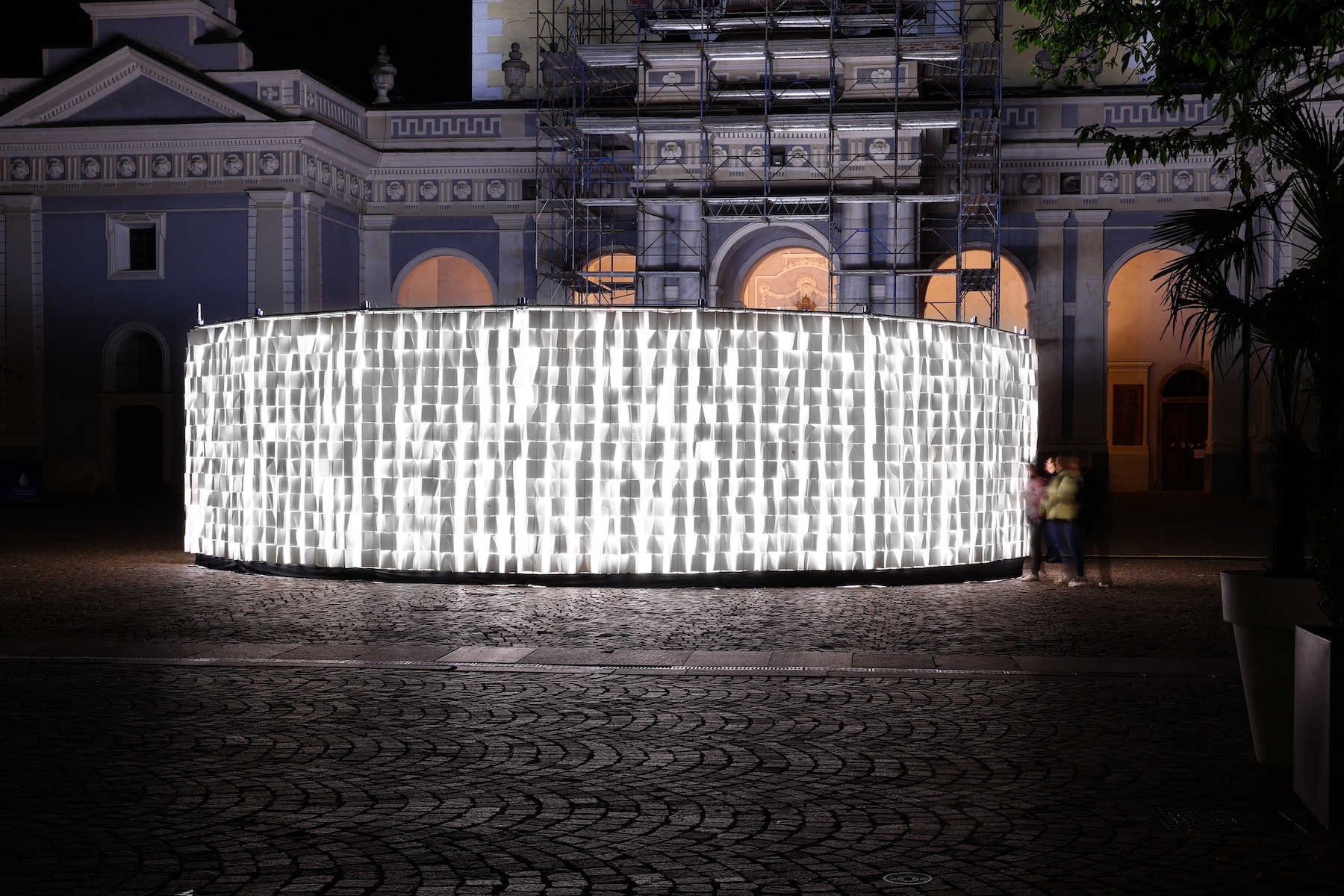
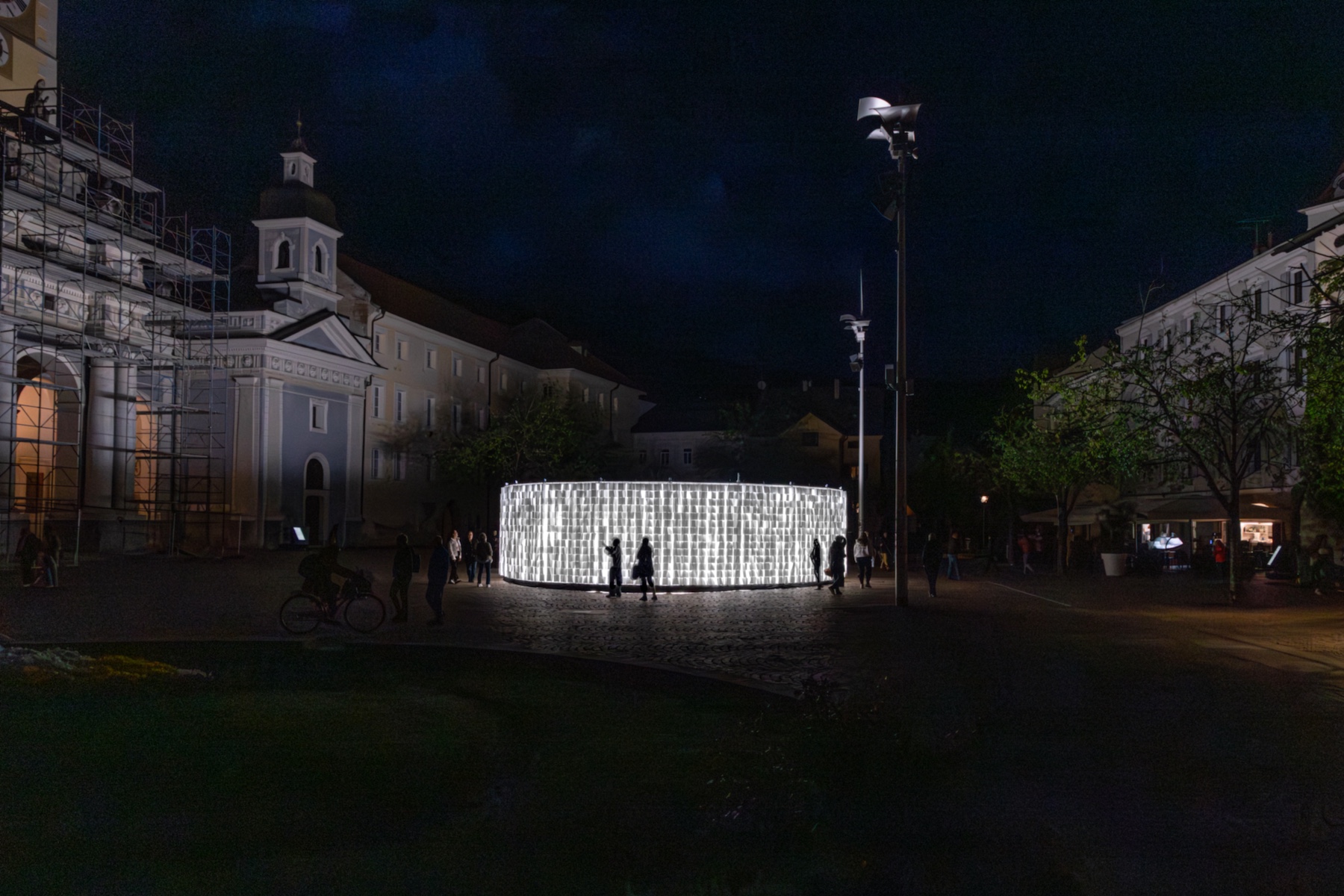
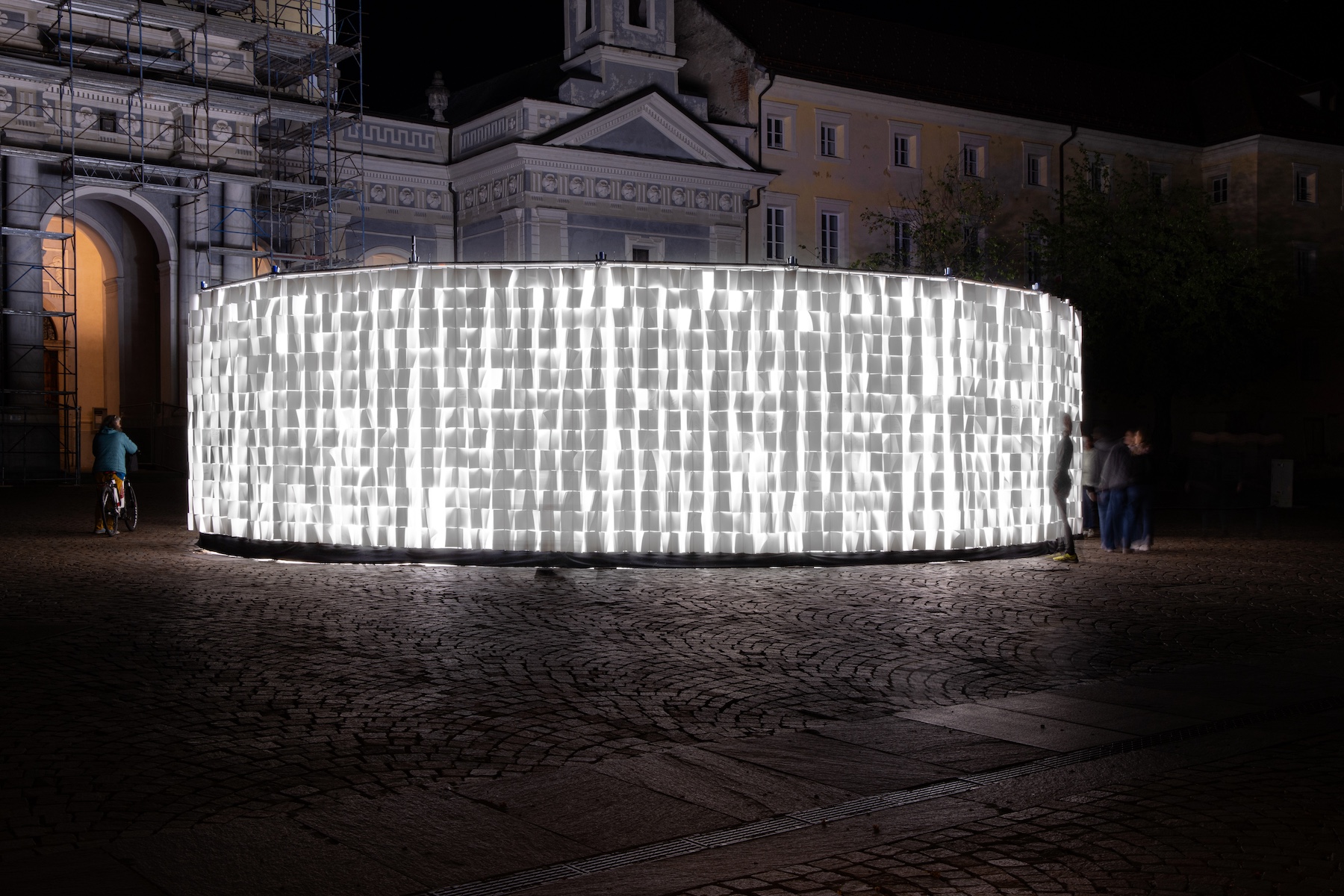
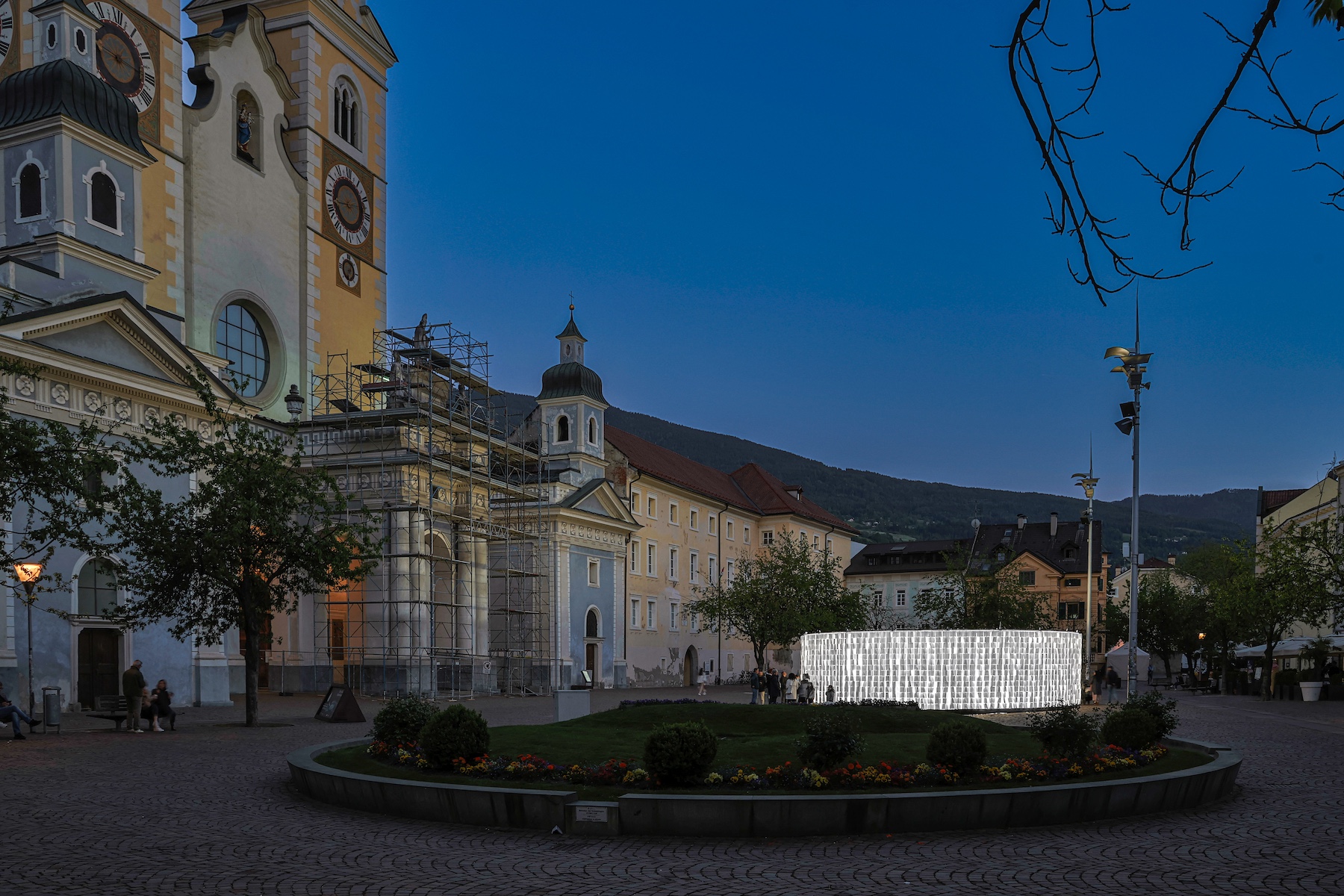
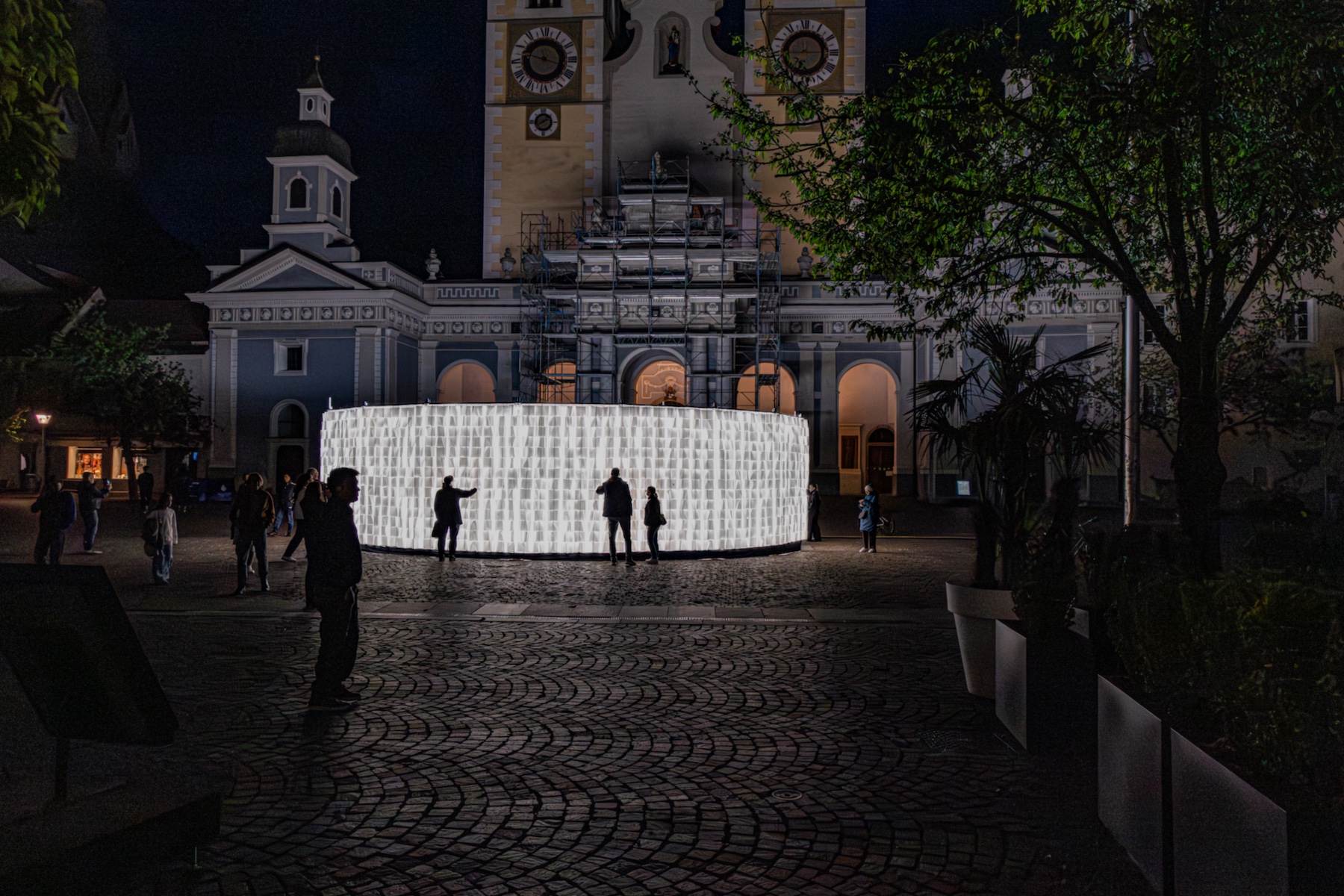
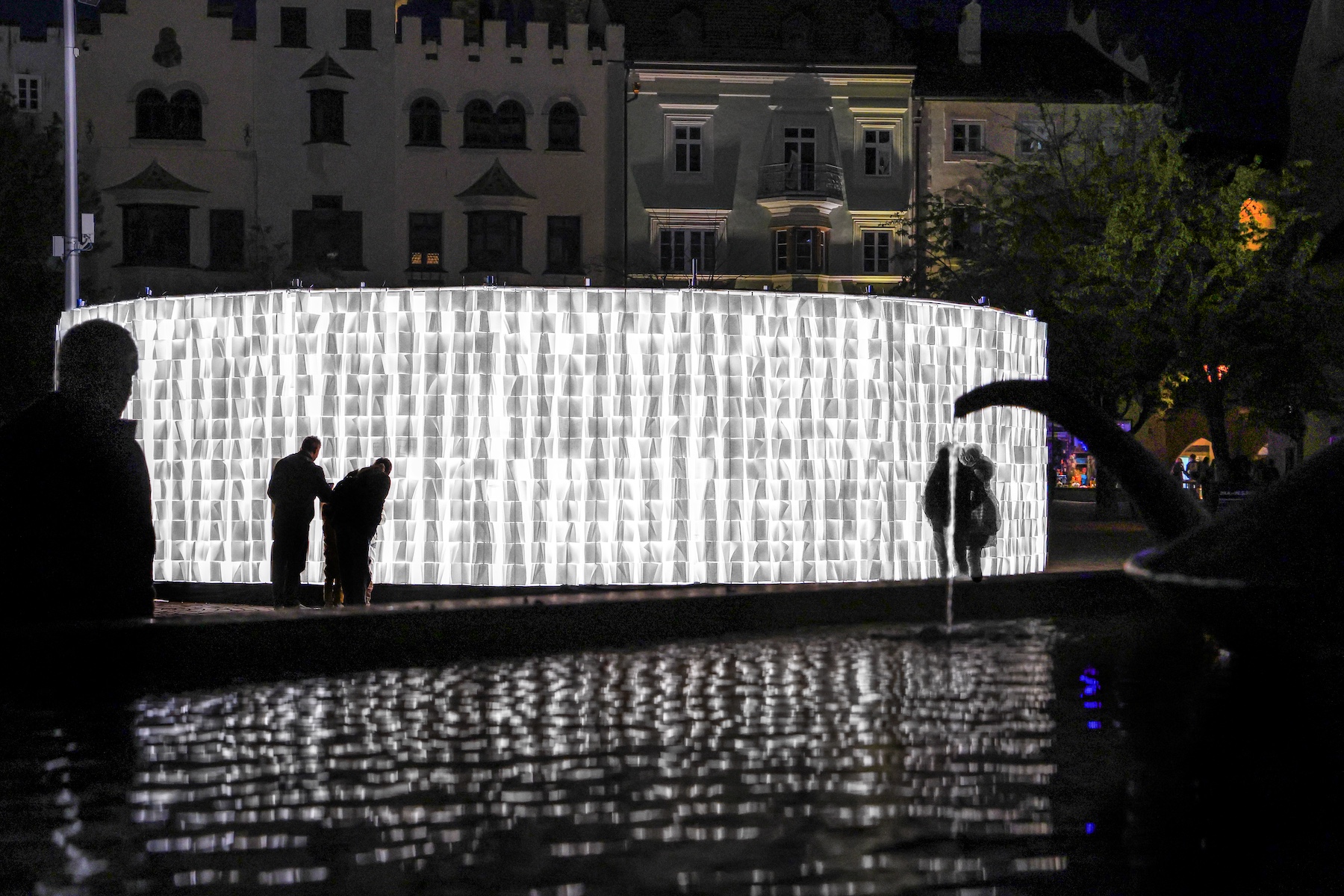
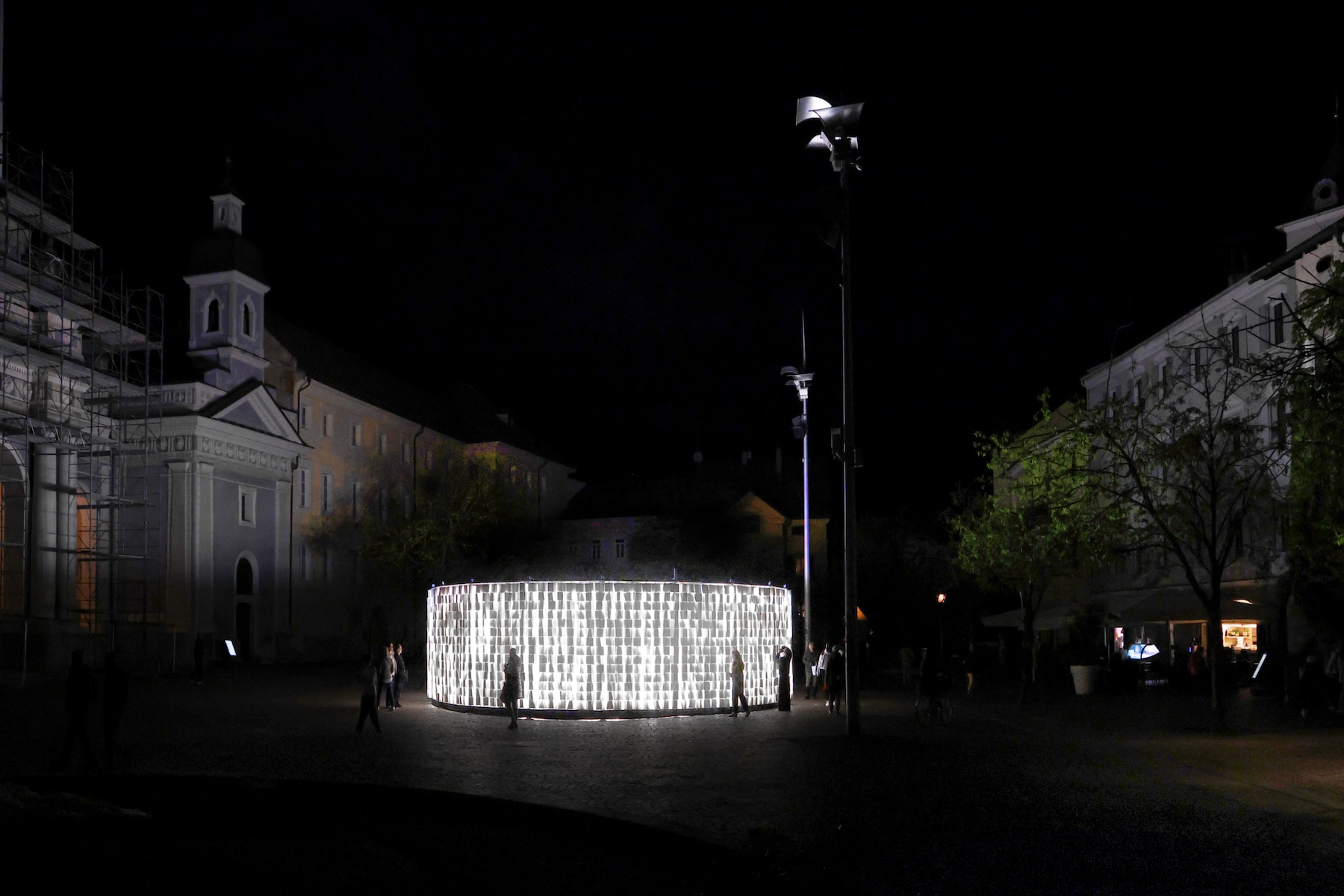
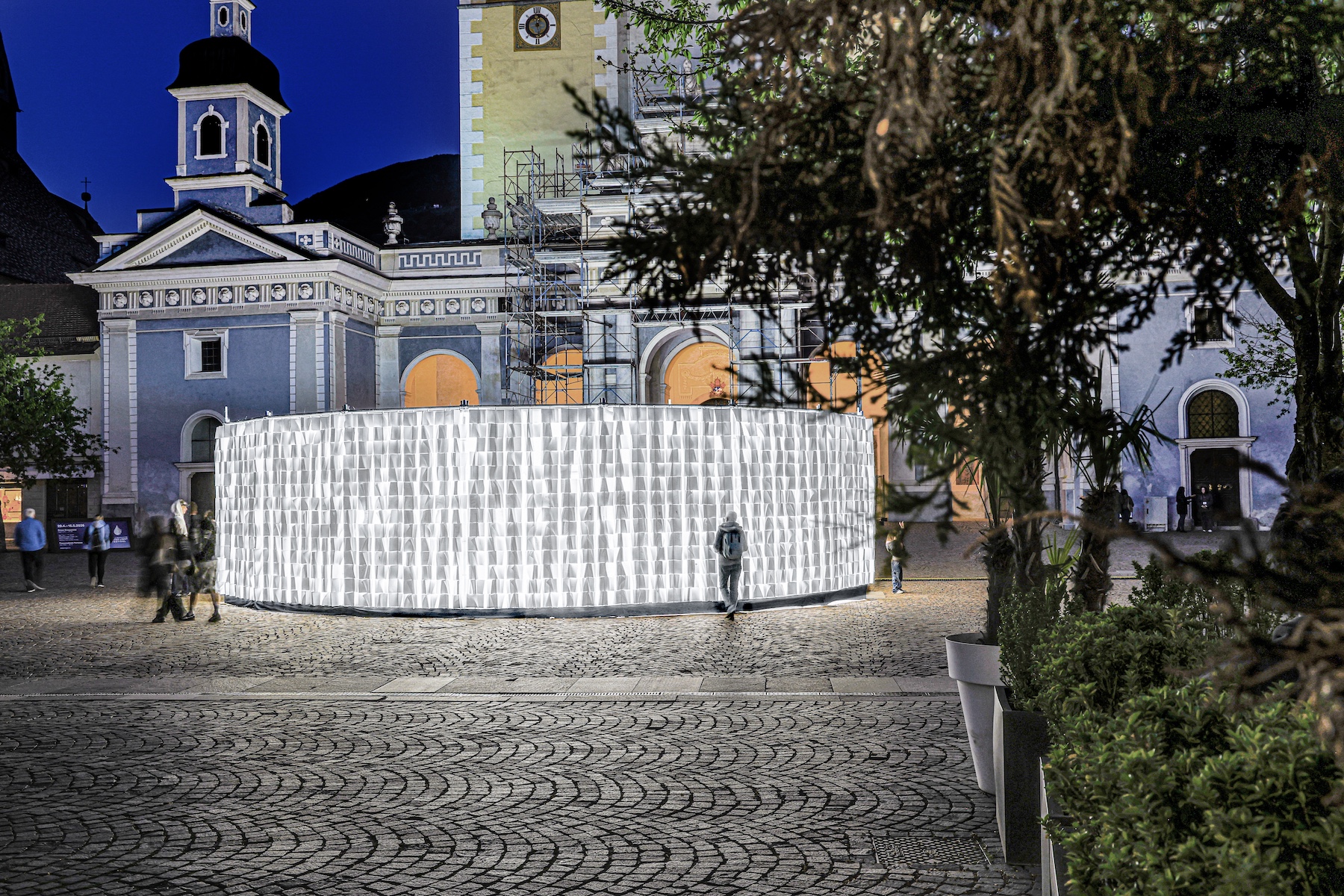
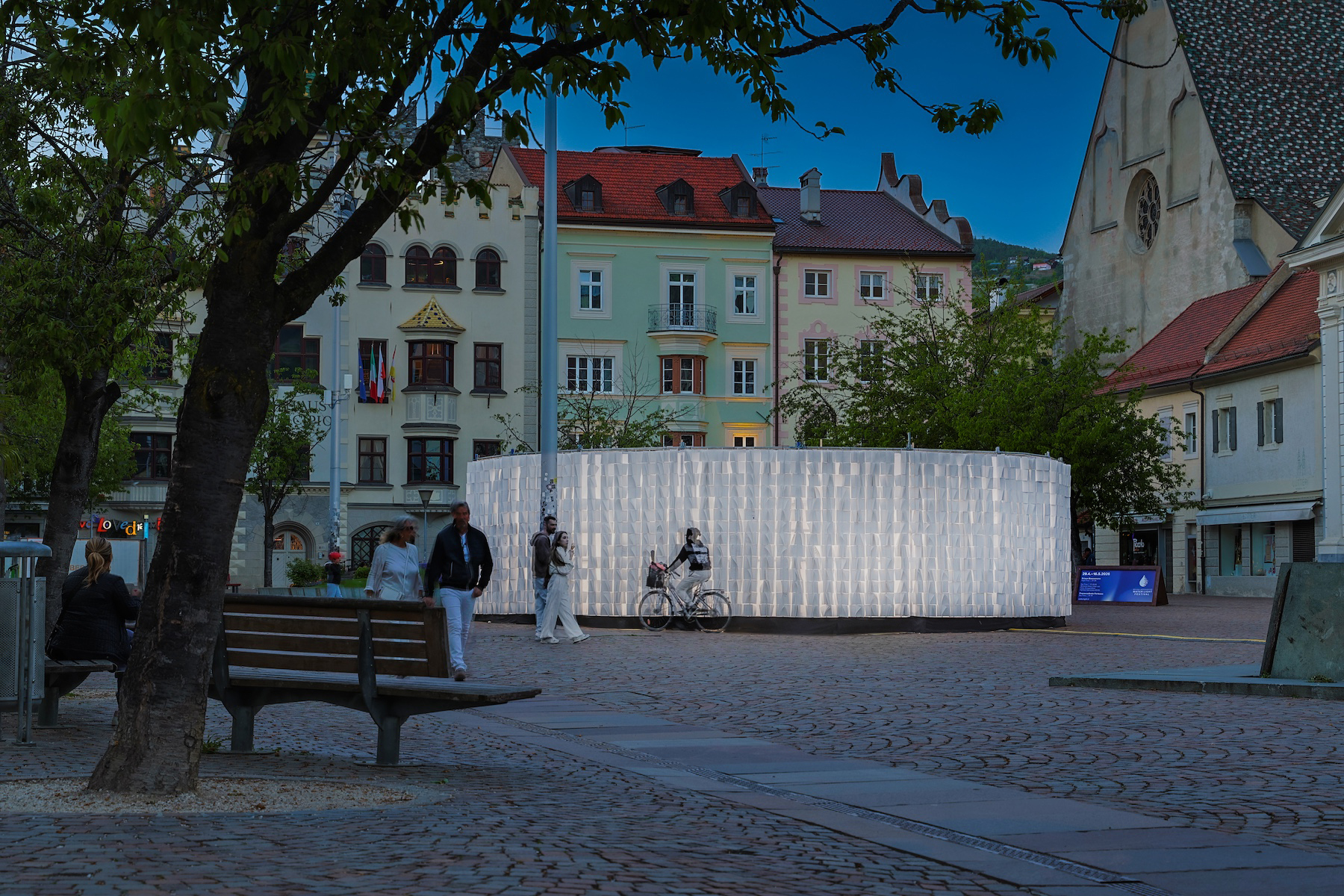
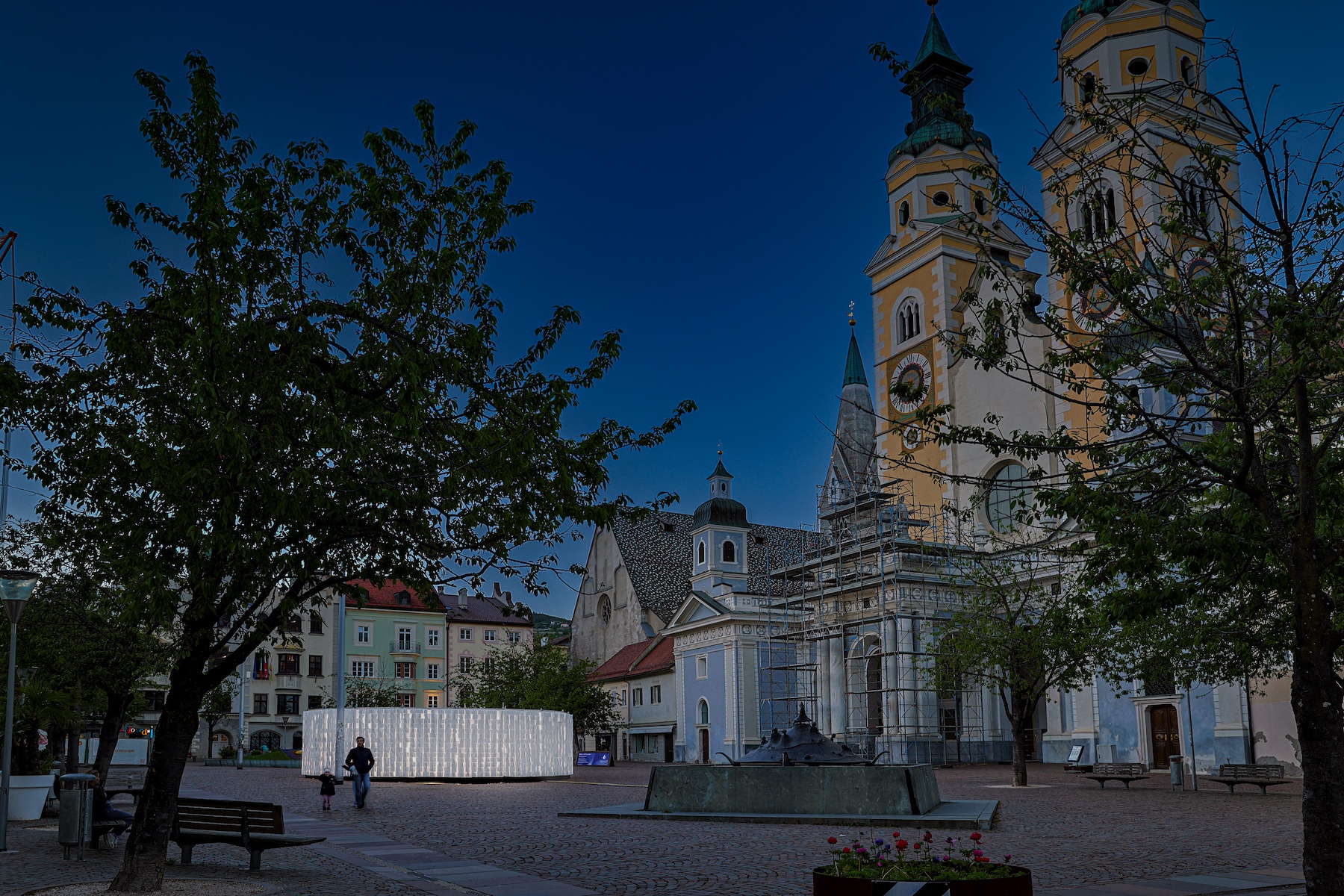
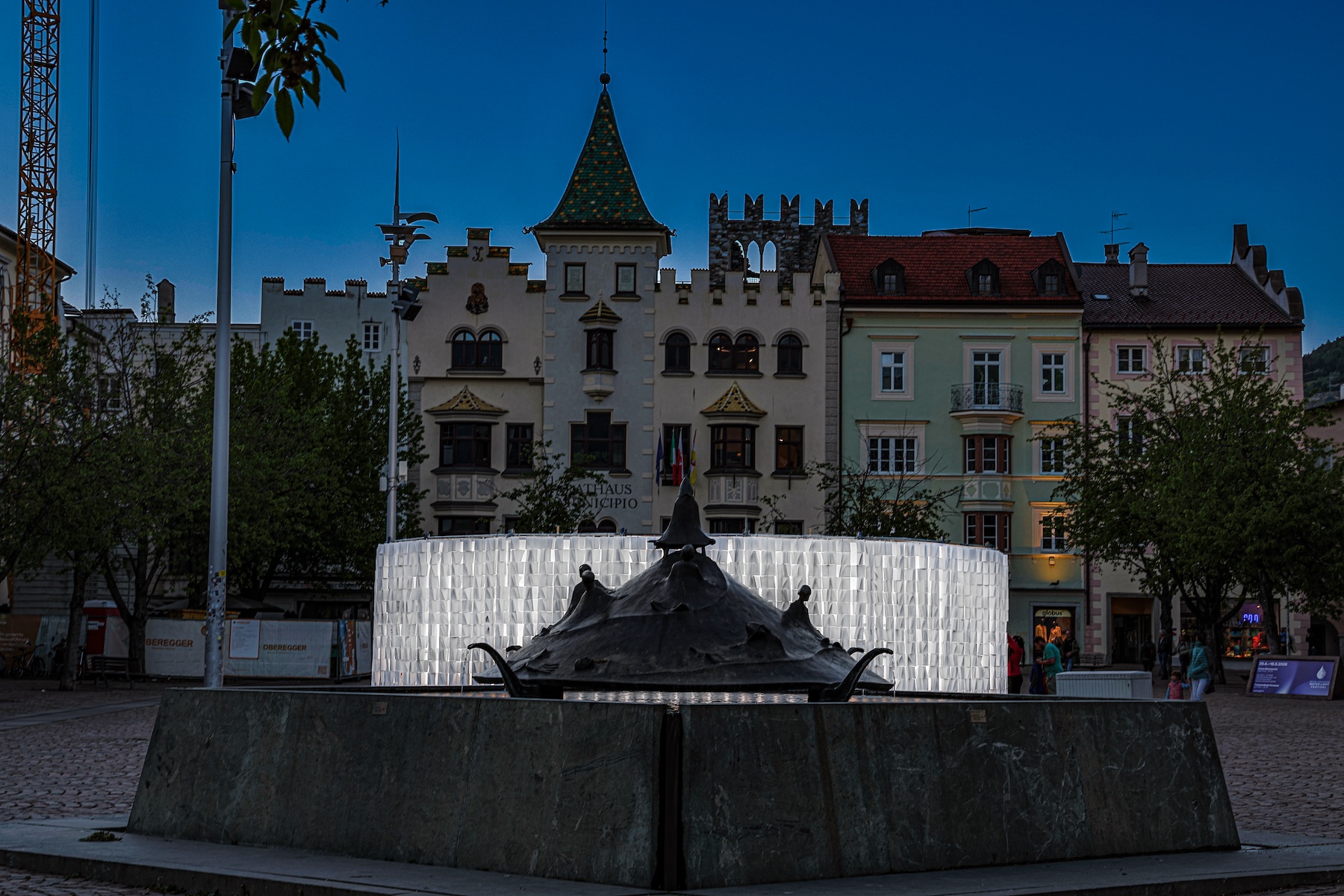
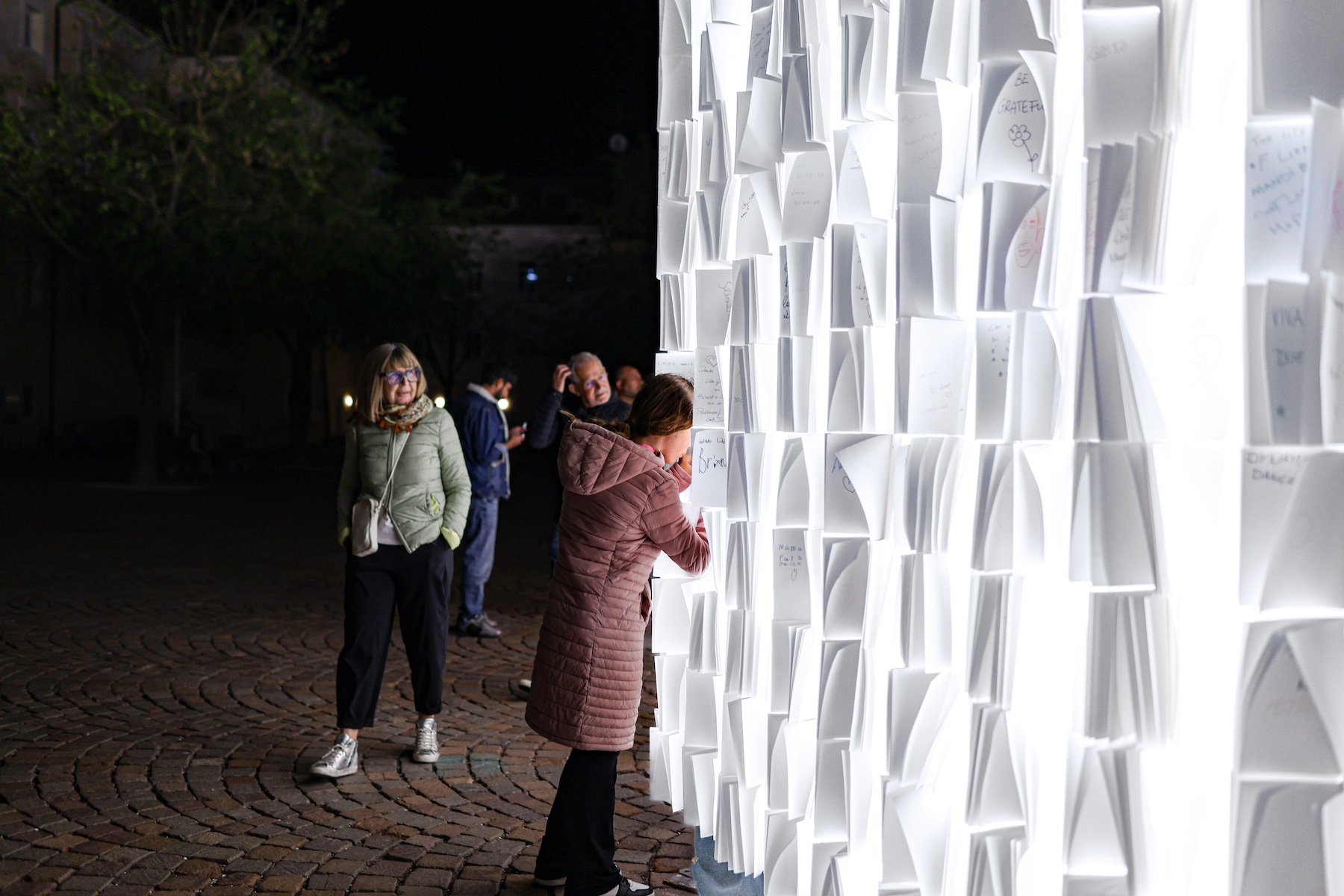
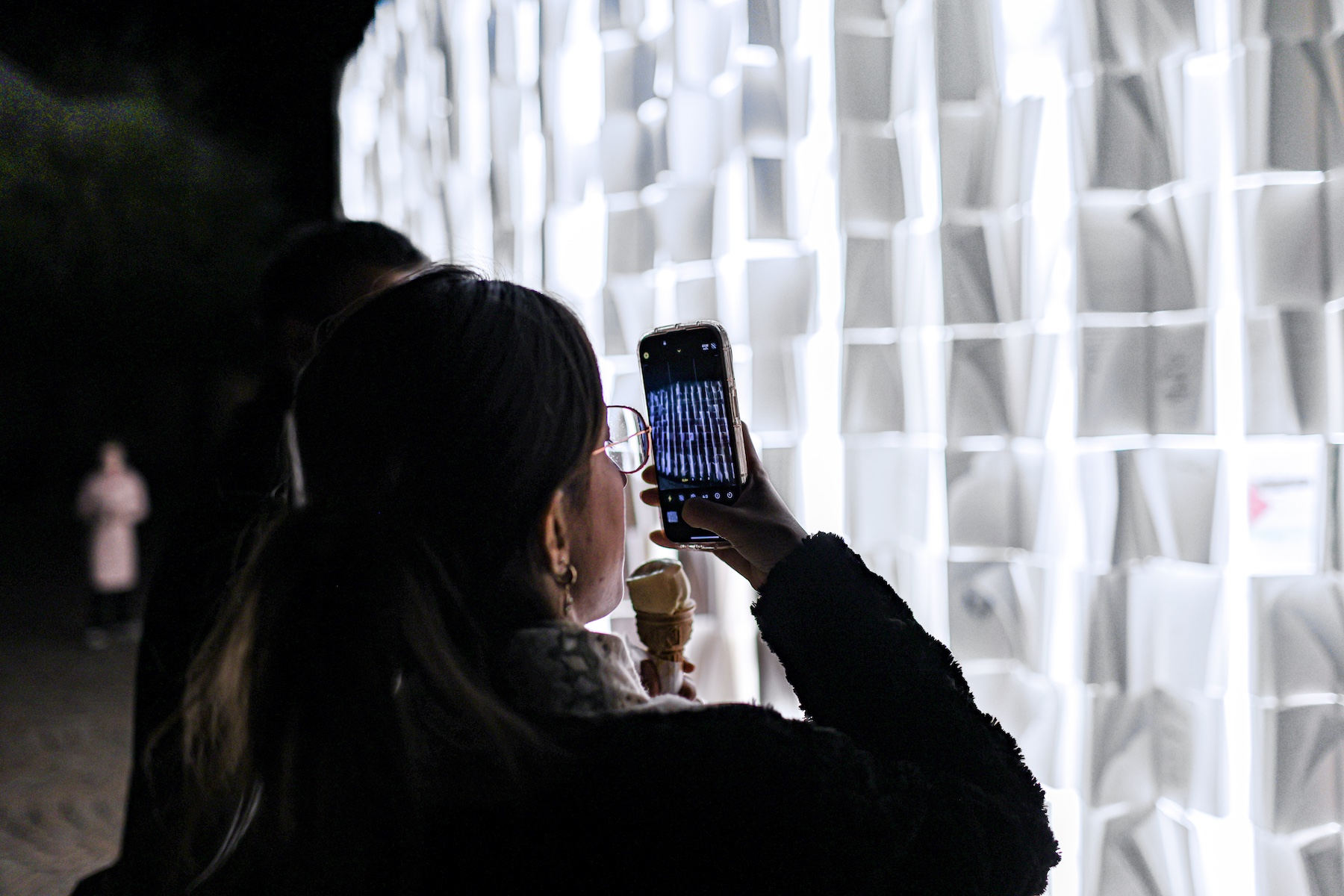
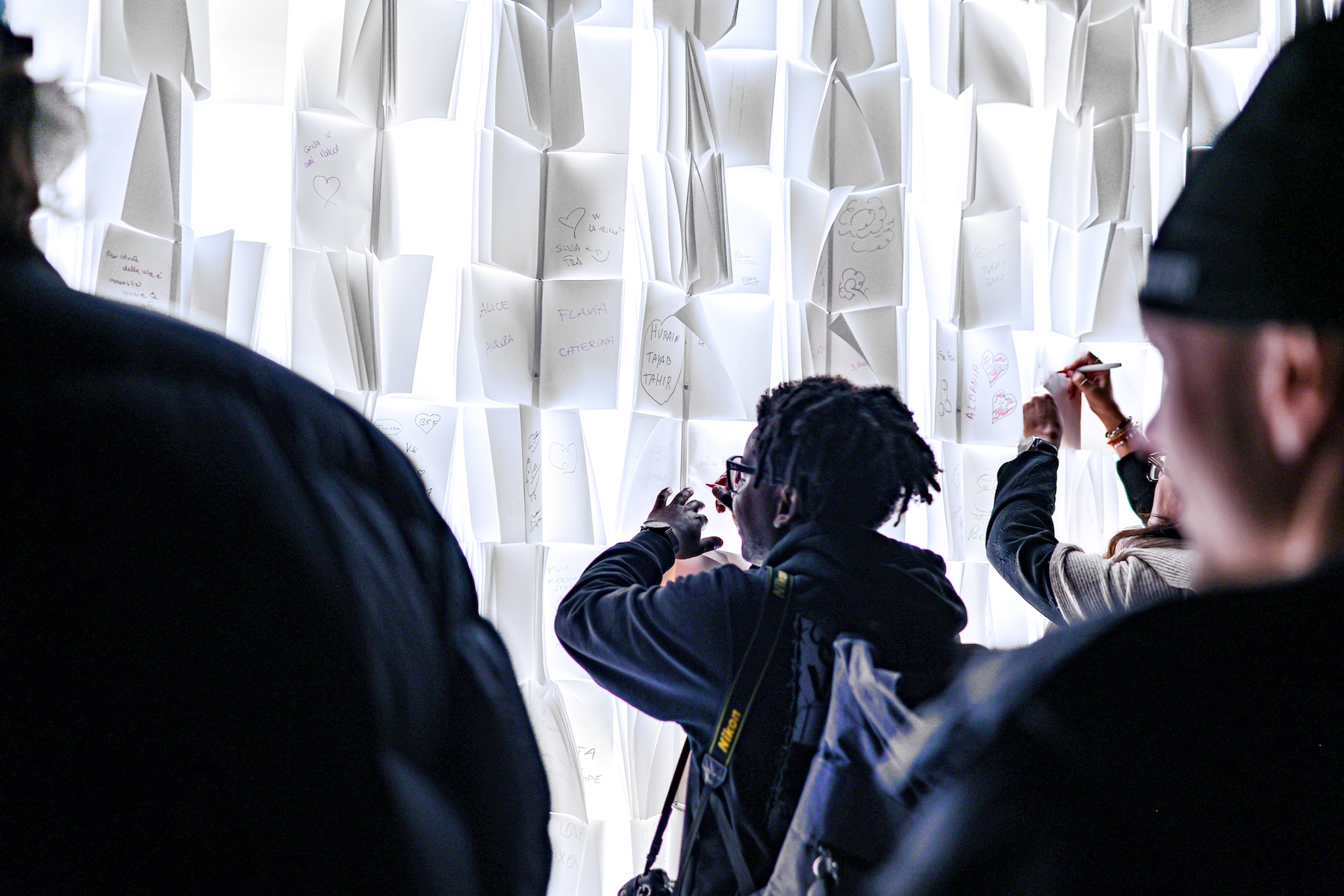
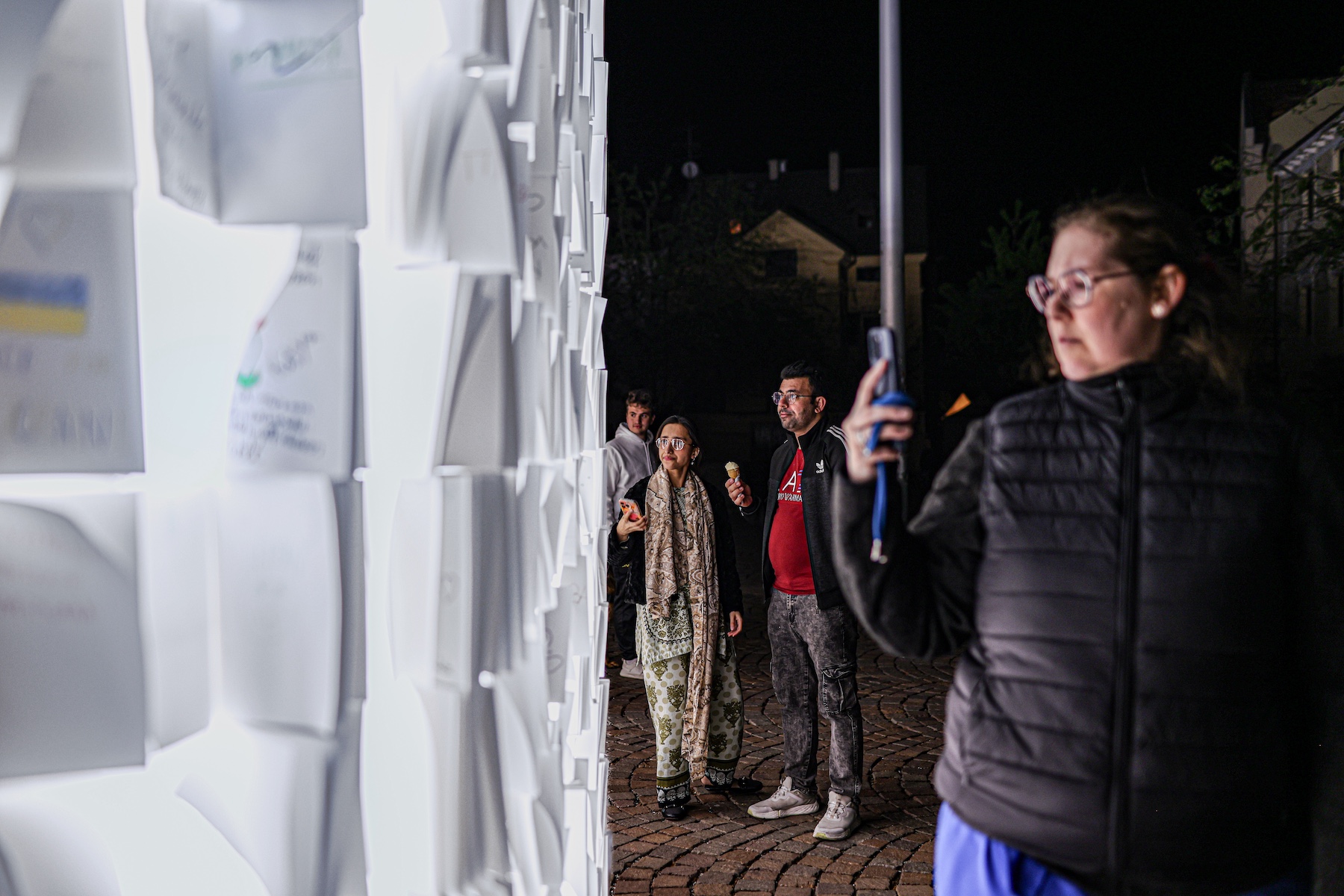
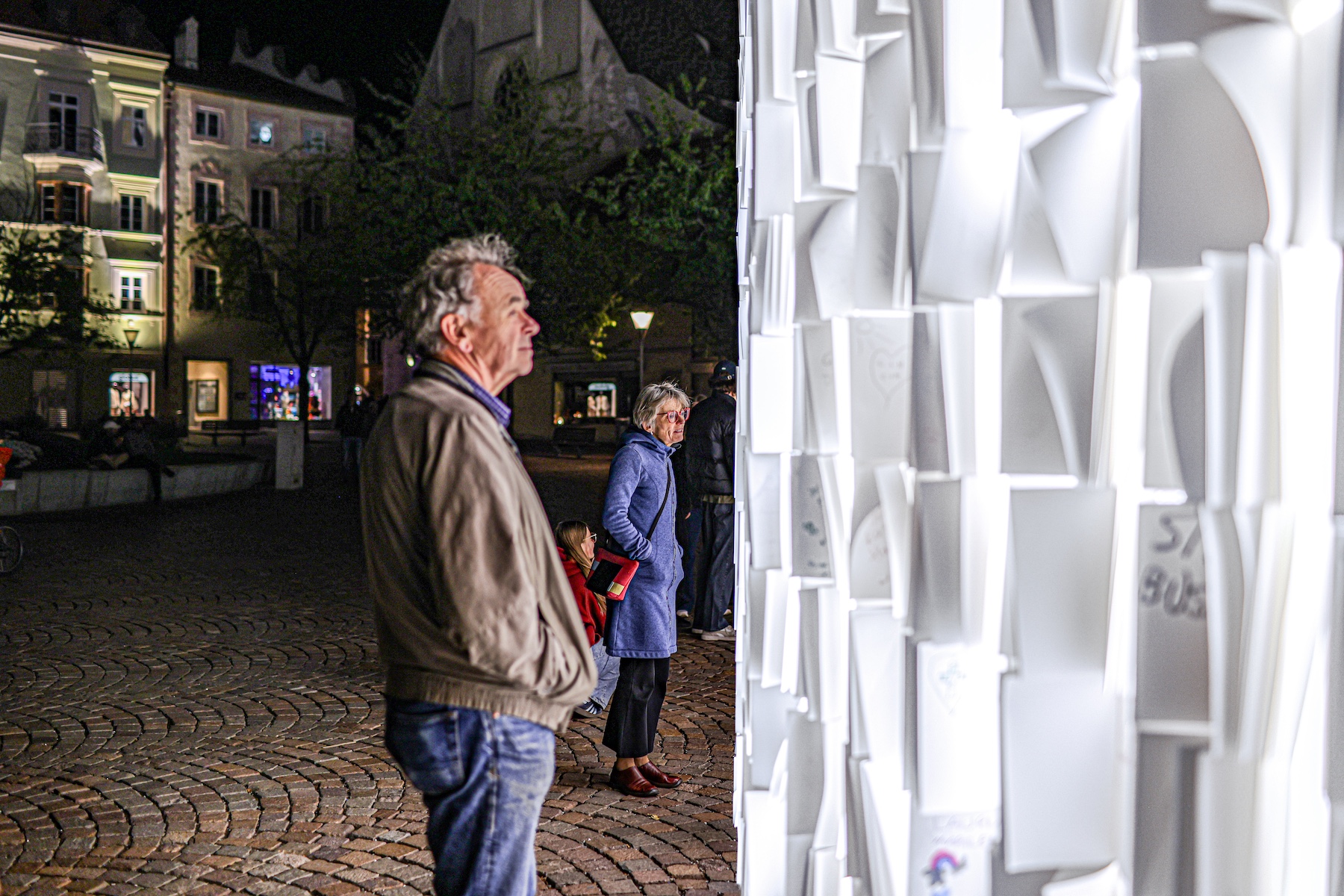
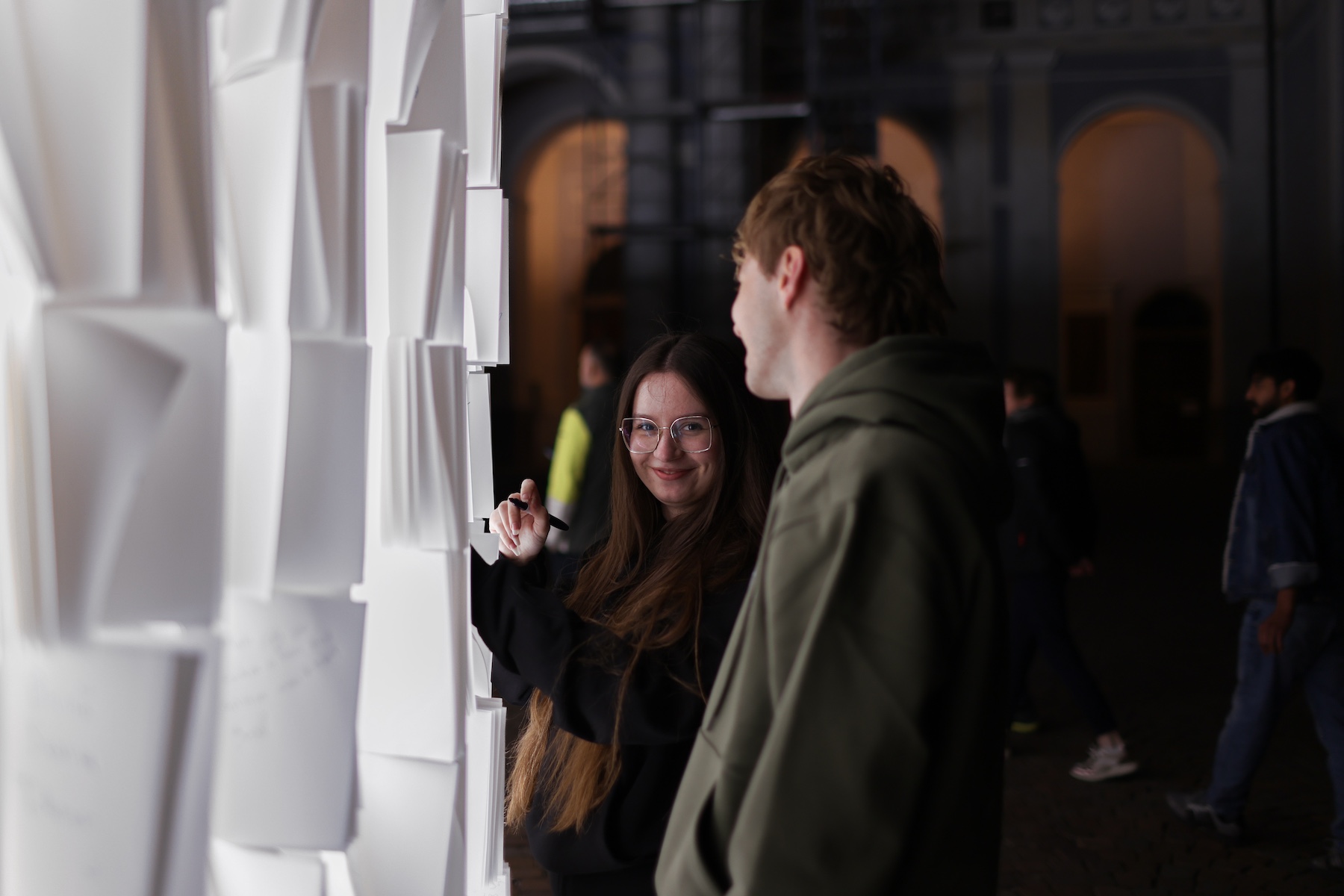
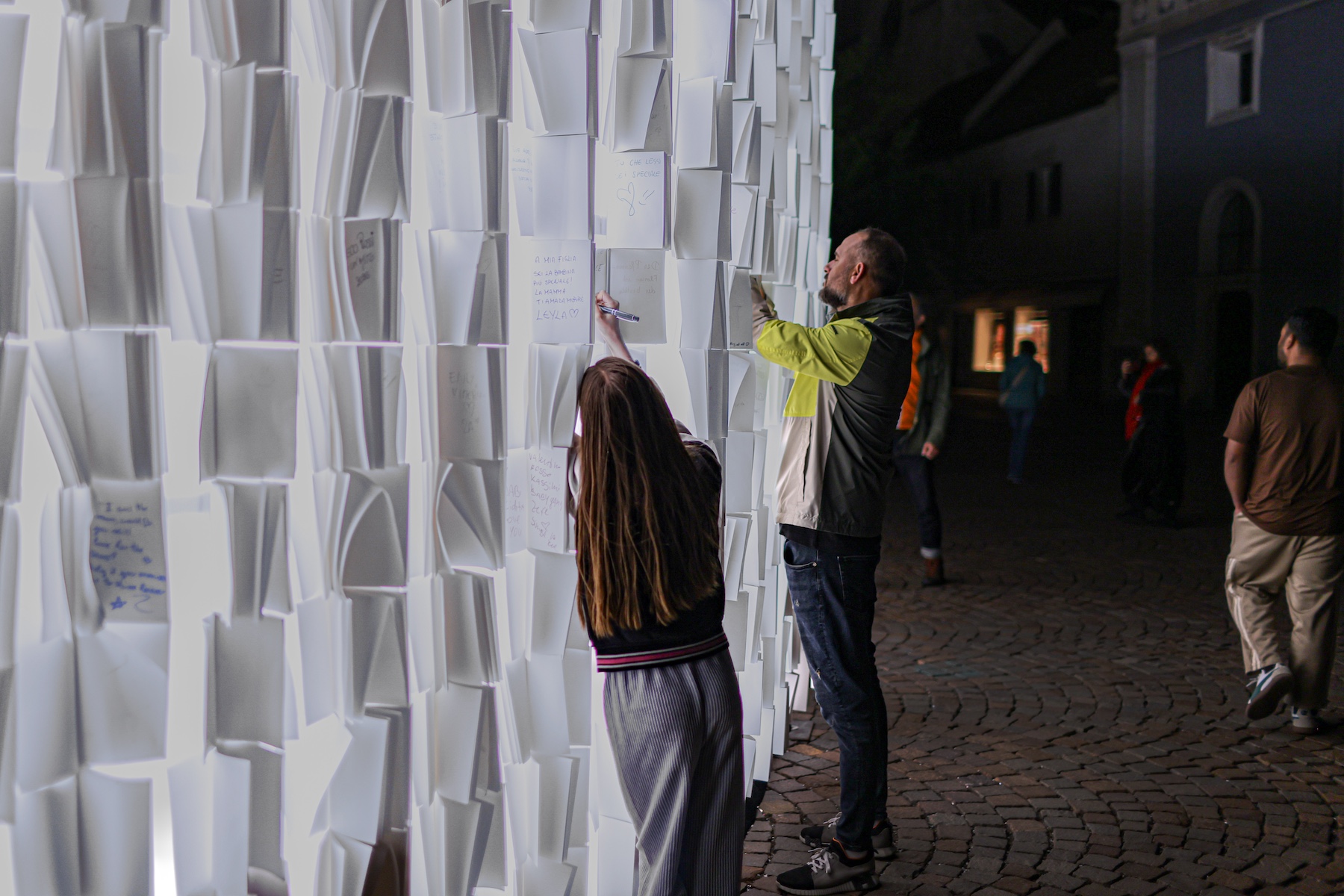
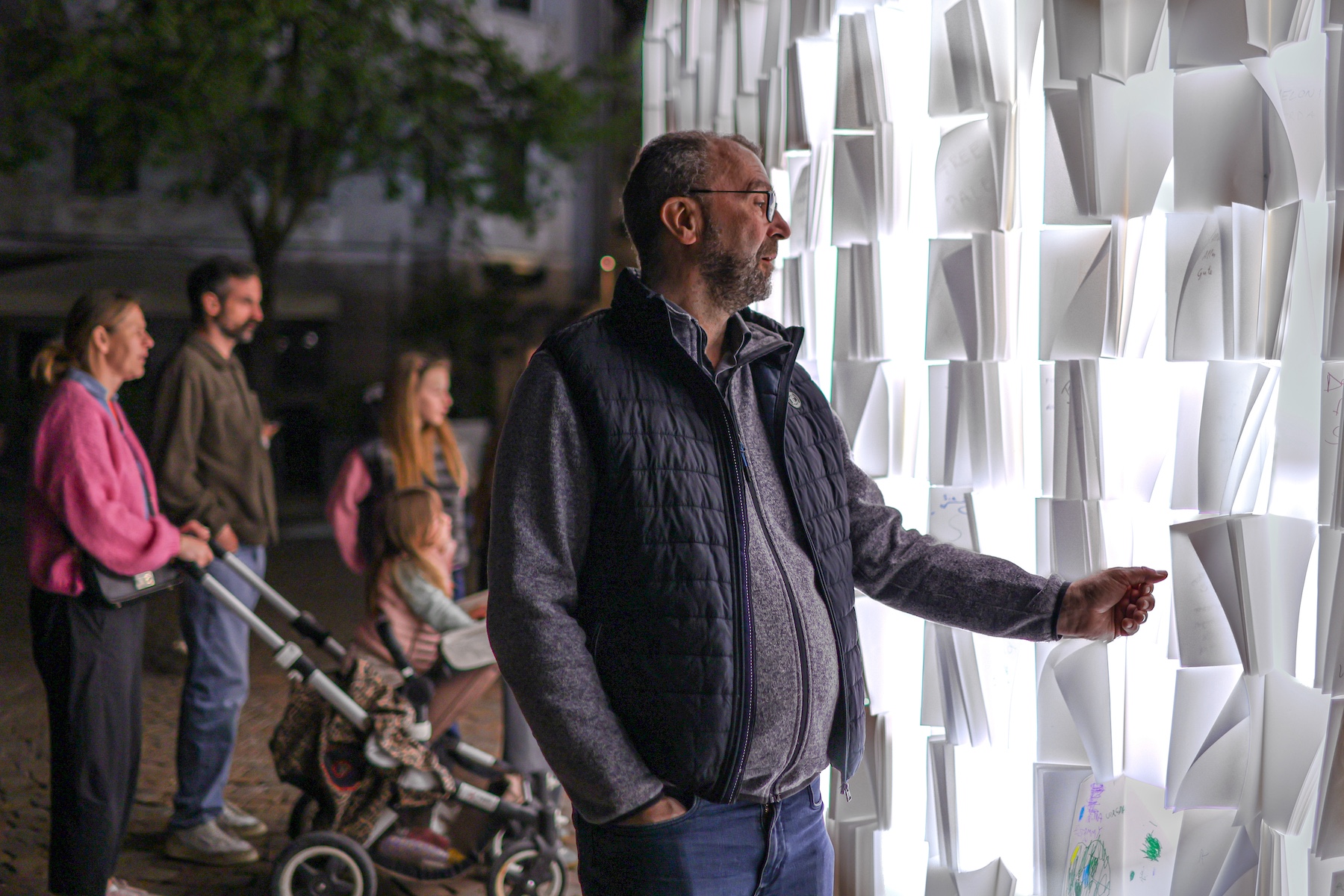
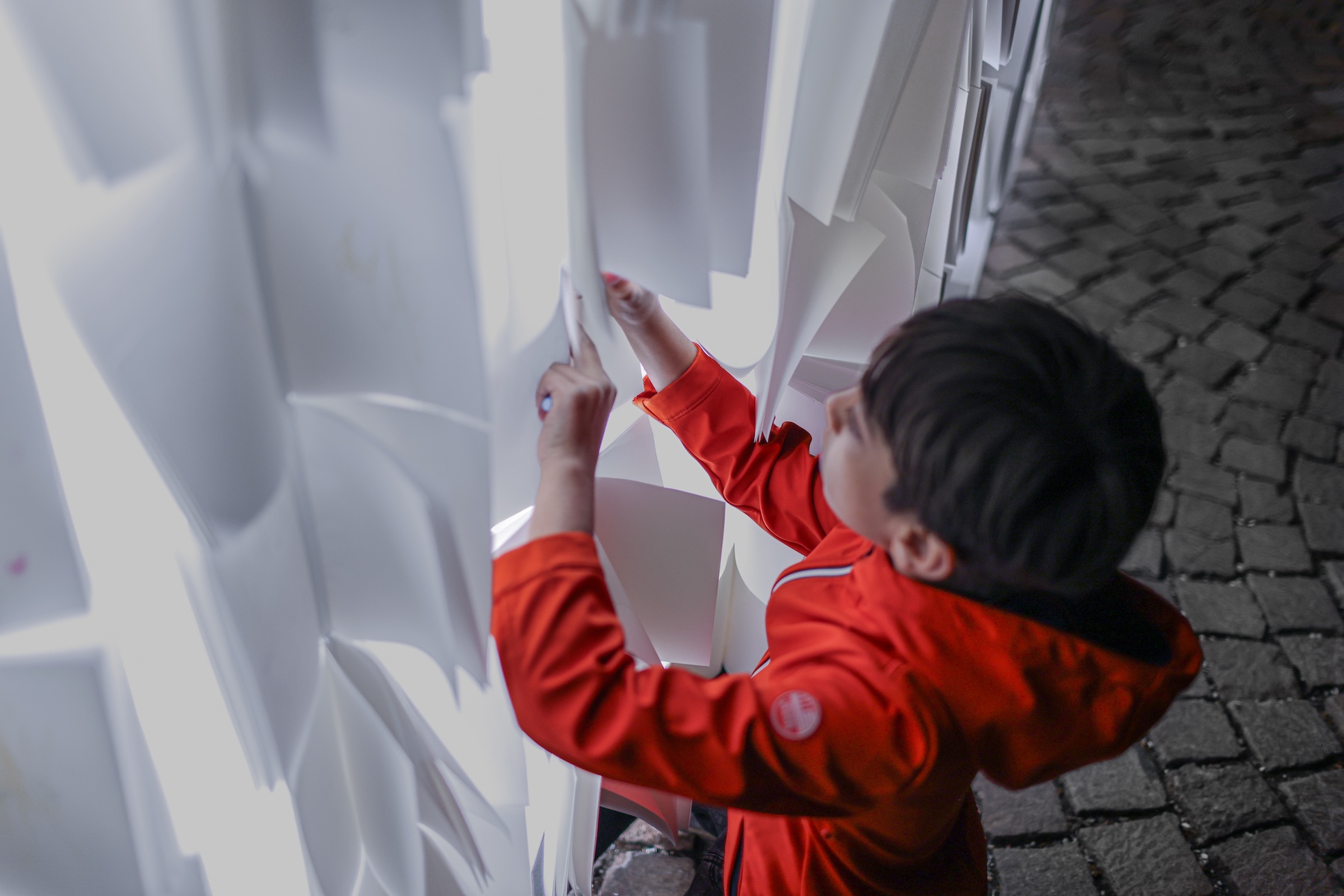
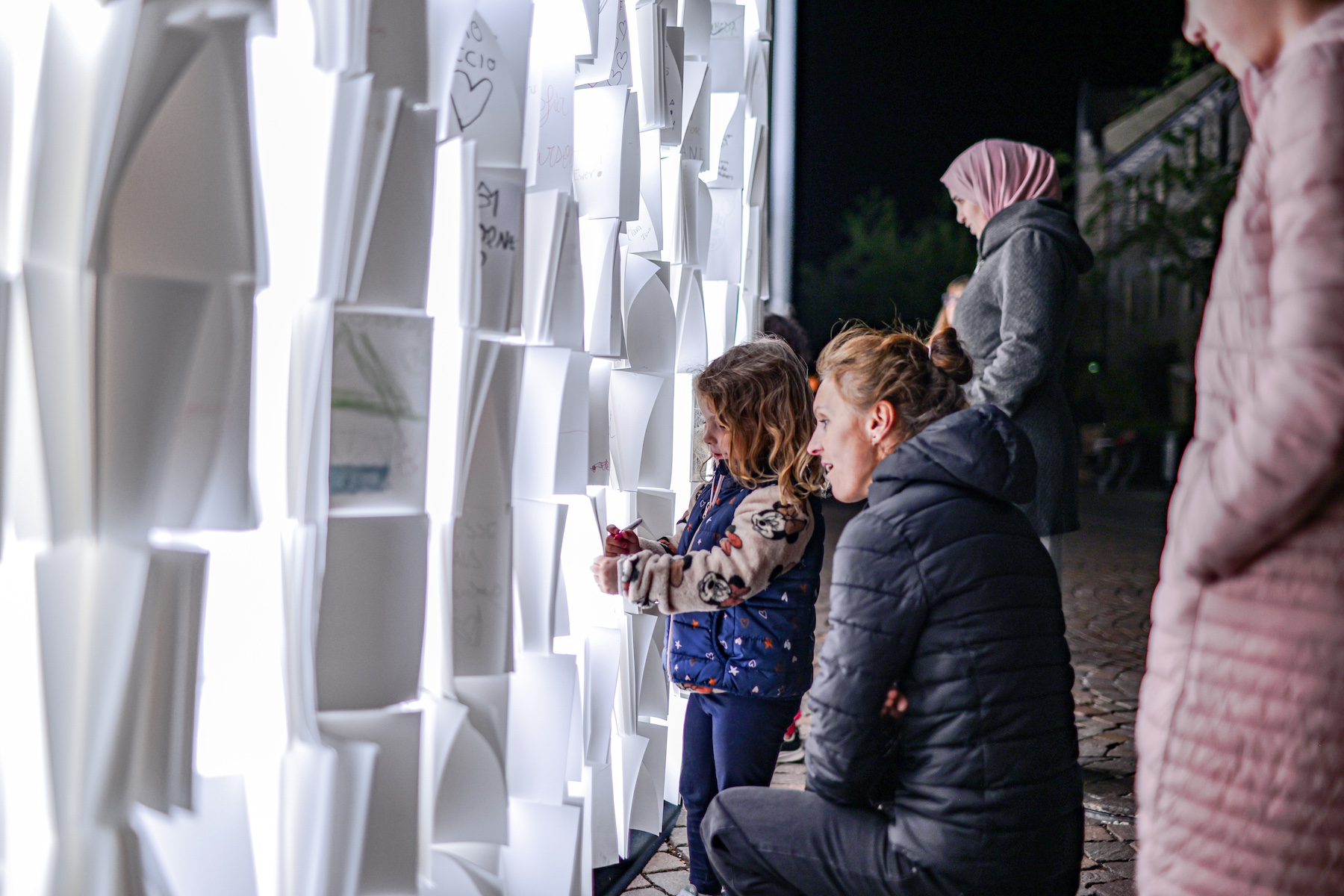
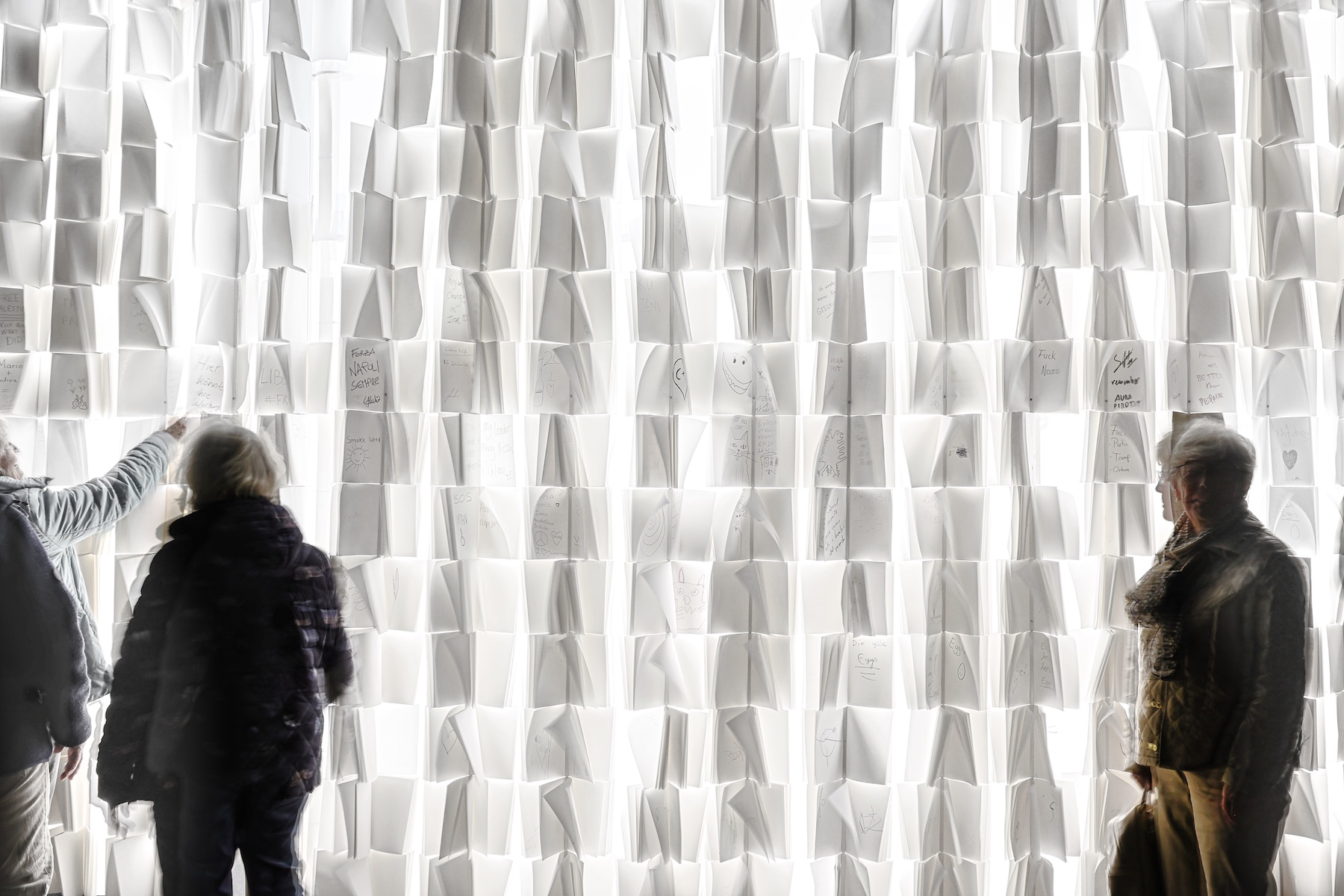
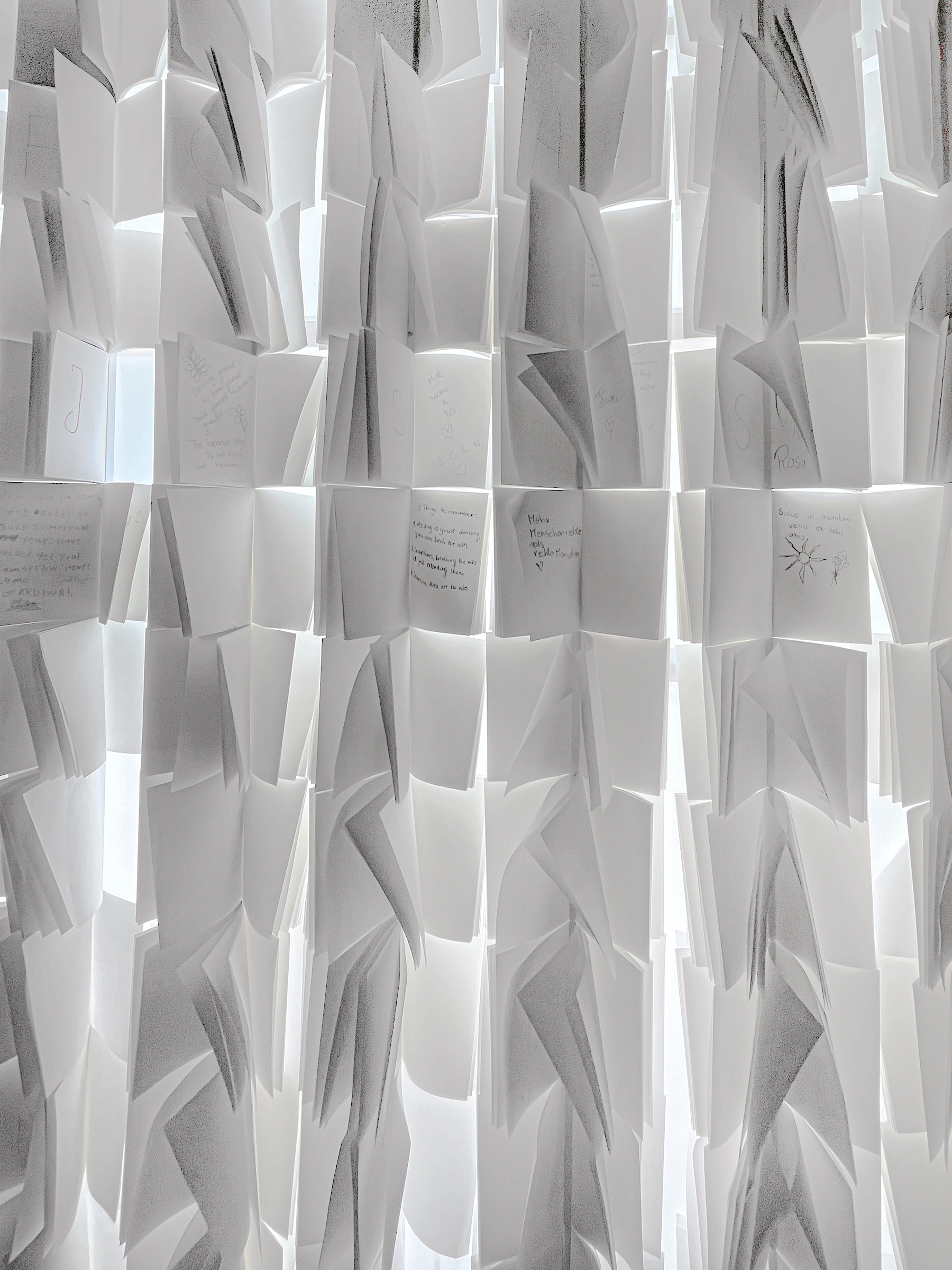
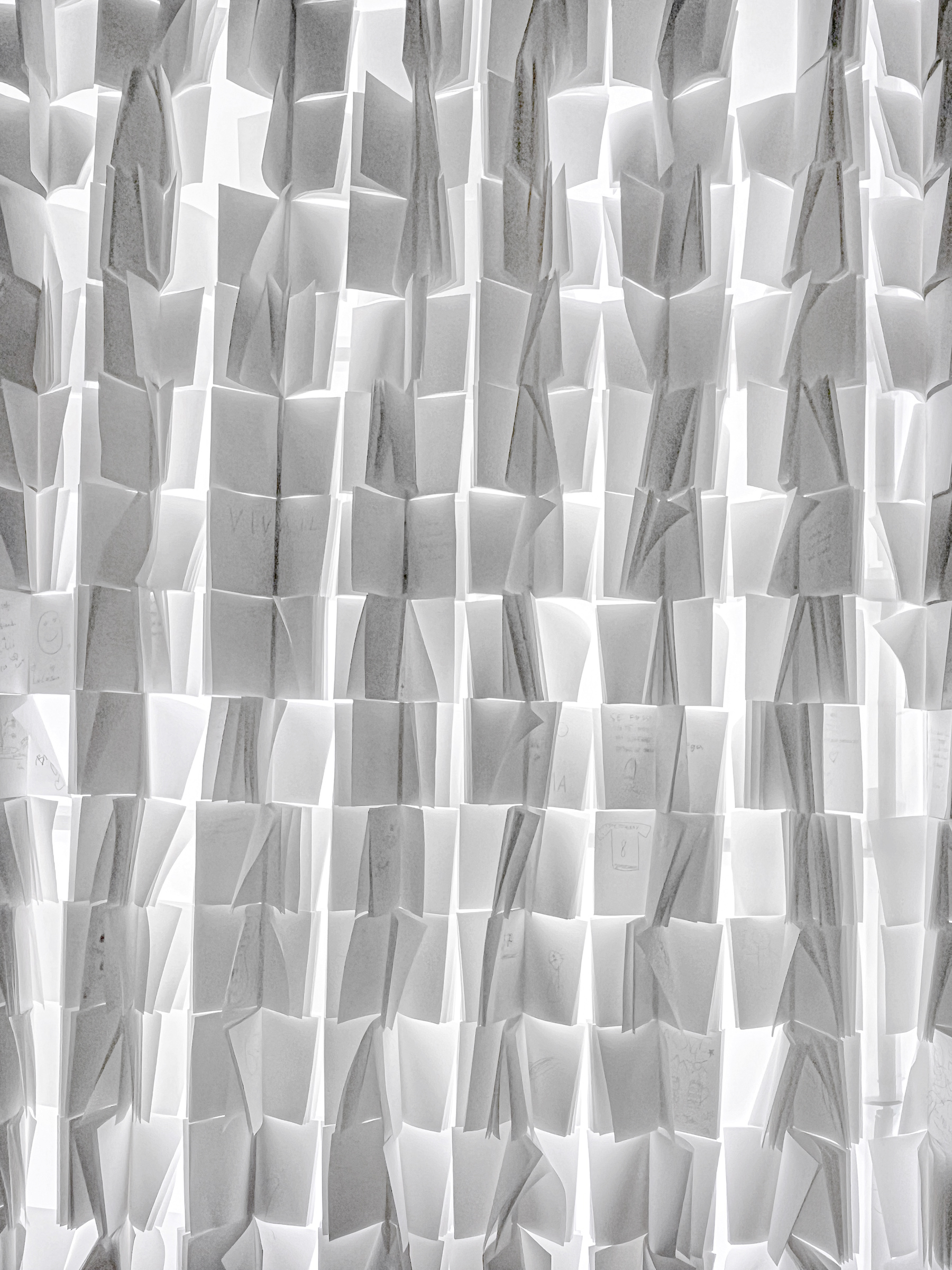
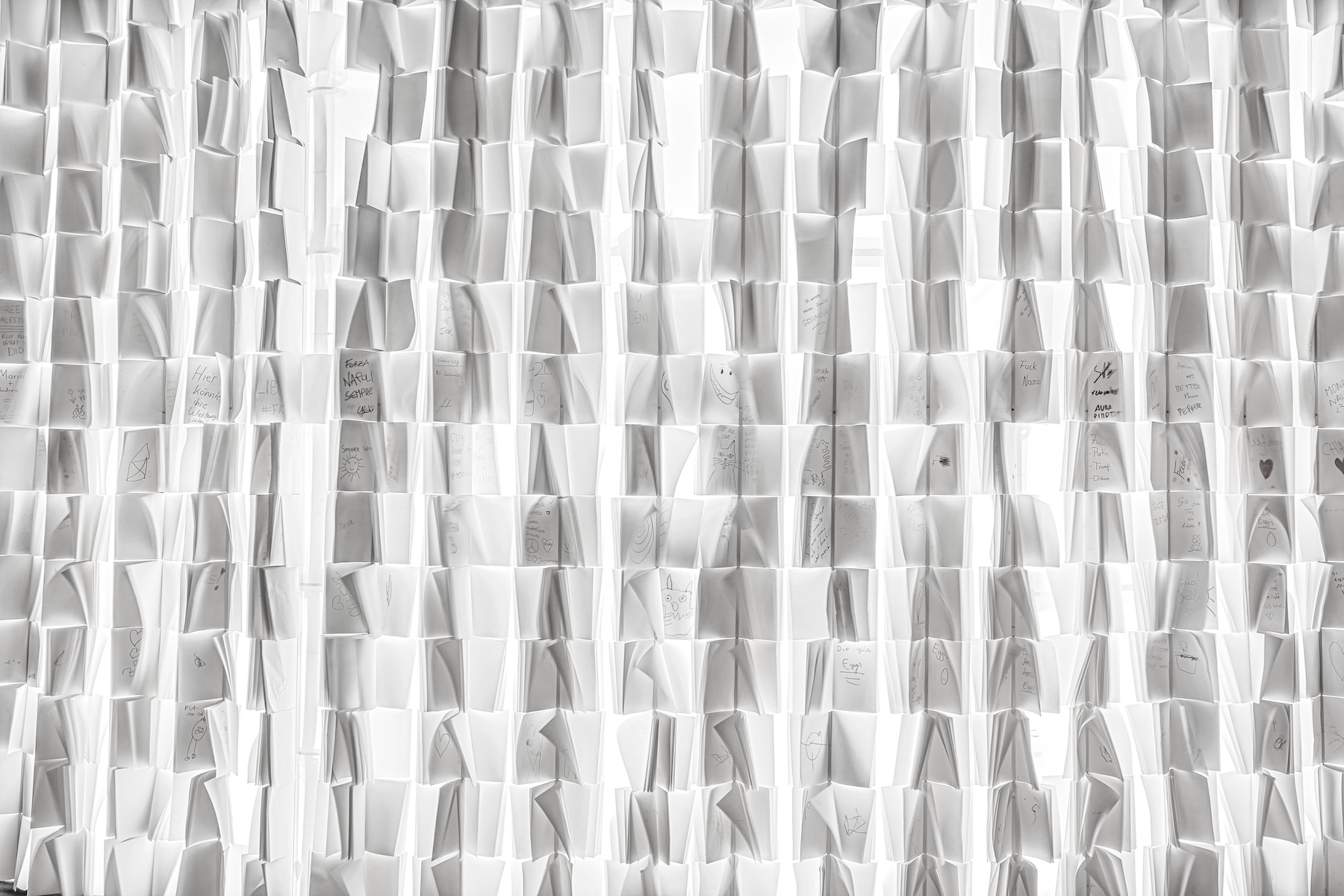
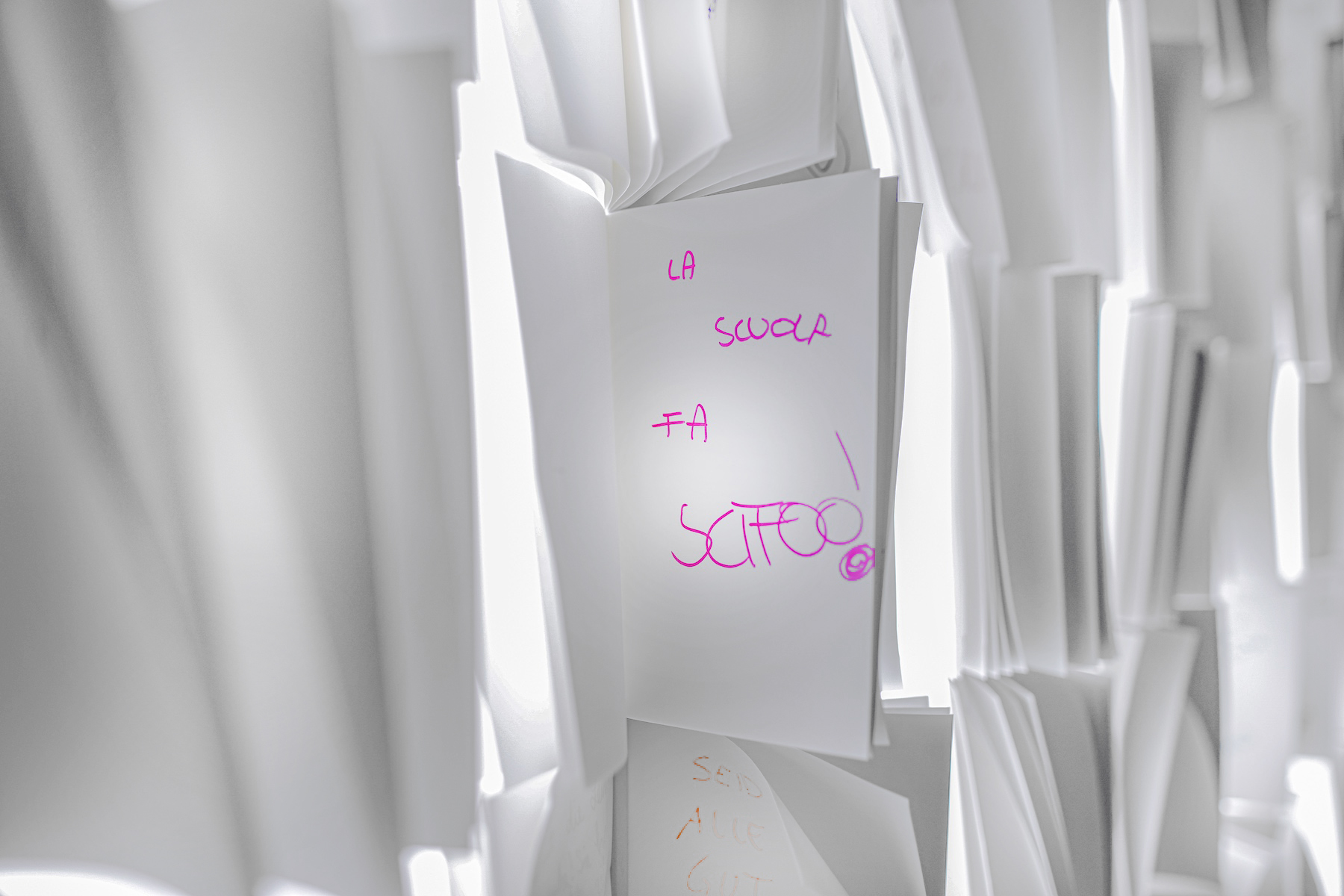
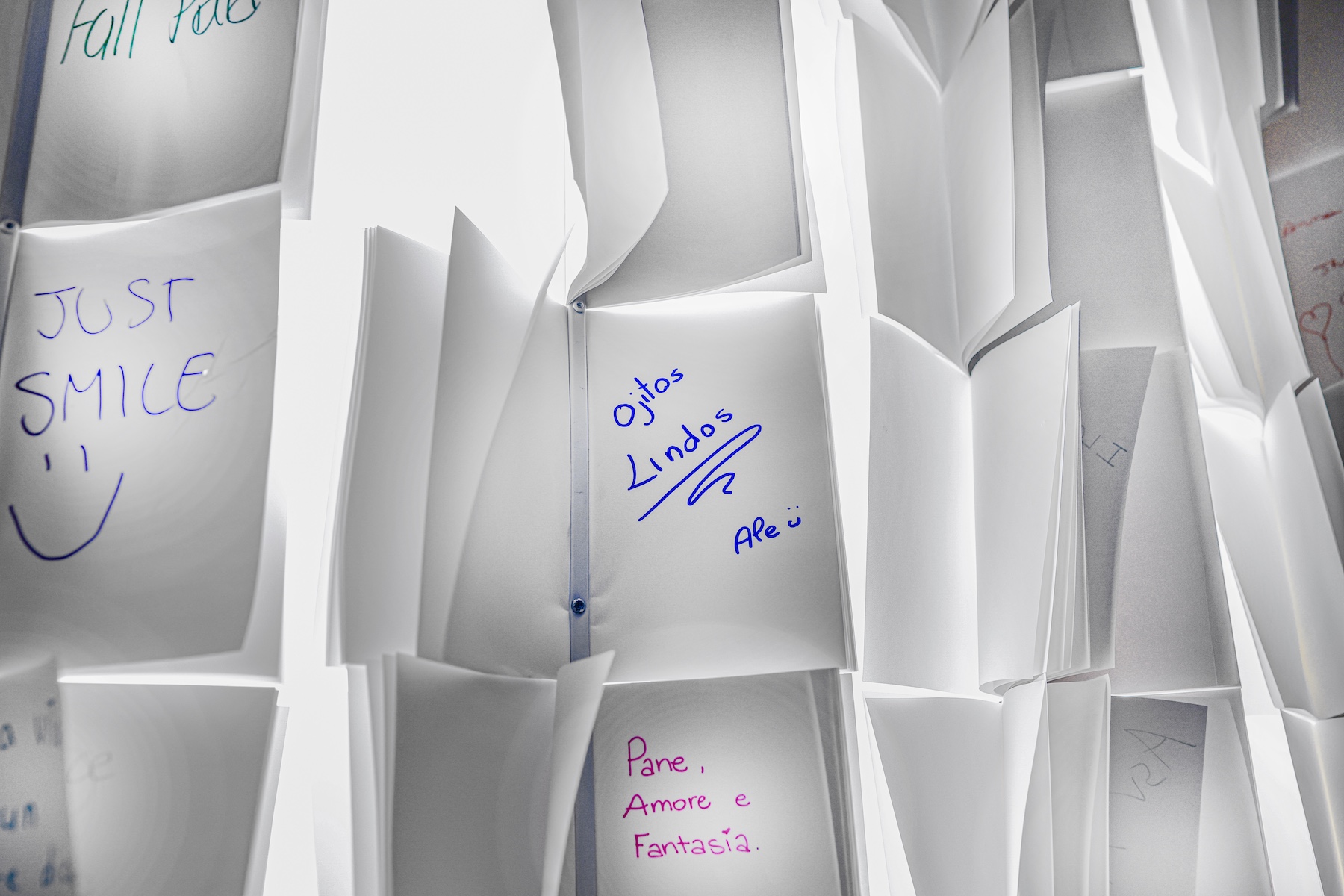
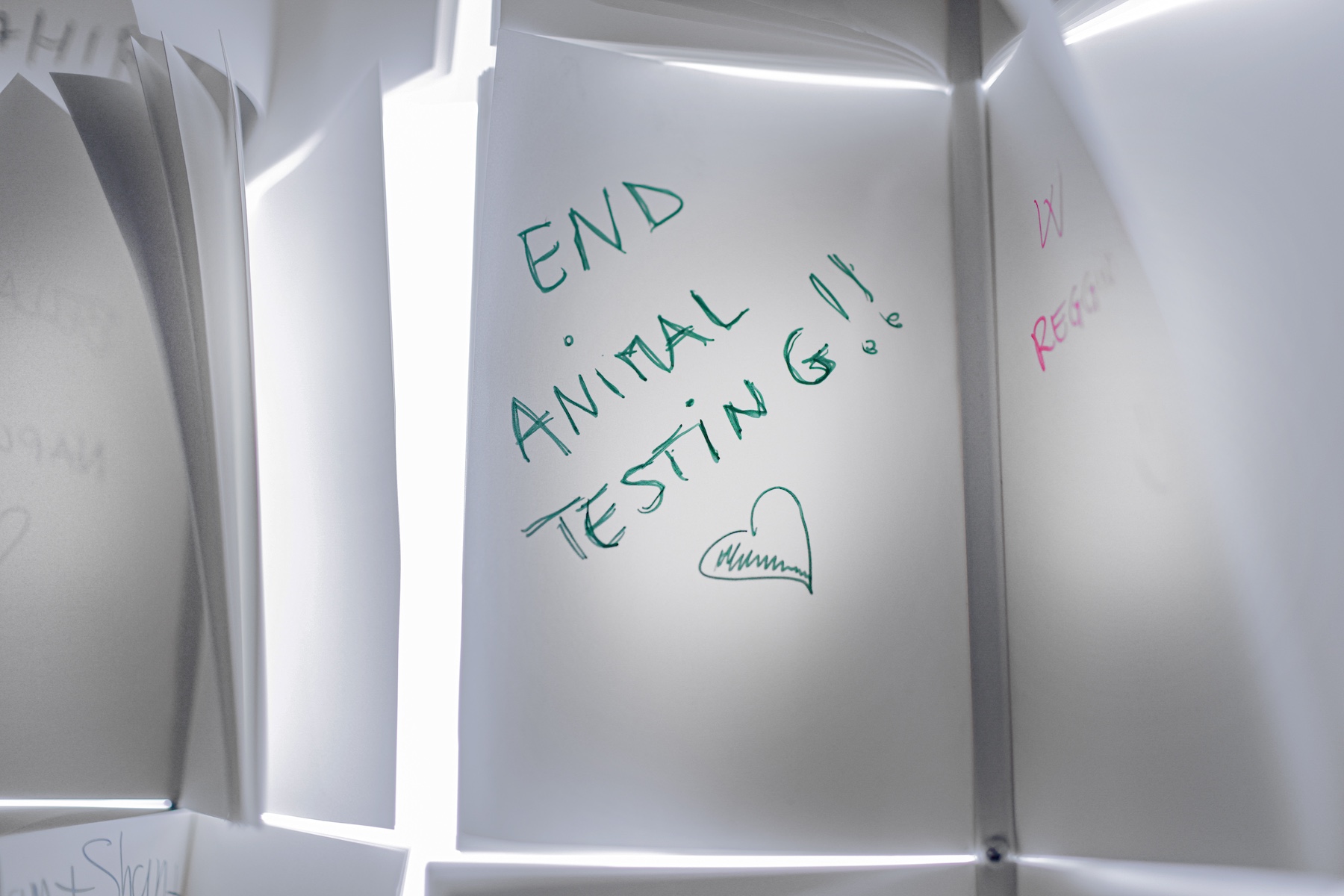
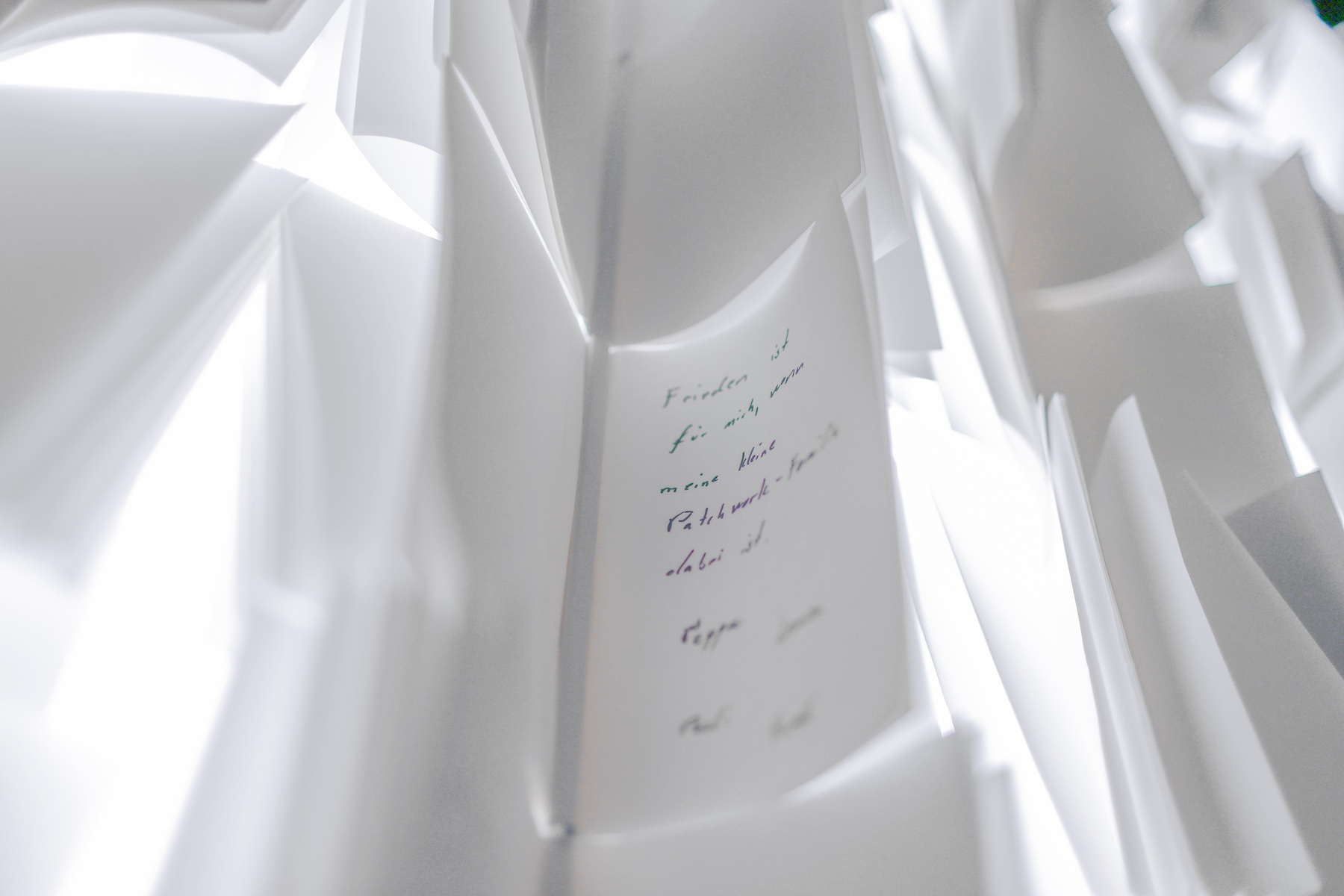
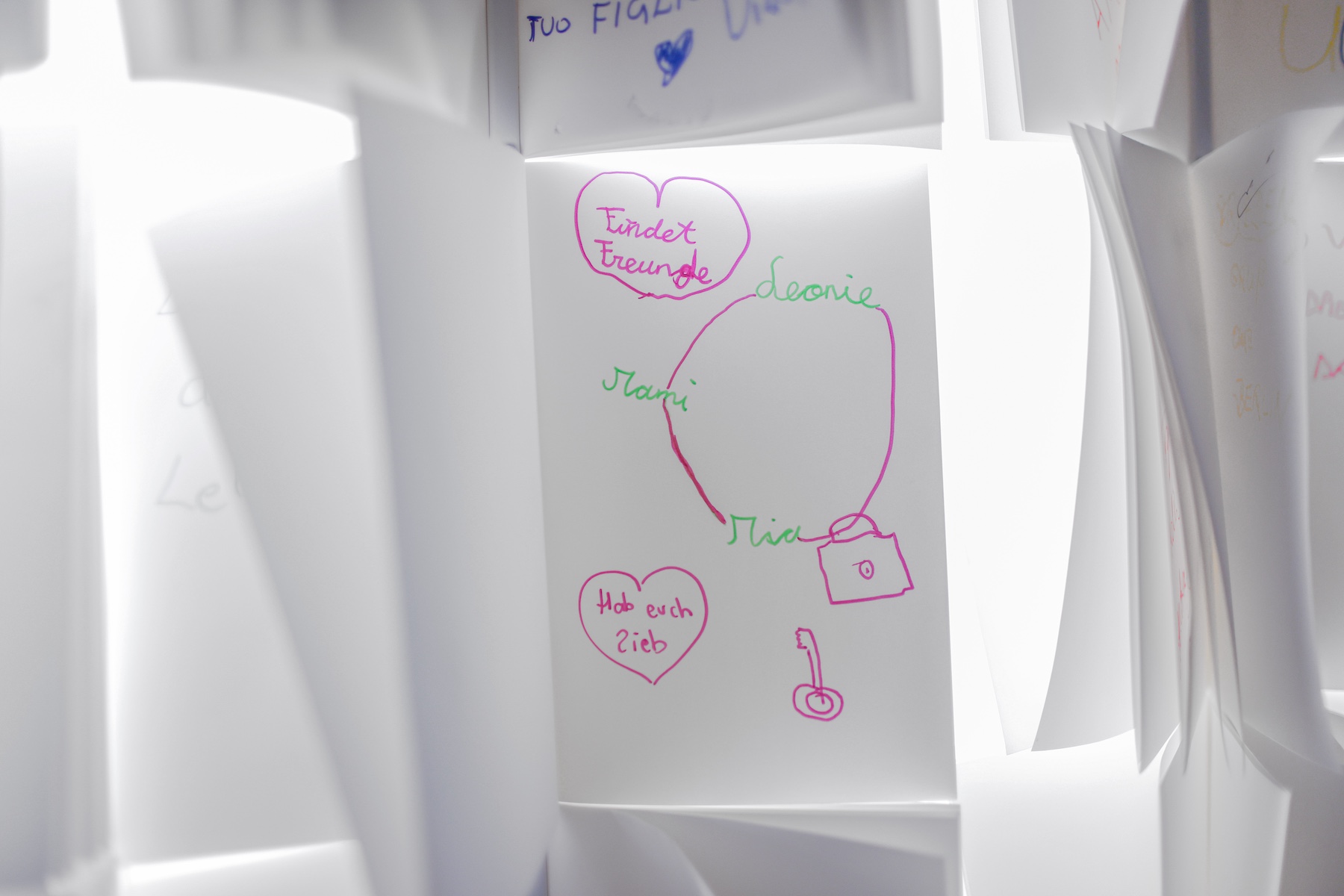
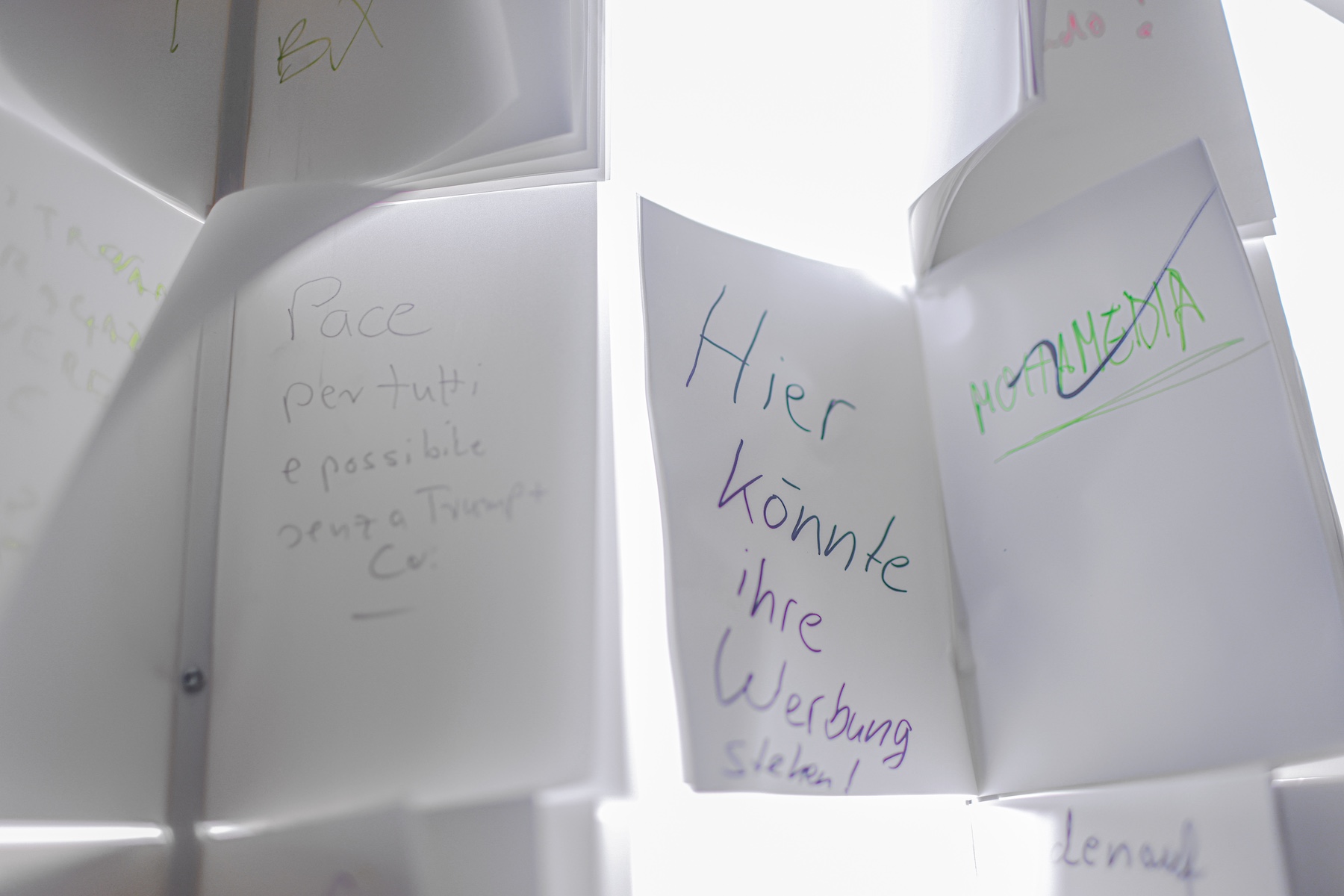
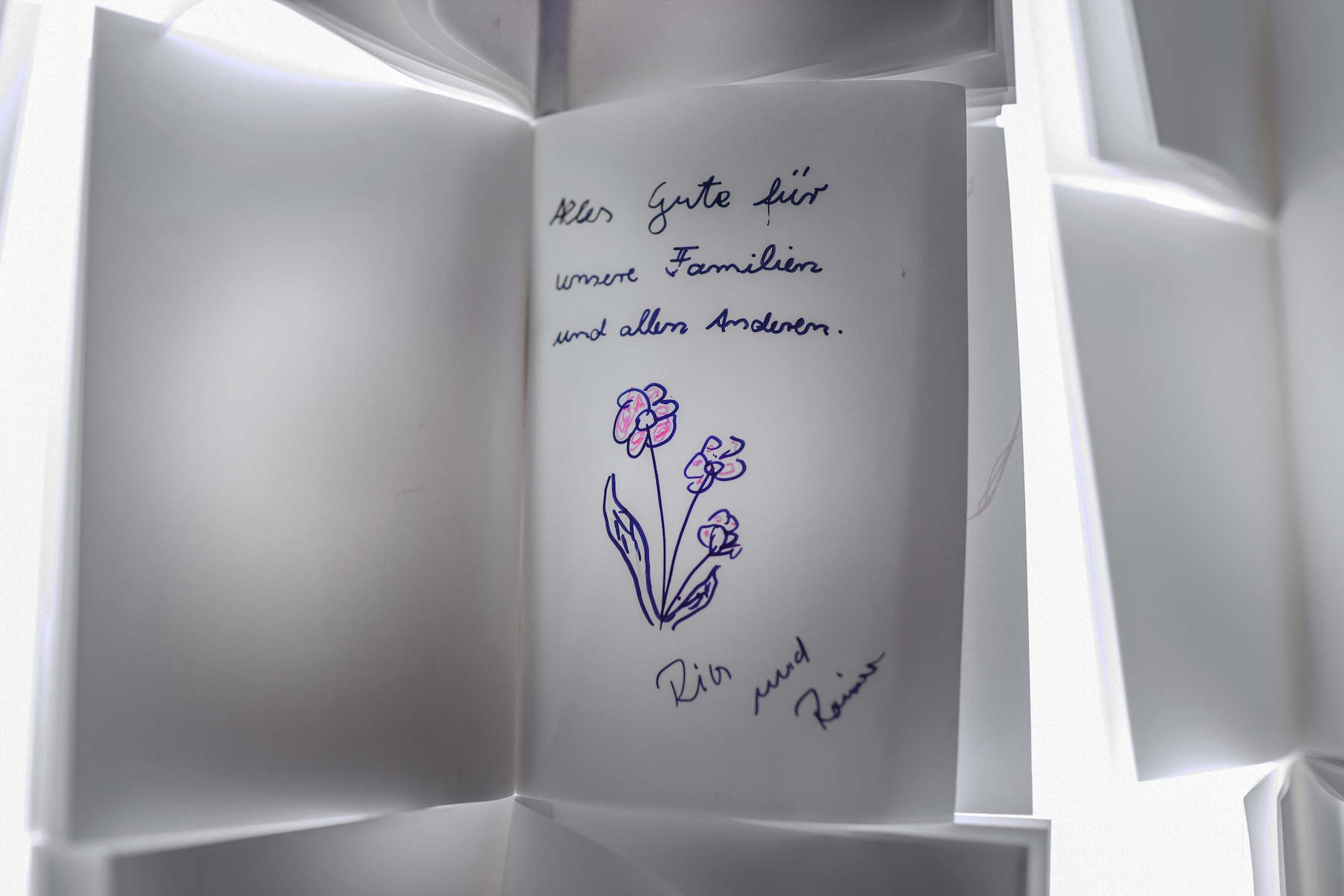
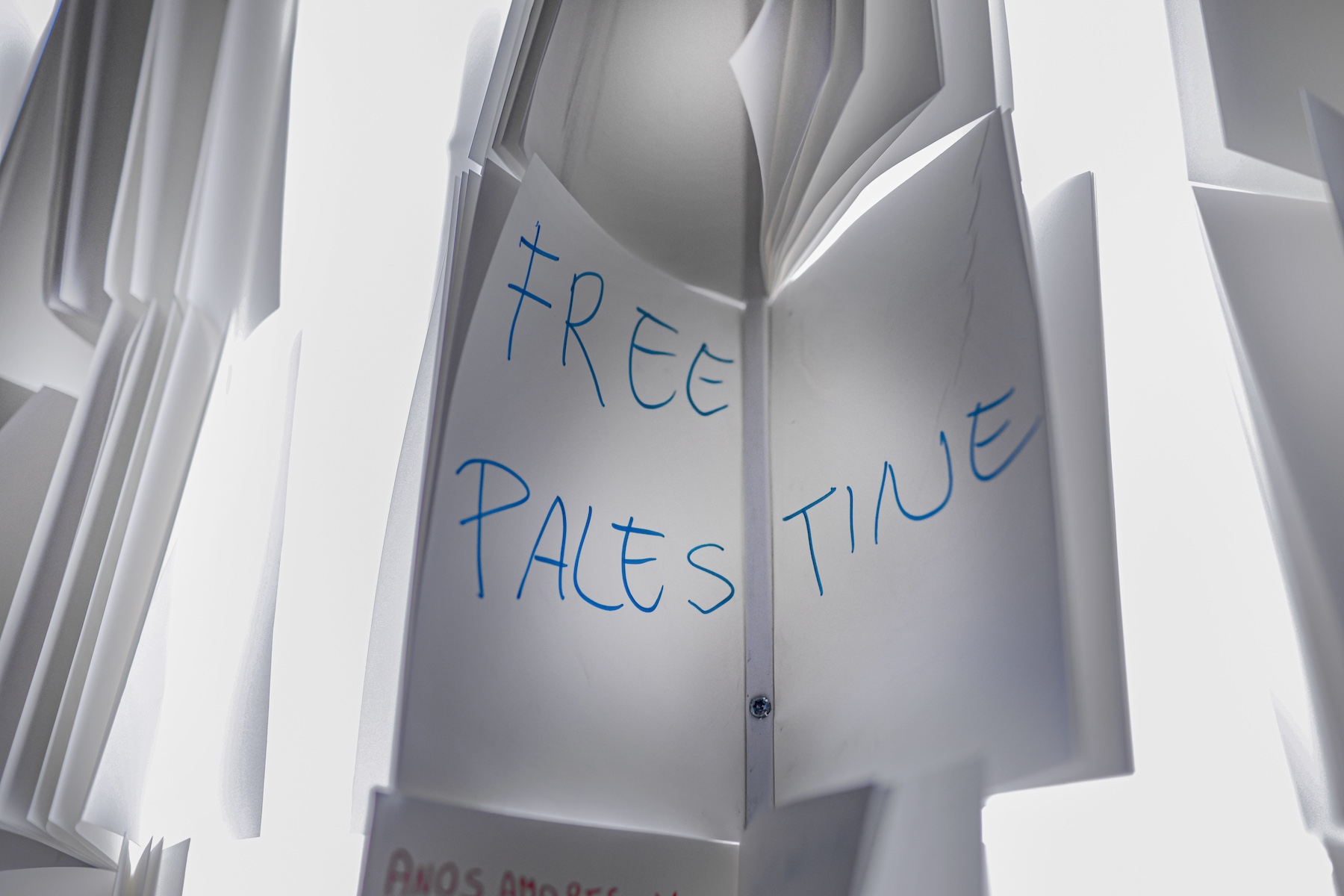
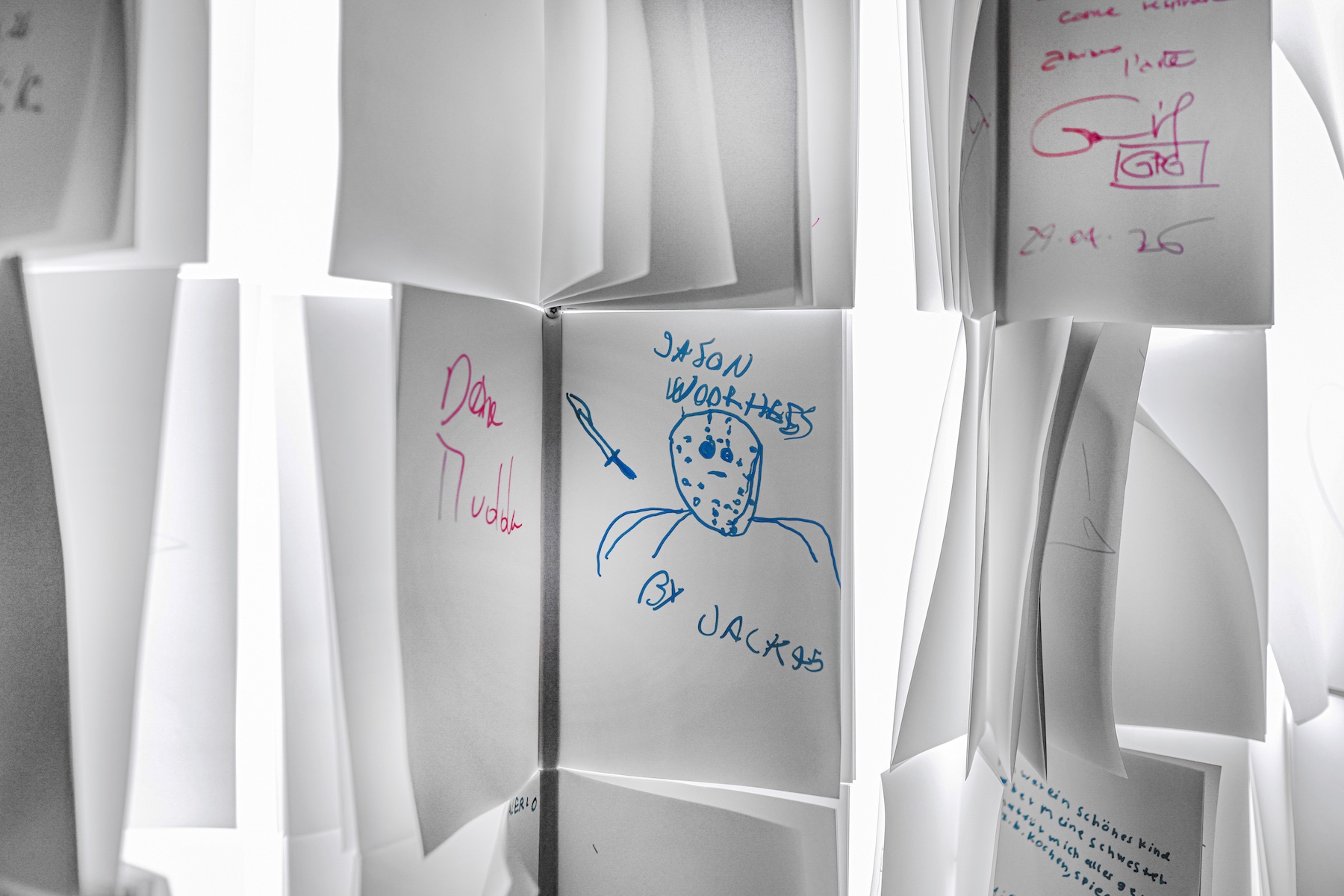
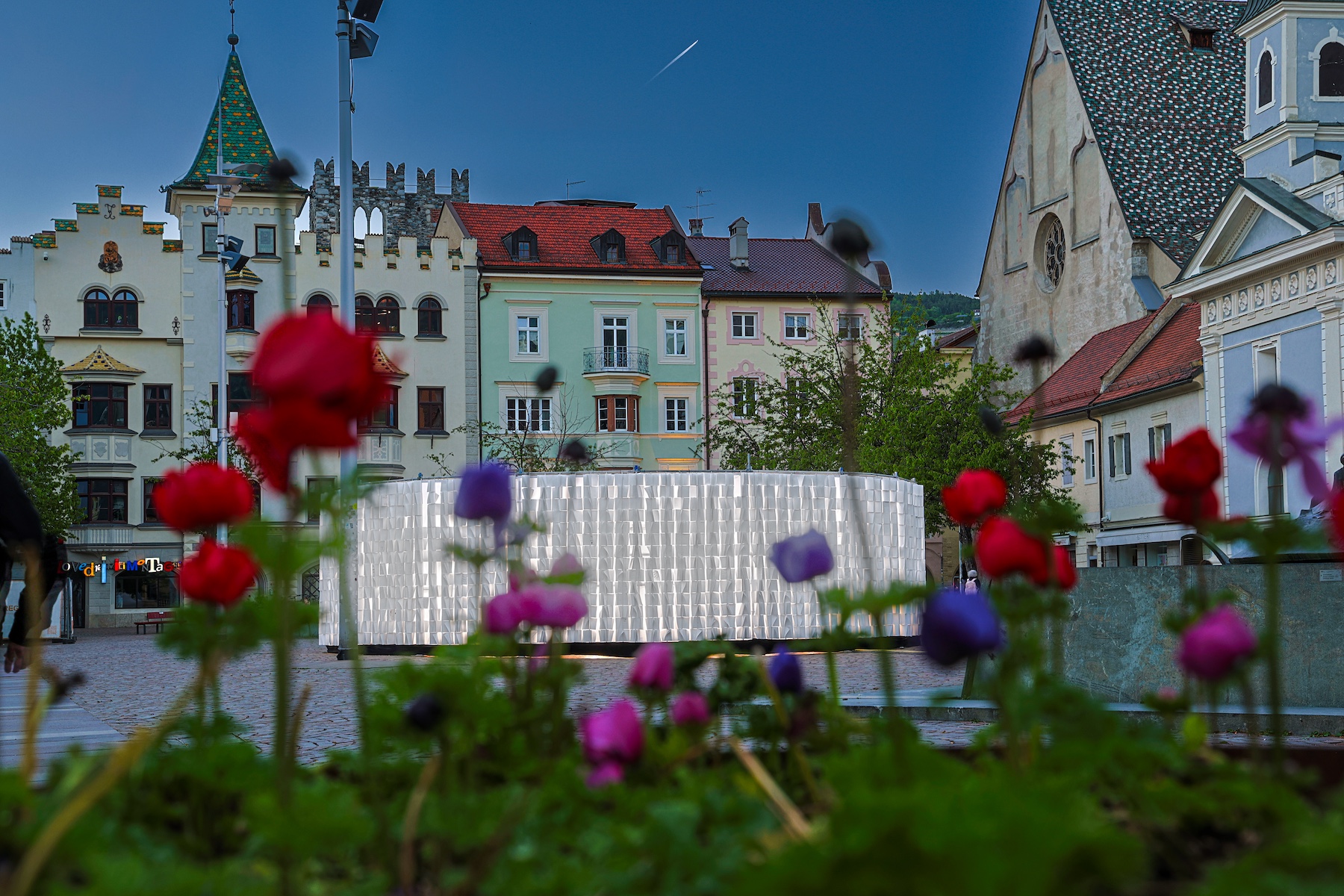
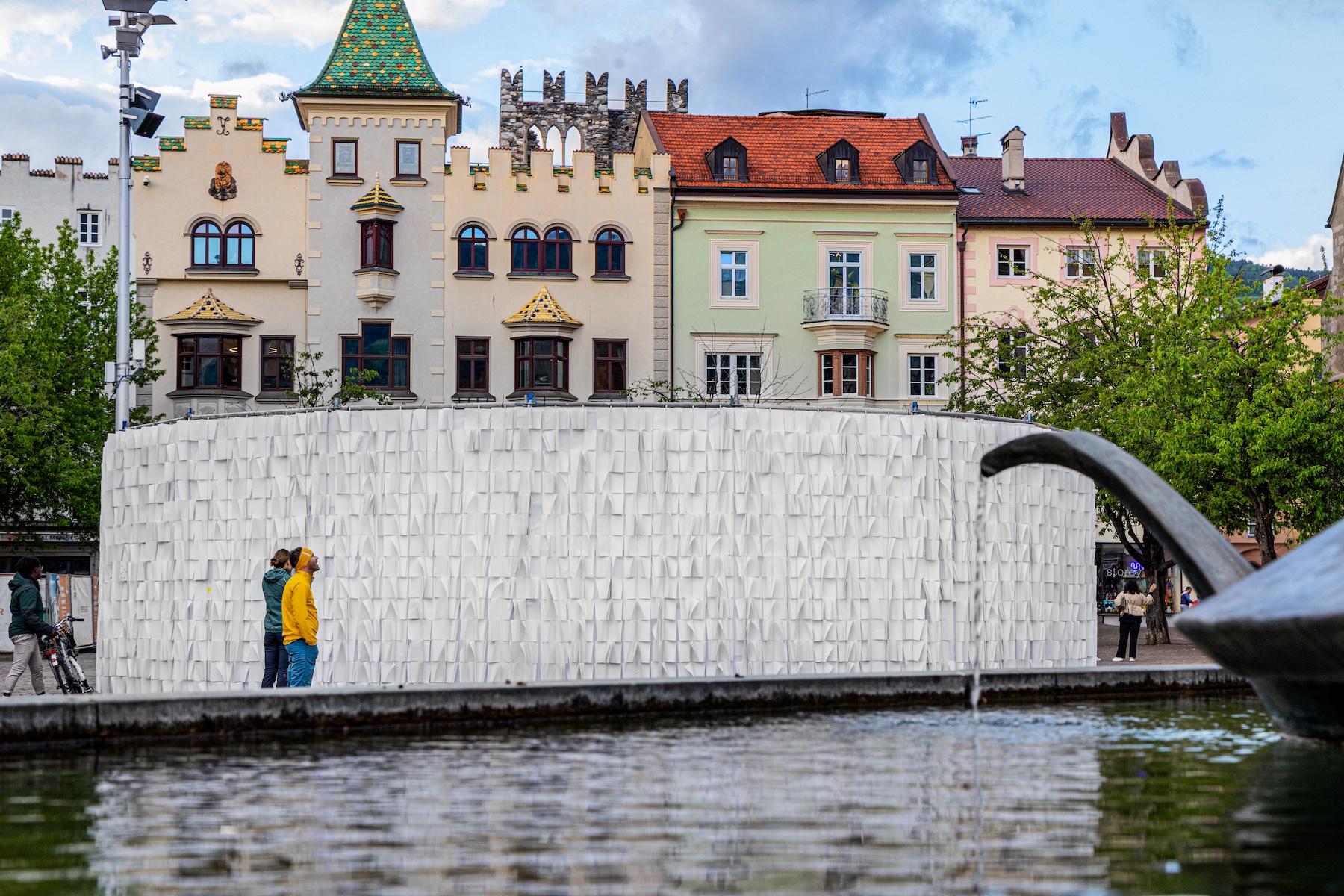
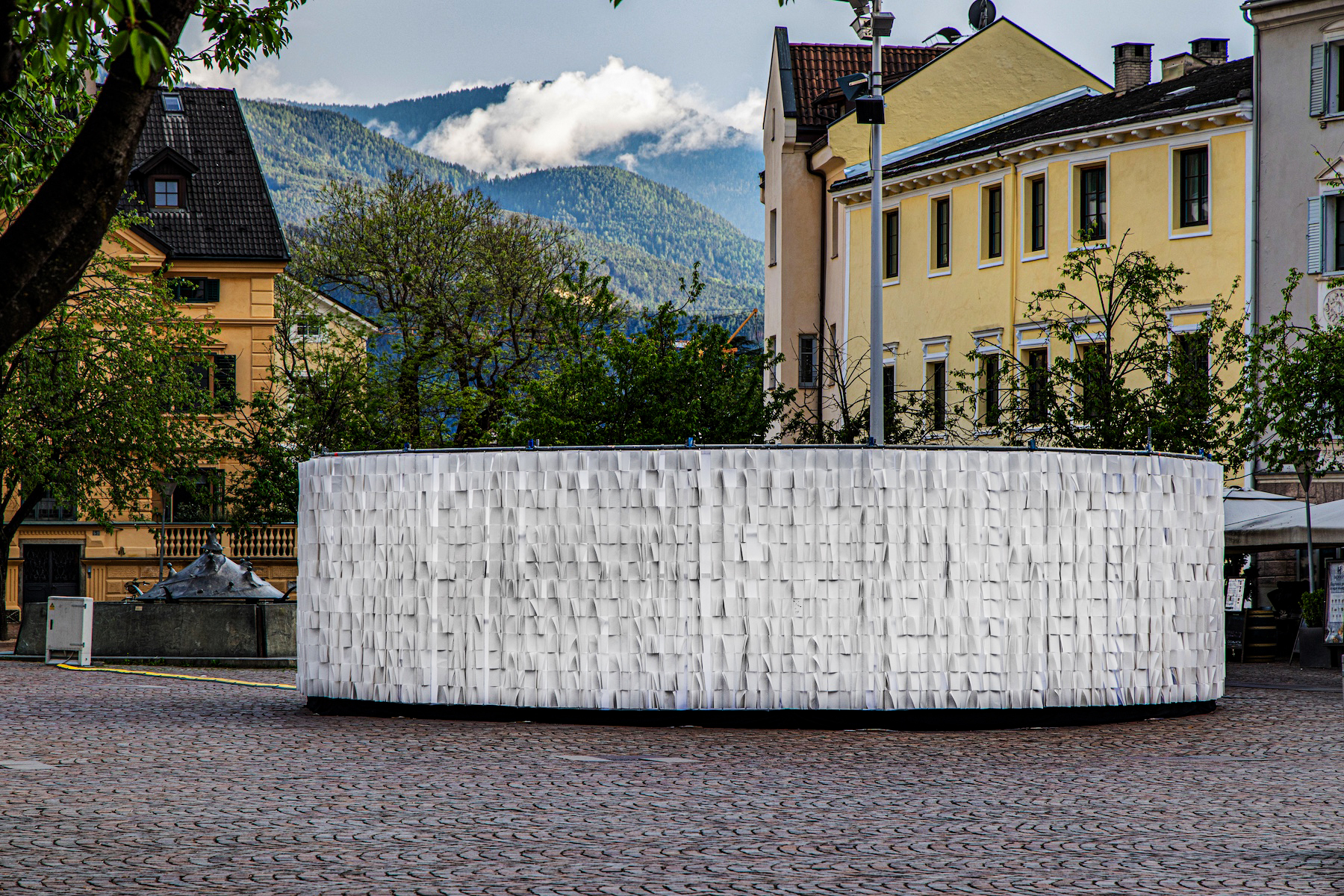
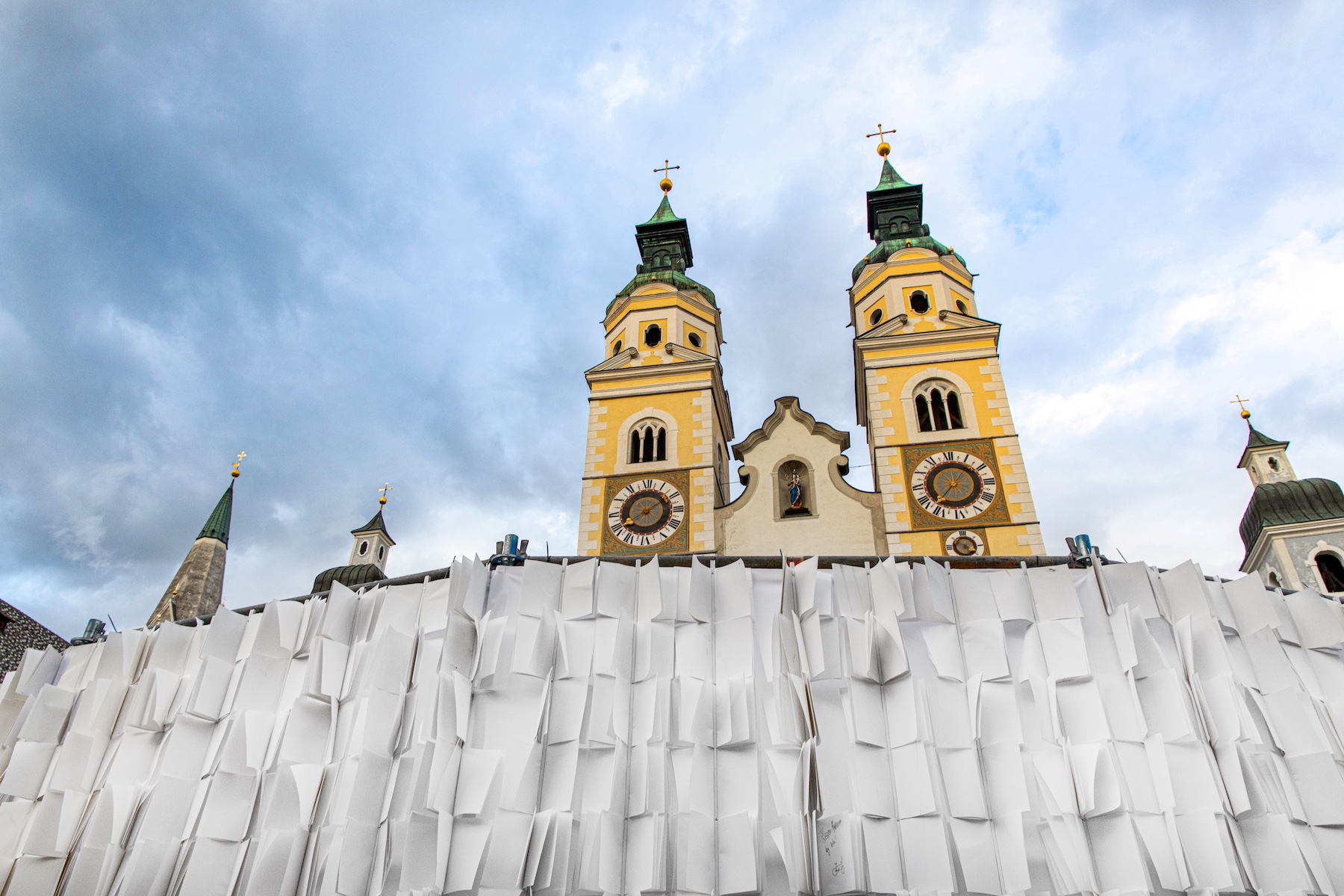
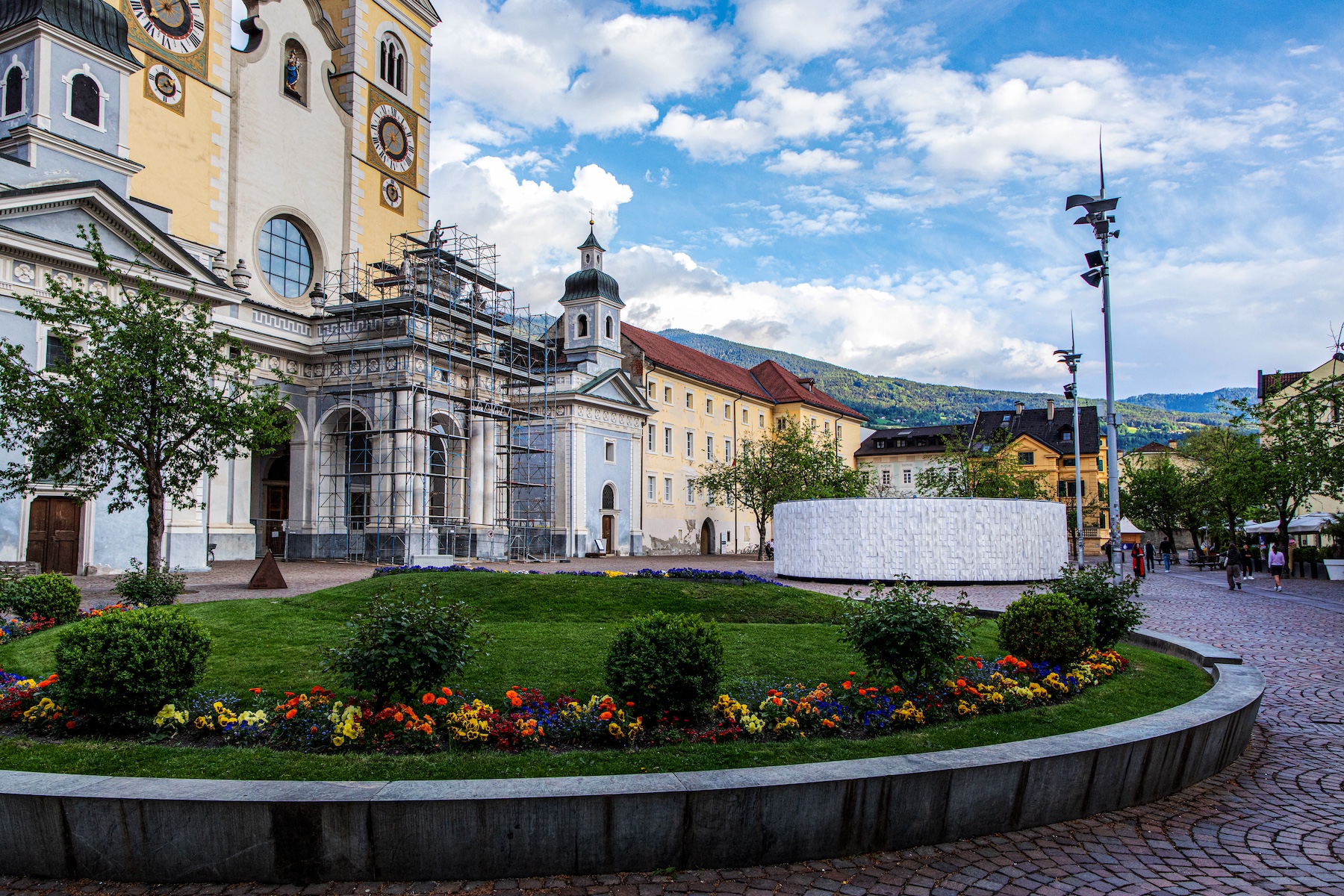
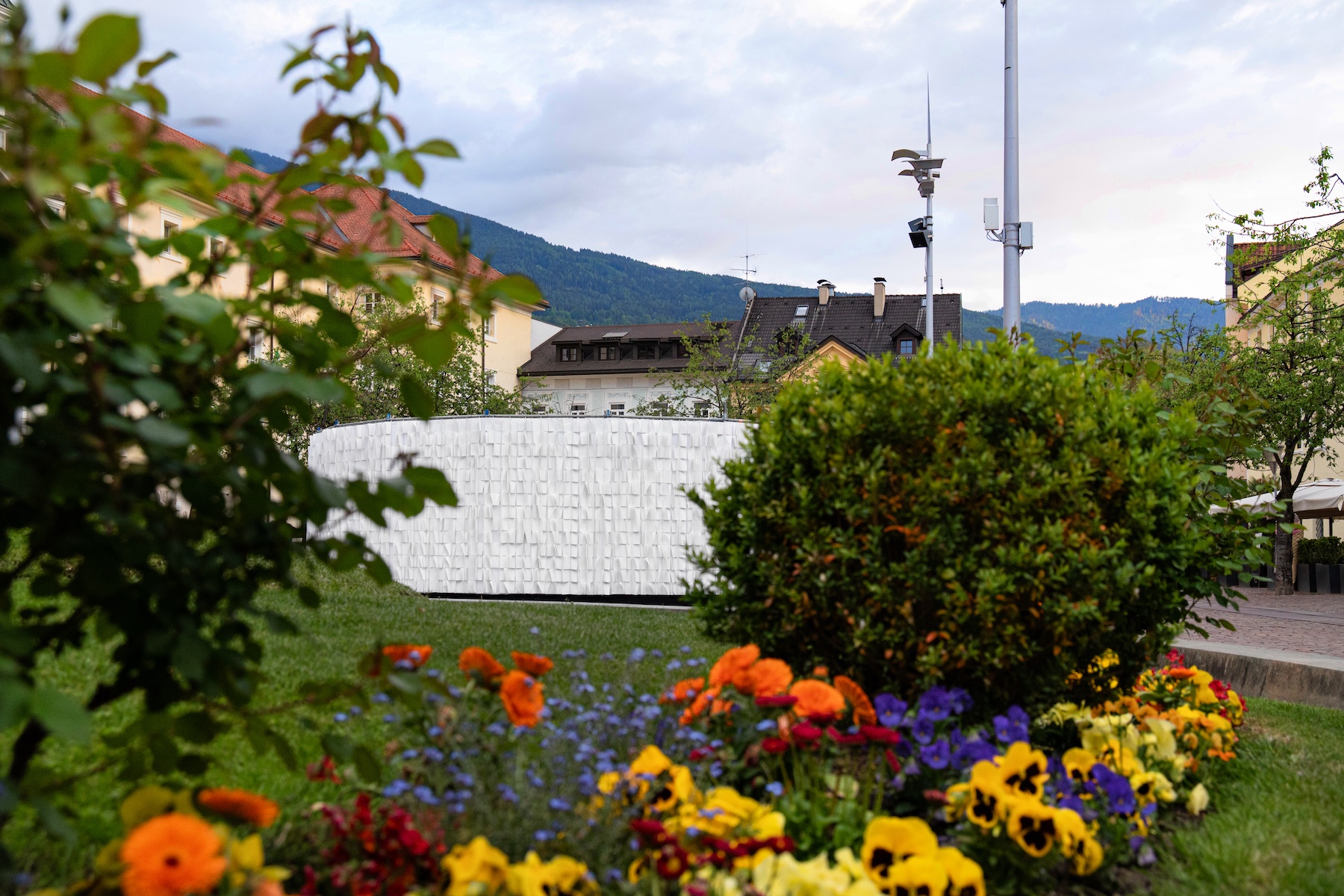
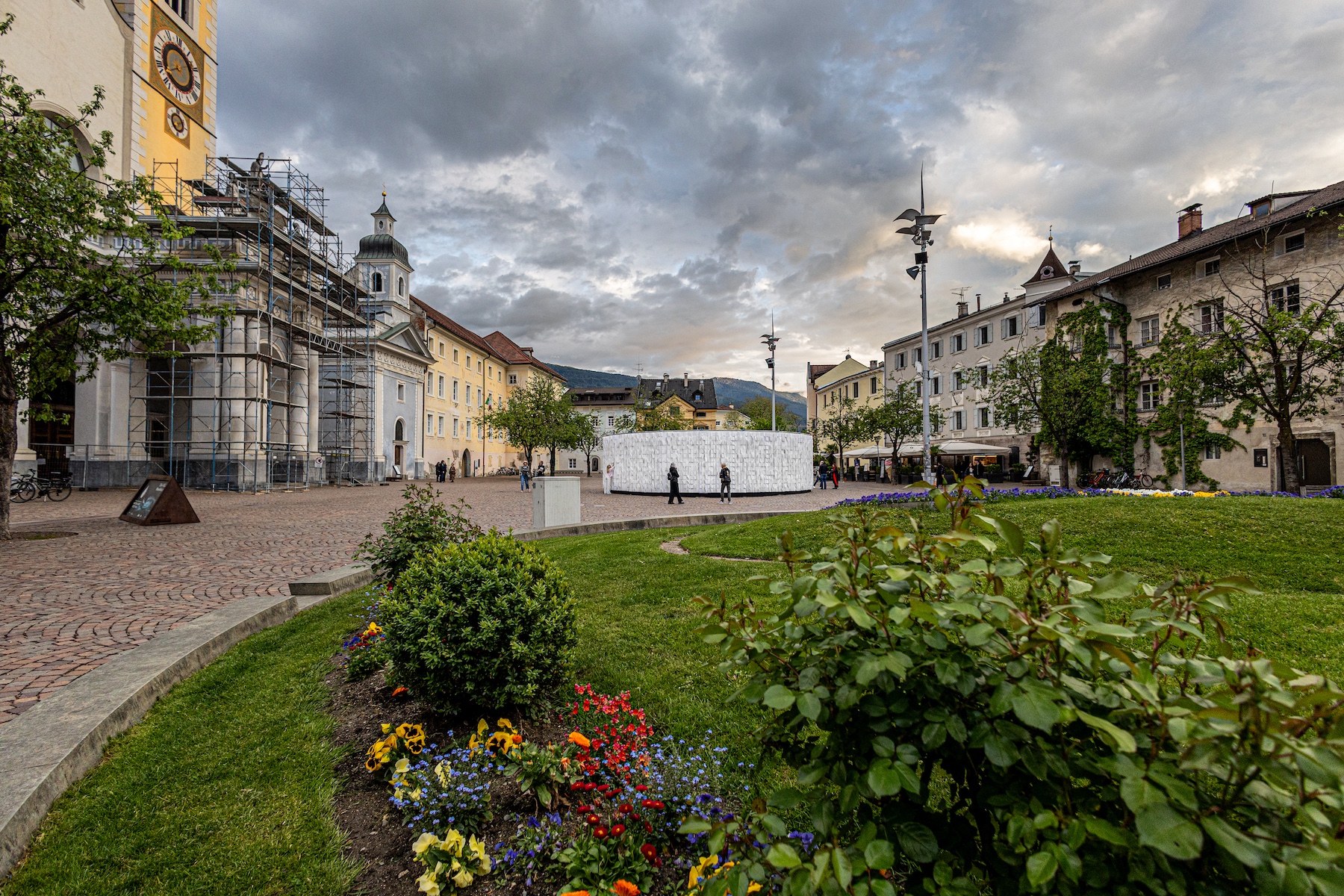
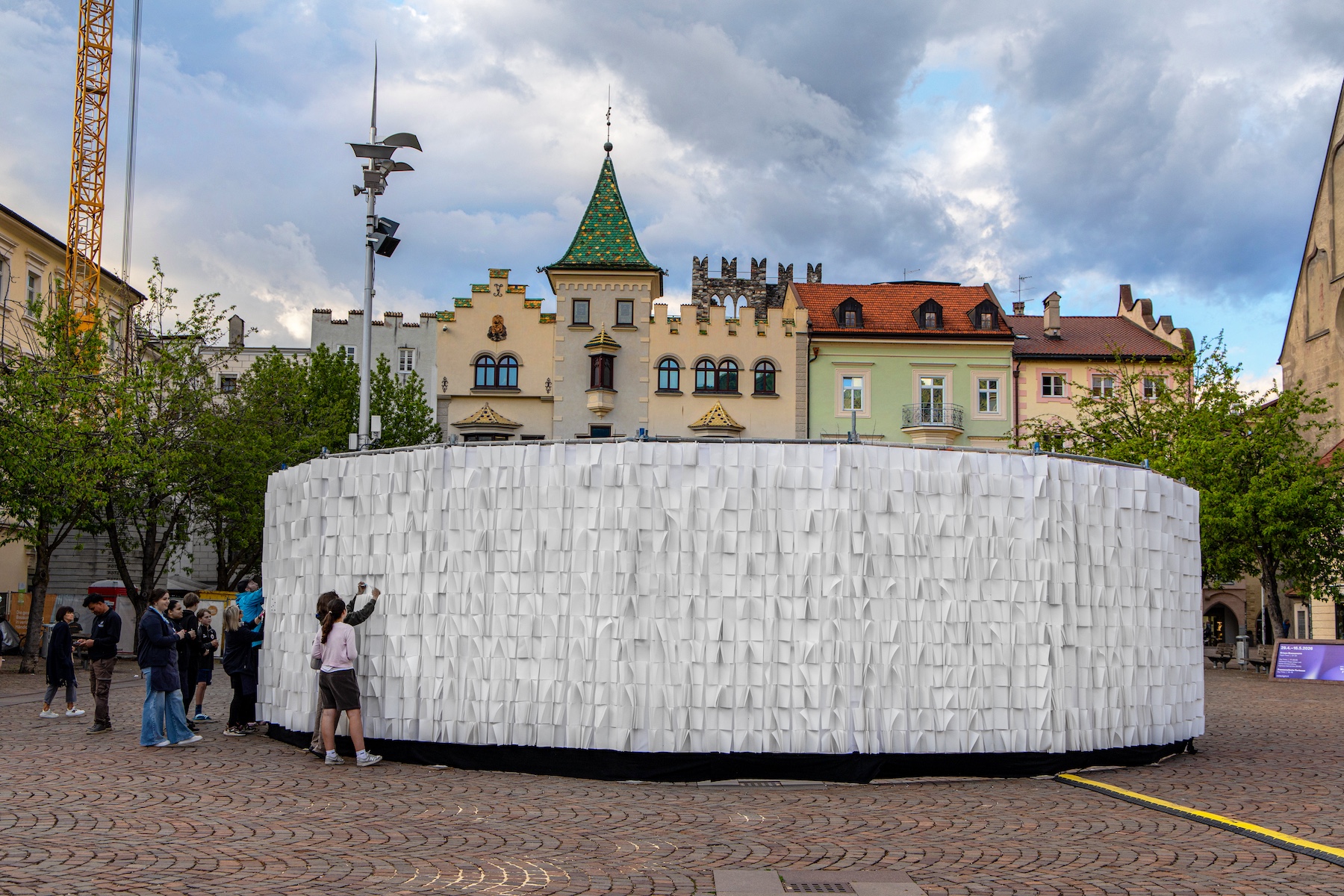
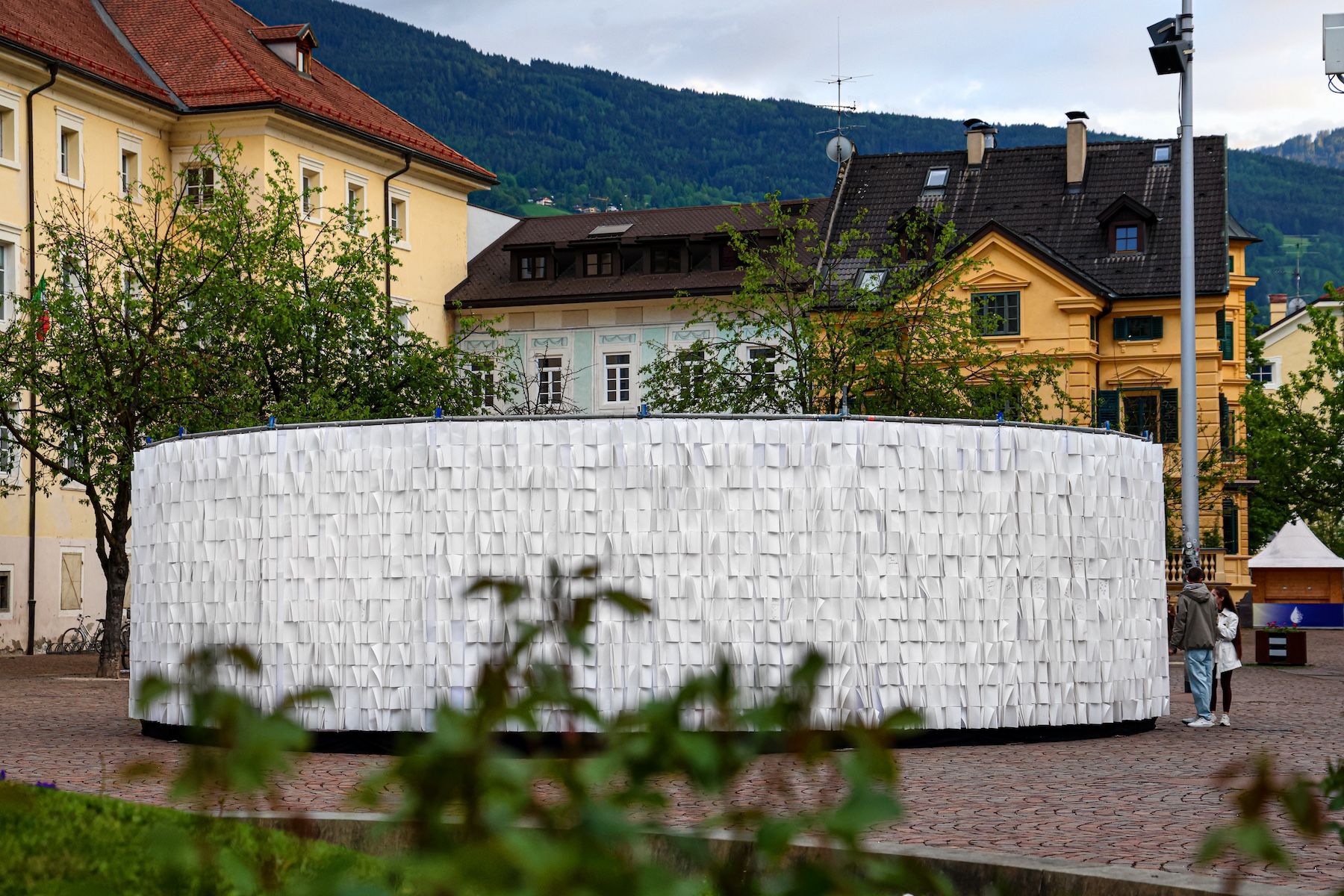
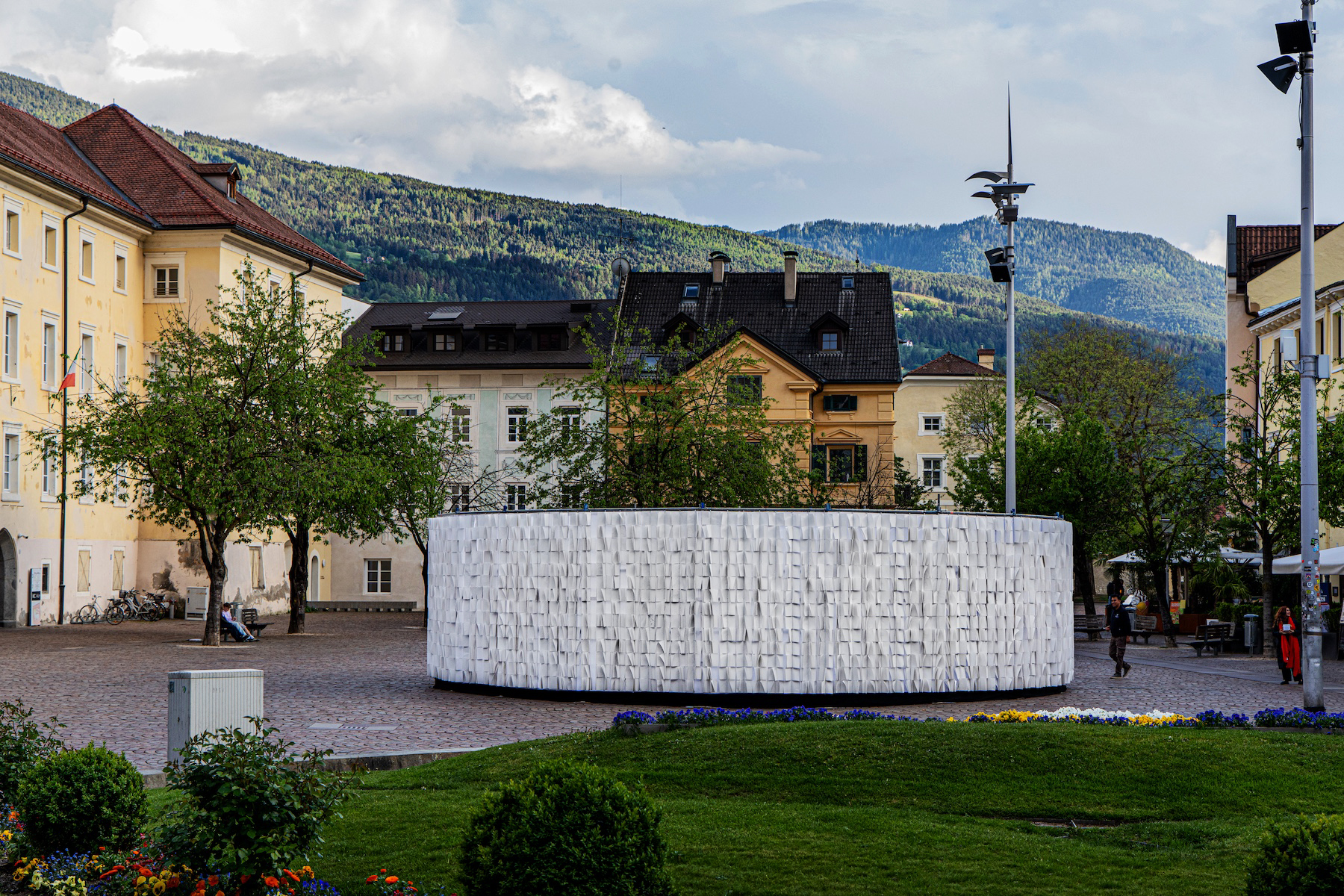
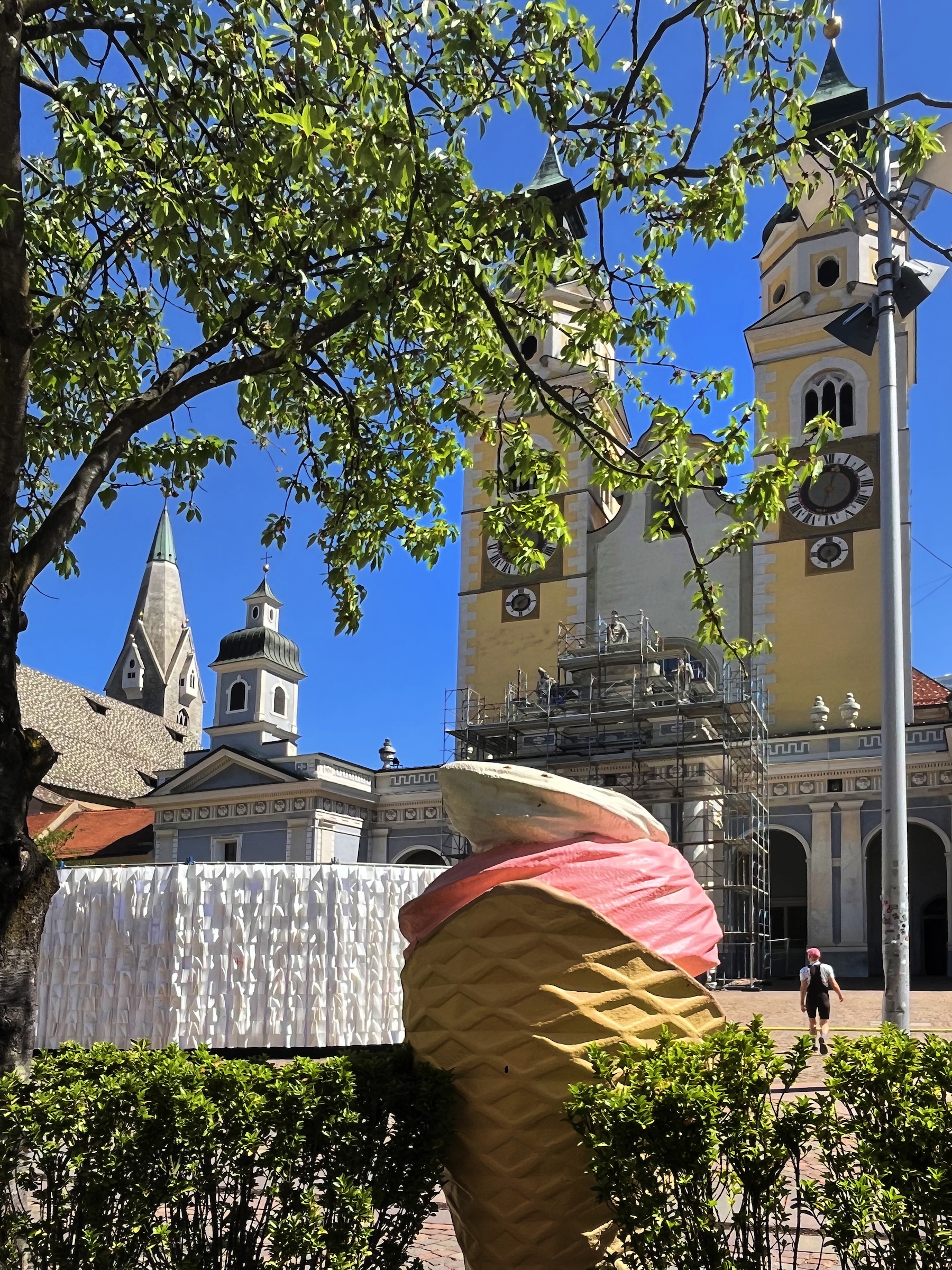
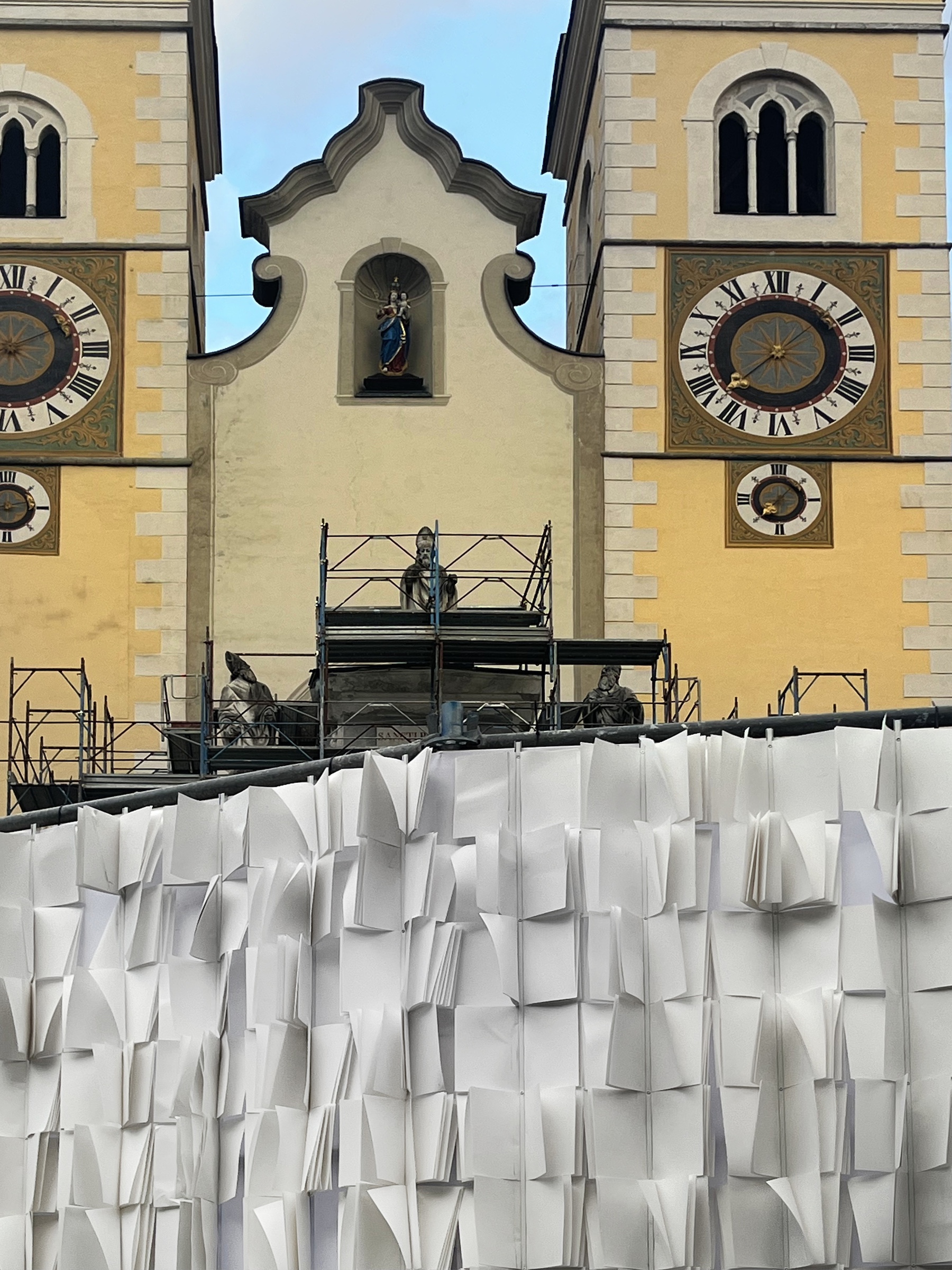
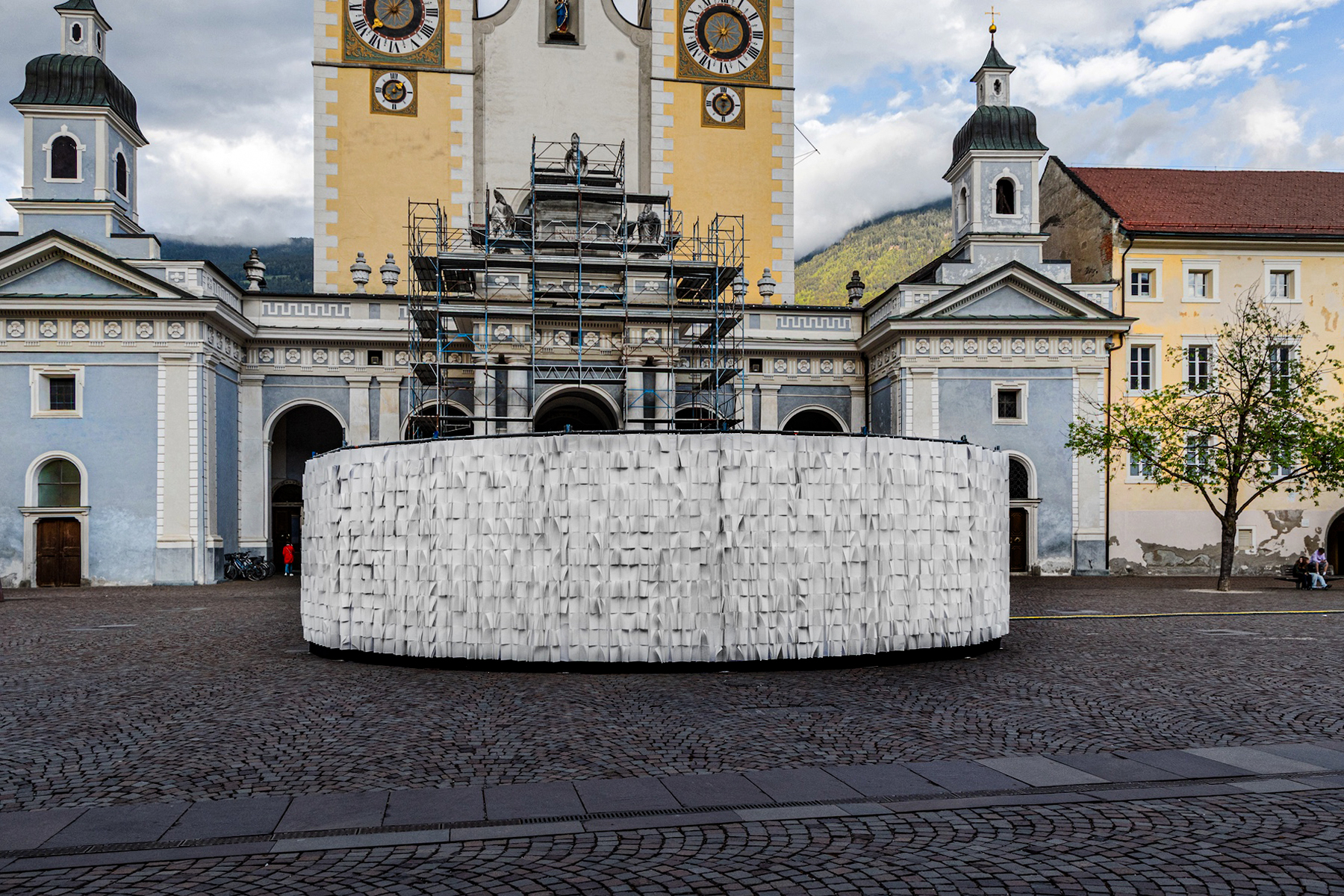
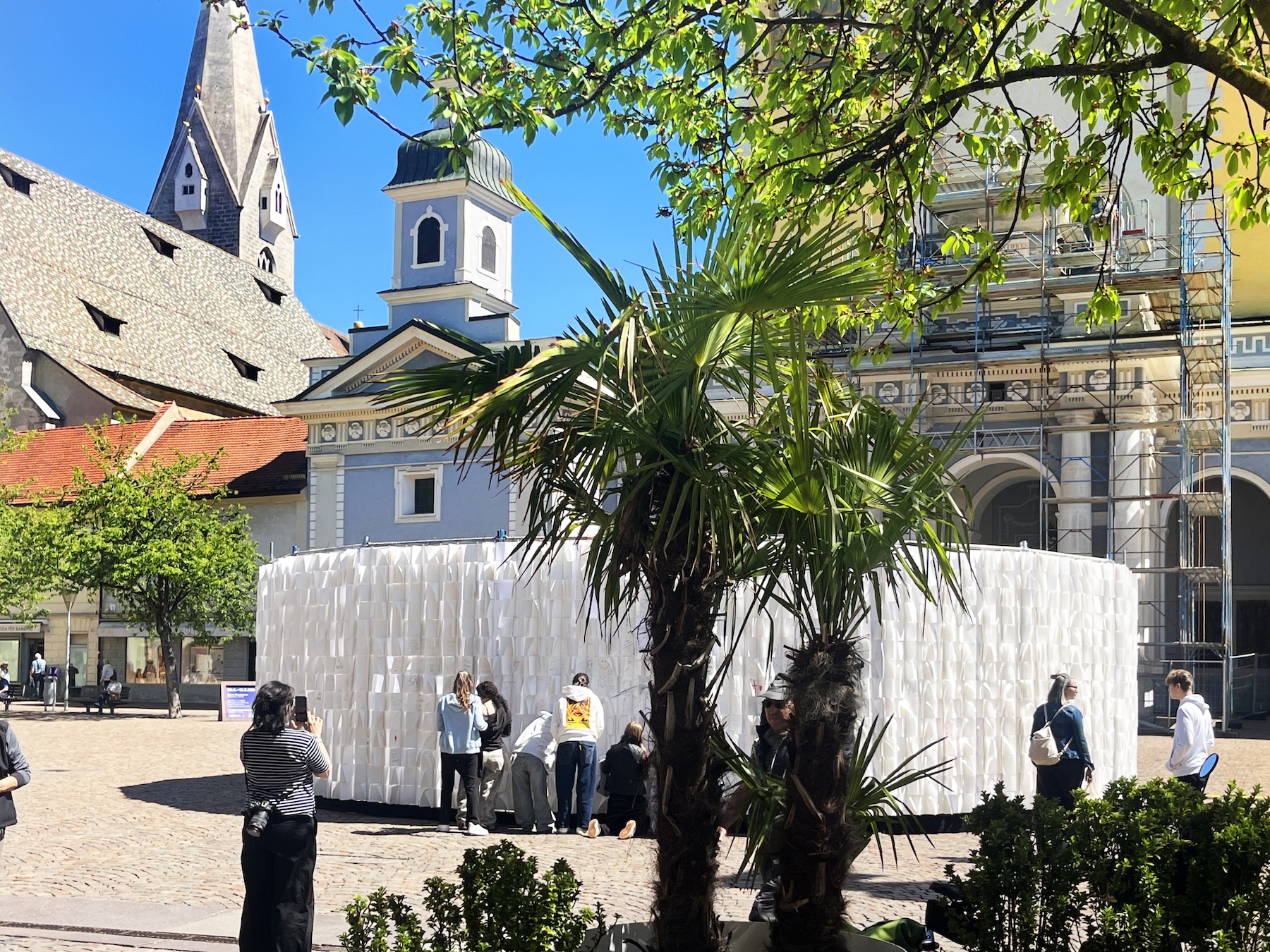
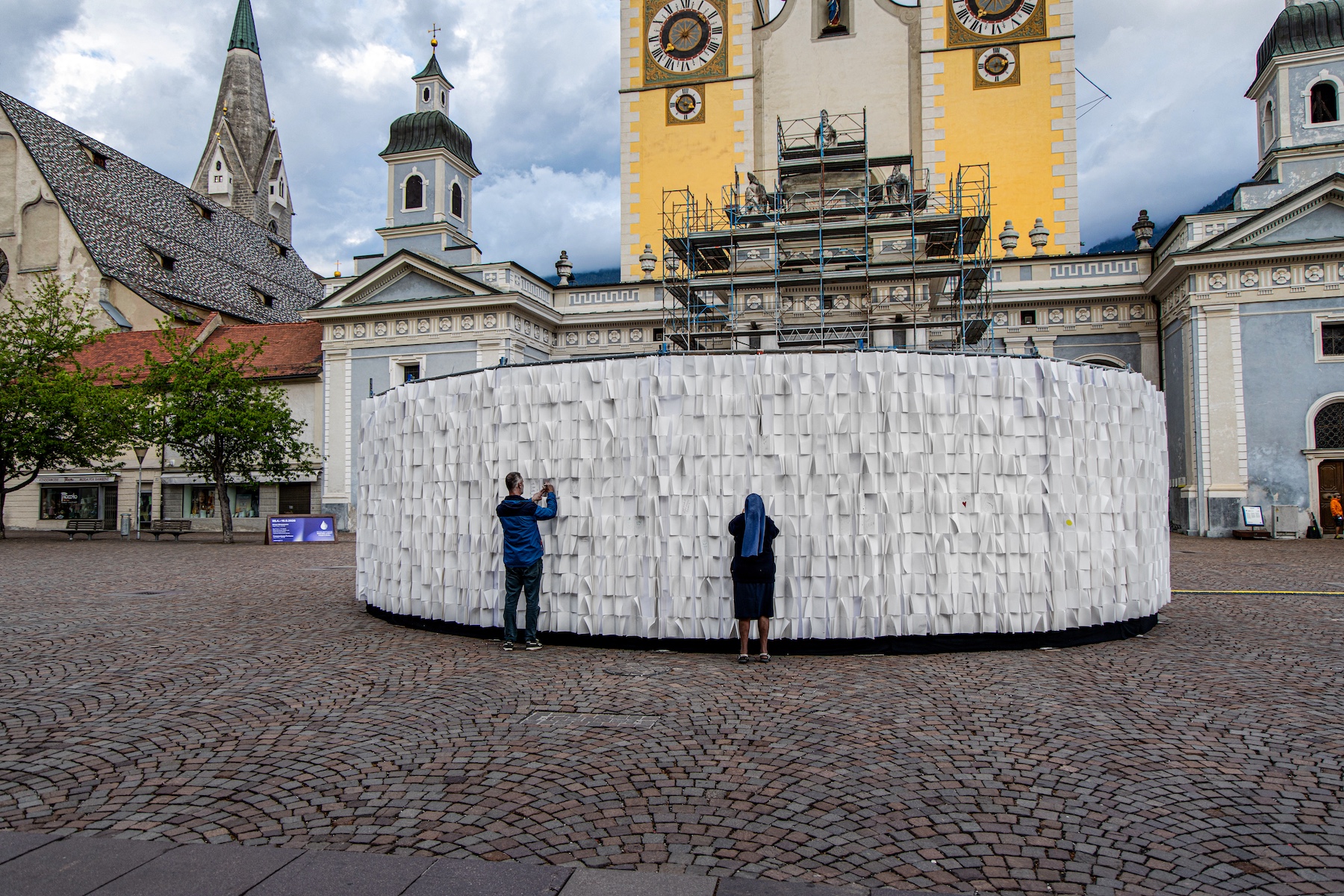
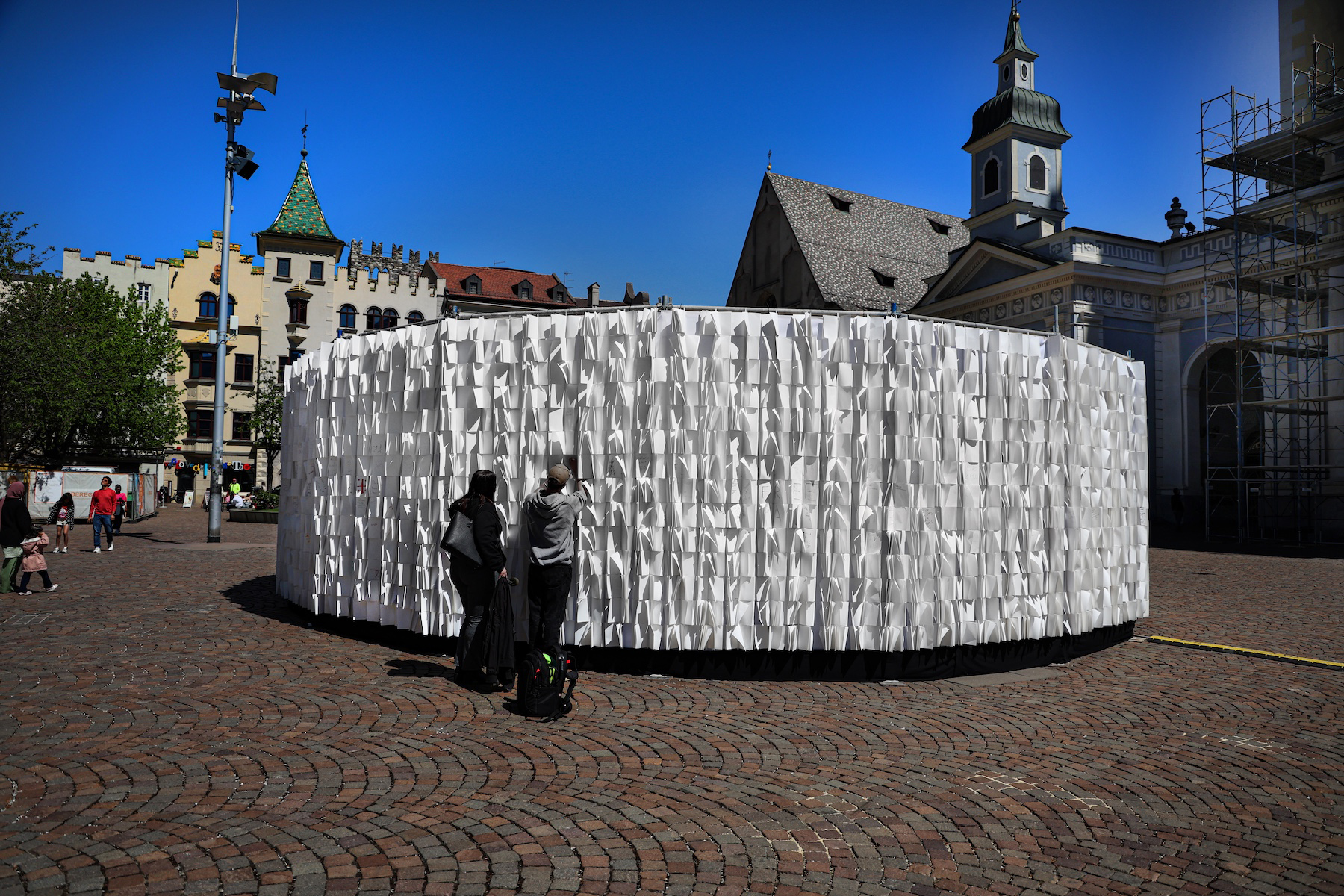
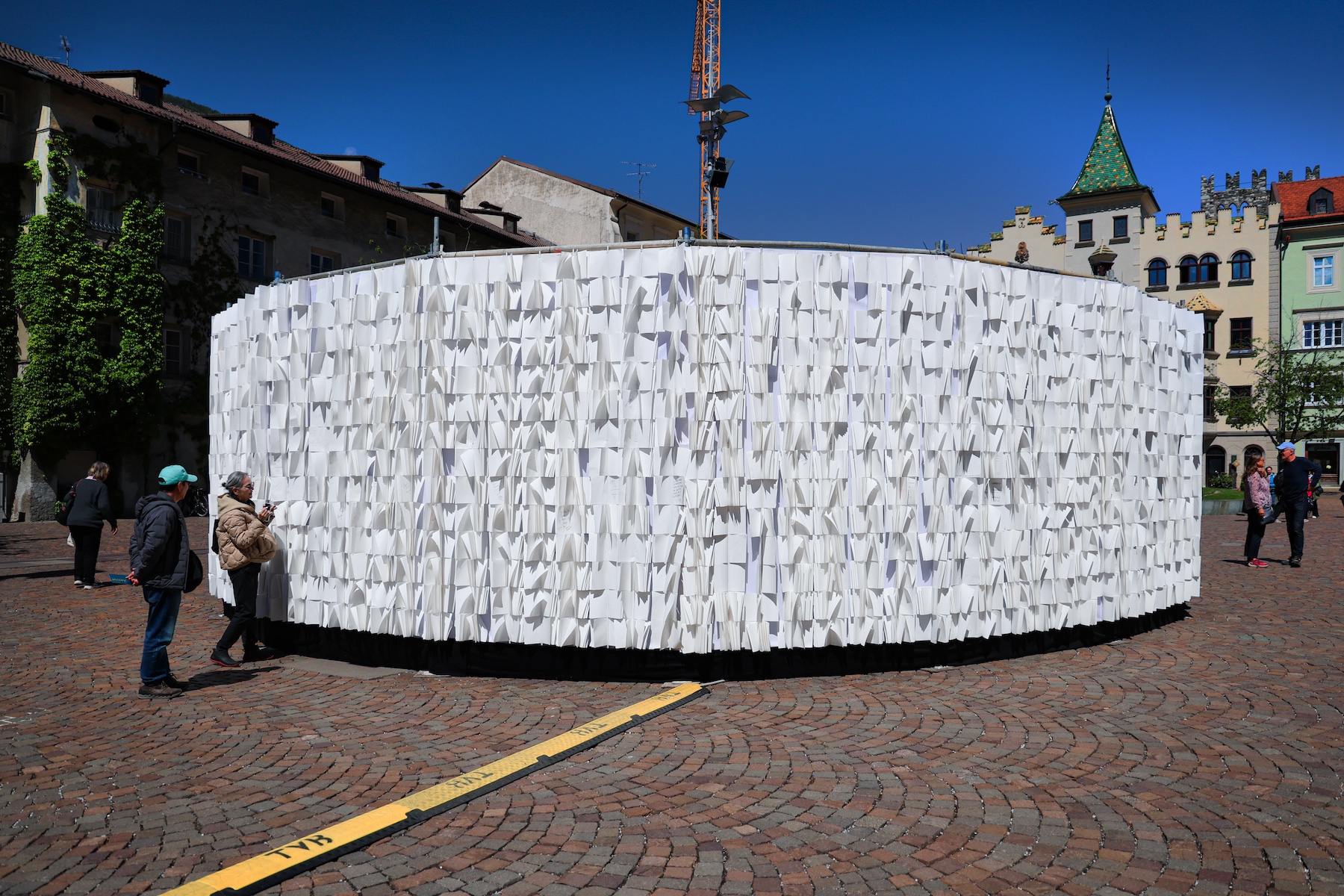
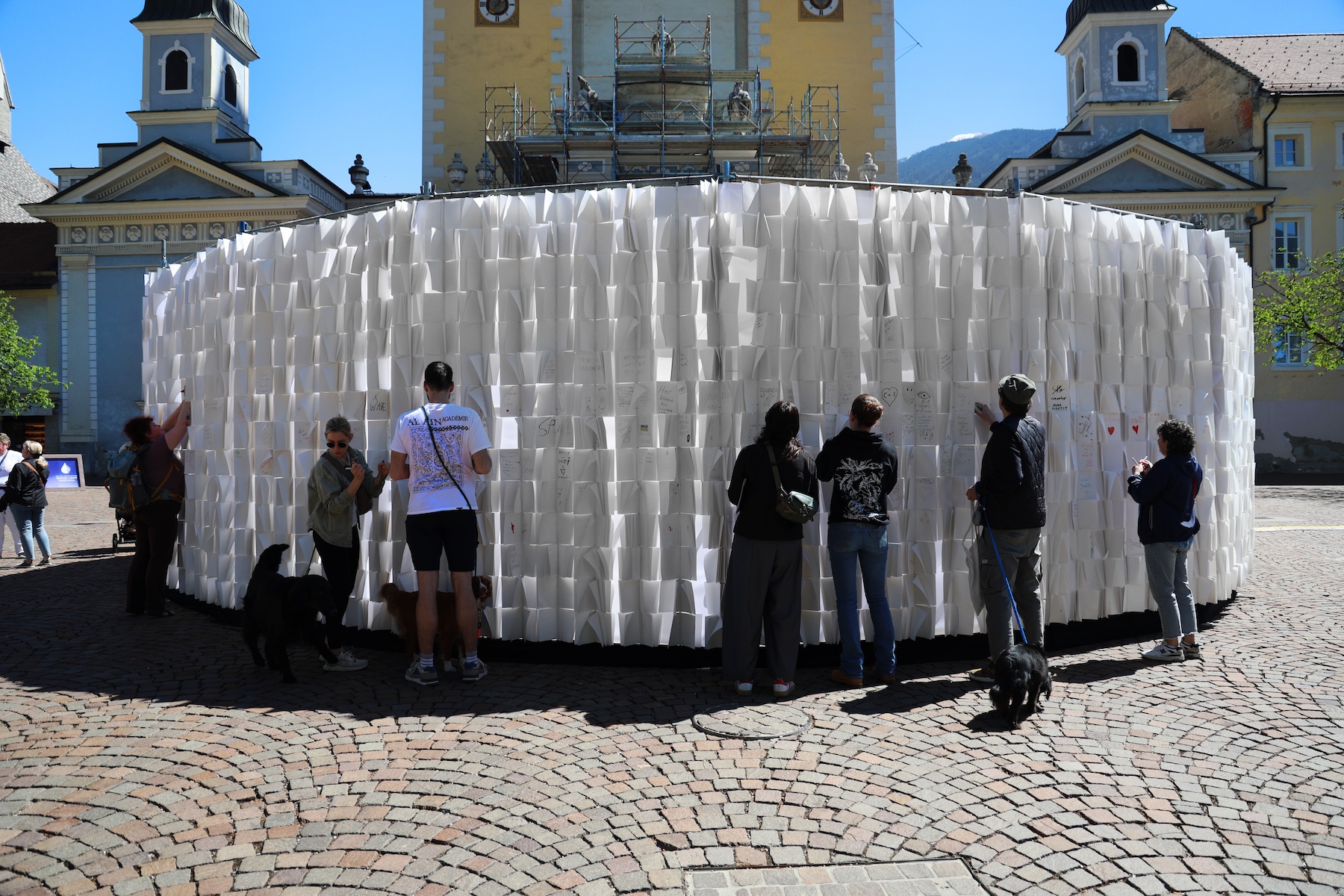
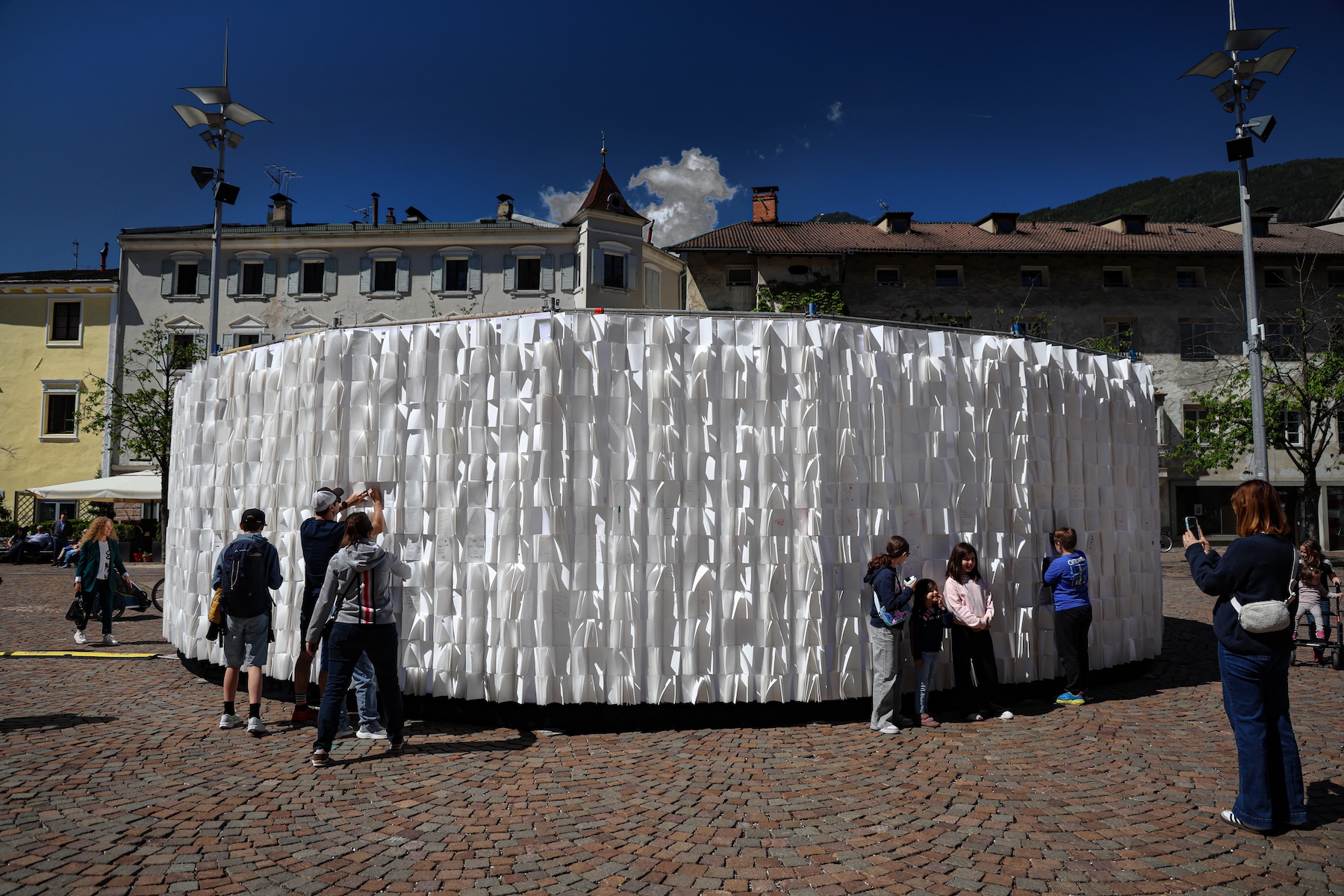
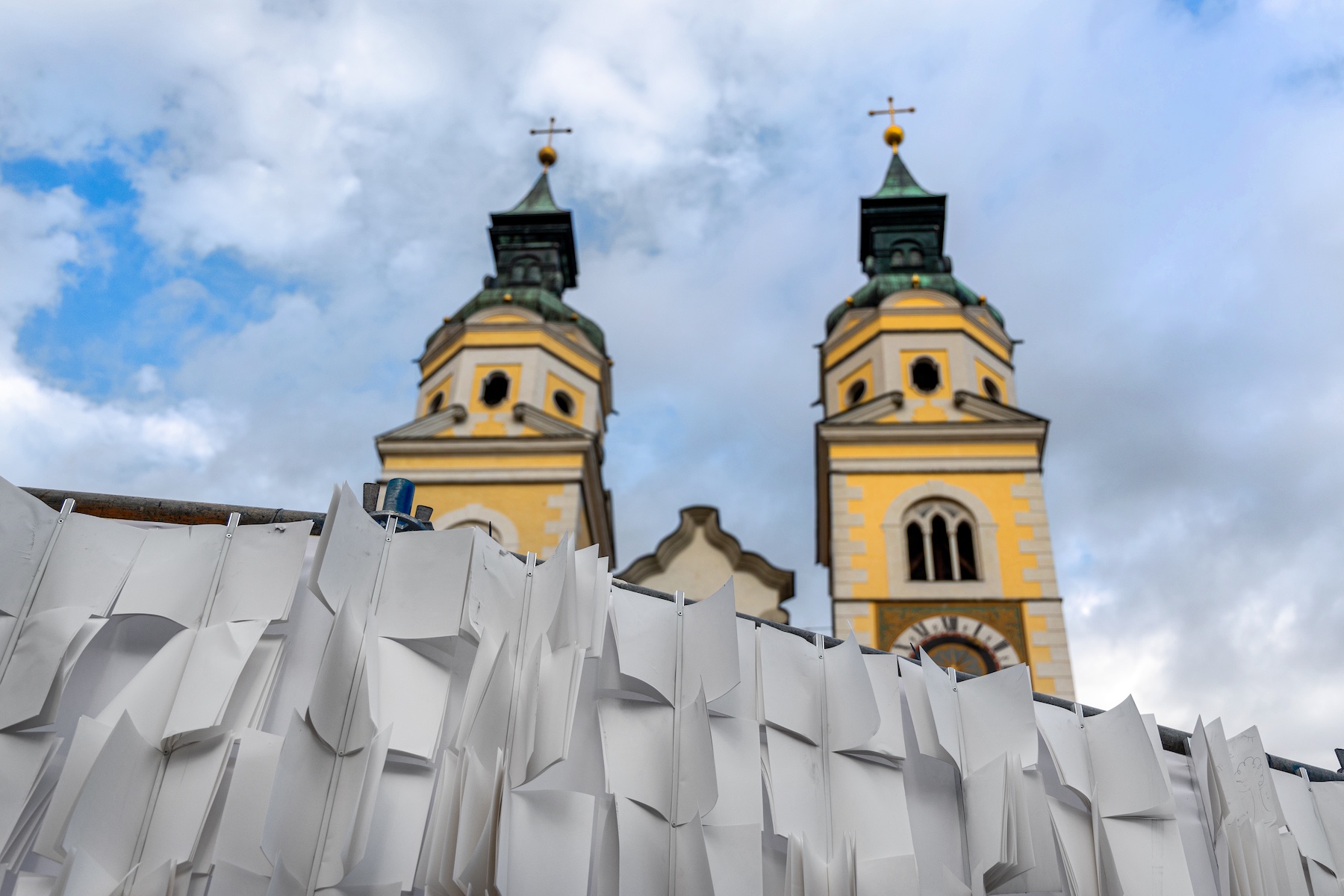
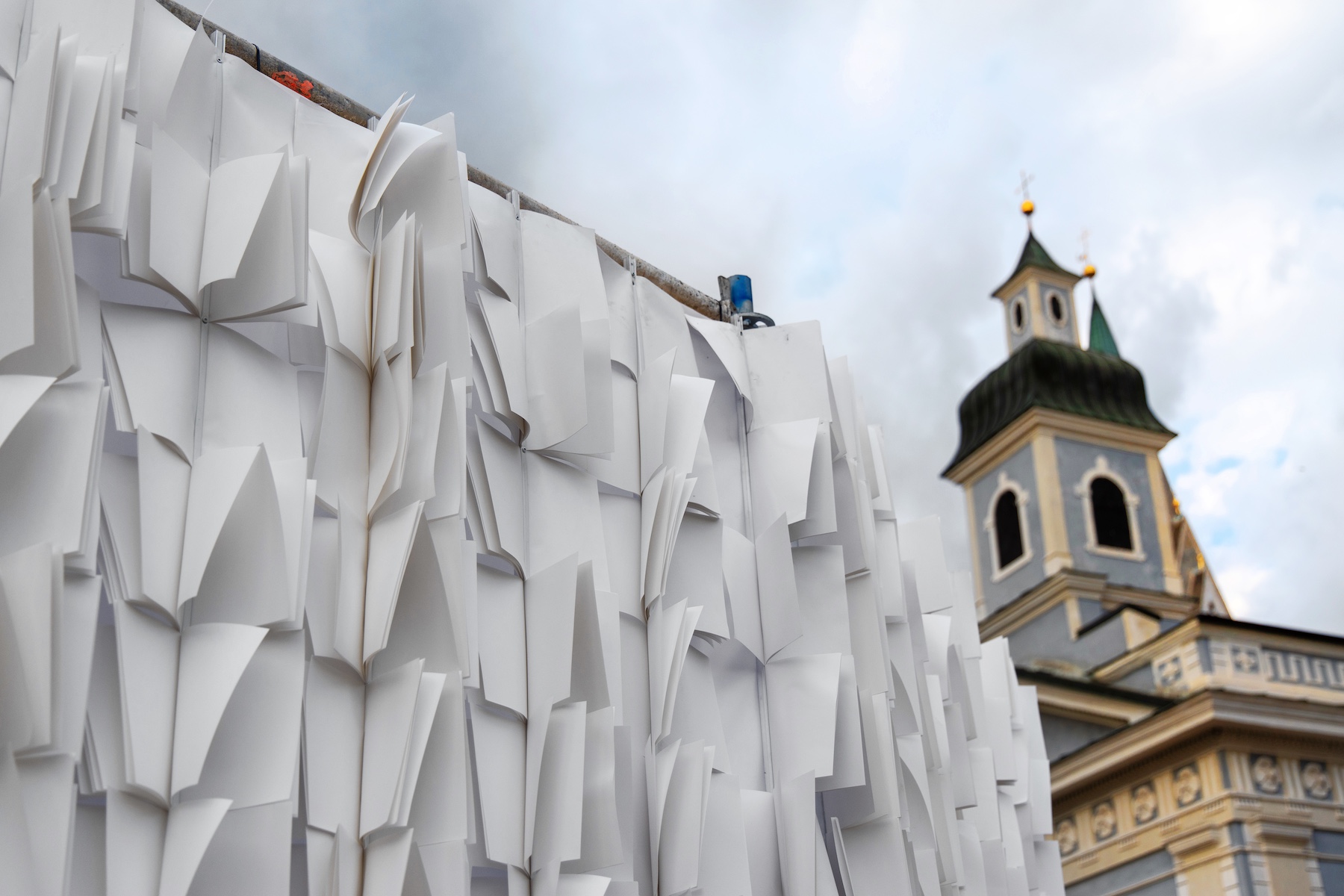
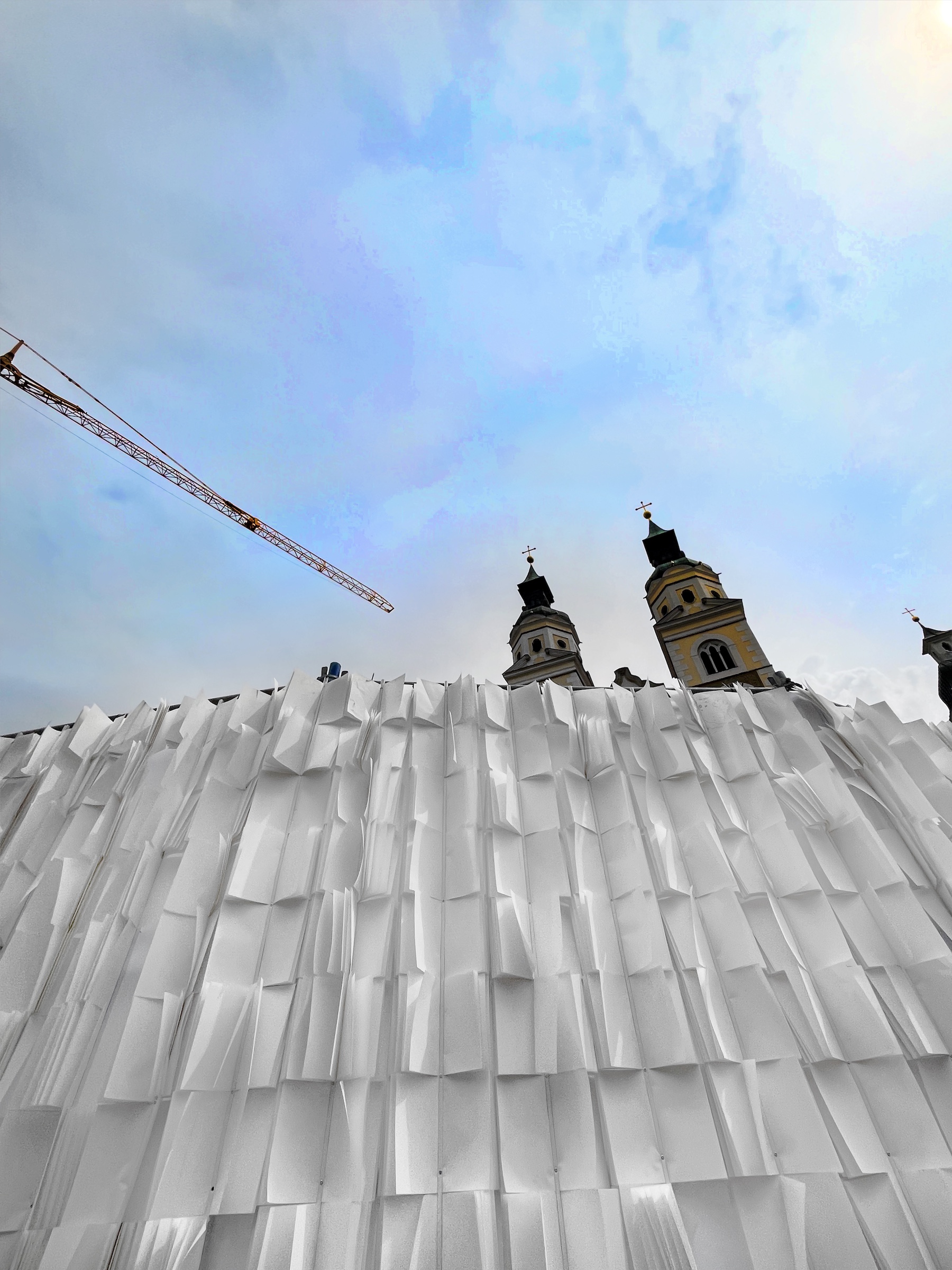
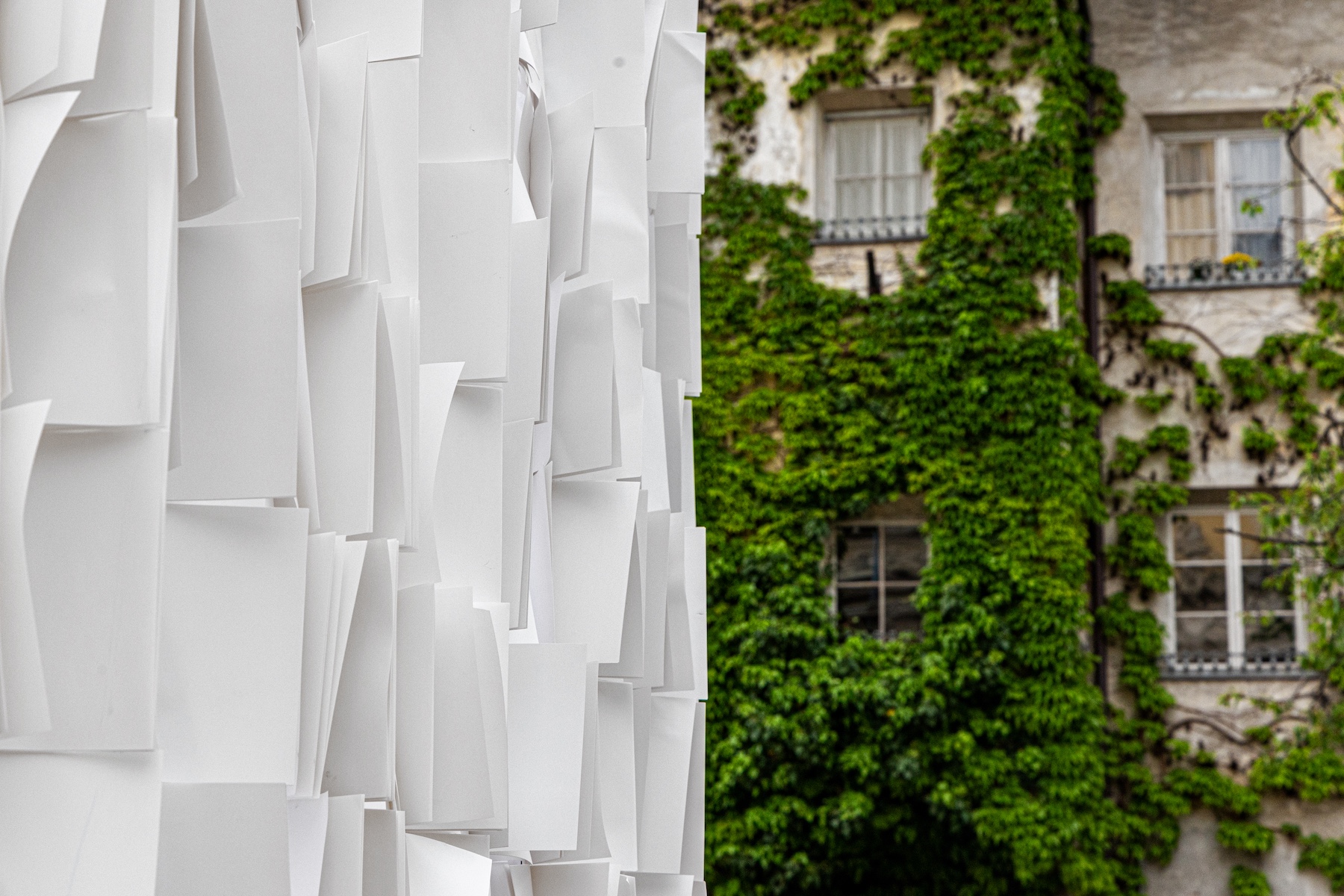
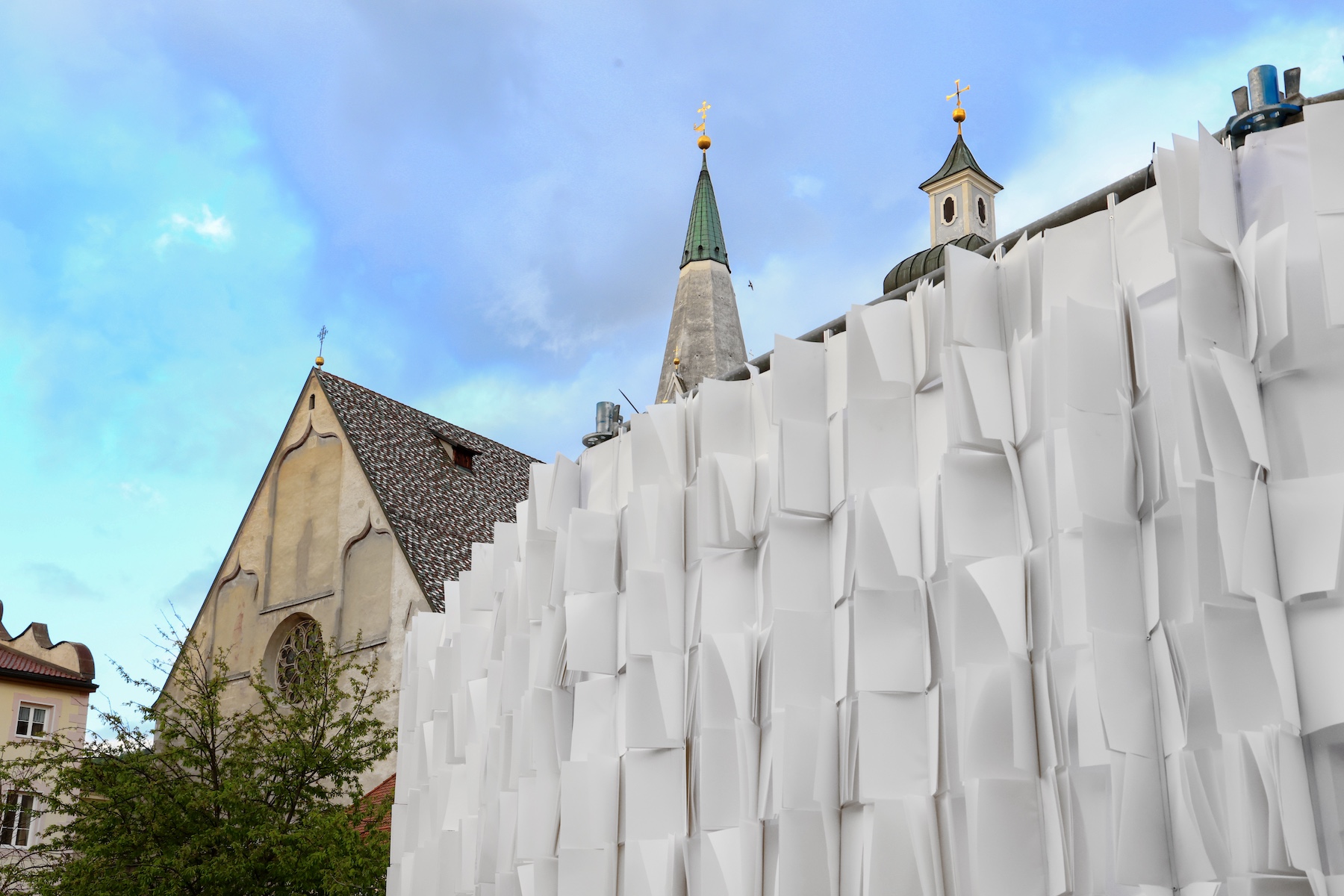
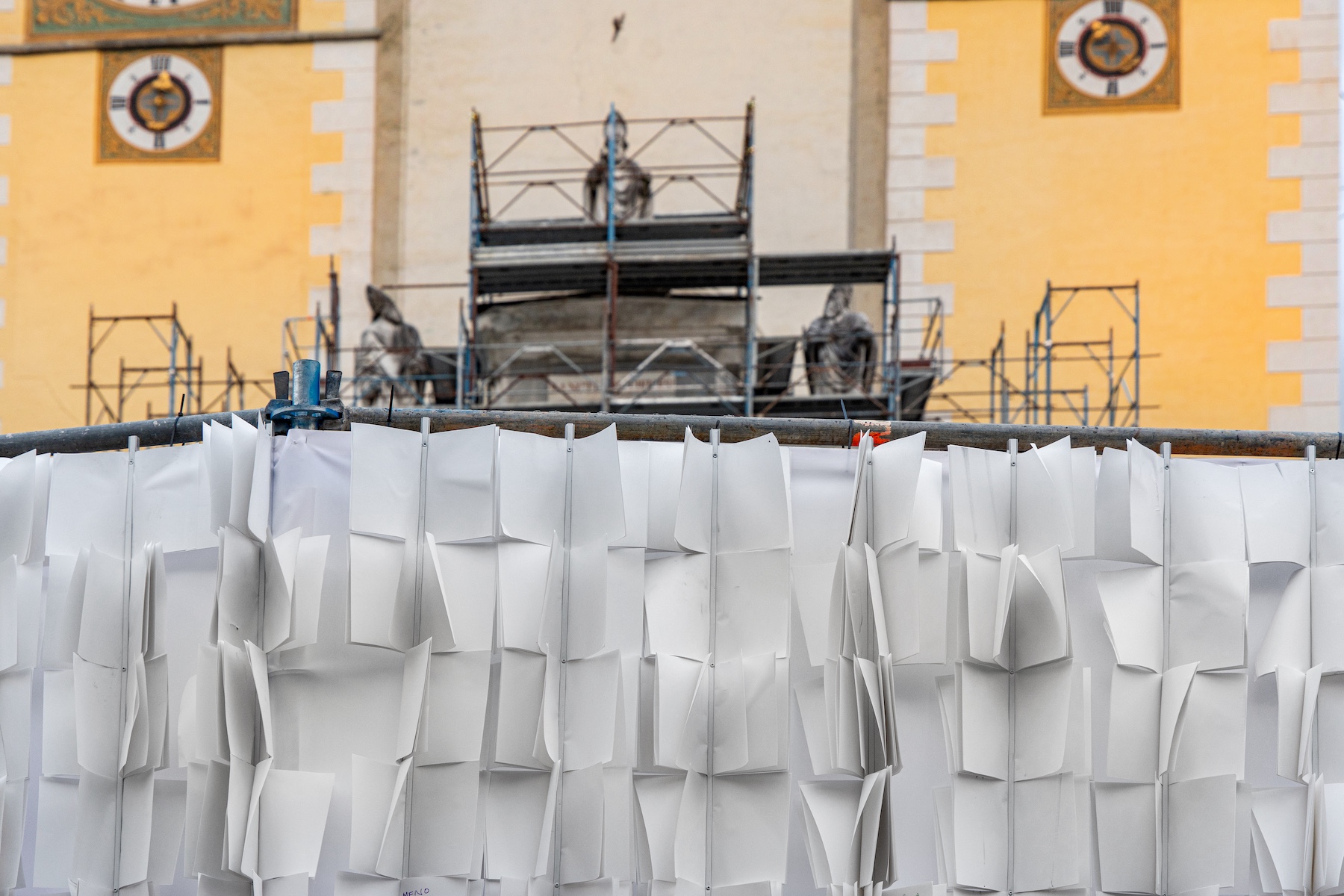
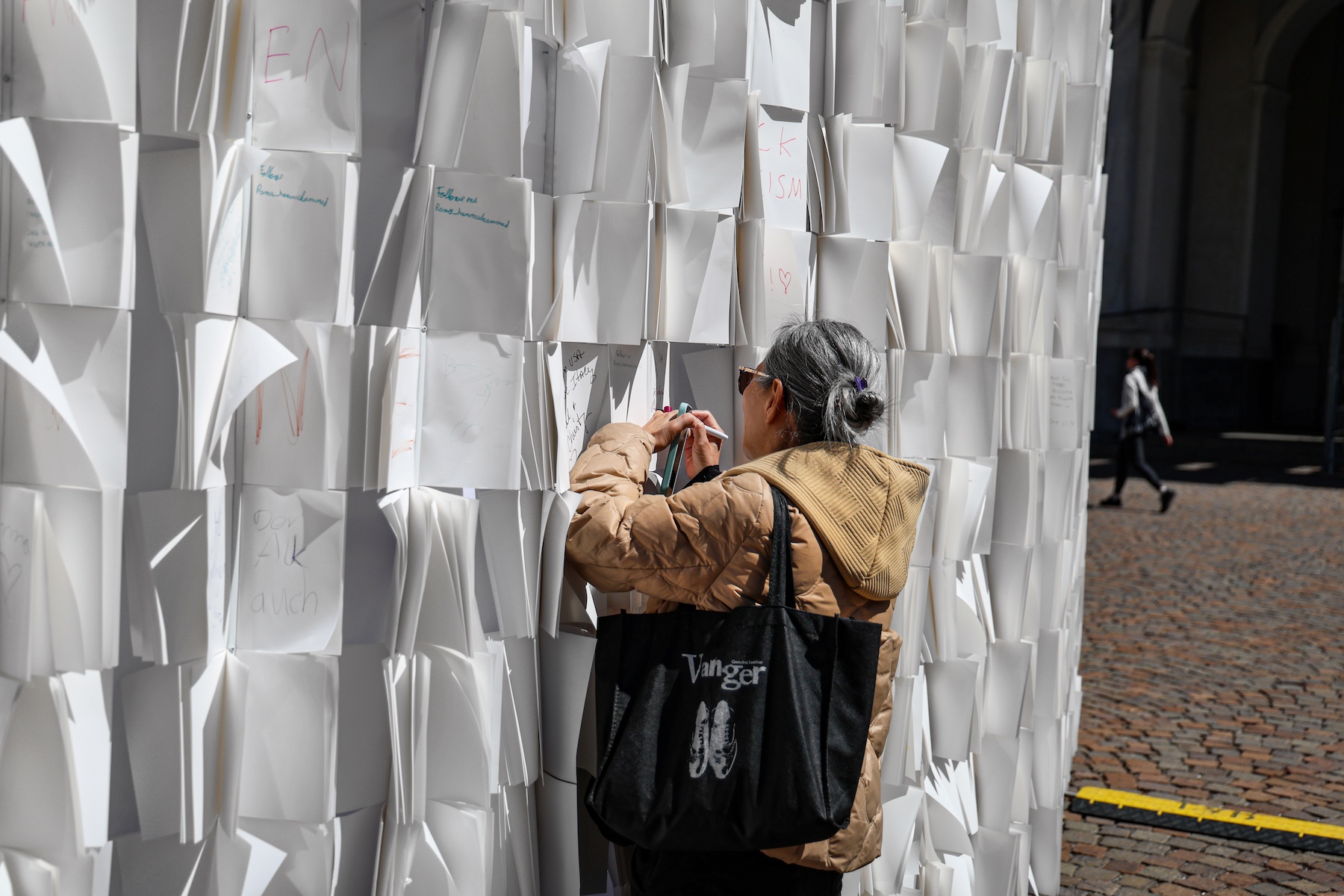
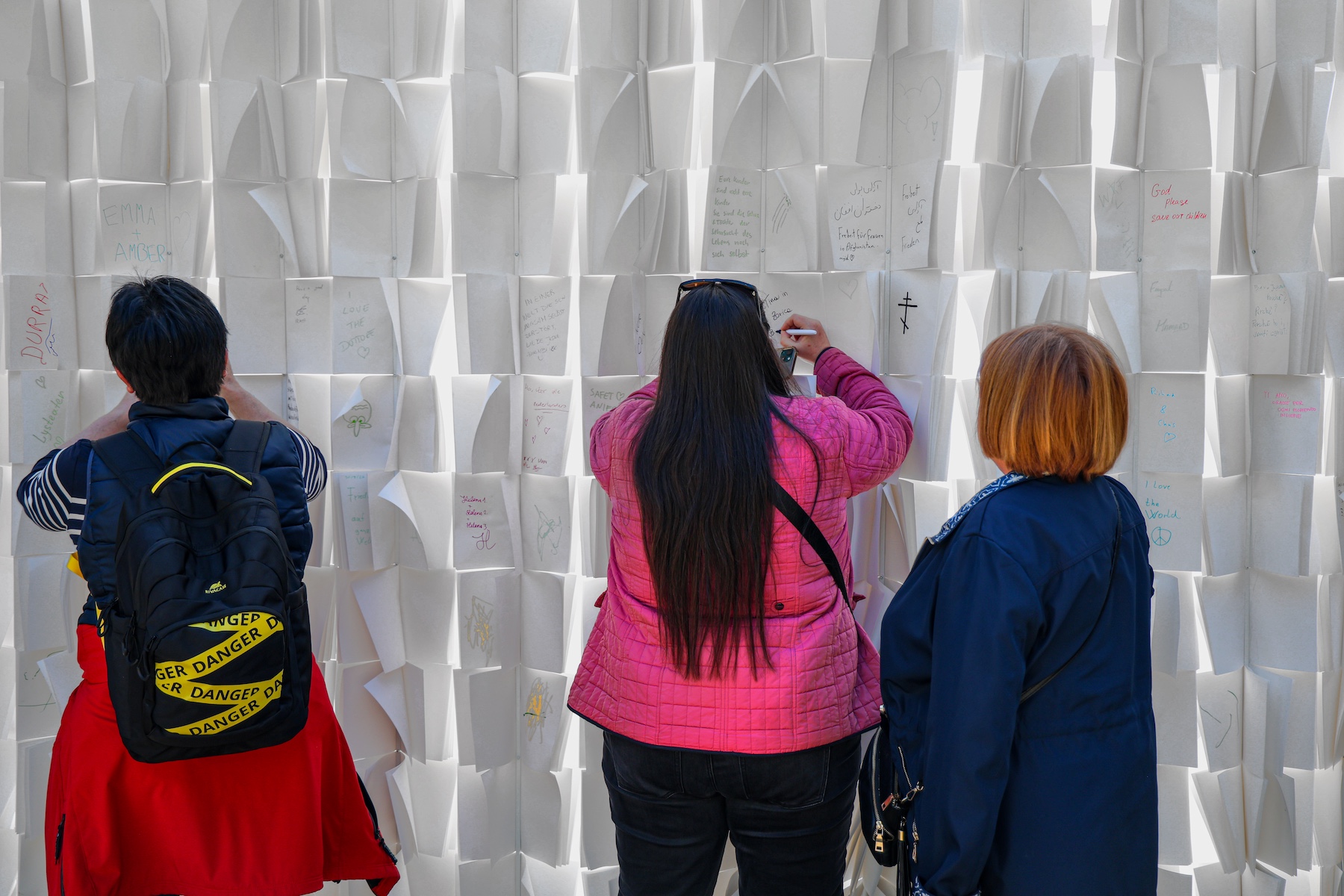
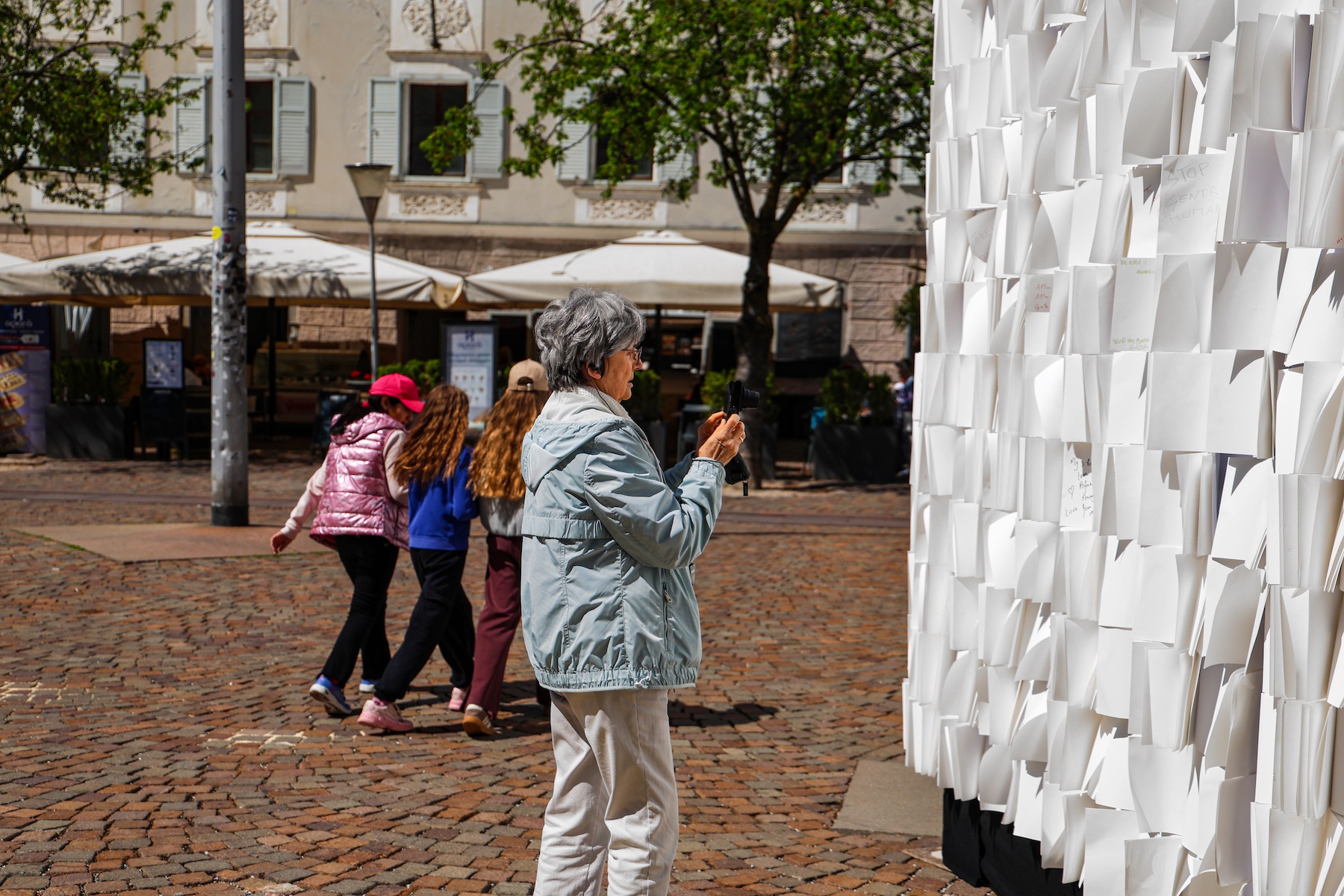
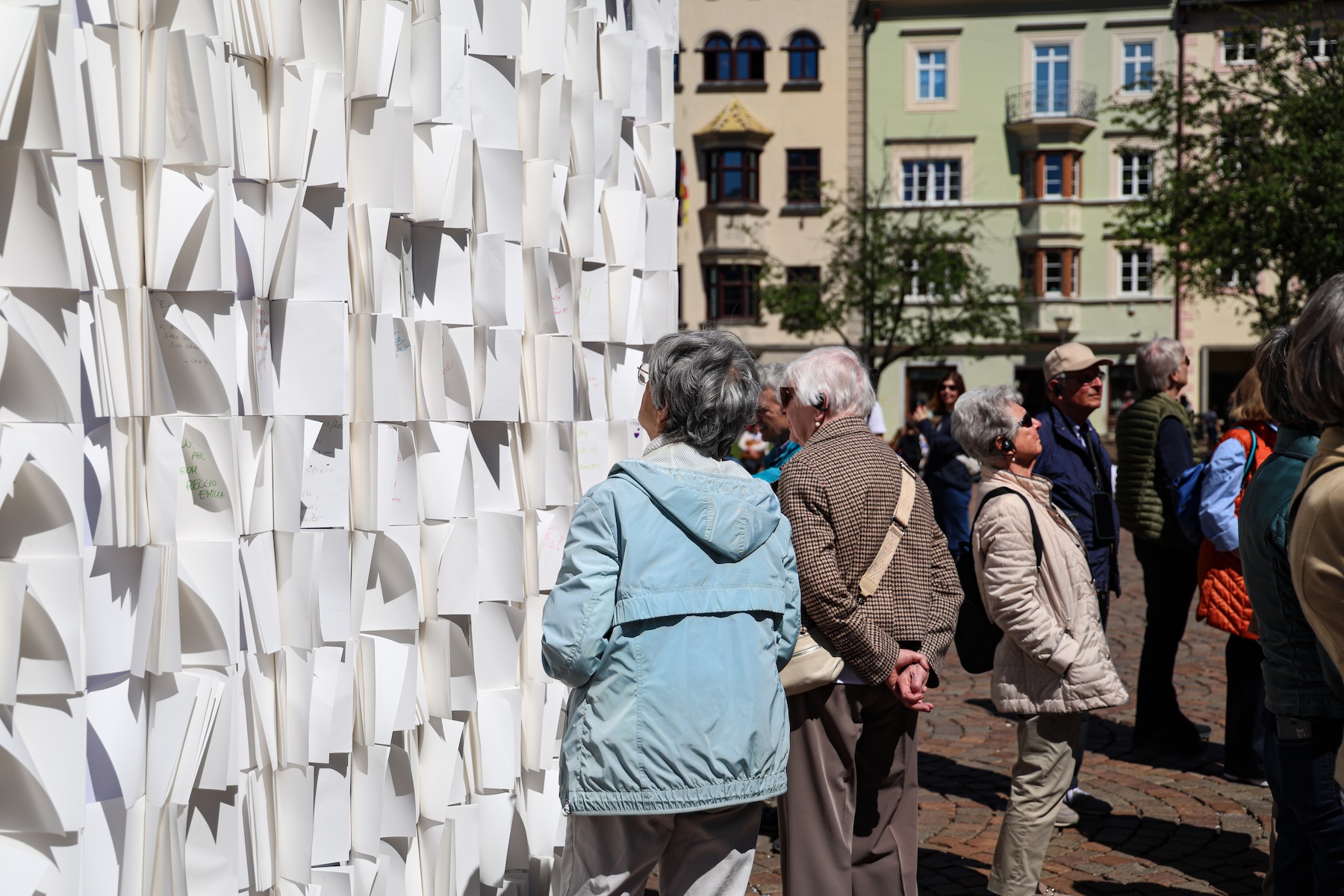
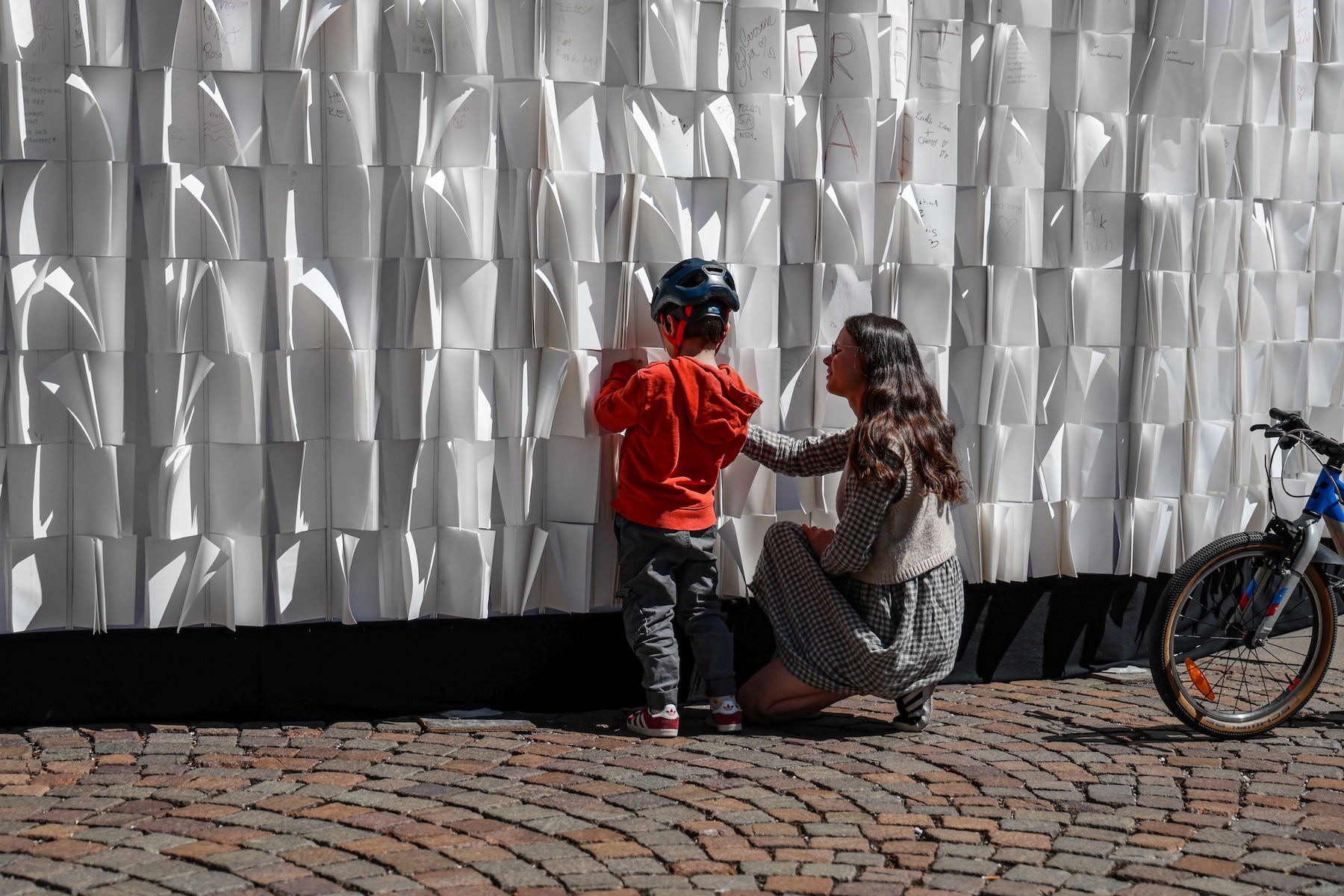
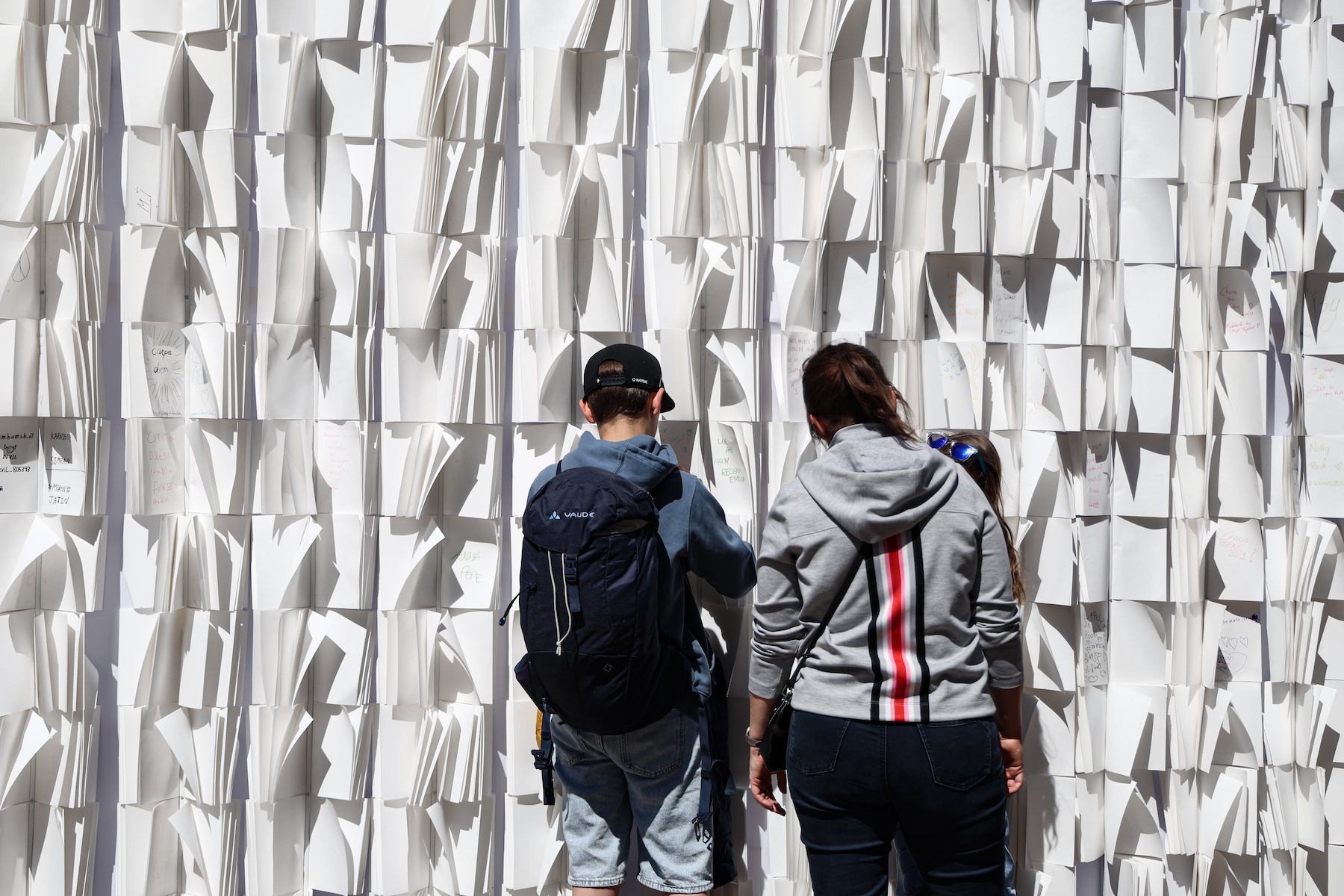
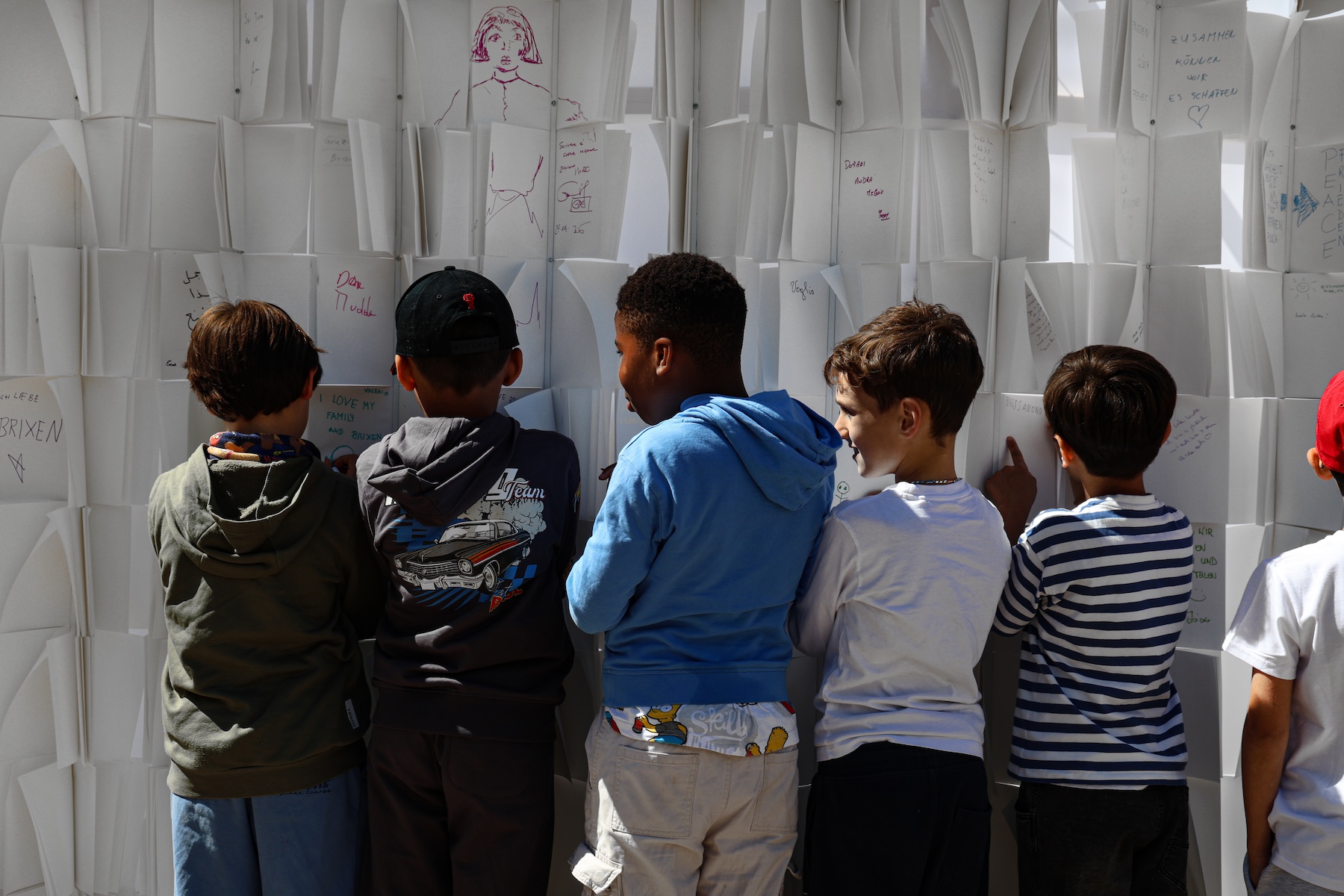
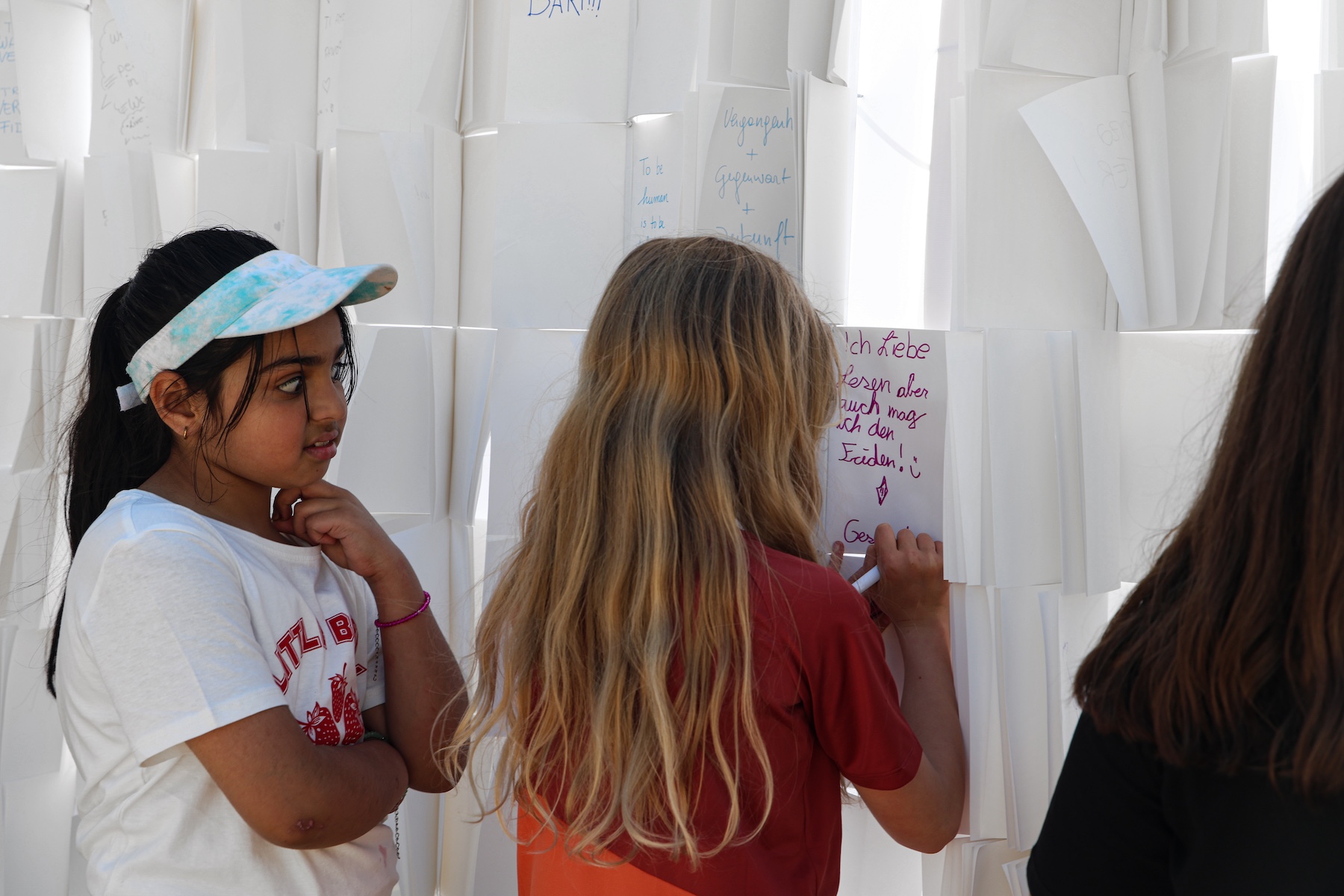
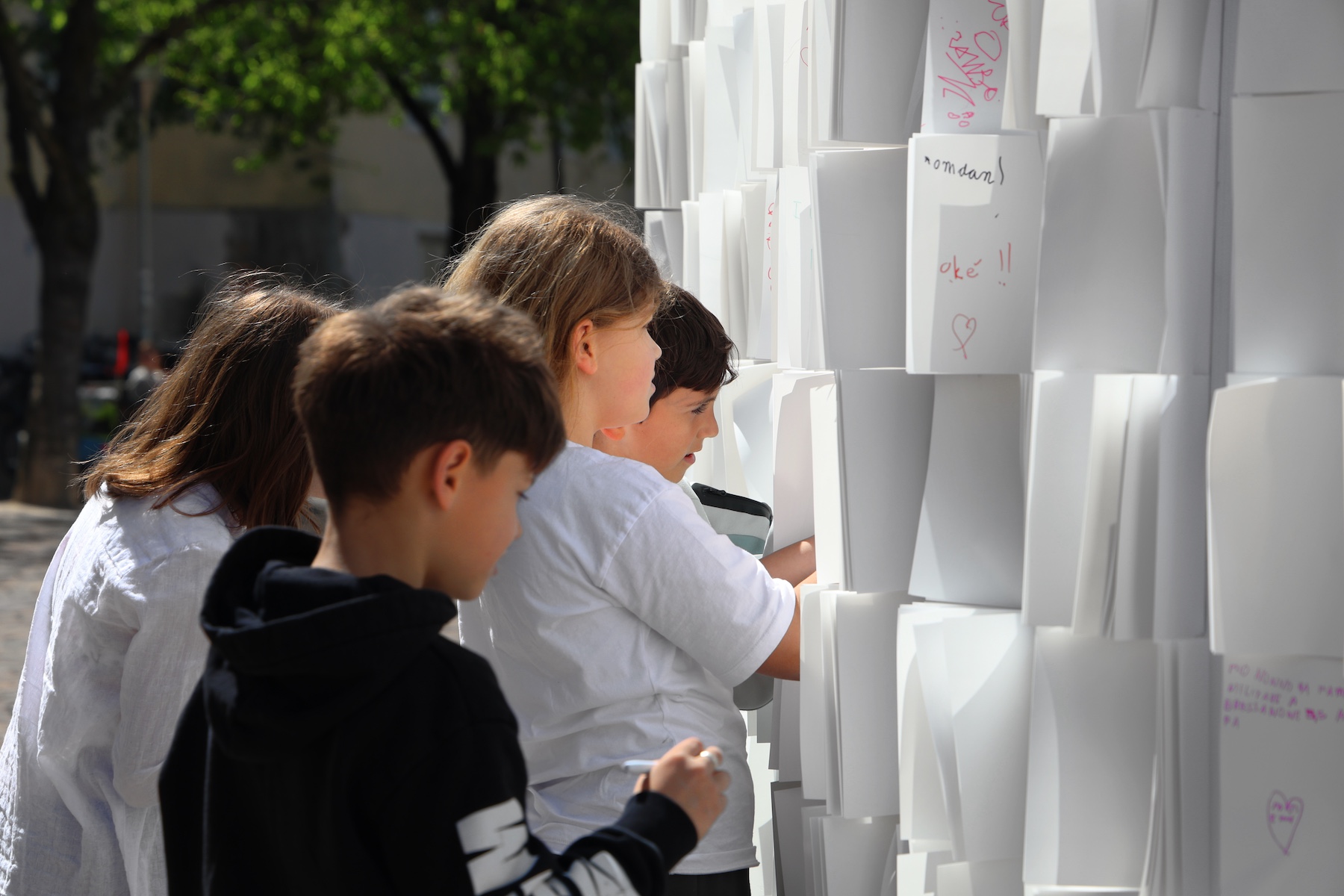
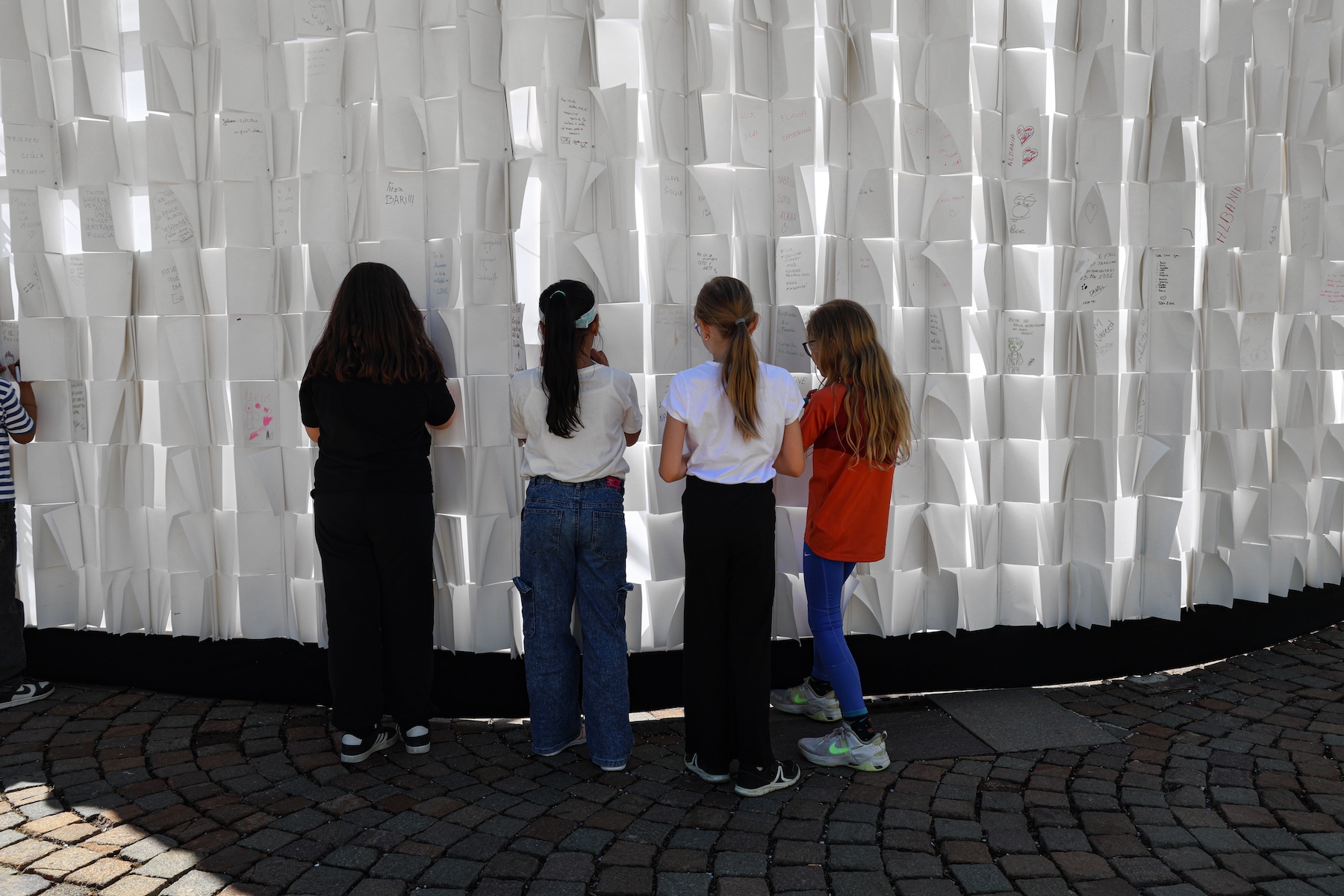
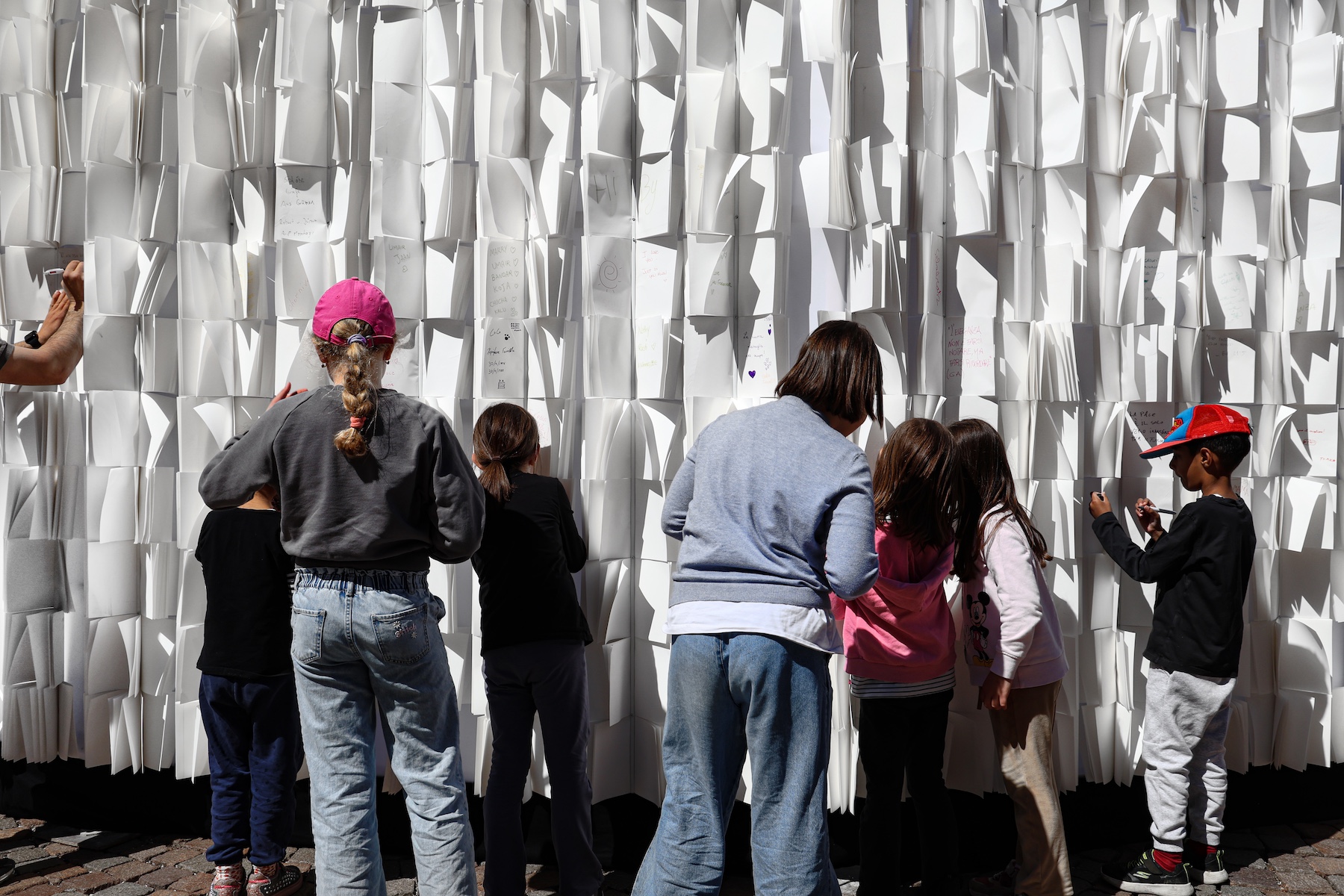
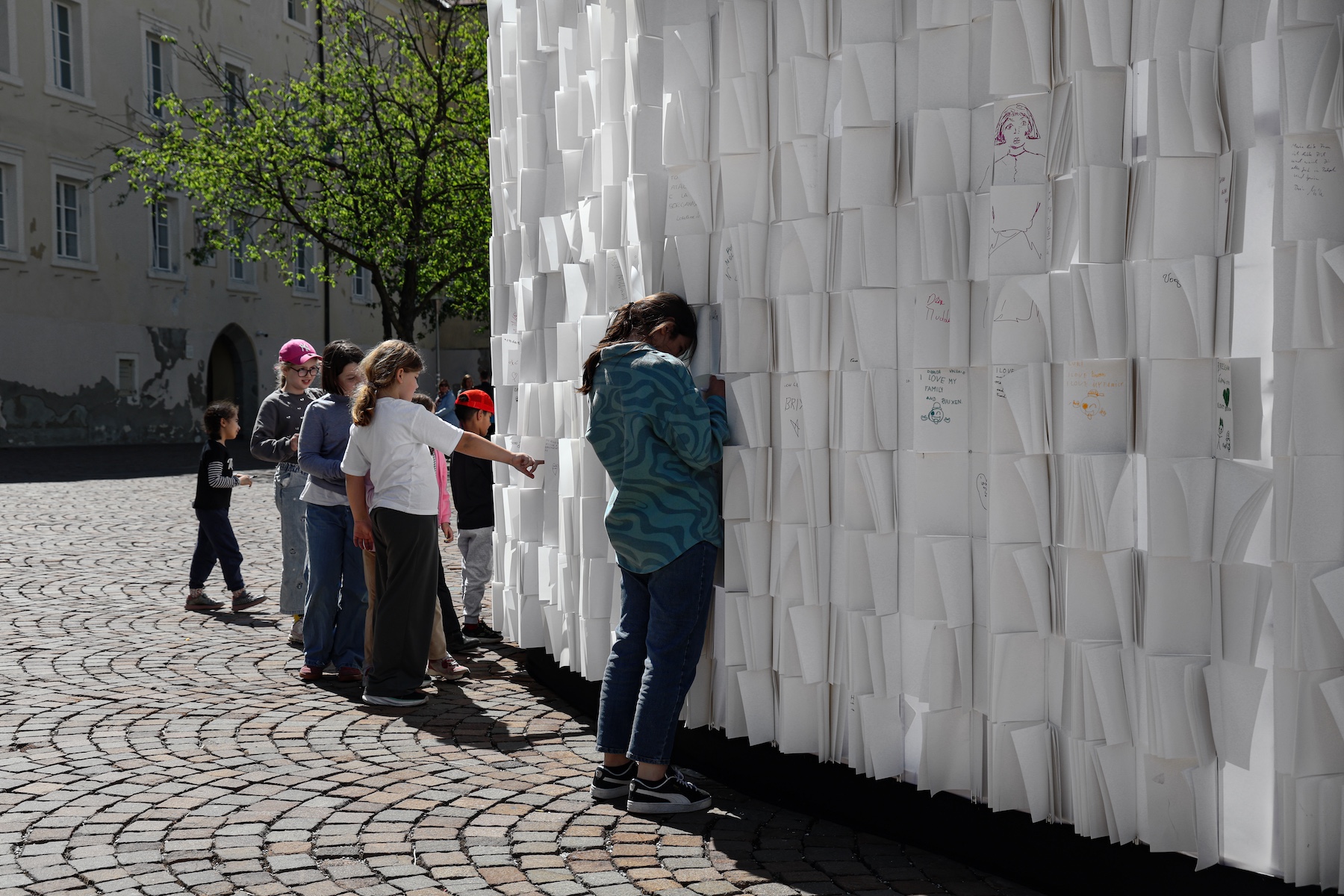
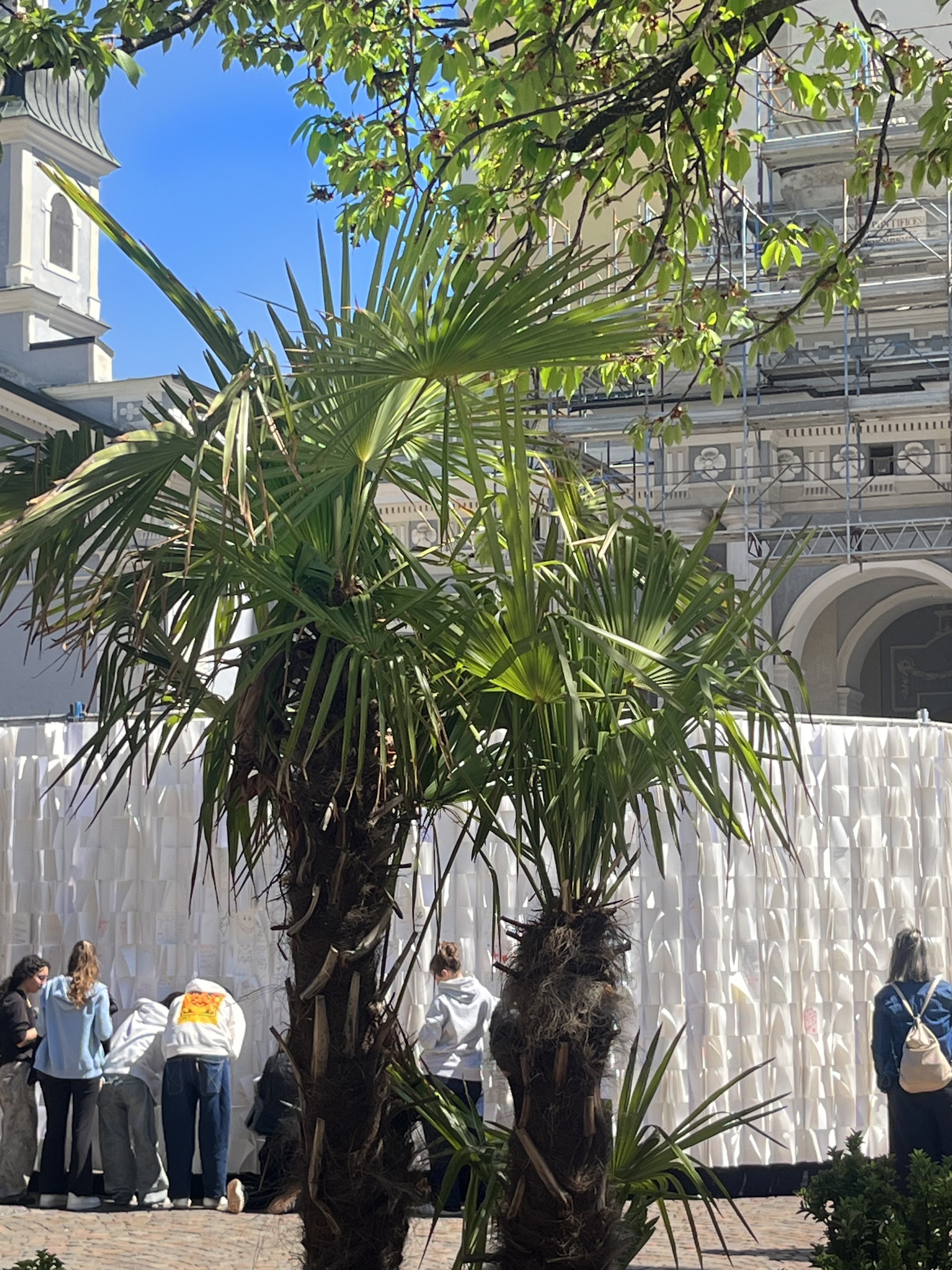
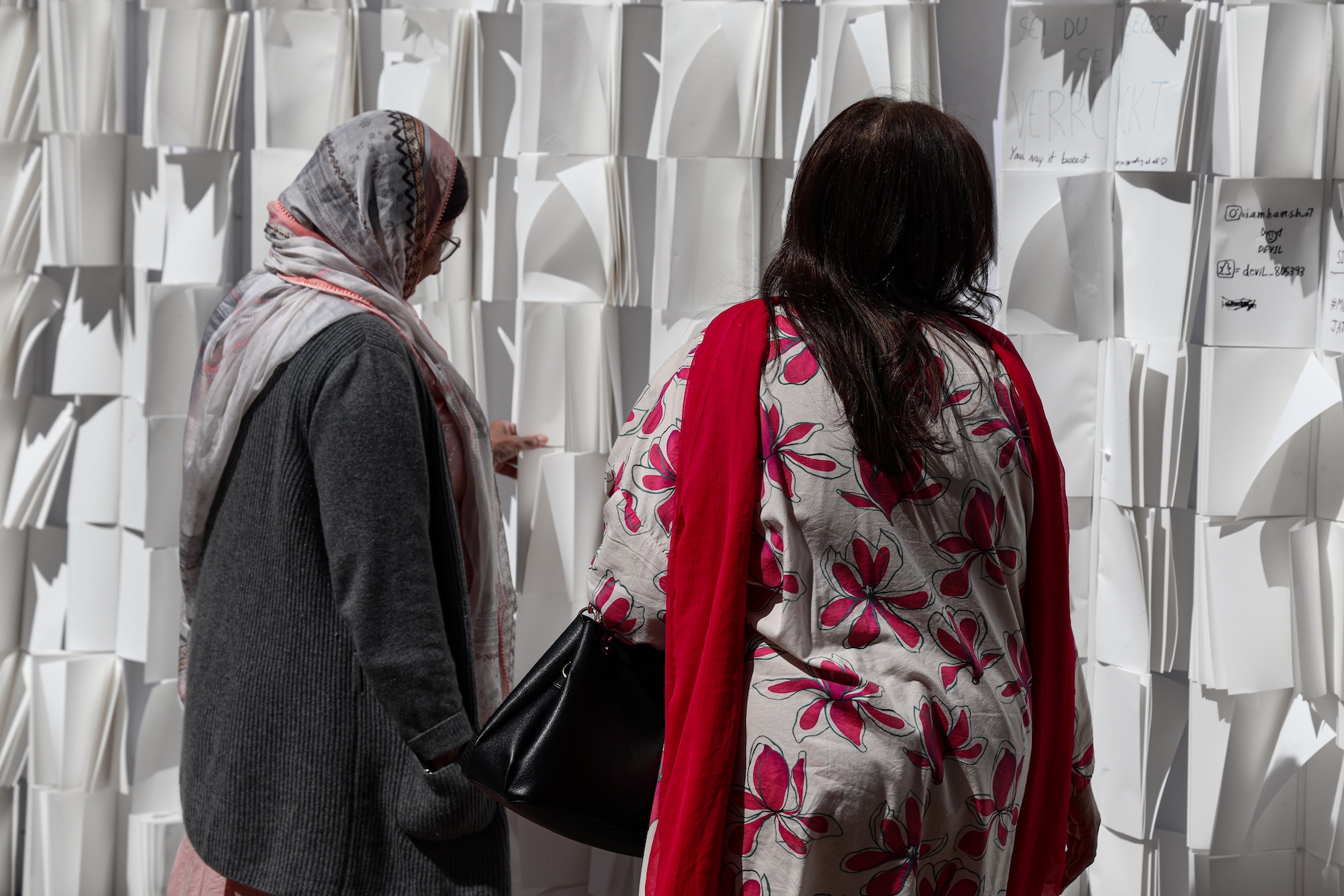
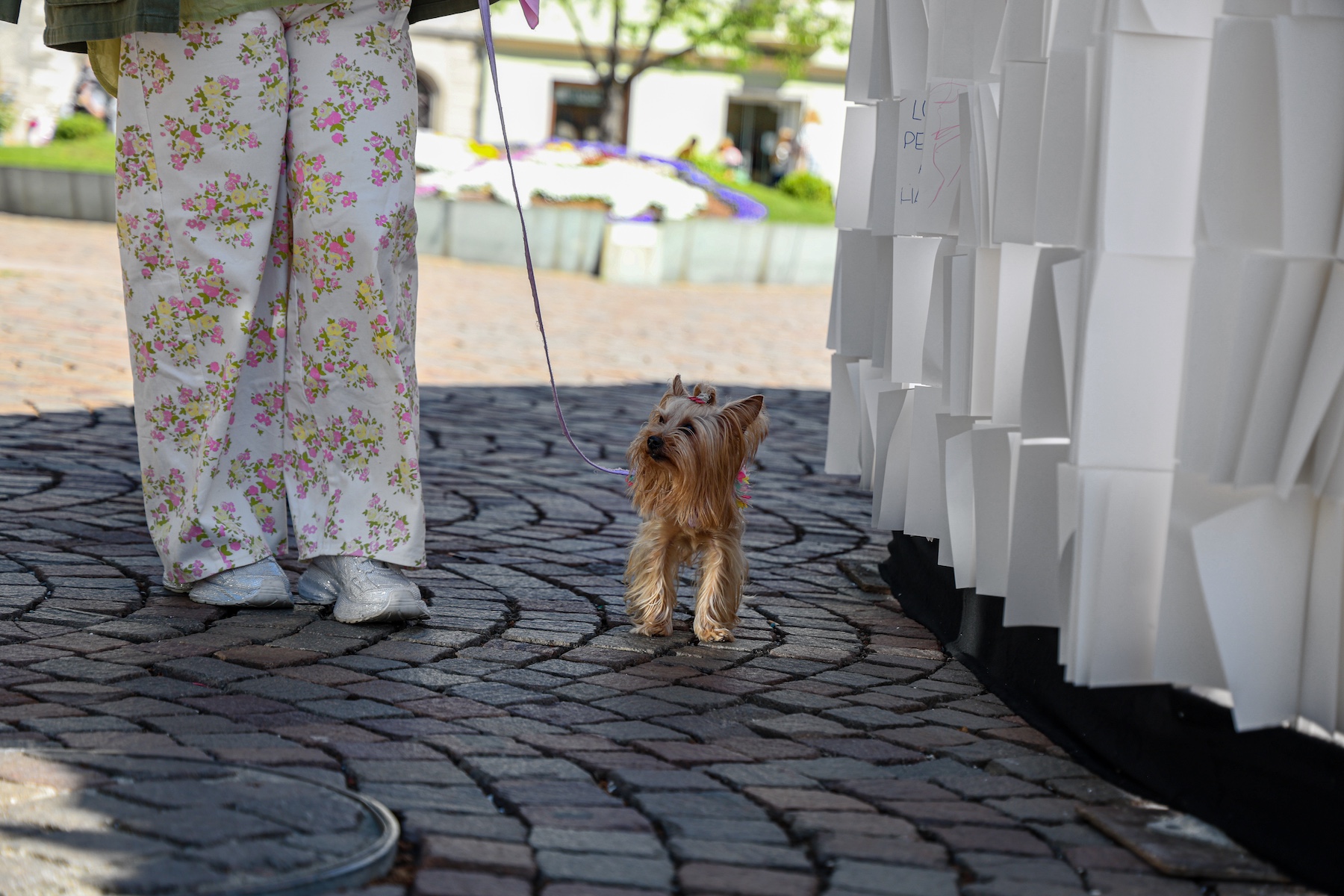
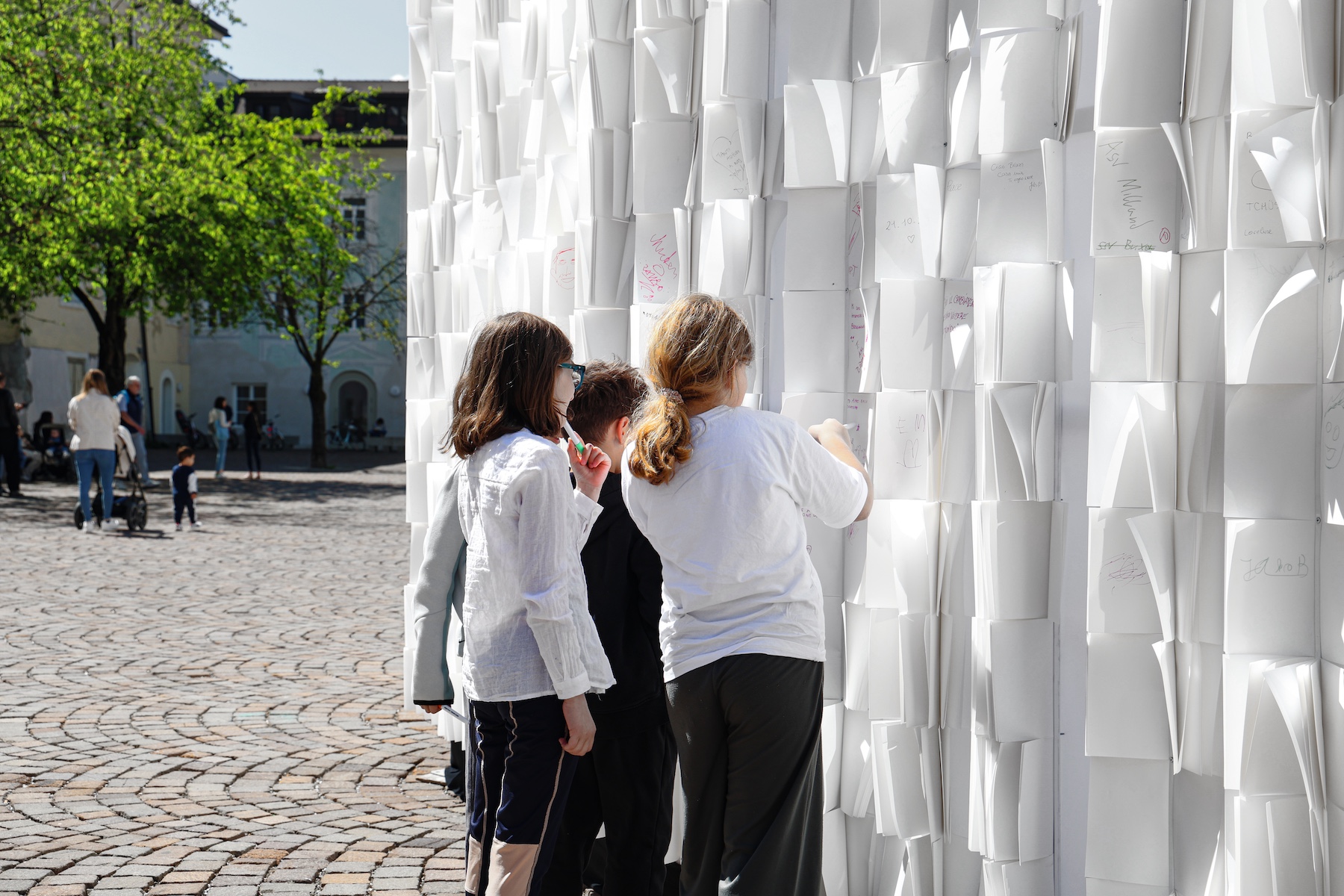
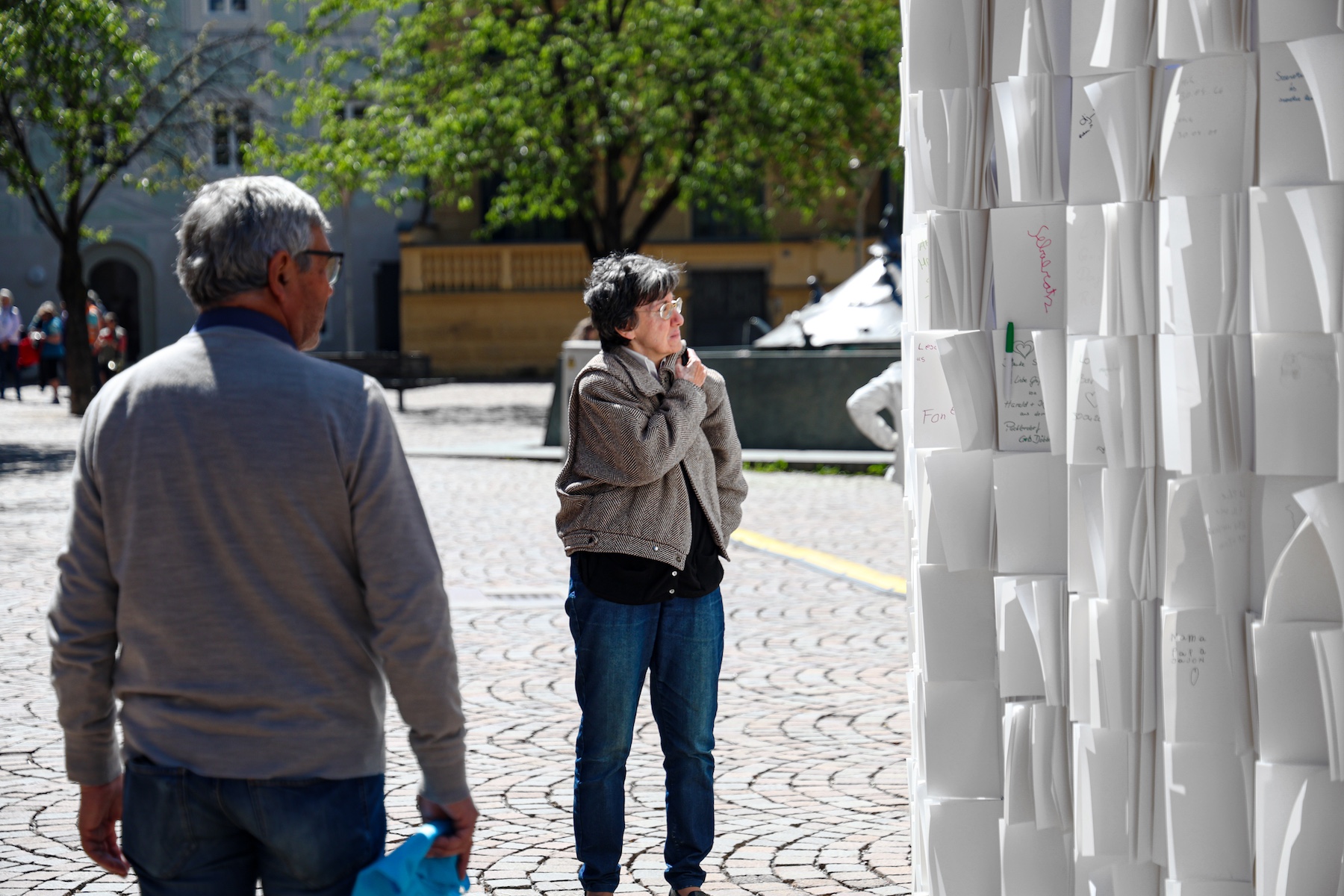
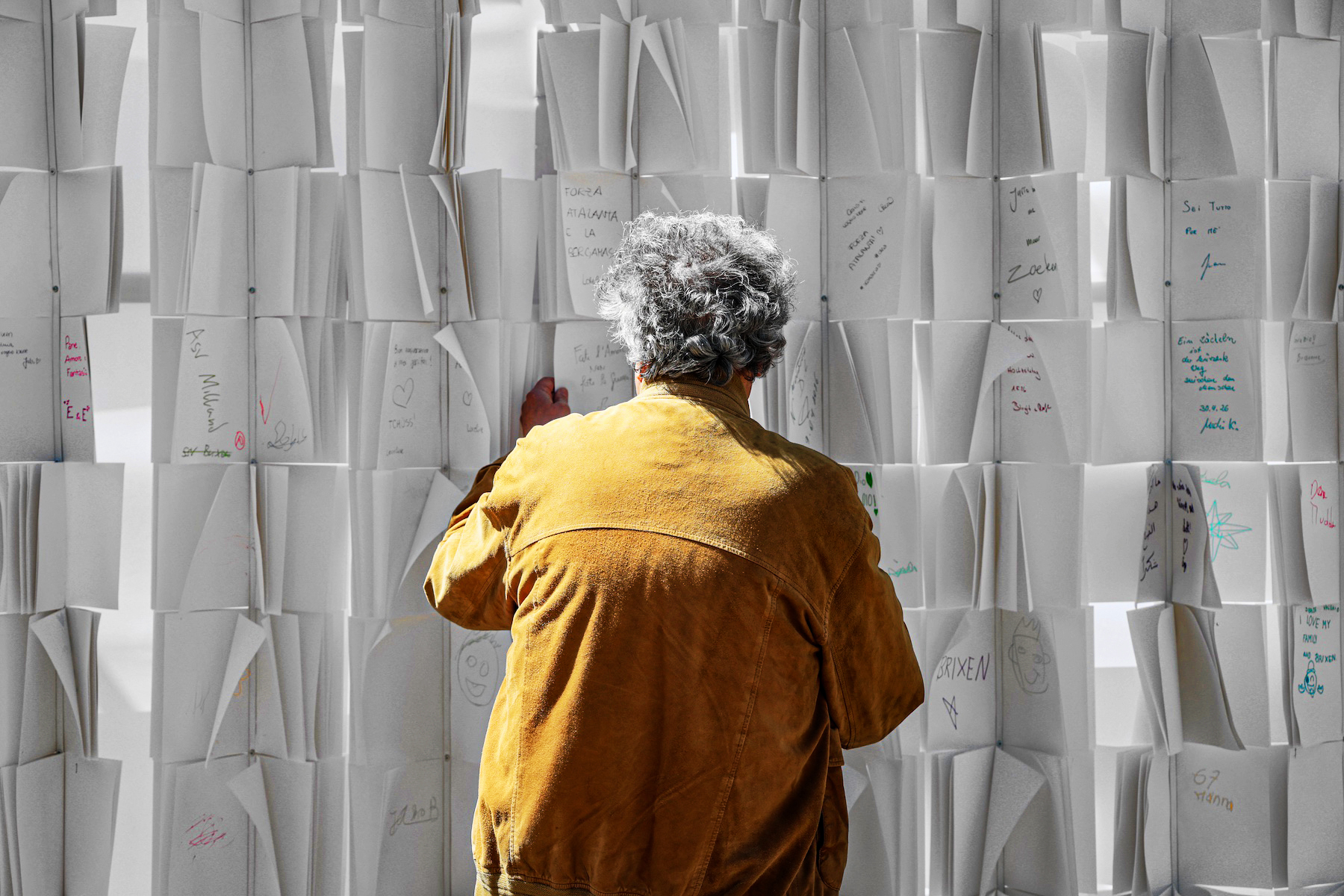
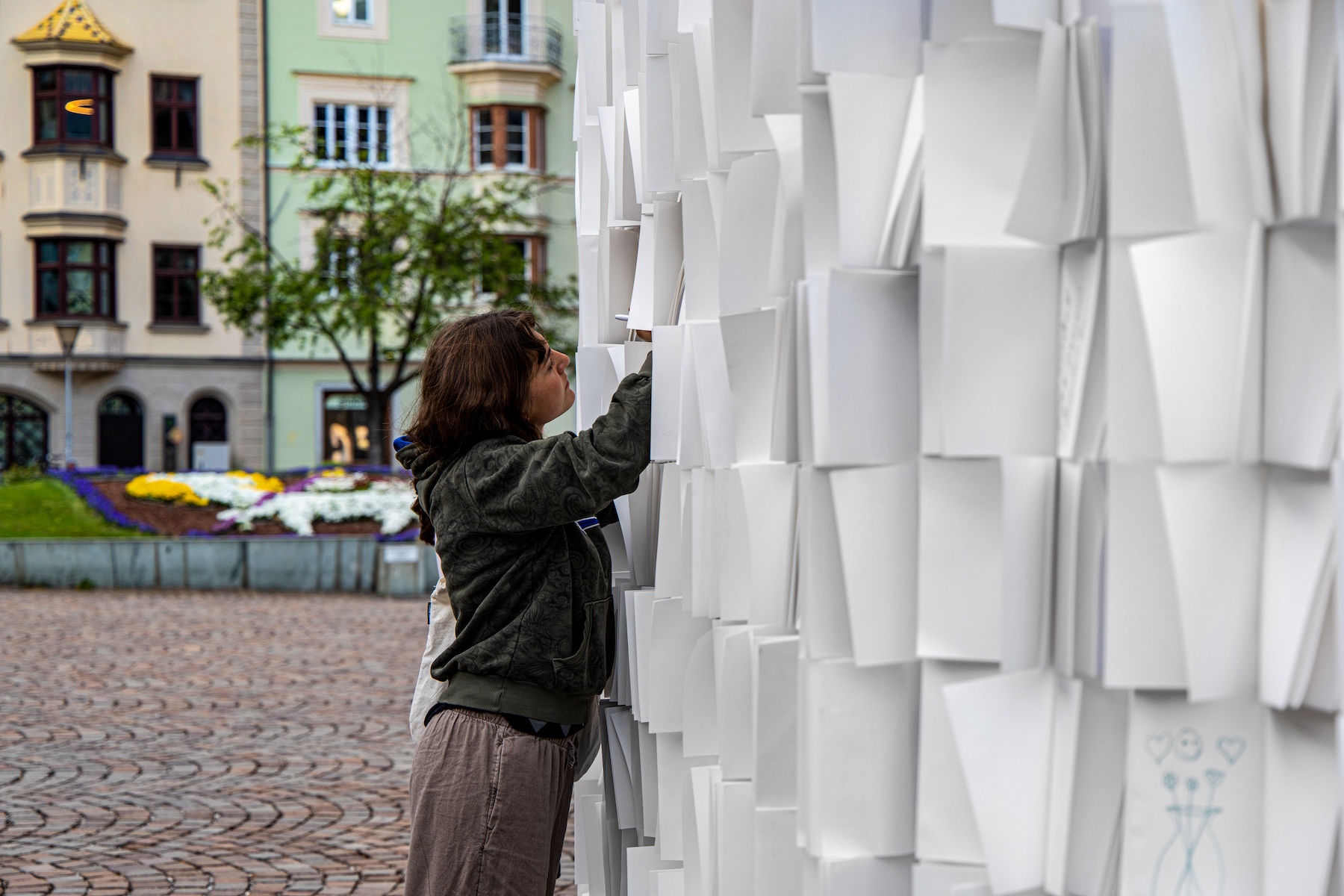
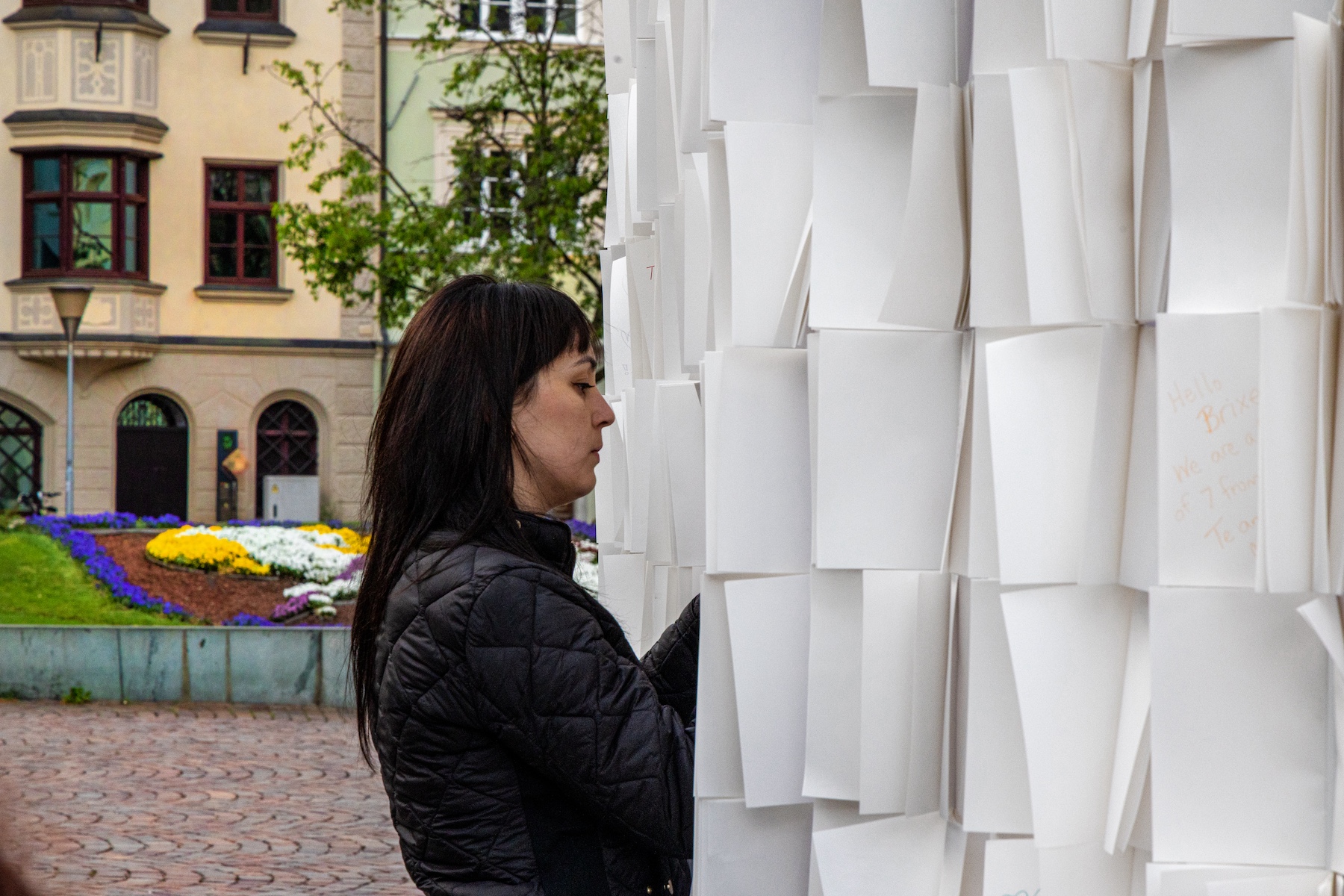
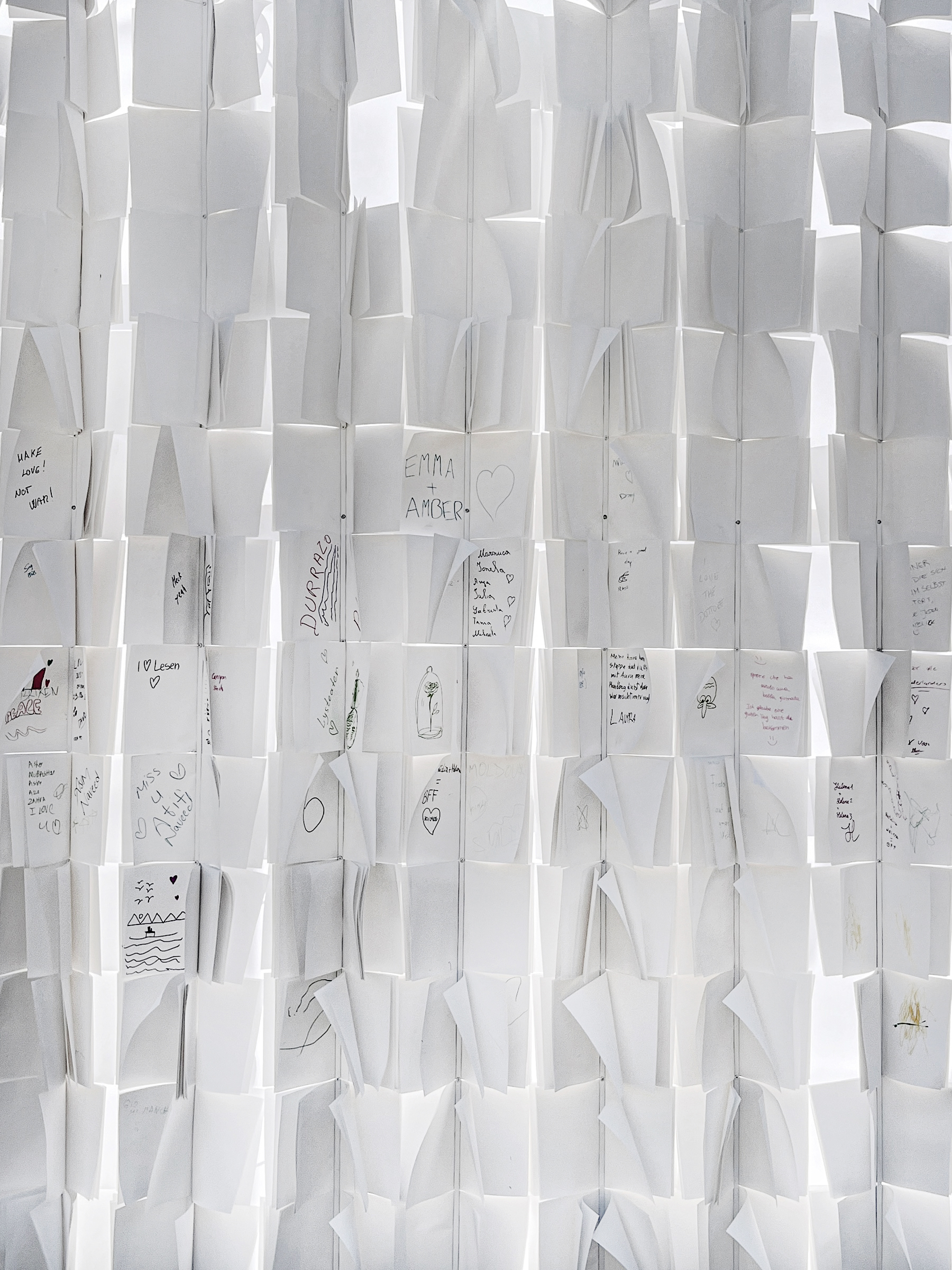
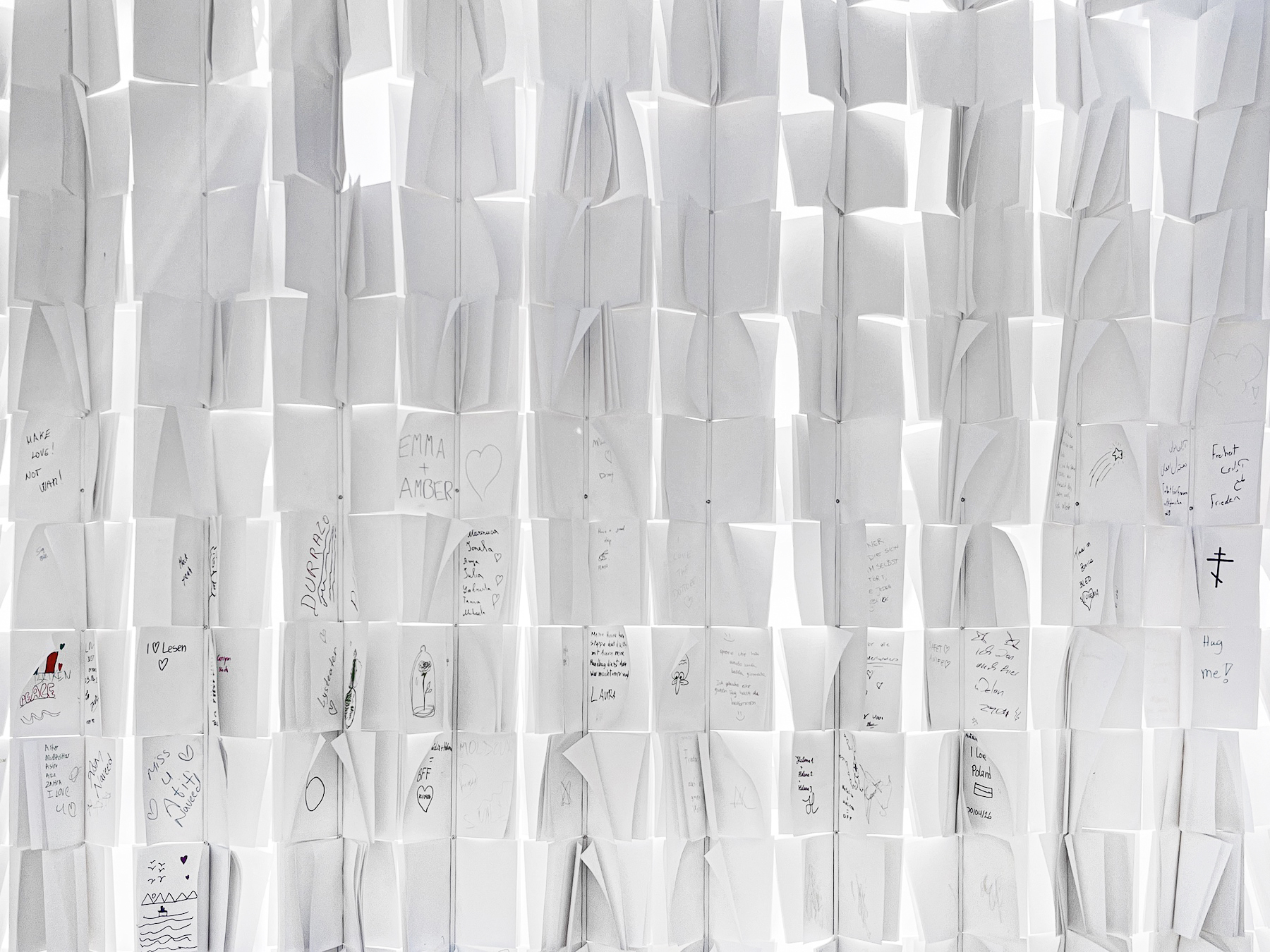
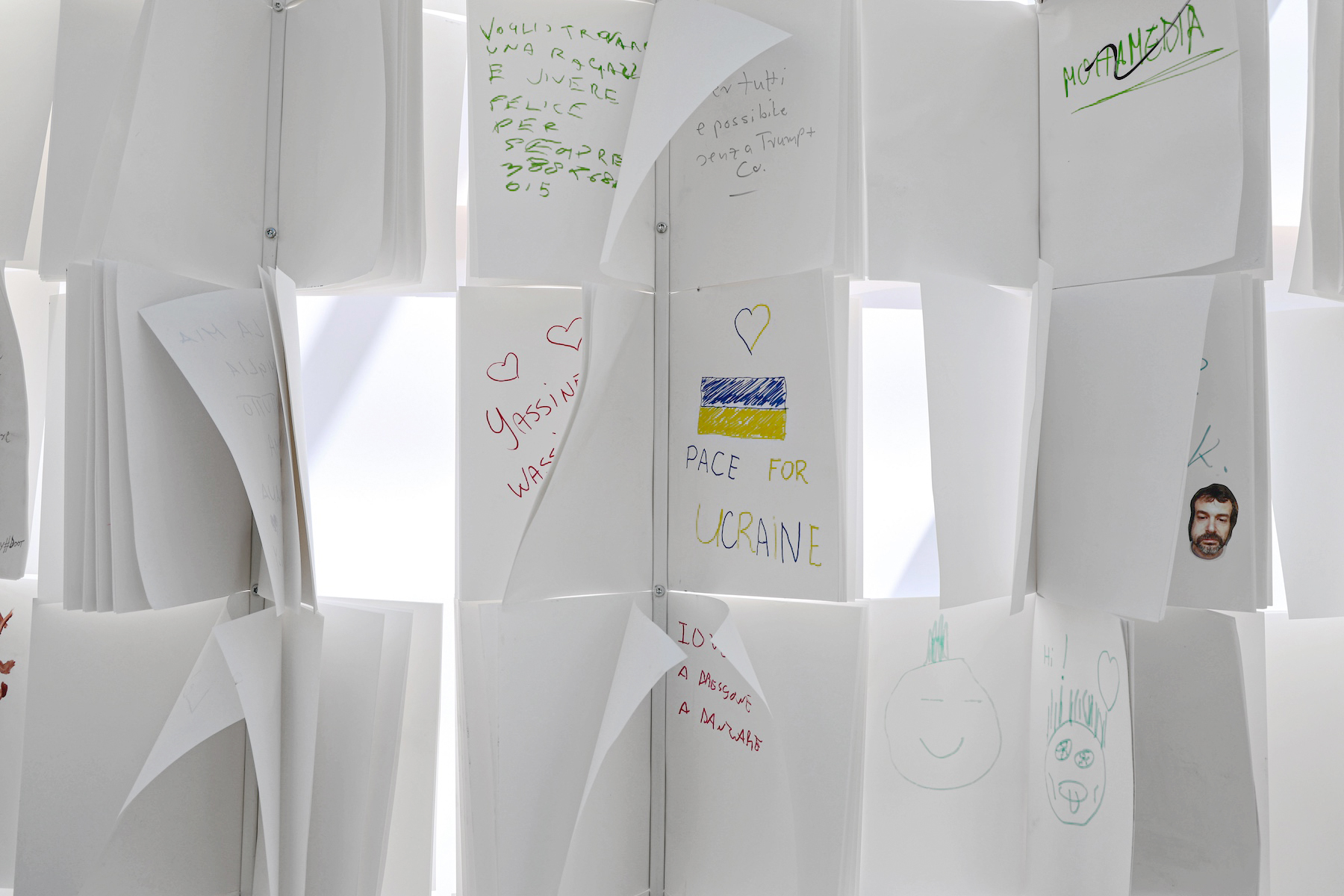
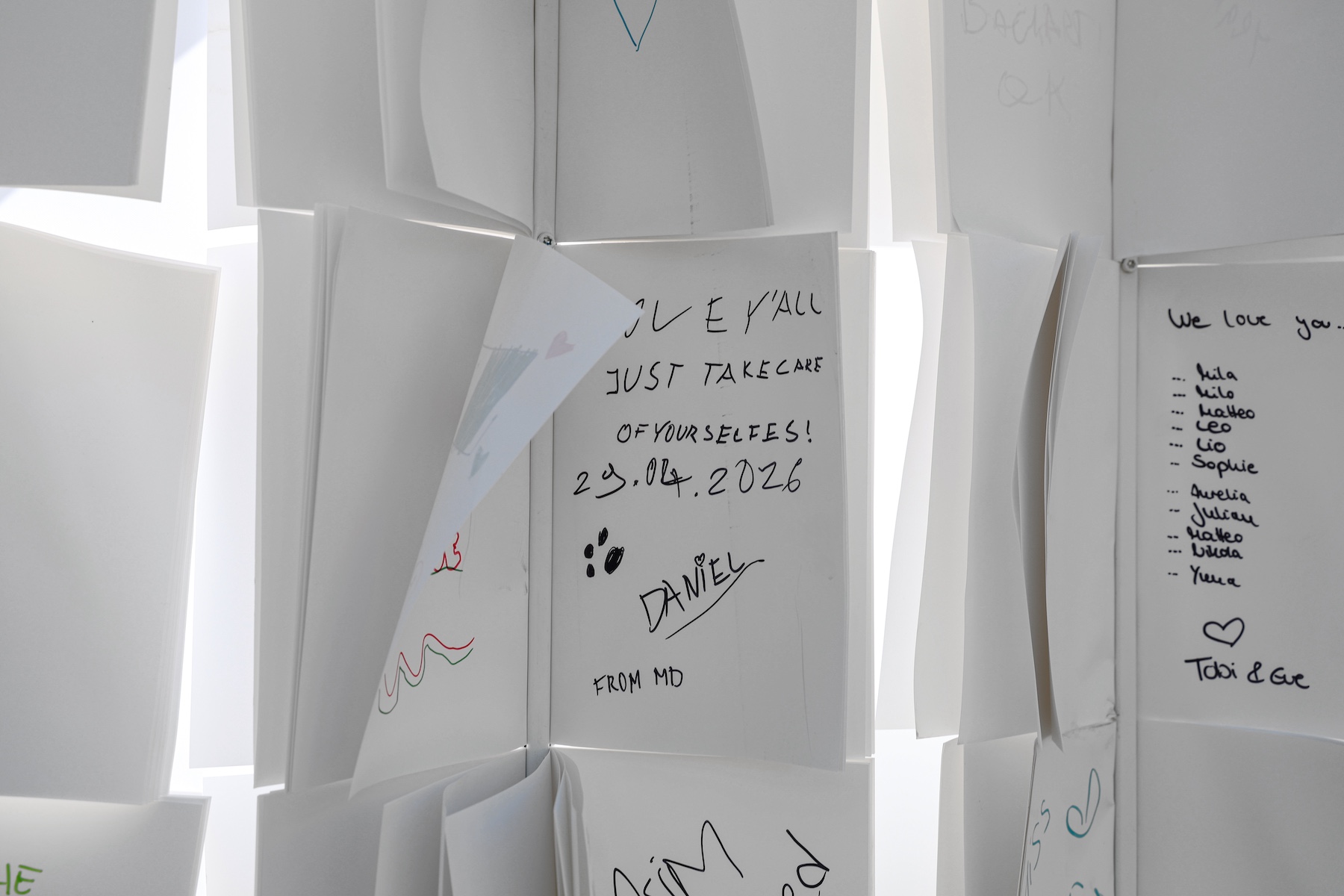
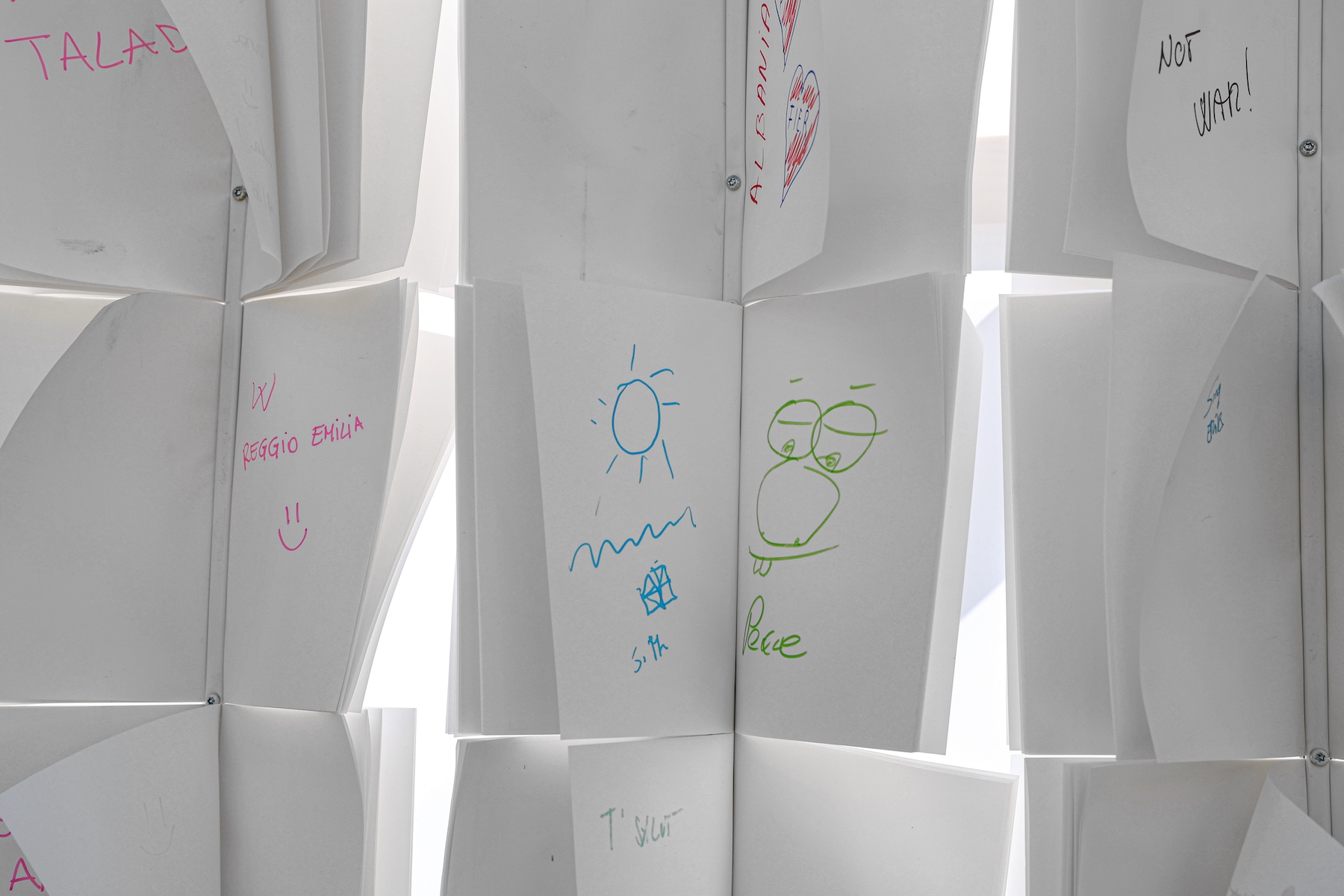
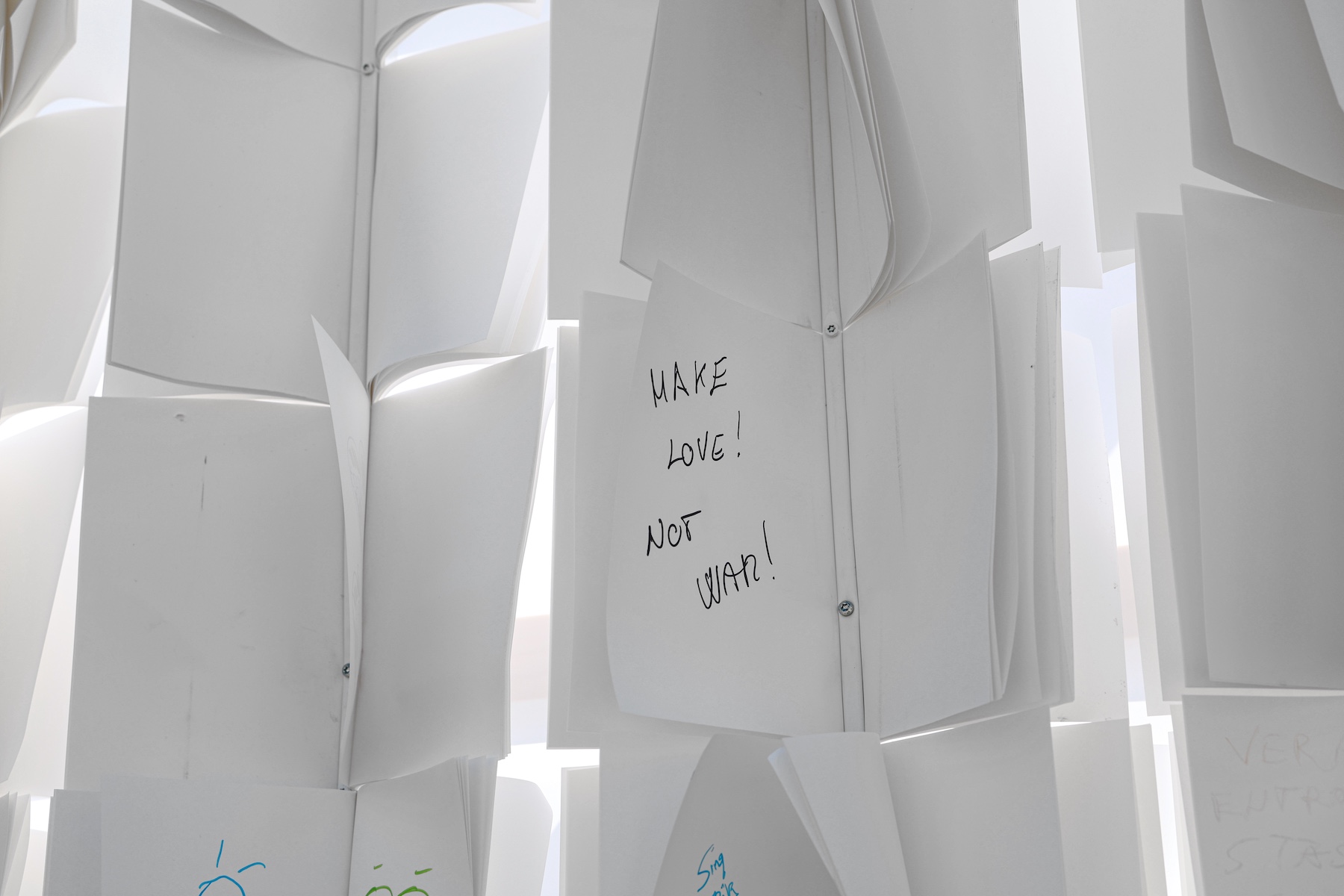
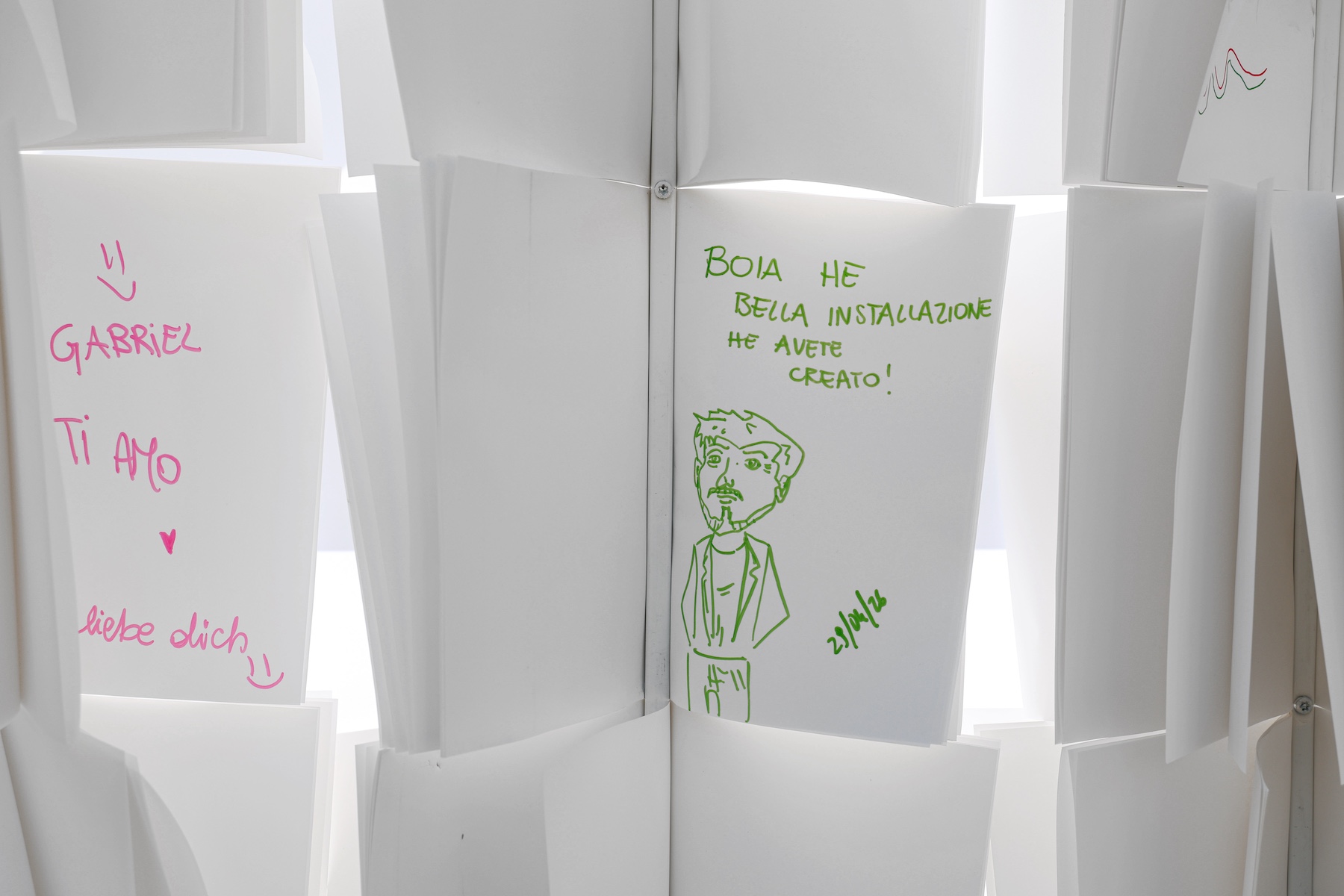
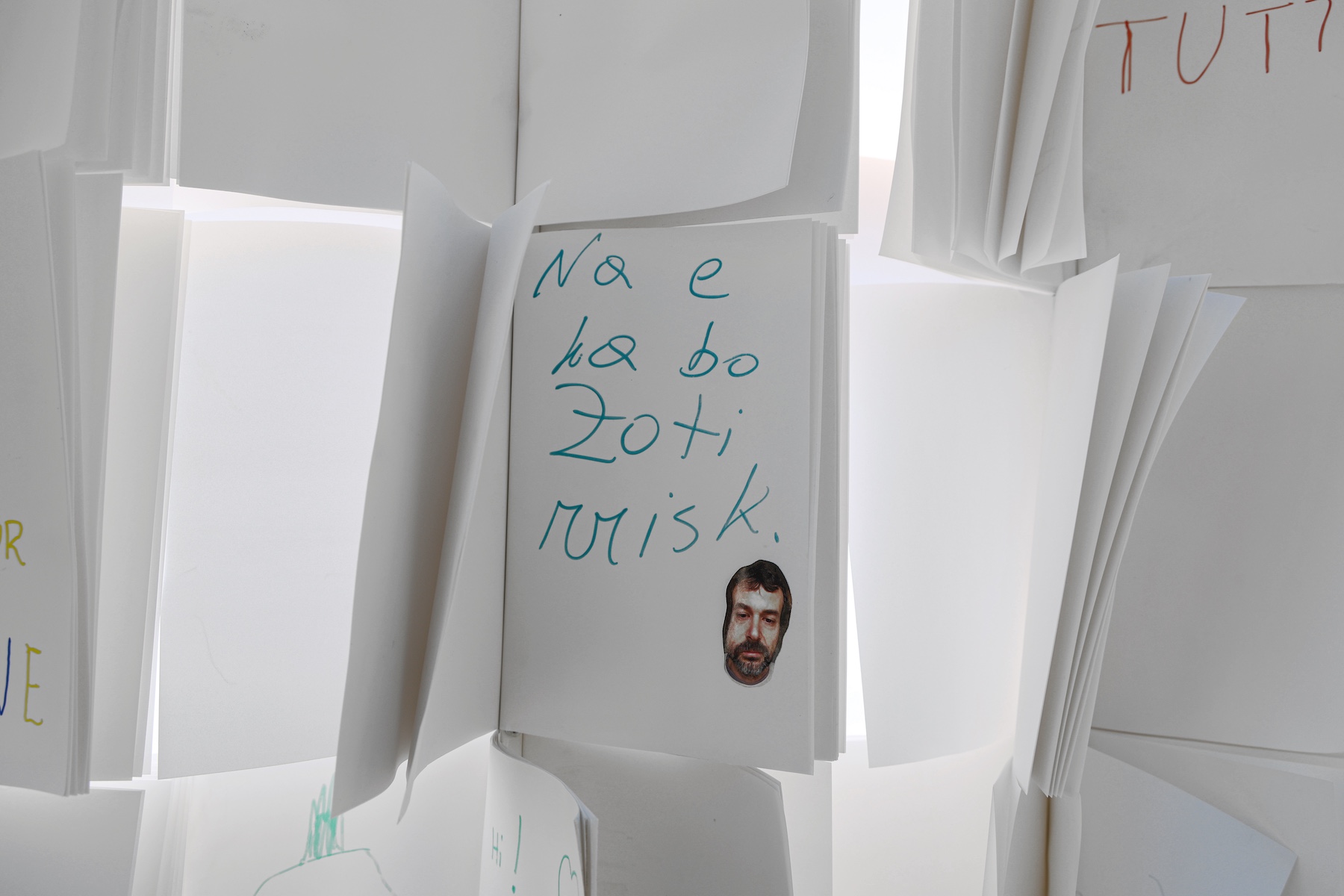
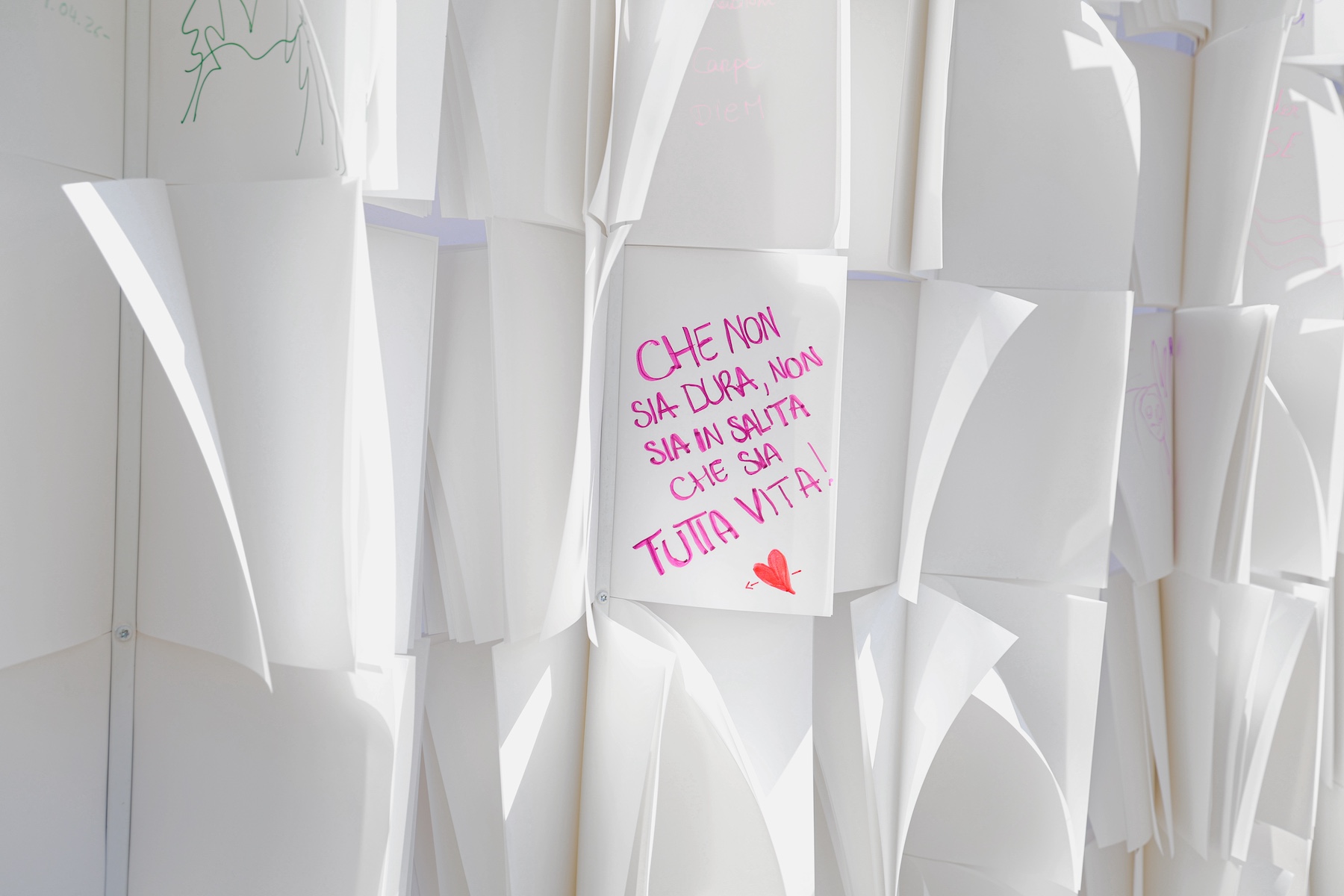
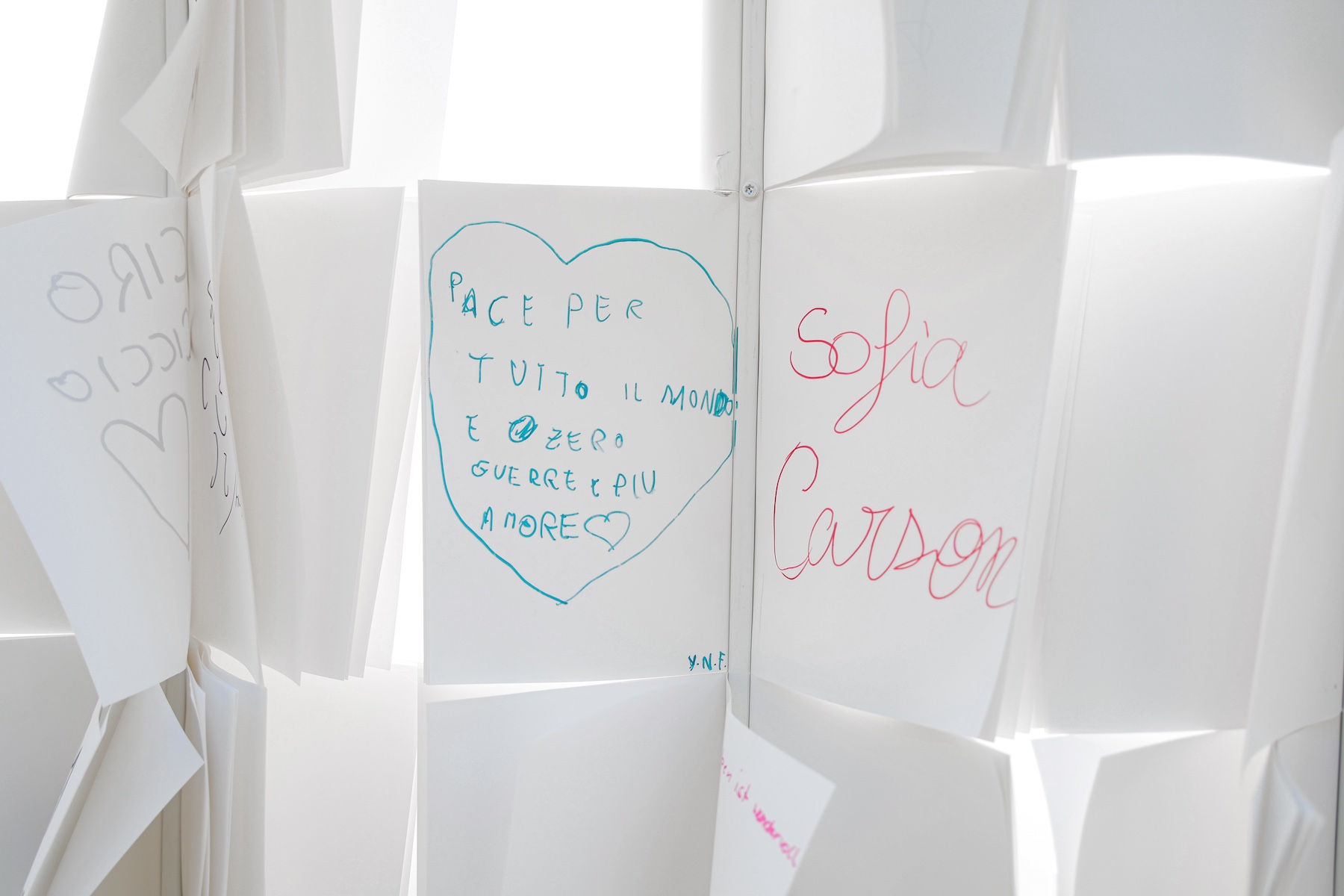
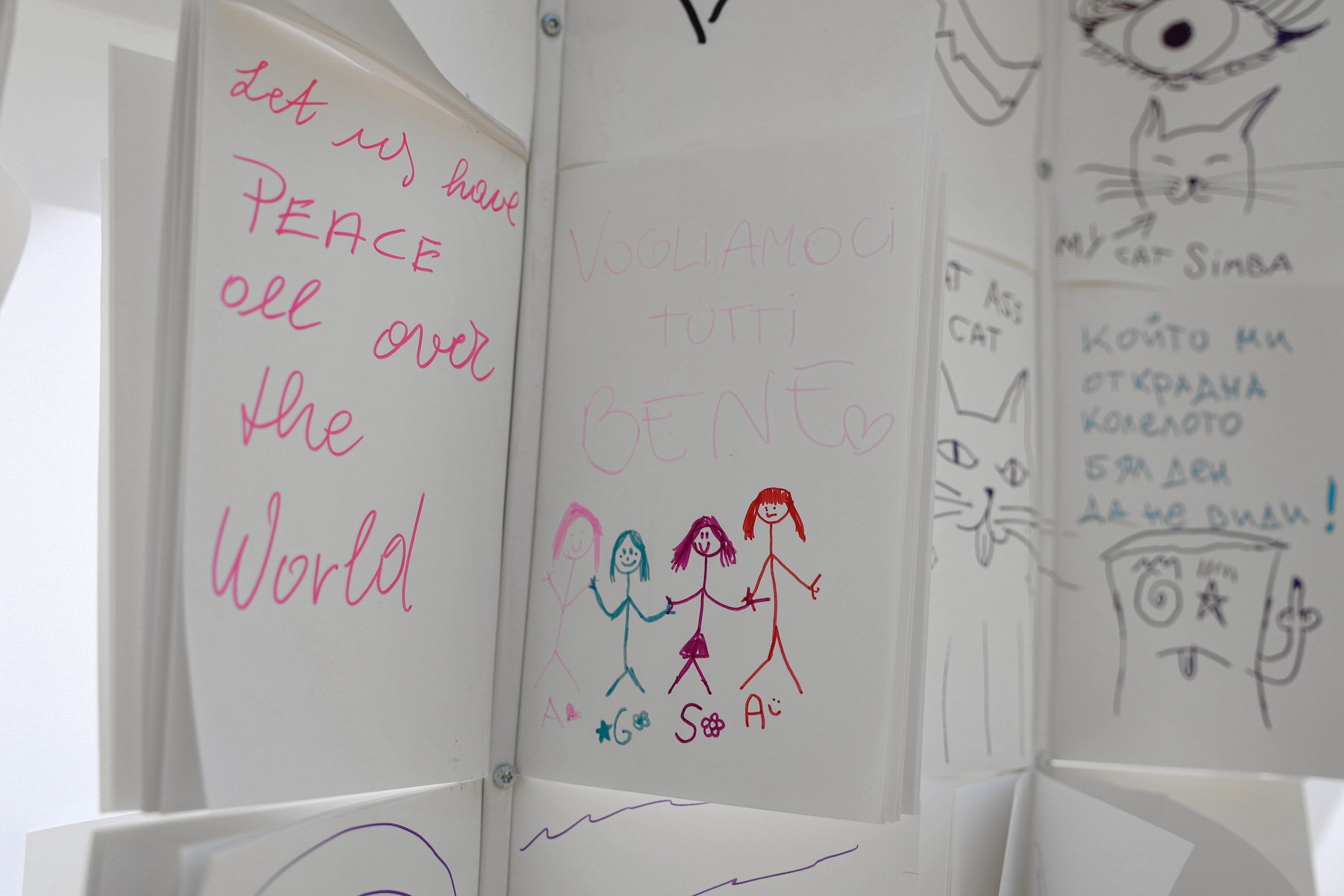
The installation was presented in front of the city’s cathedral, as part of an edition dedicated to reflecting on peace under the theme “Imagine Peace.” For this occasion, we built a large circular wall of free expression measuring 12 meters in diameter and 3 meters in height, covered with thousands of blank pages illuminated from within, on which visitors could freely write and draw.

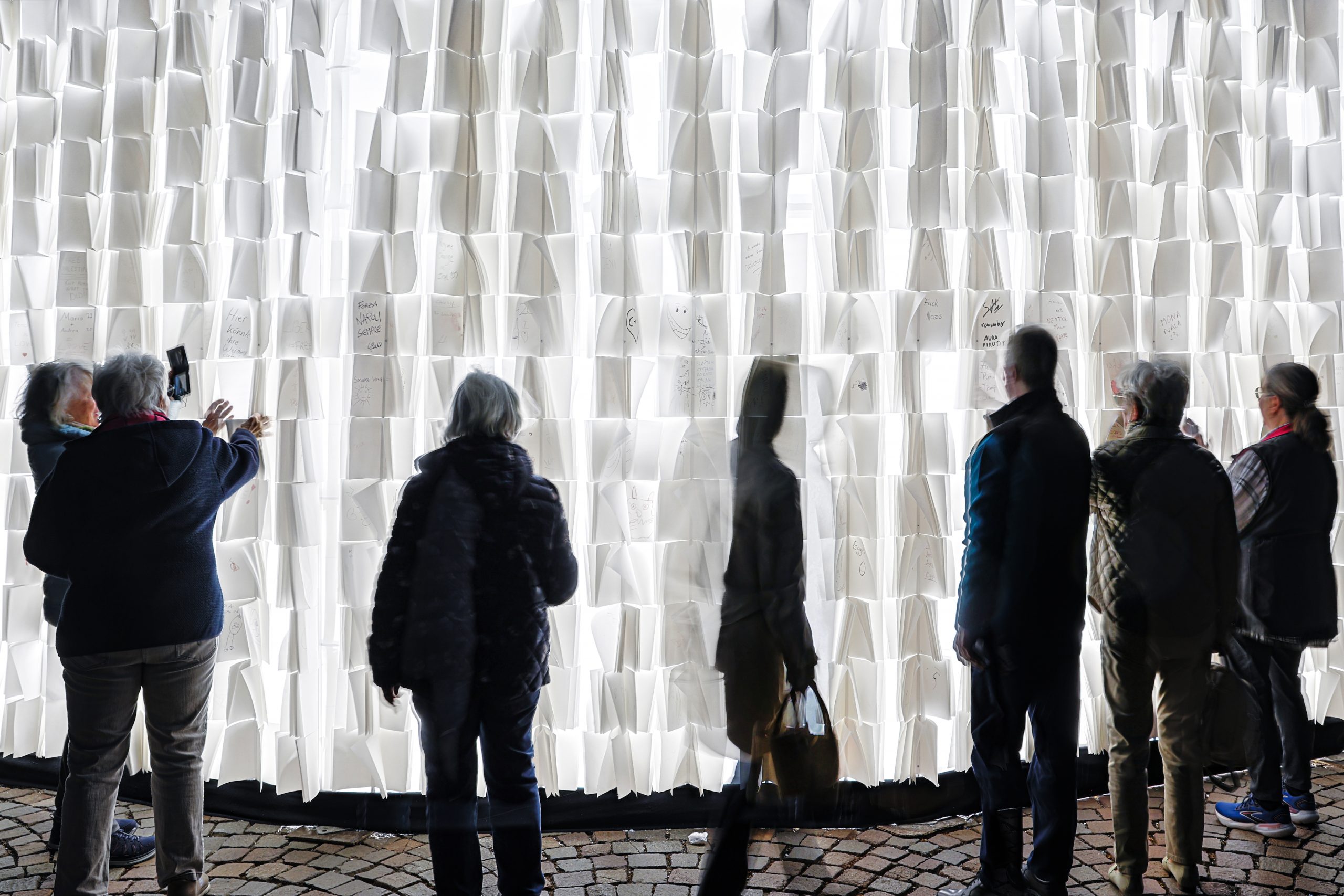
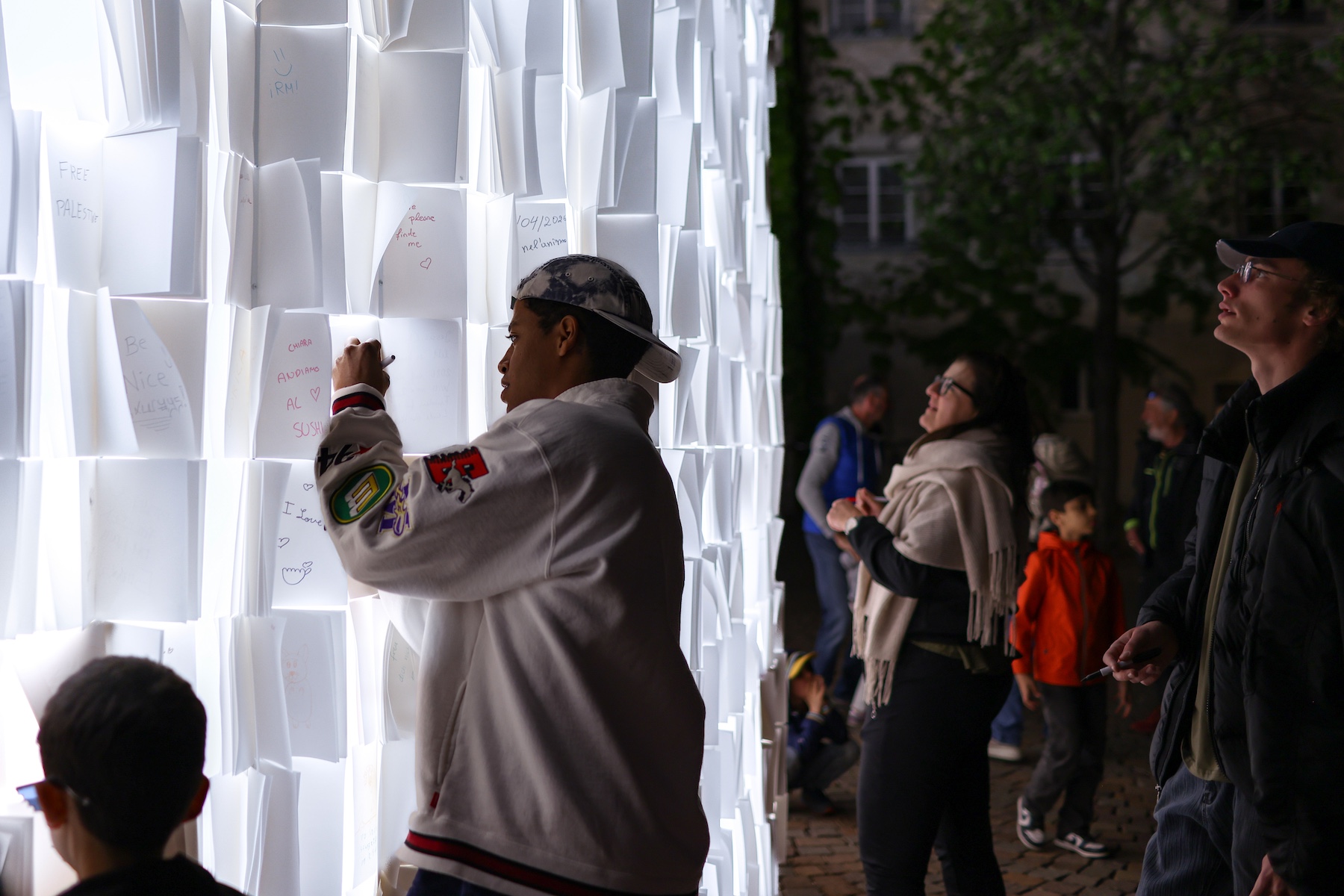
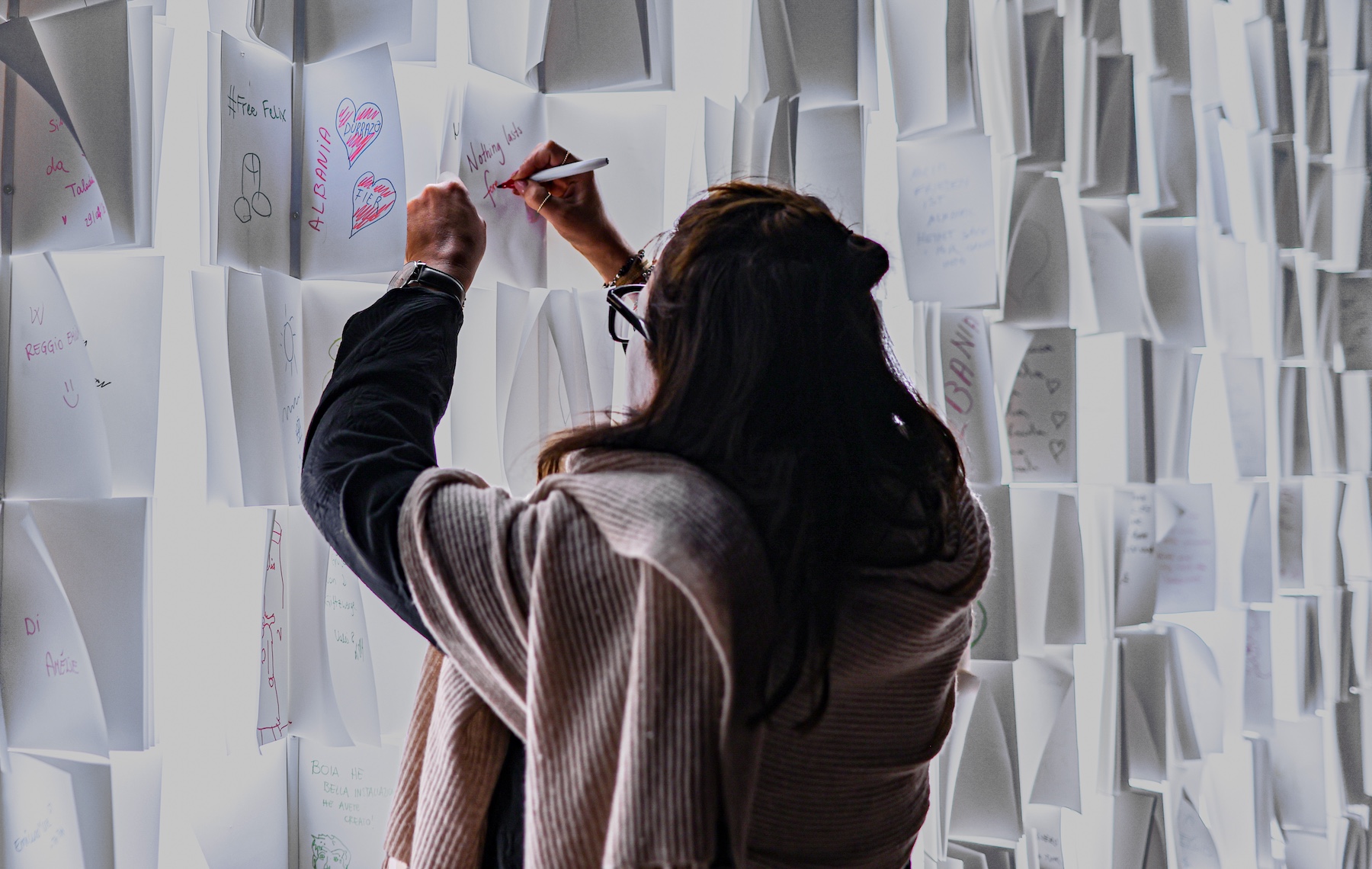
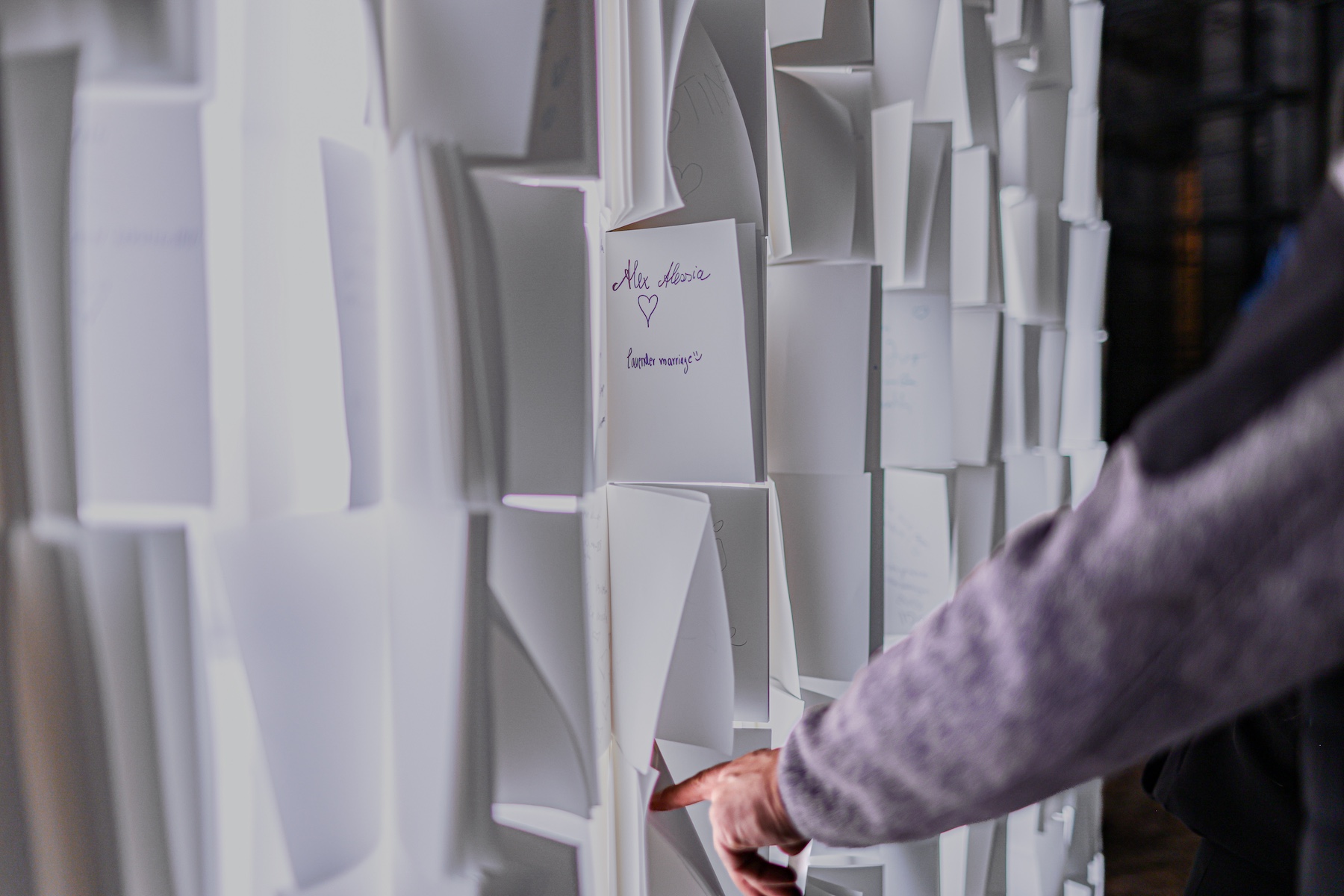
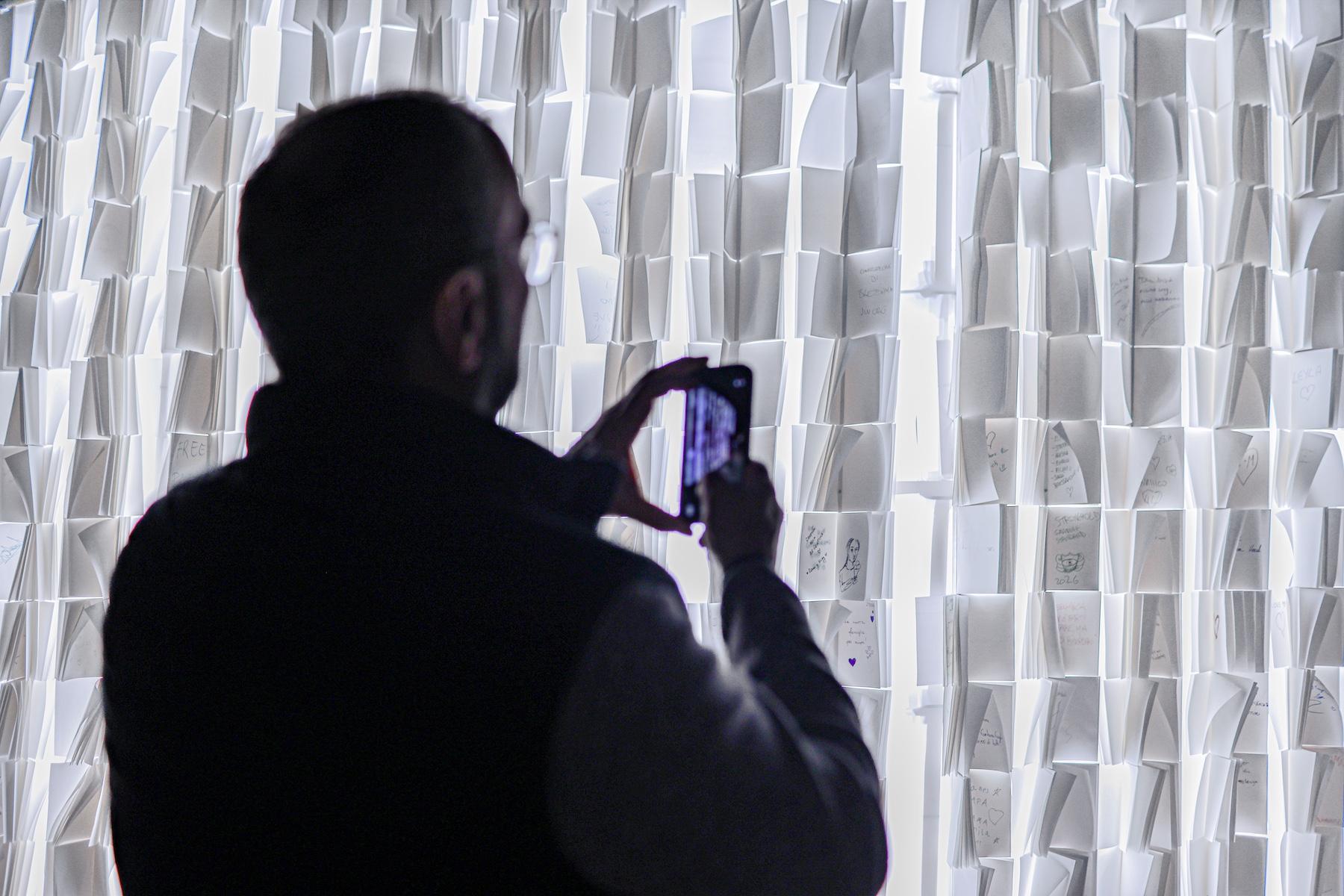
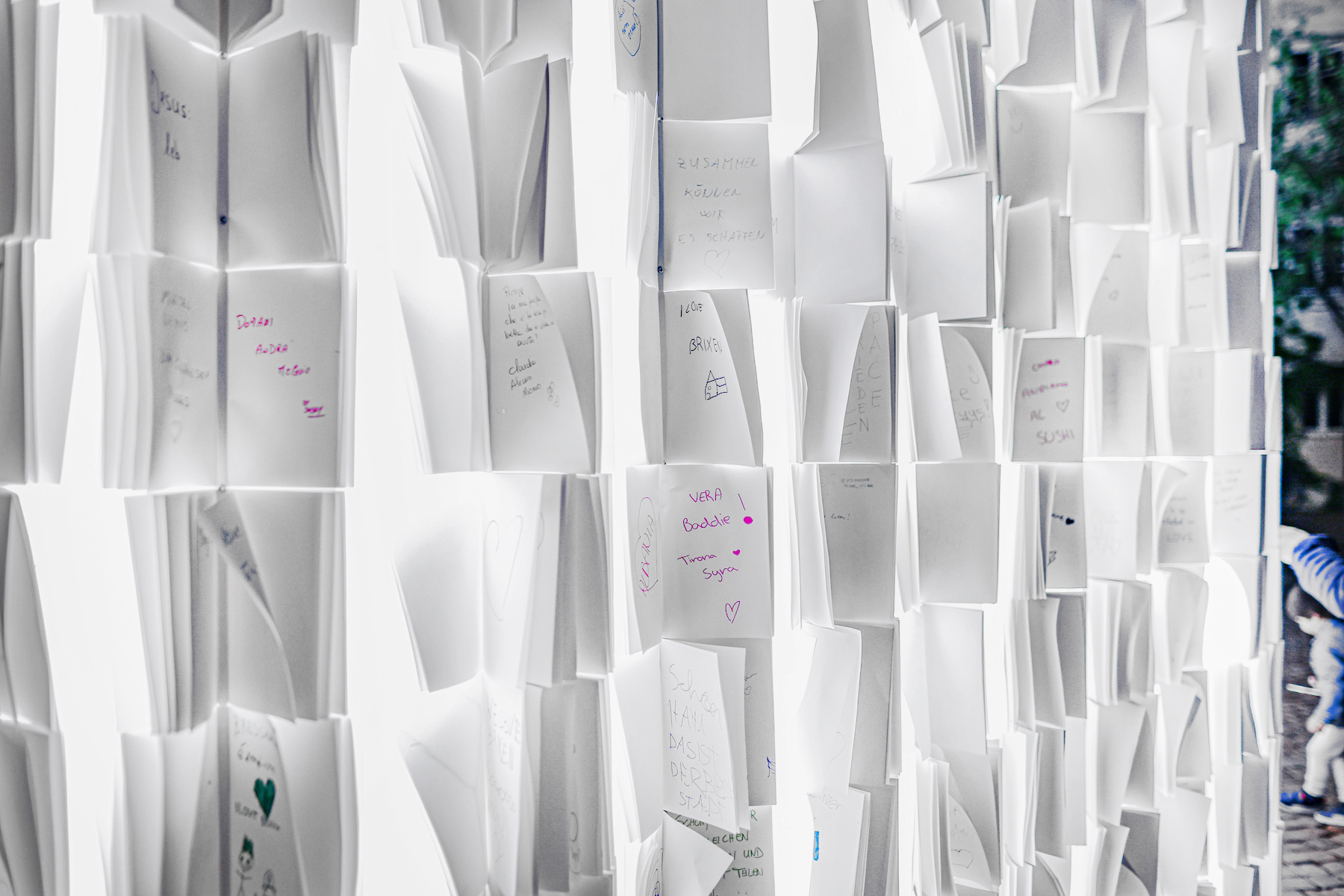
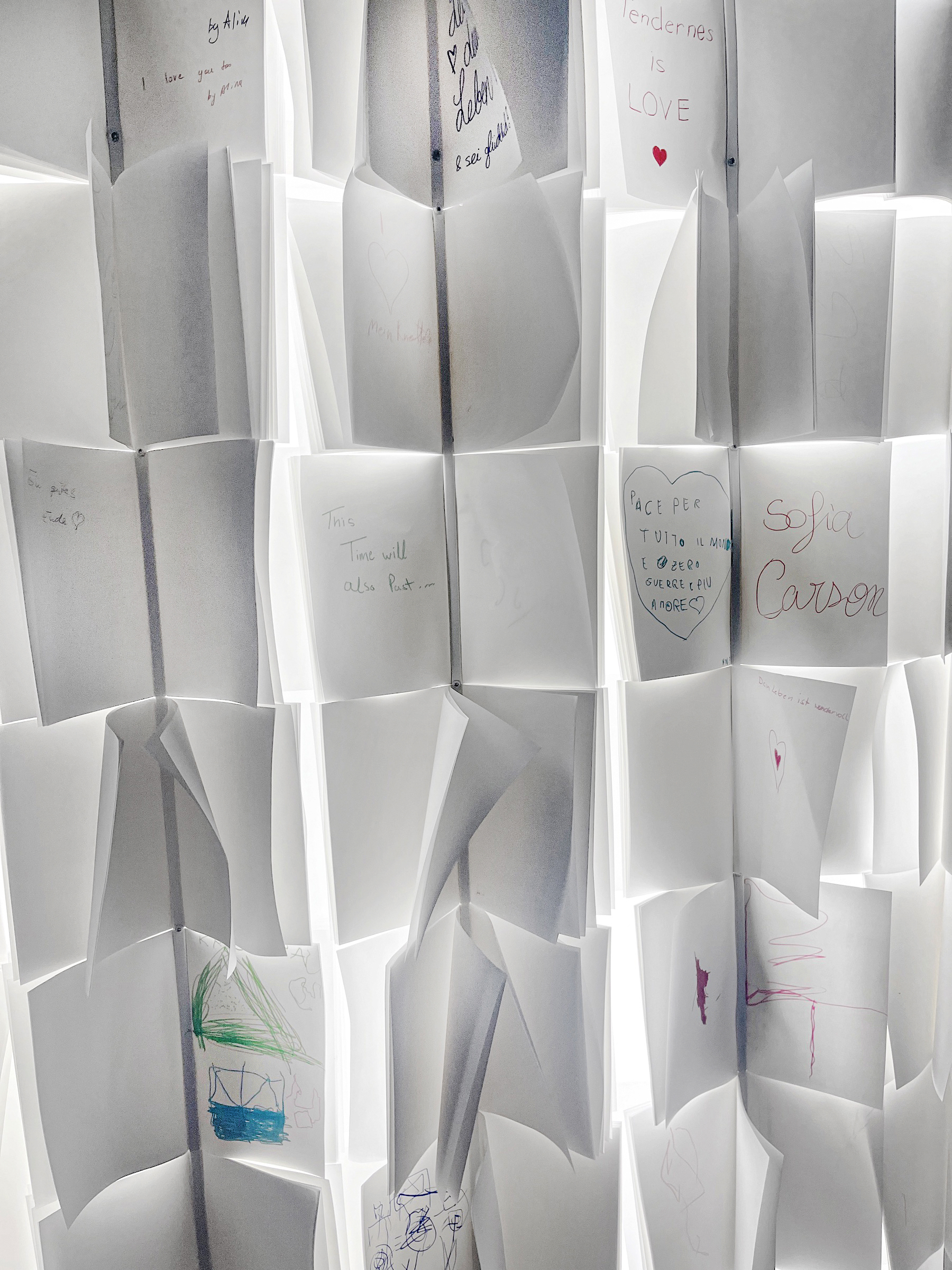
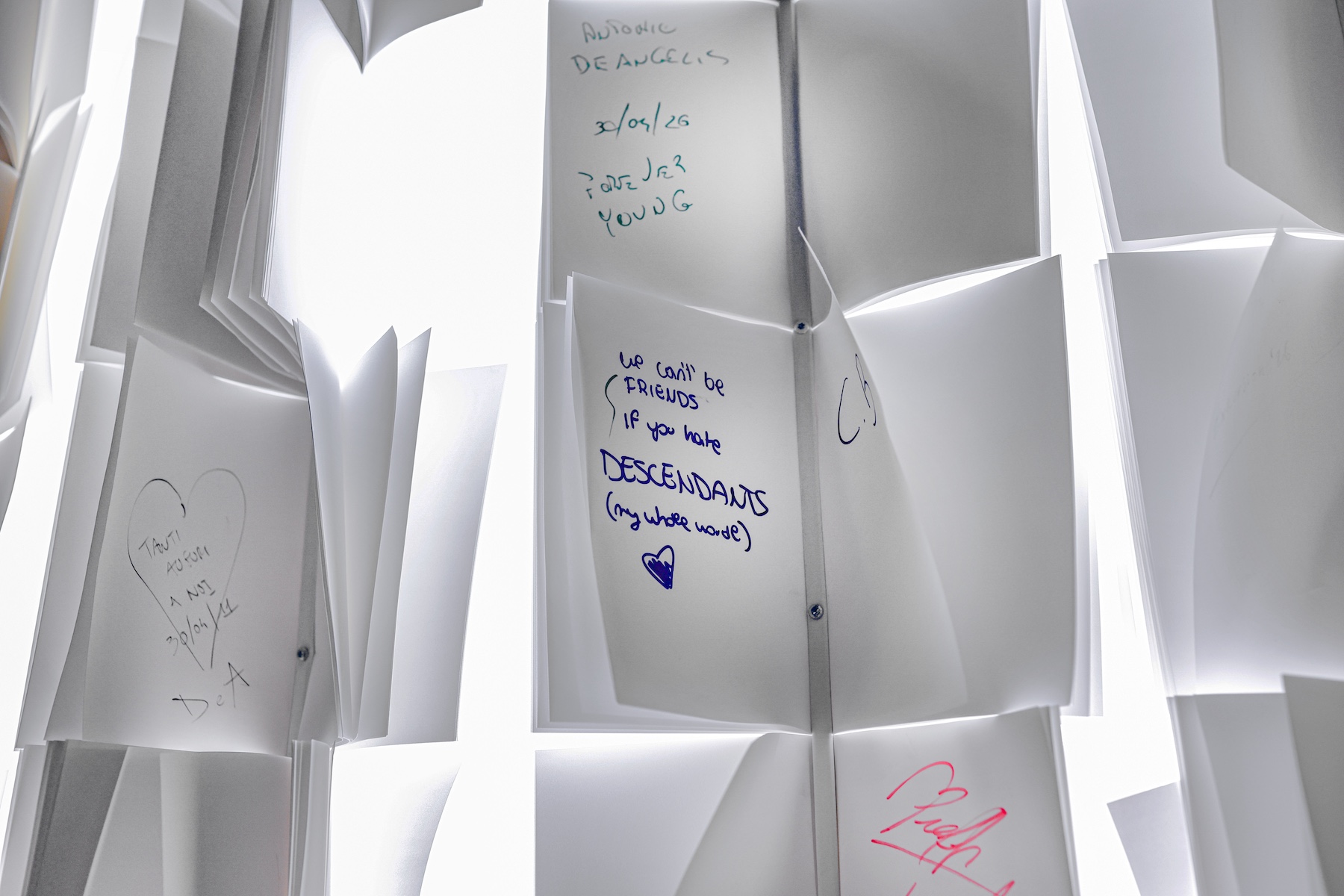
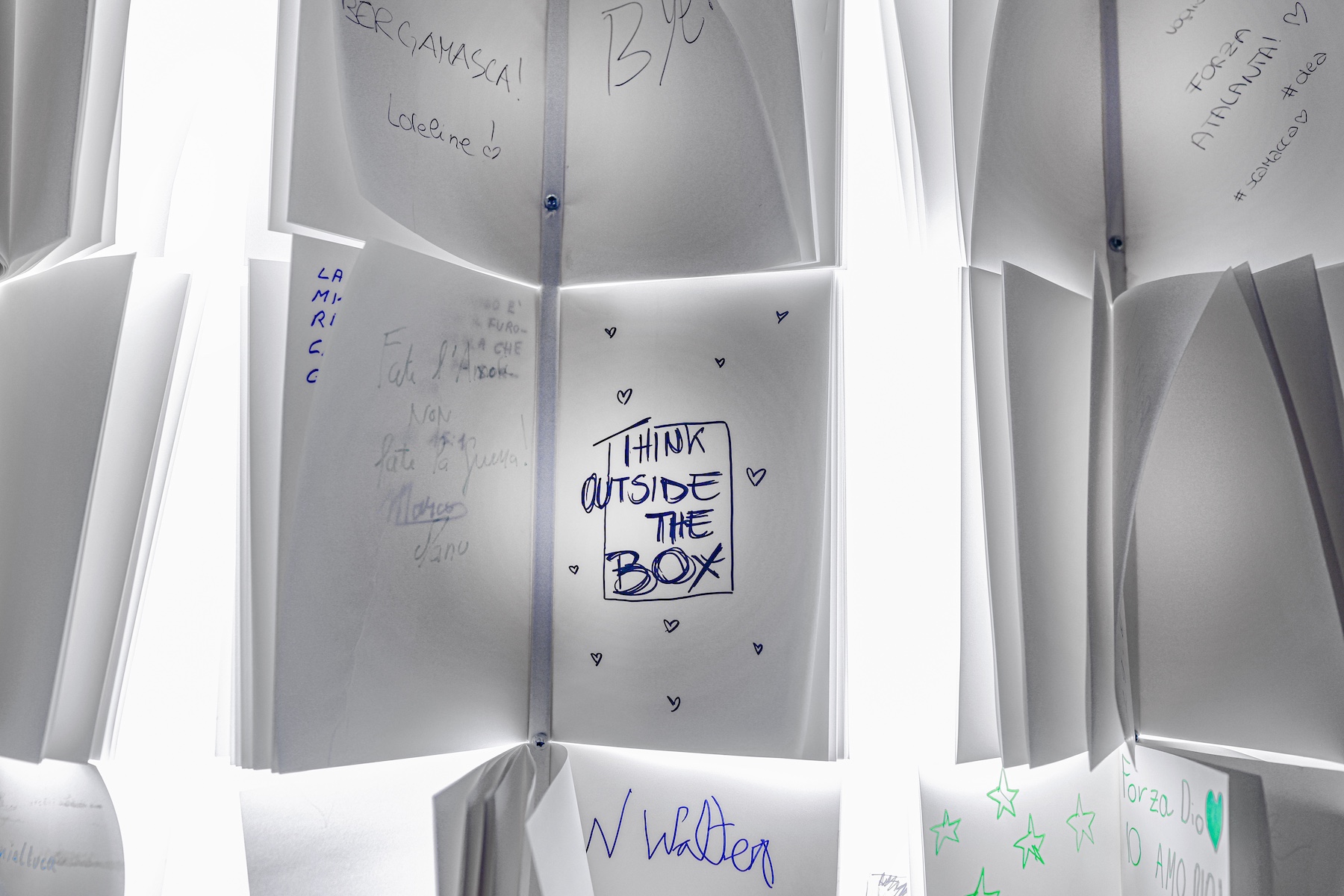
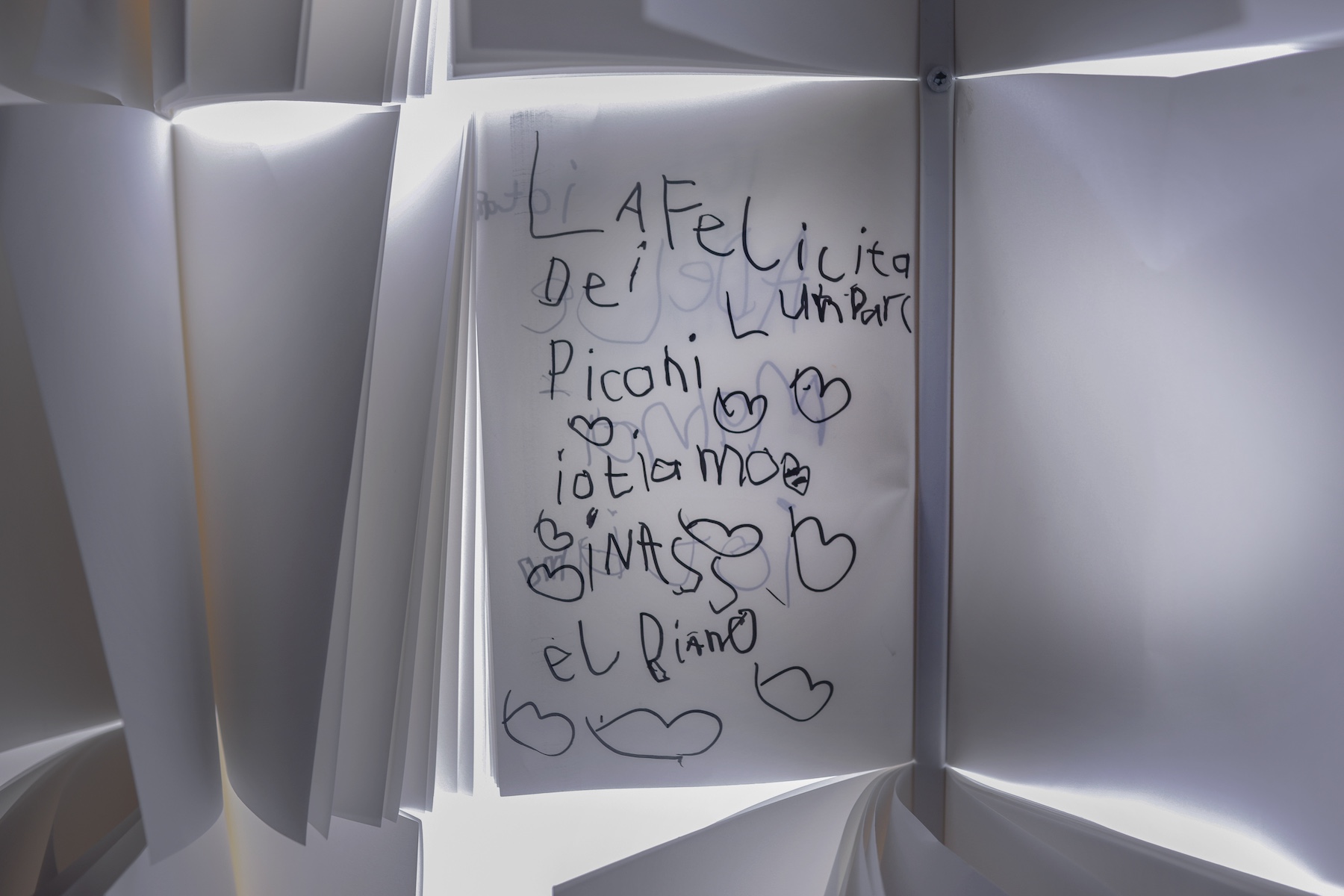
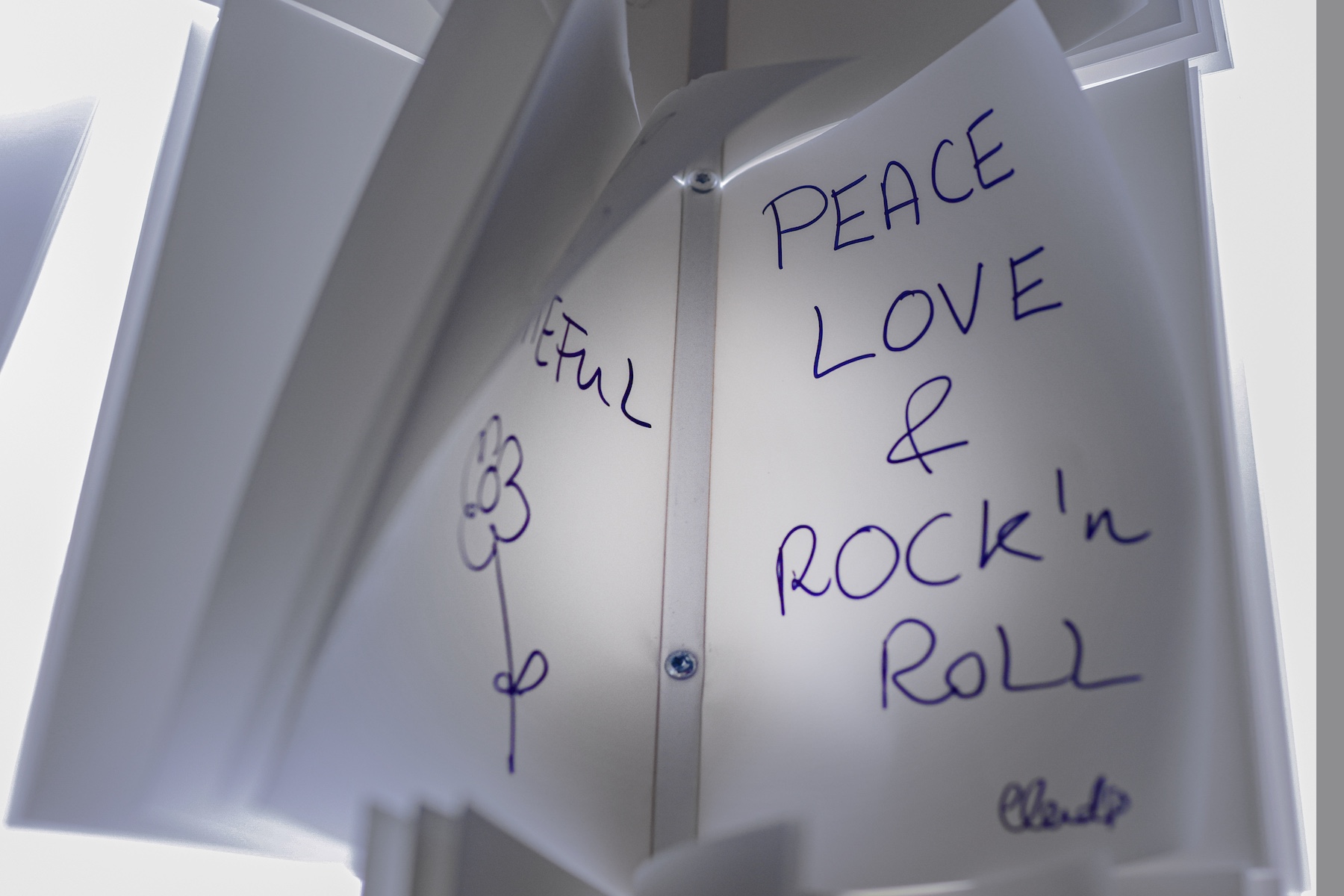
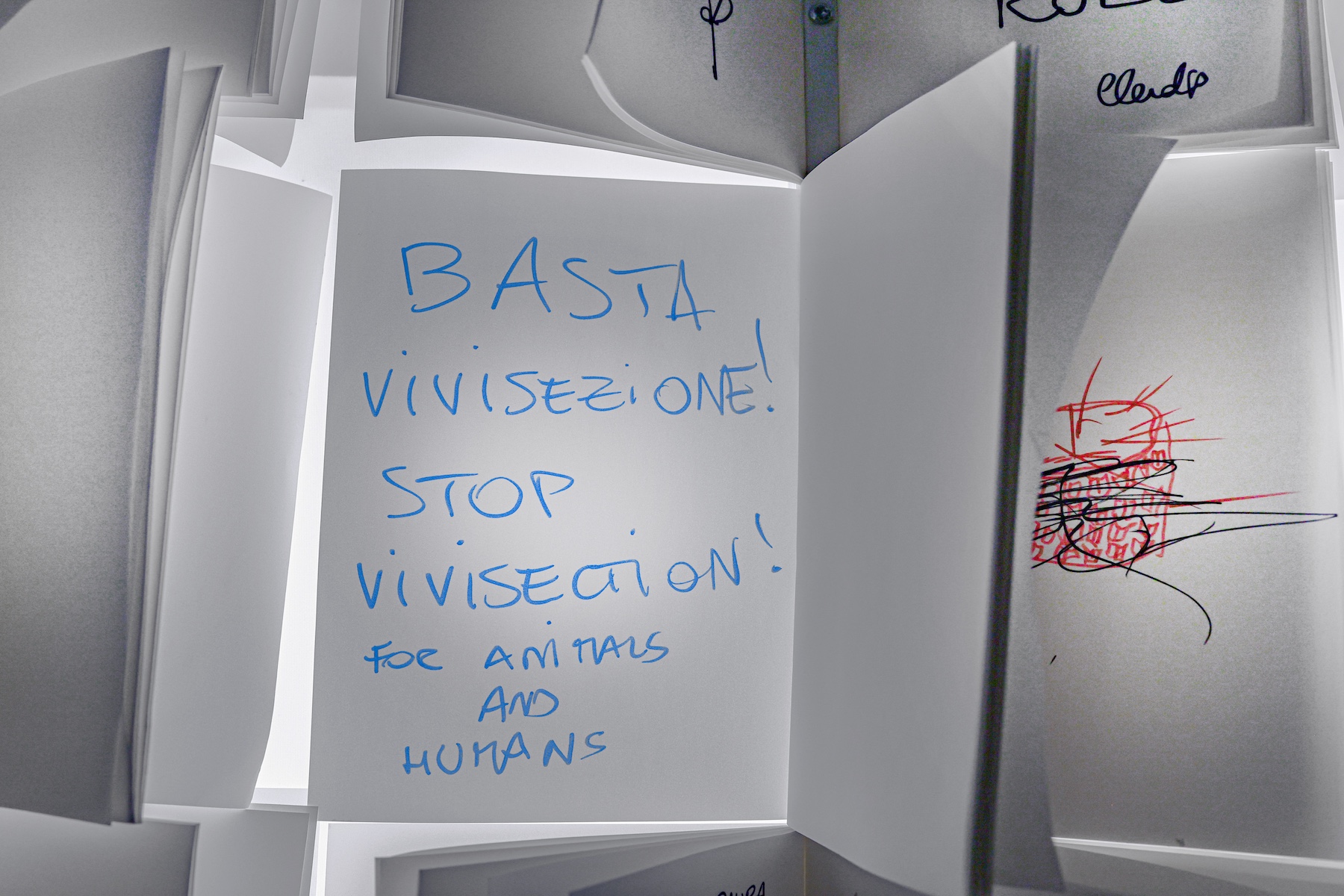
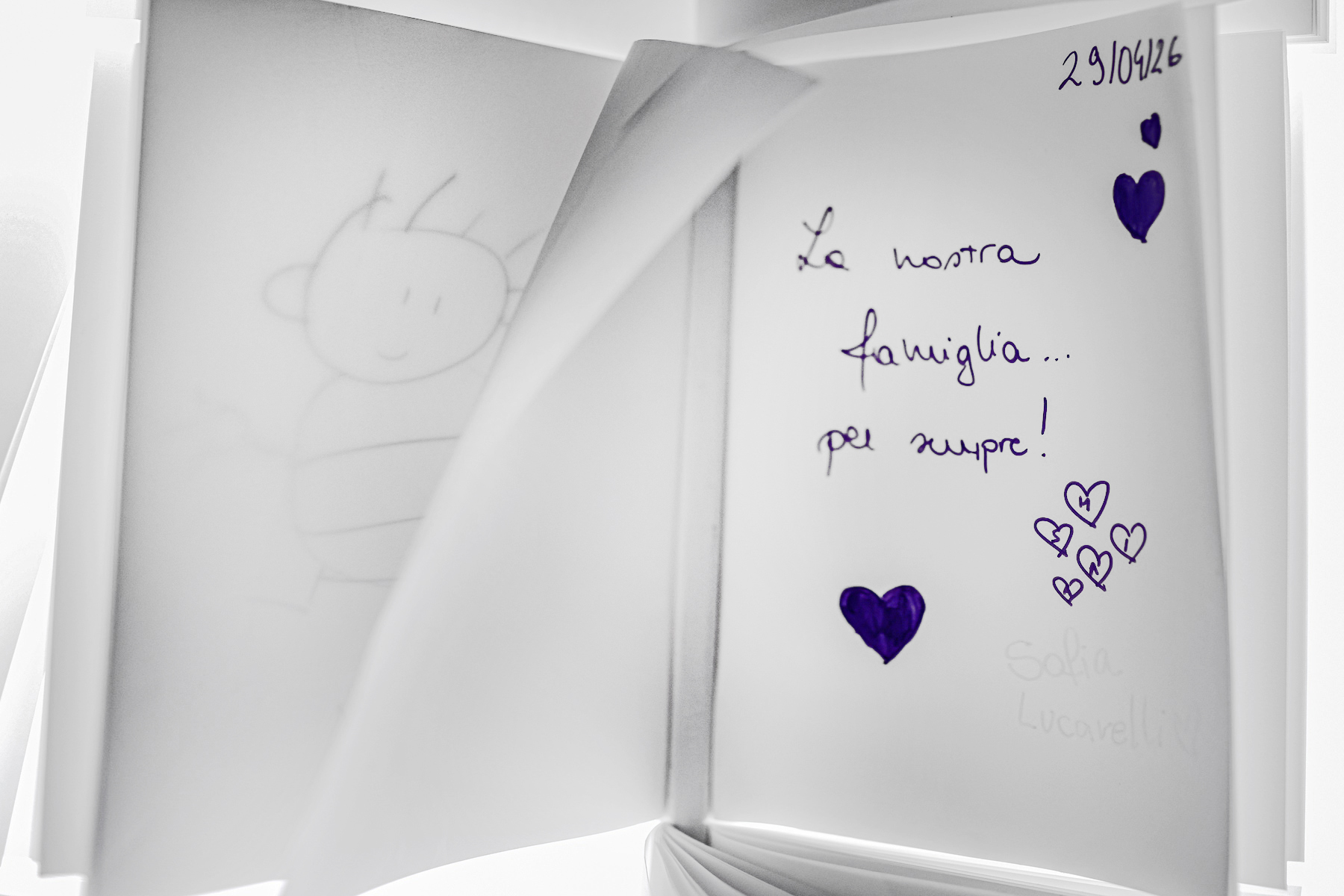
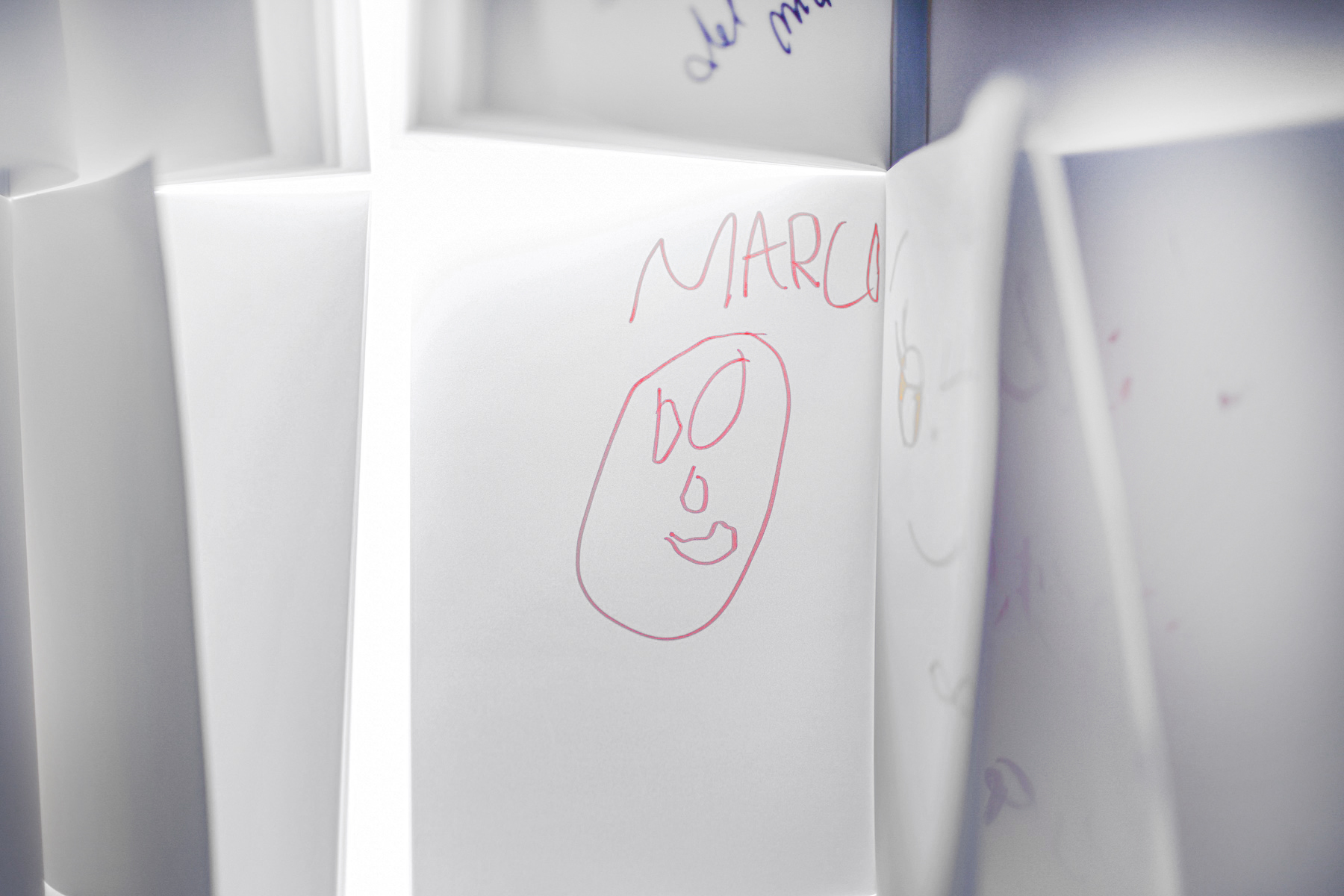
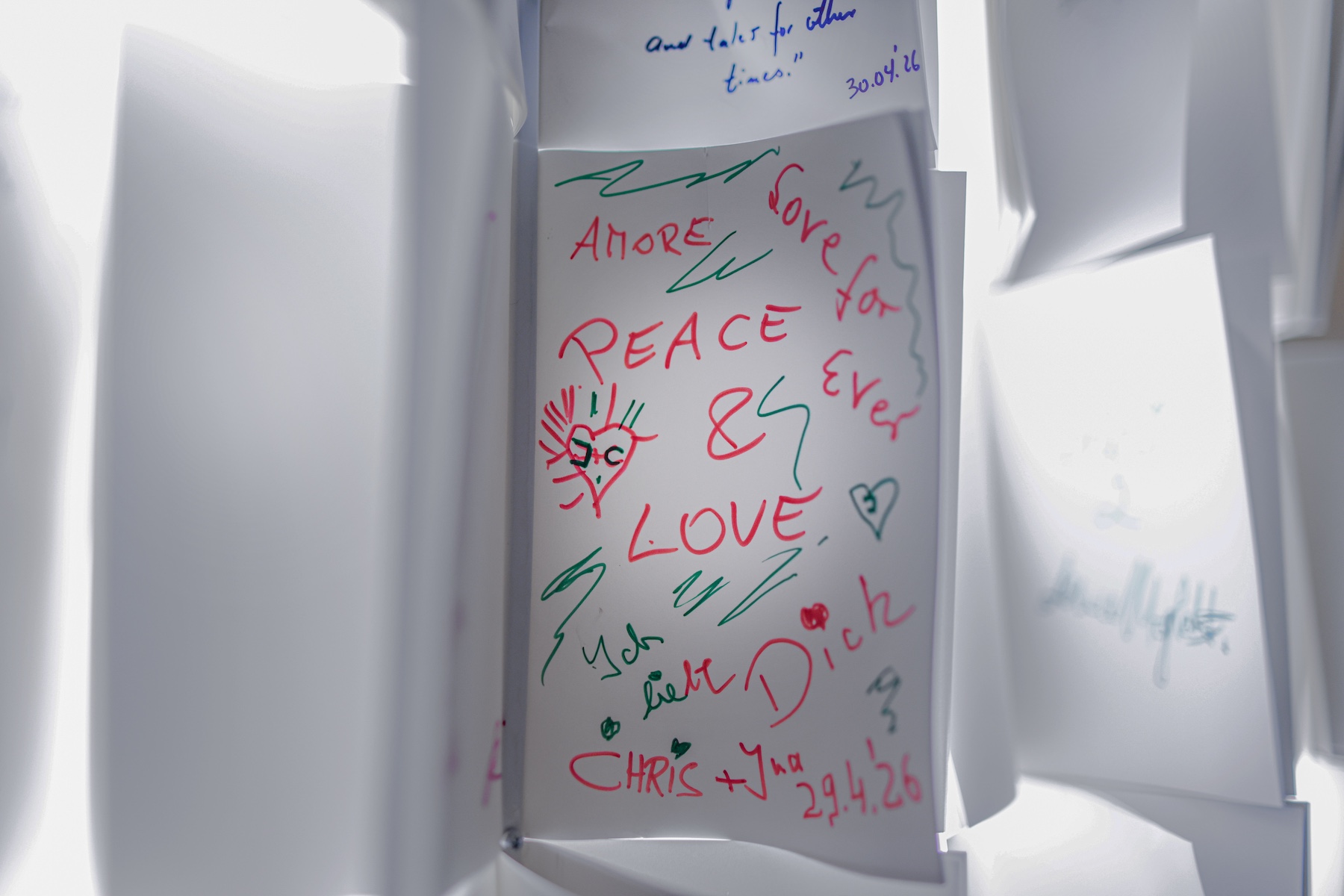
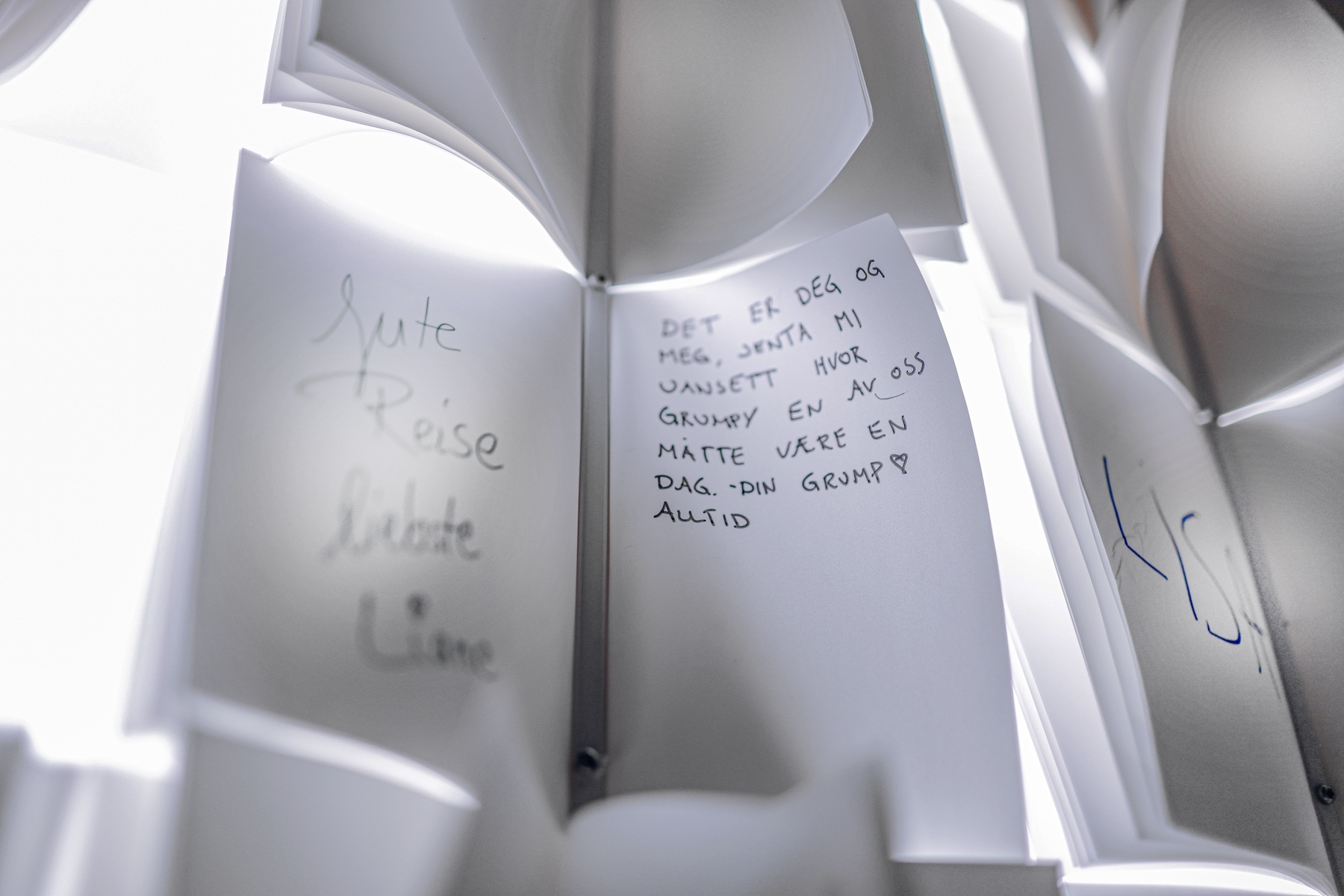
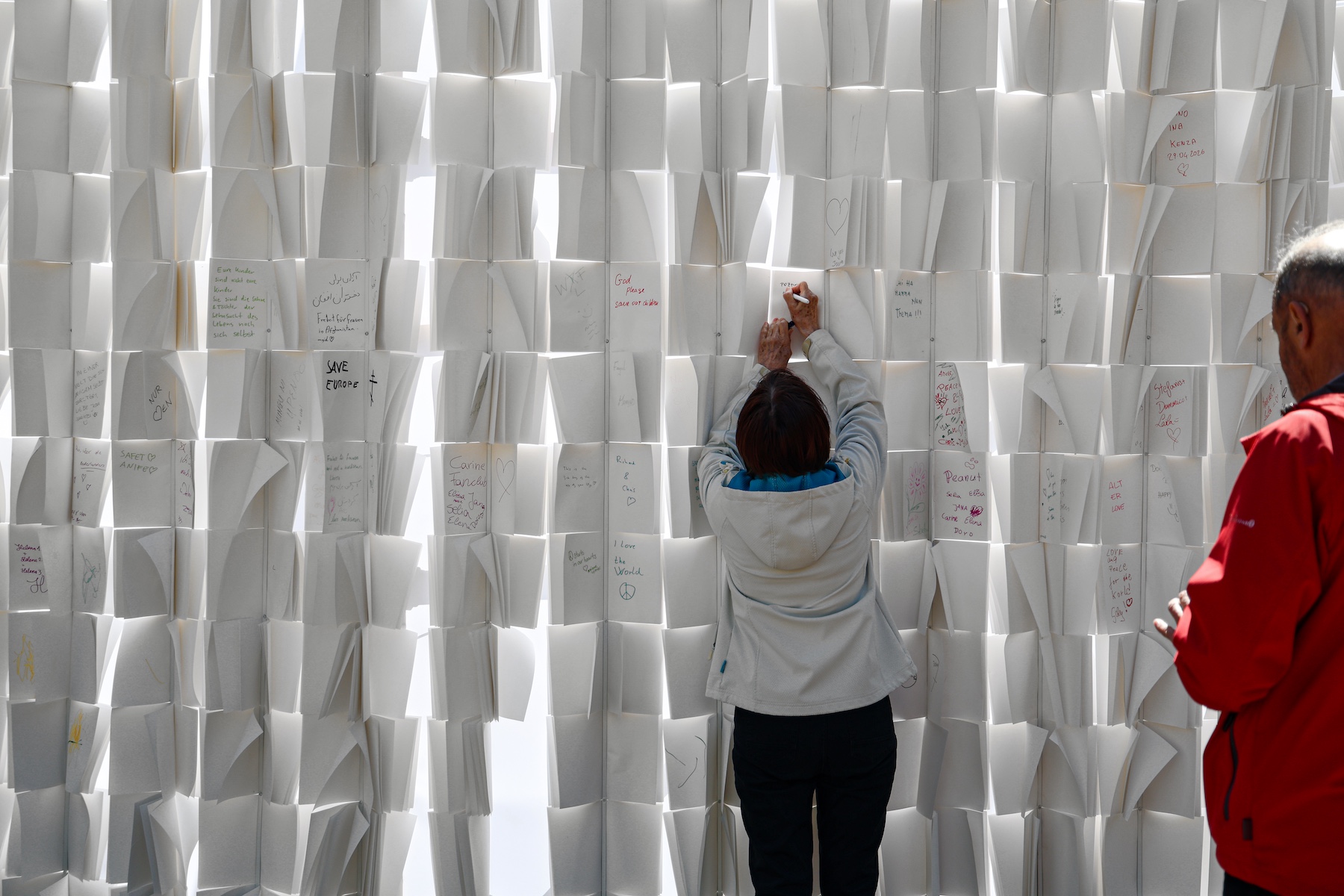
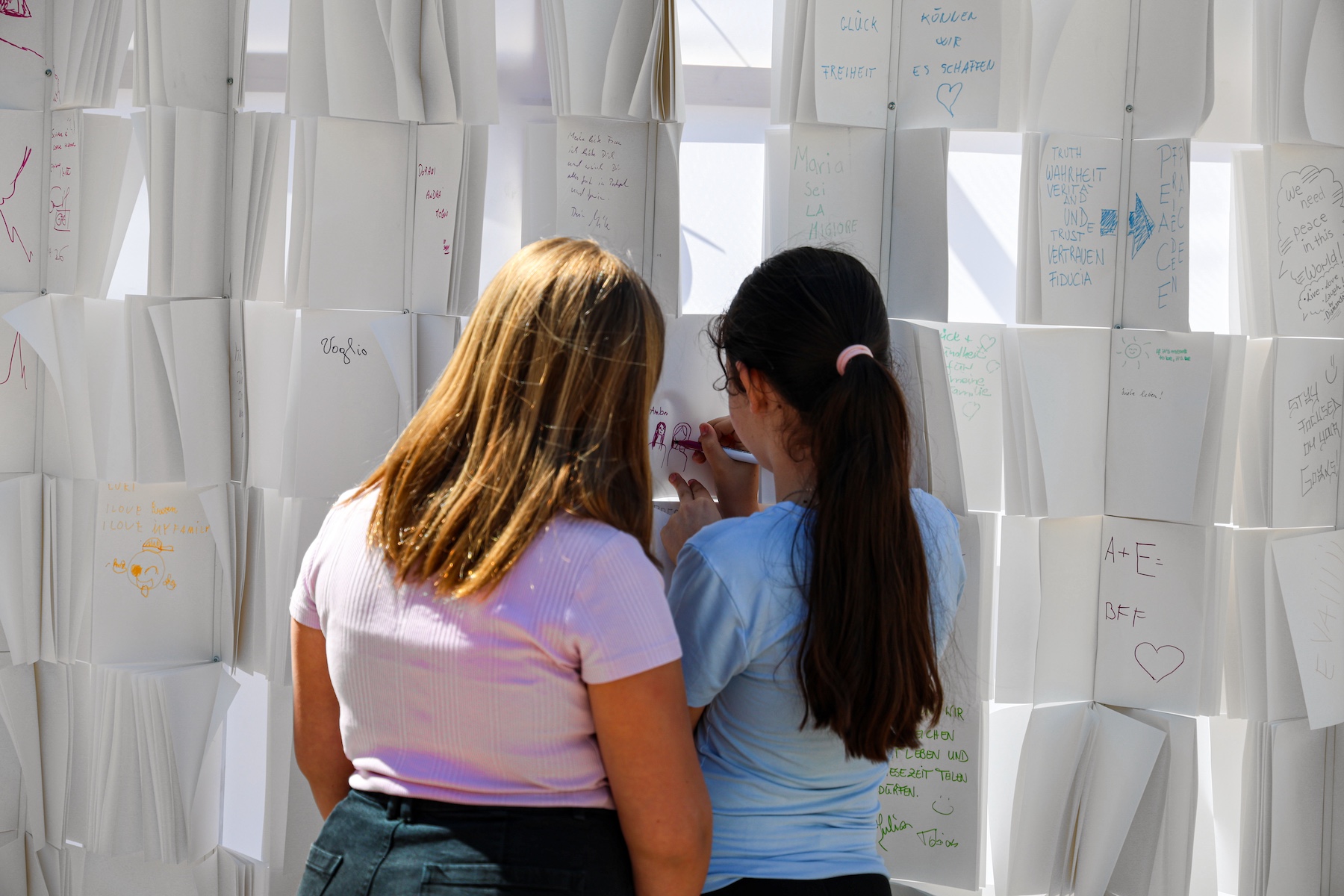
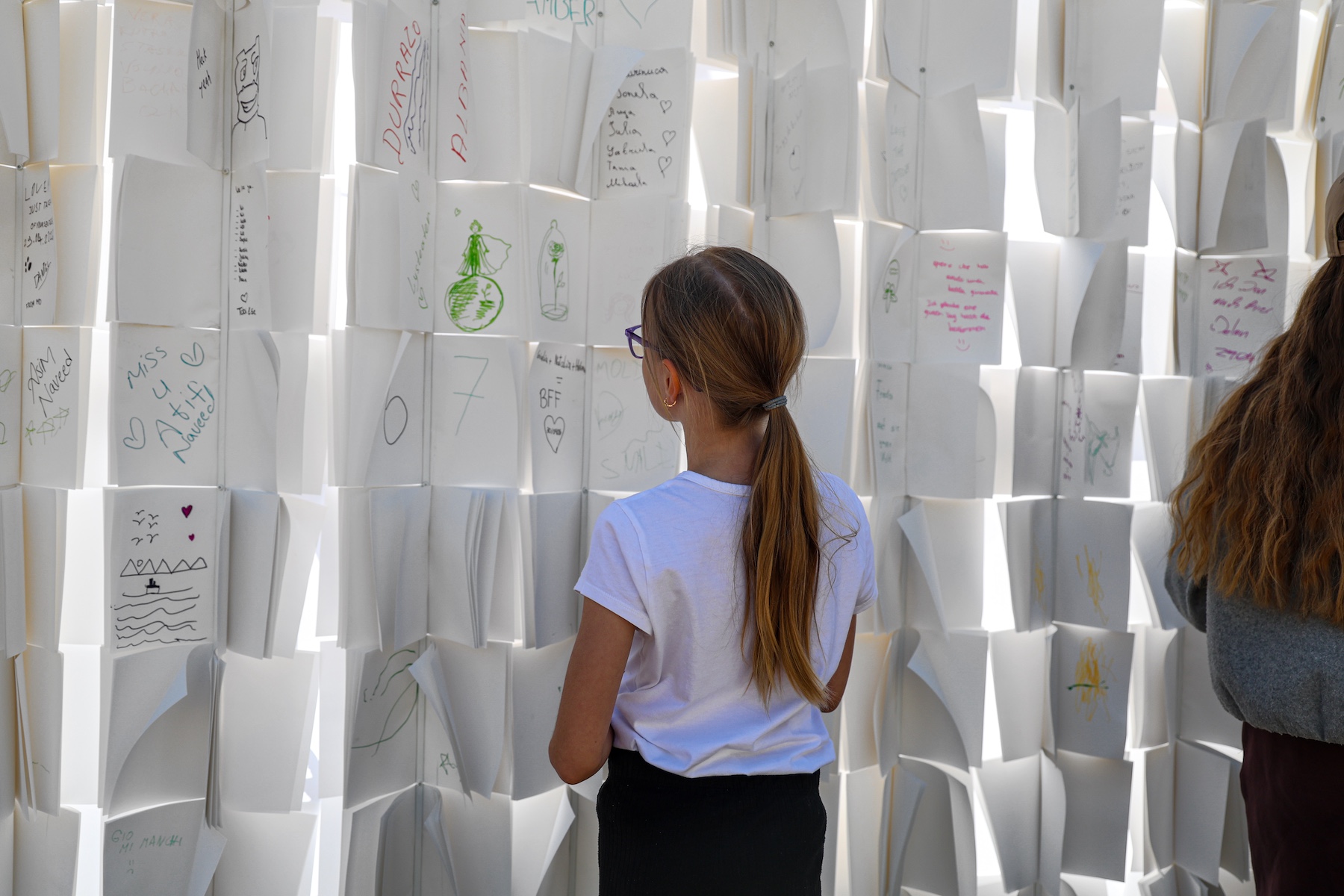
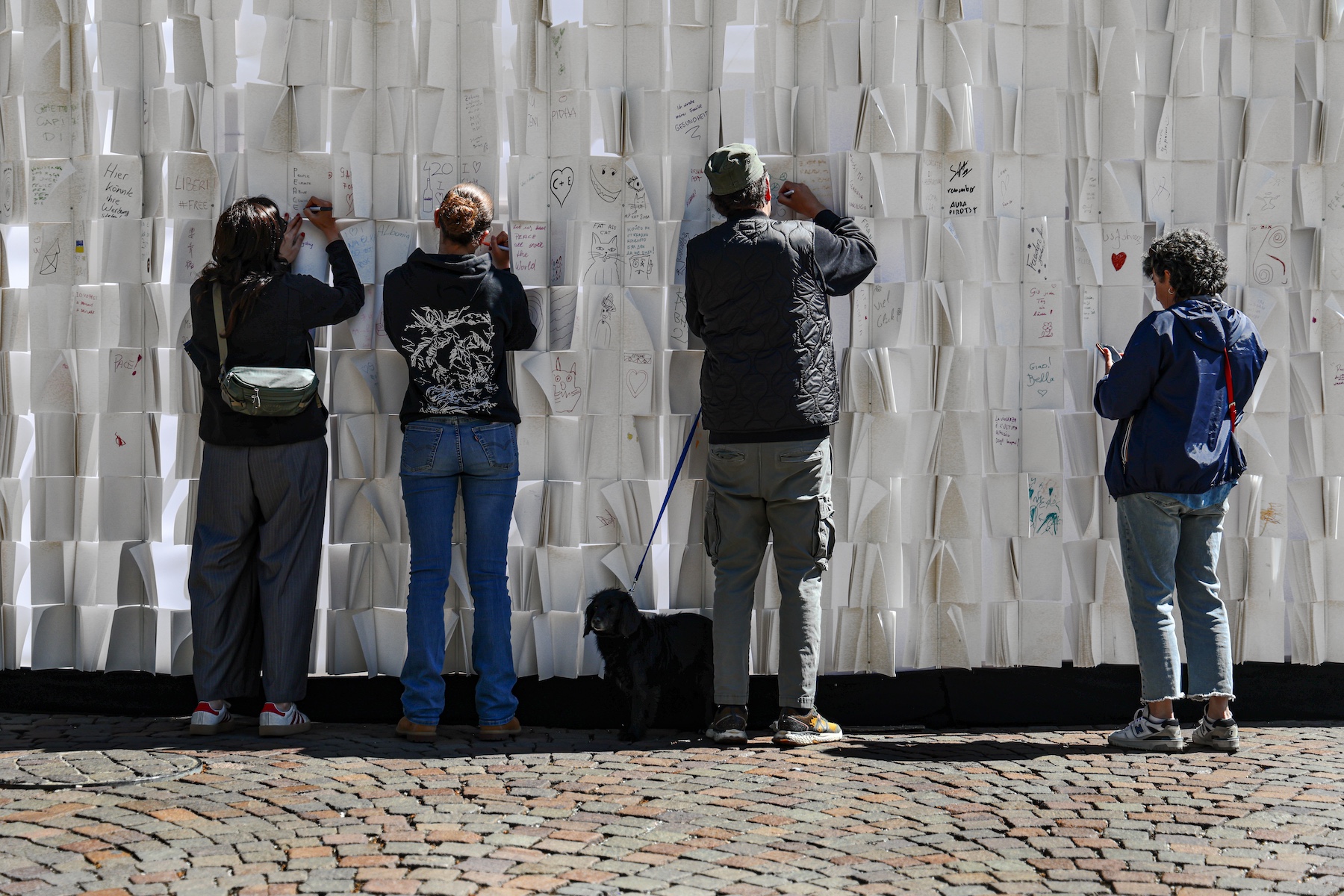
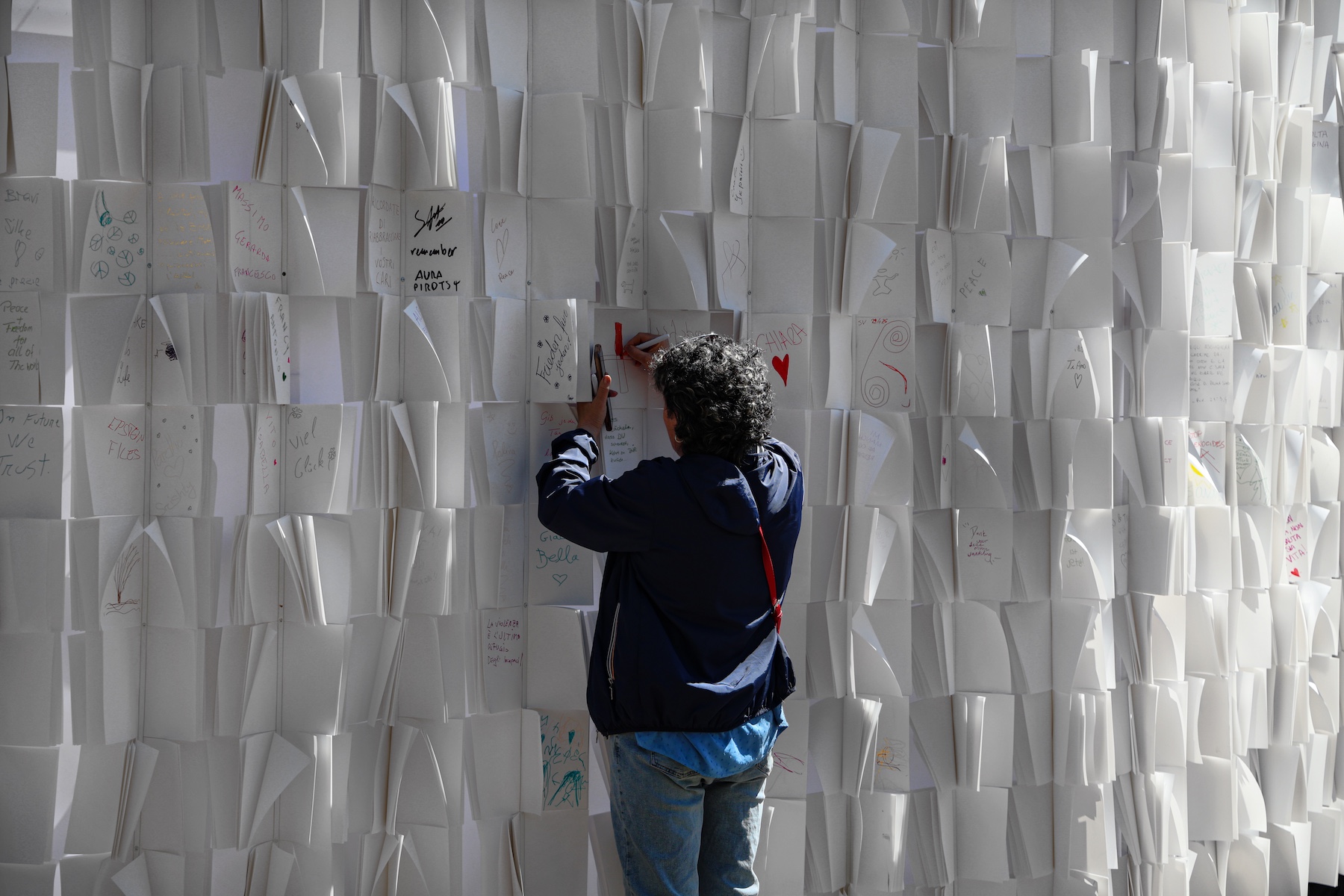
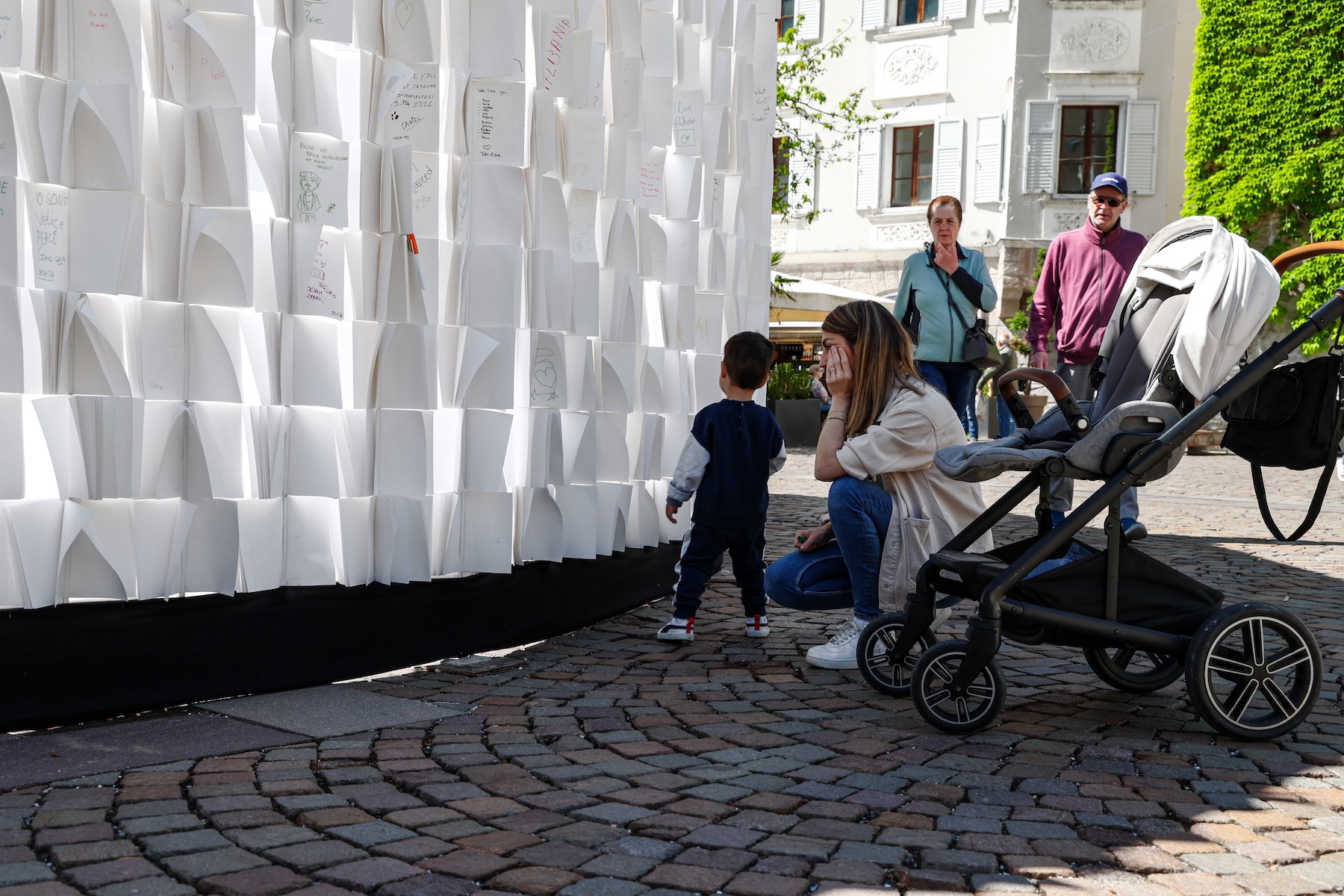
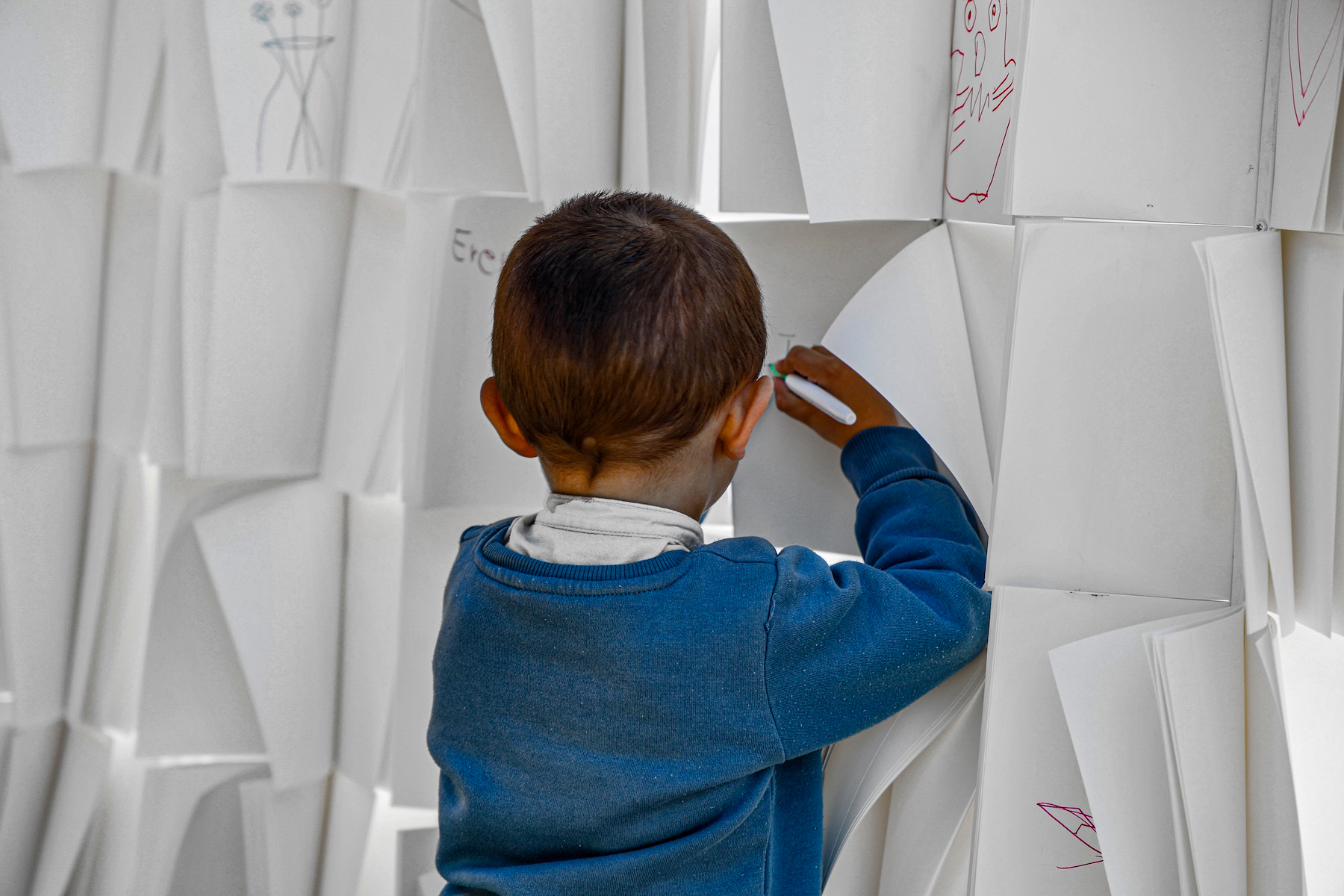
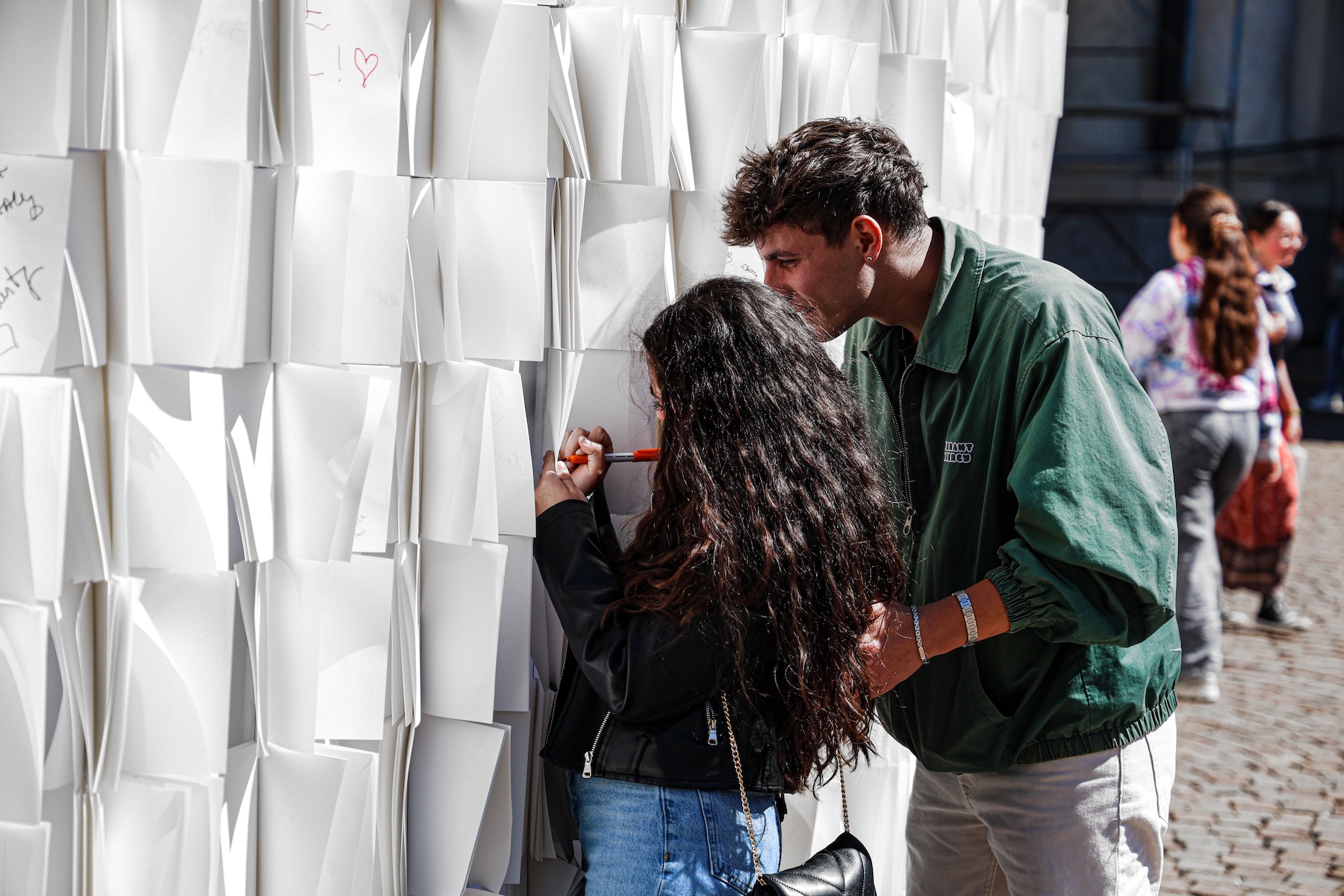
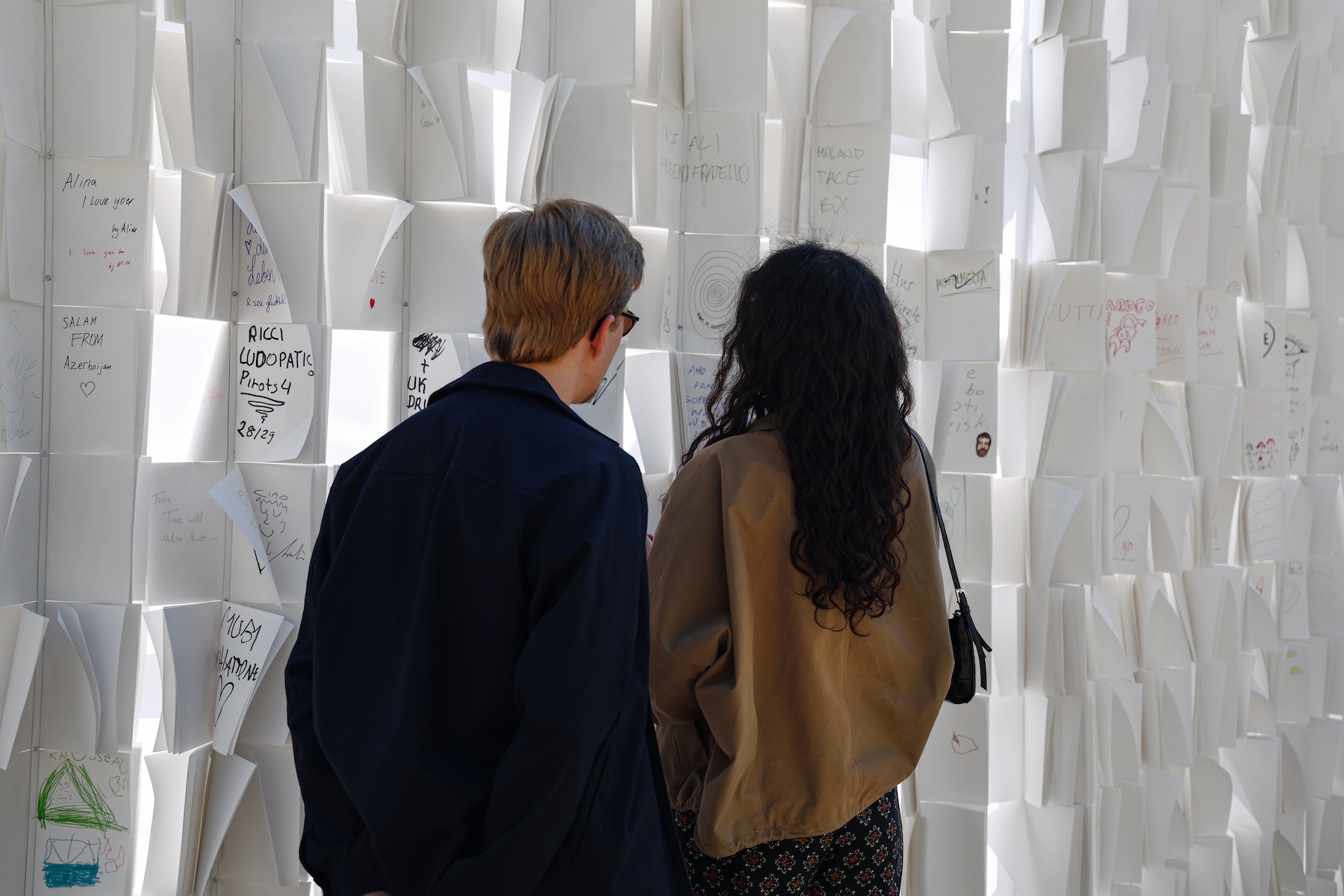
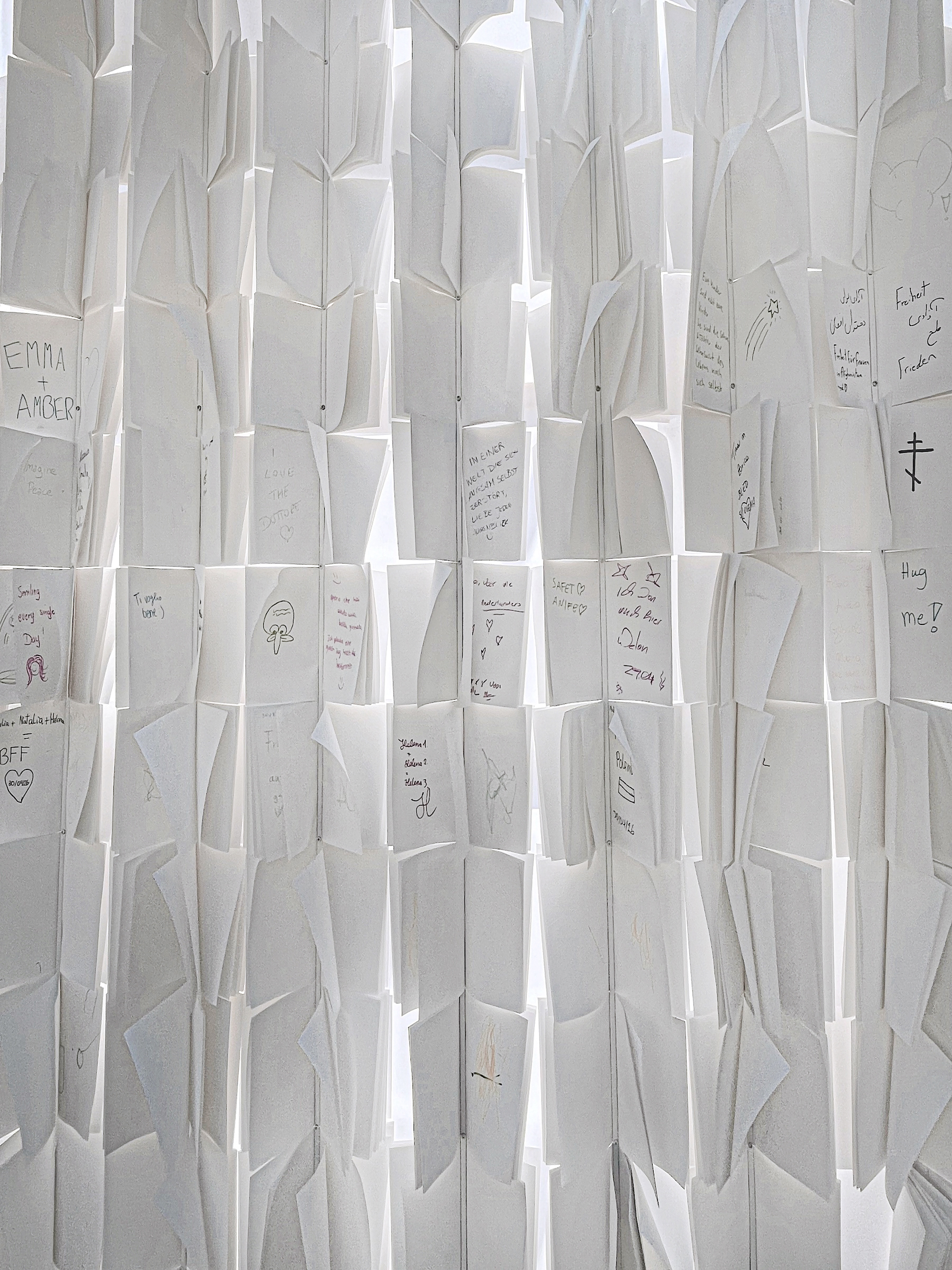
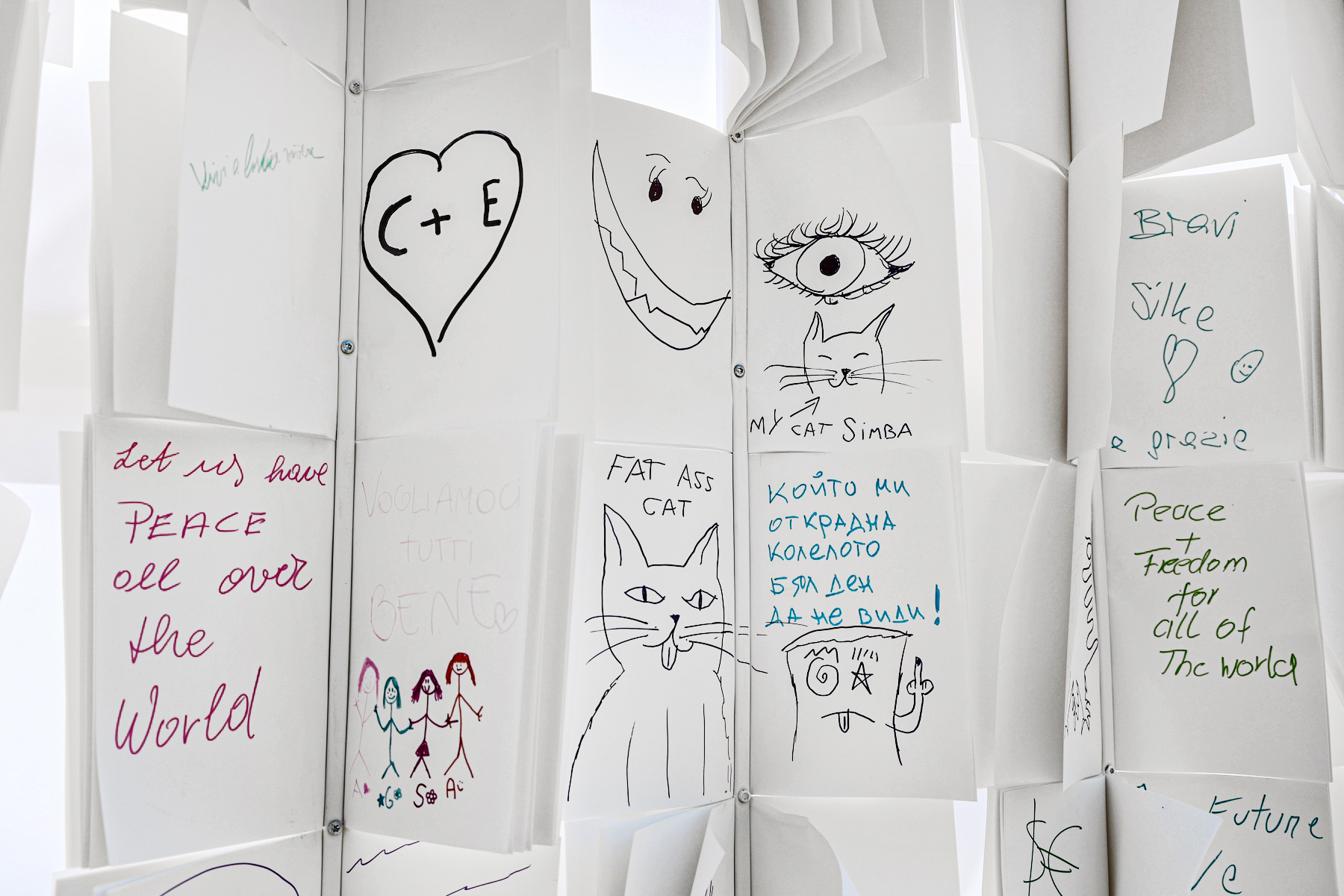
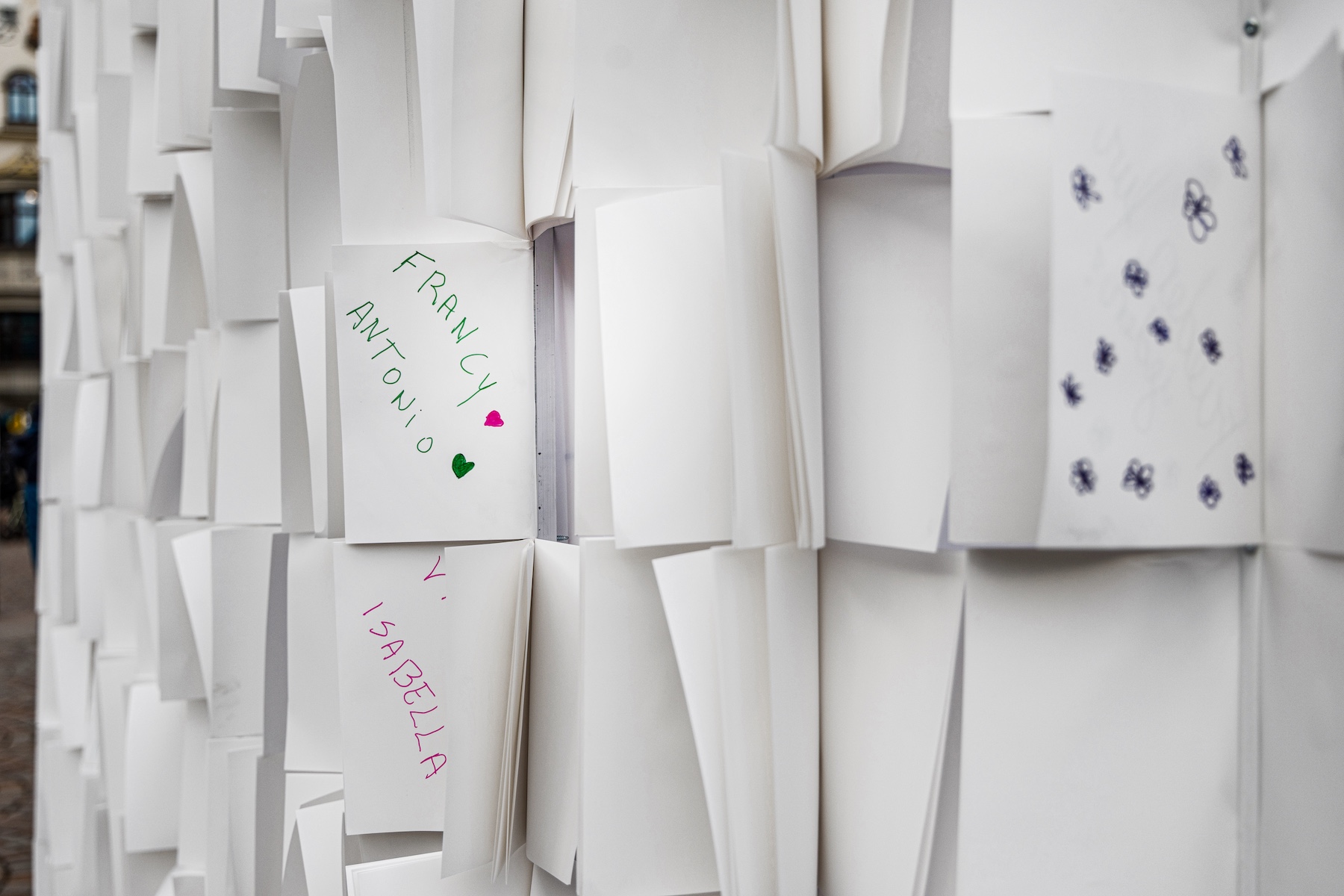
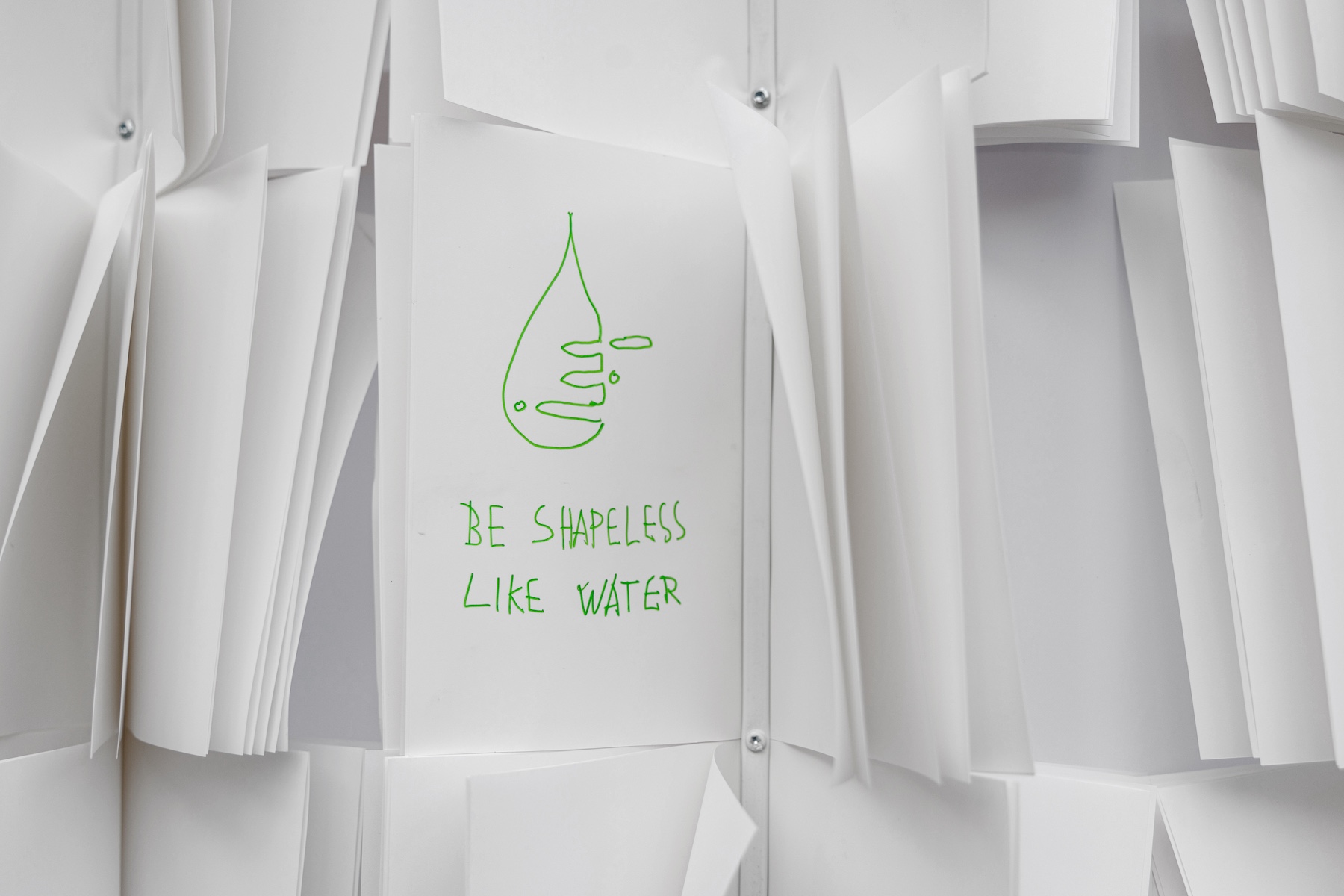
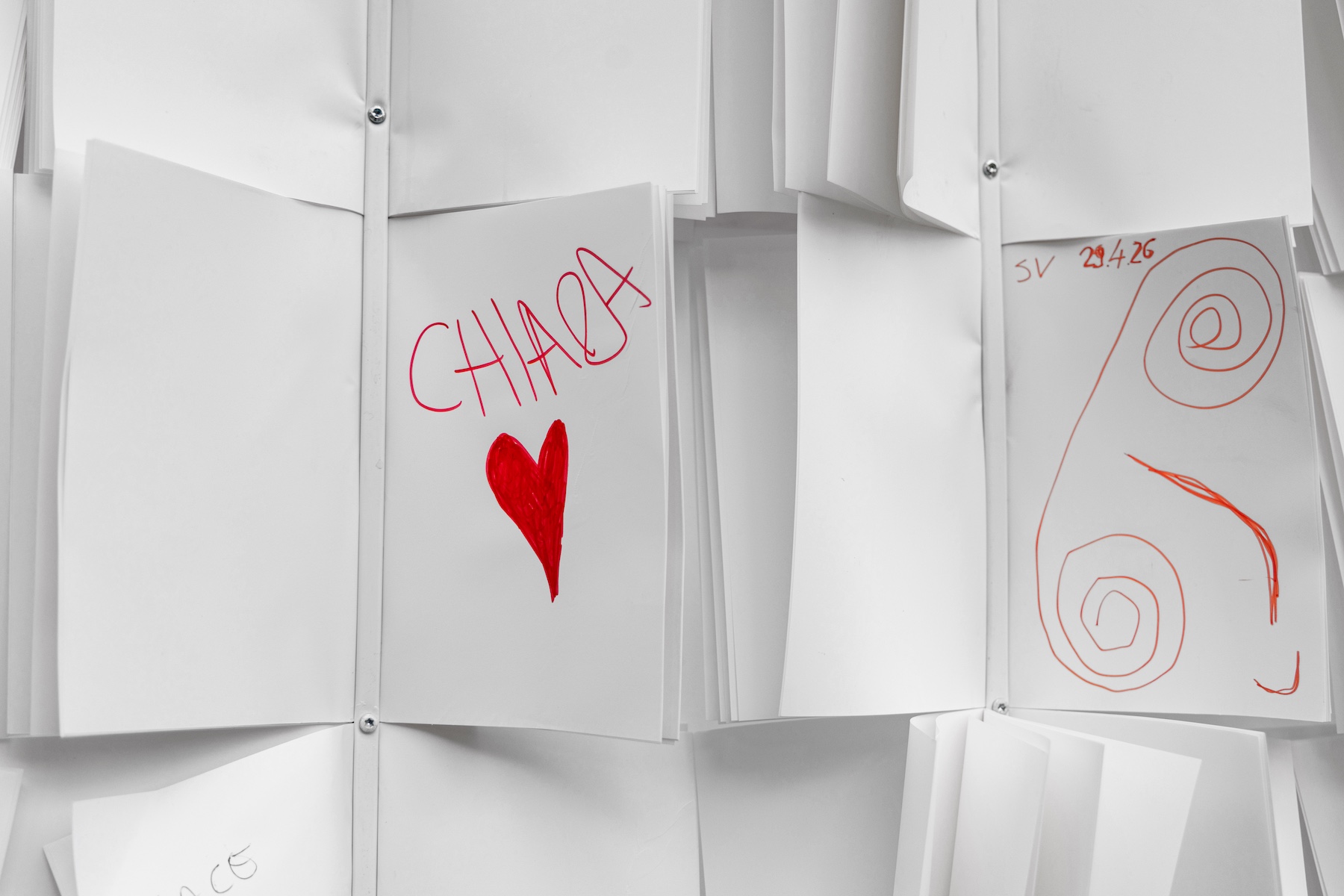
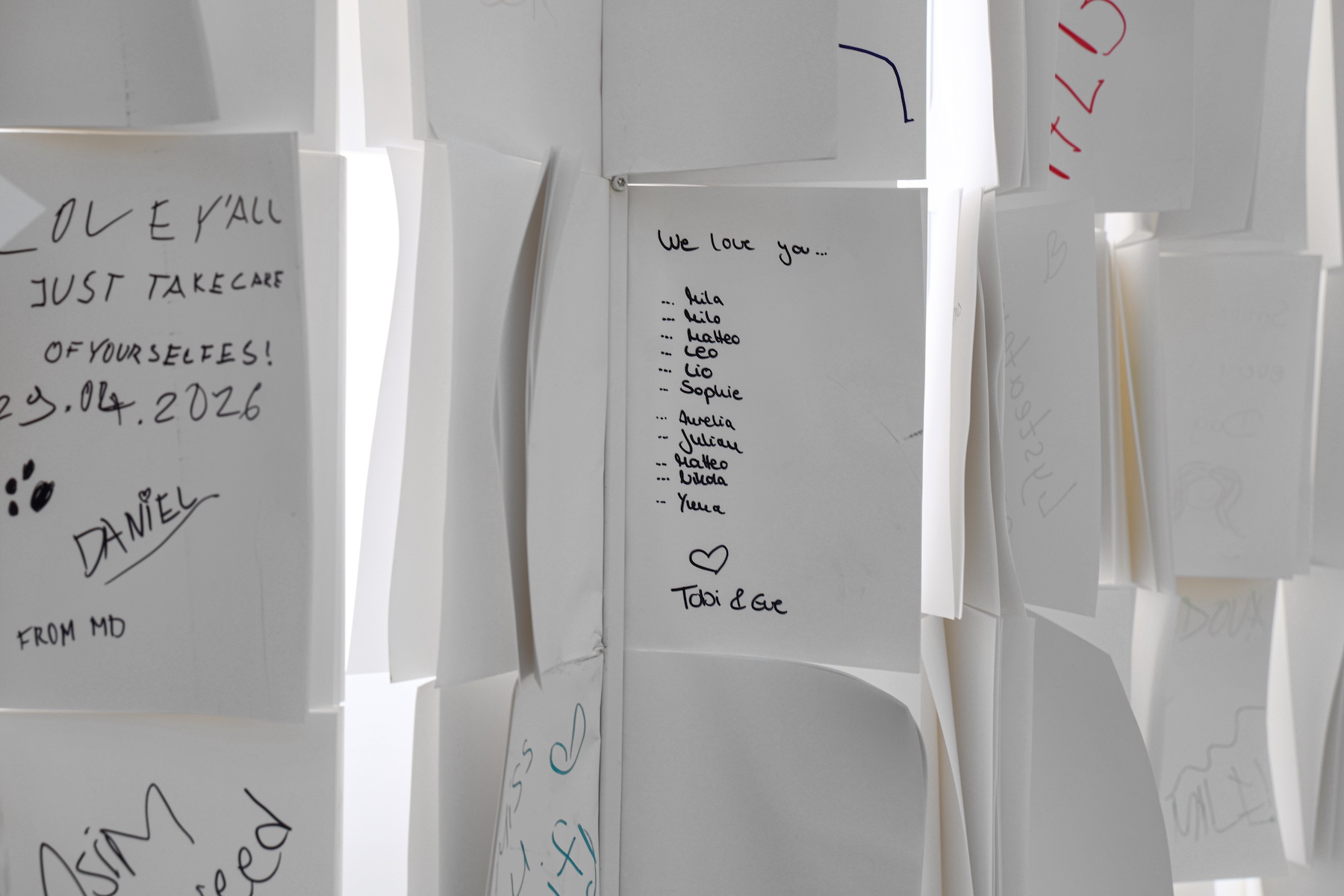
As in previous versions of the piece, we wanted to create a space where people could freely share opinions, questions, concerns, or proposals related to the theme proposed by the festival. Little by little, the pages filled with texts and drawings about peace, coexistence, contemporary conflicts, and the ways in which we imagine a better future.

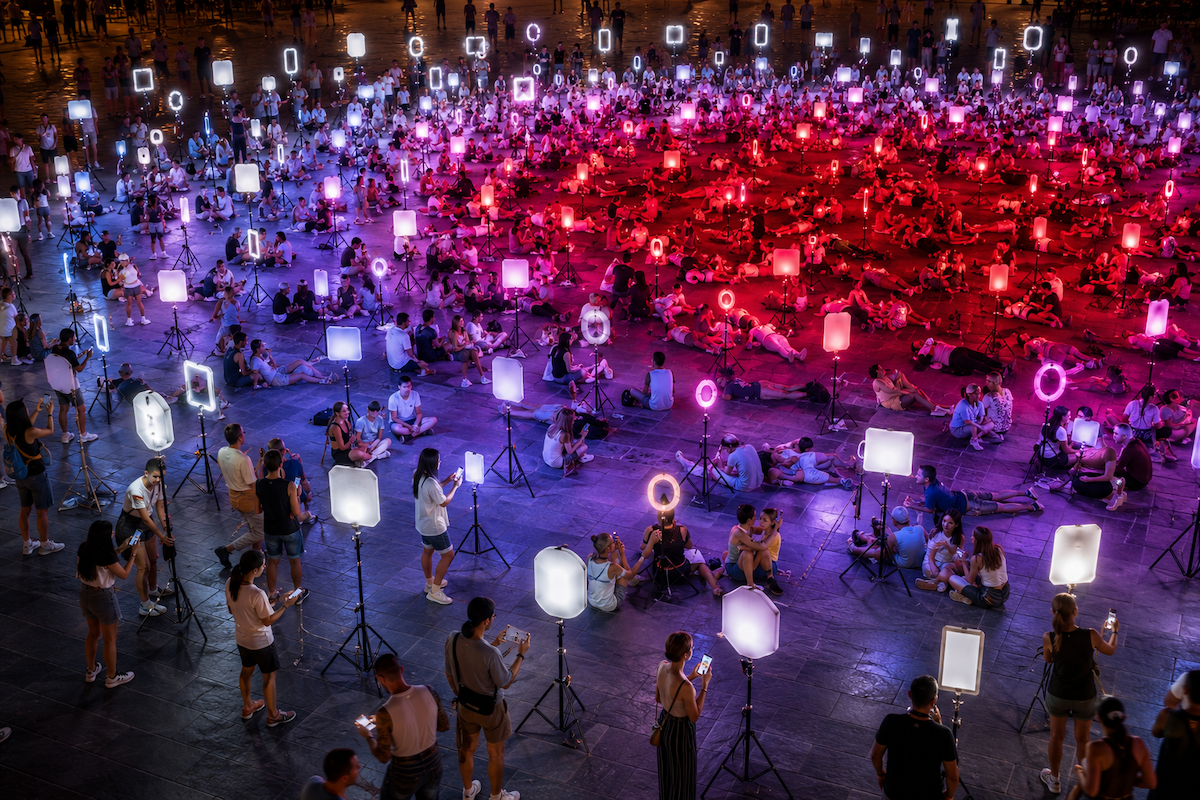
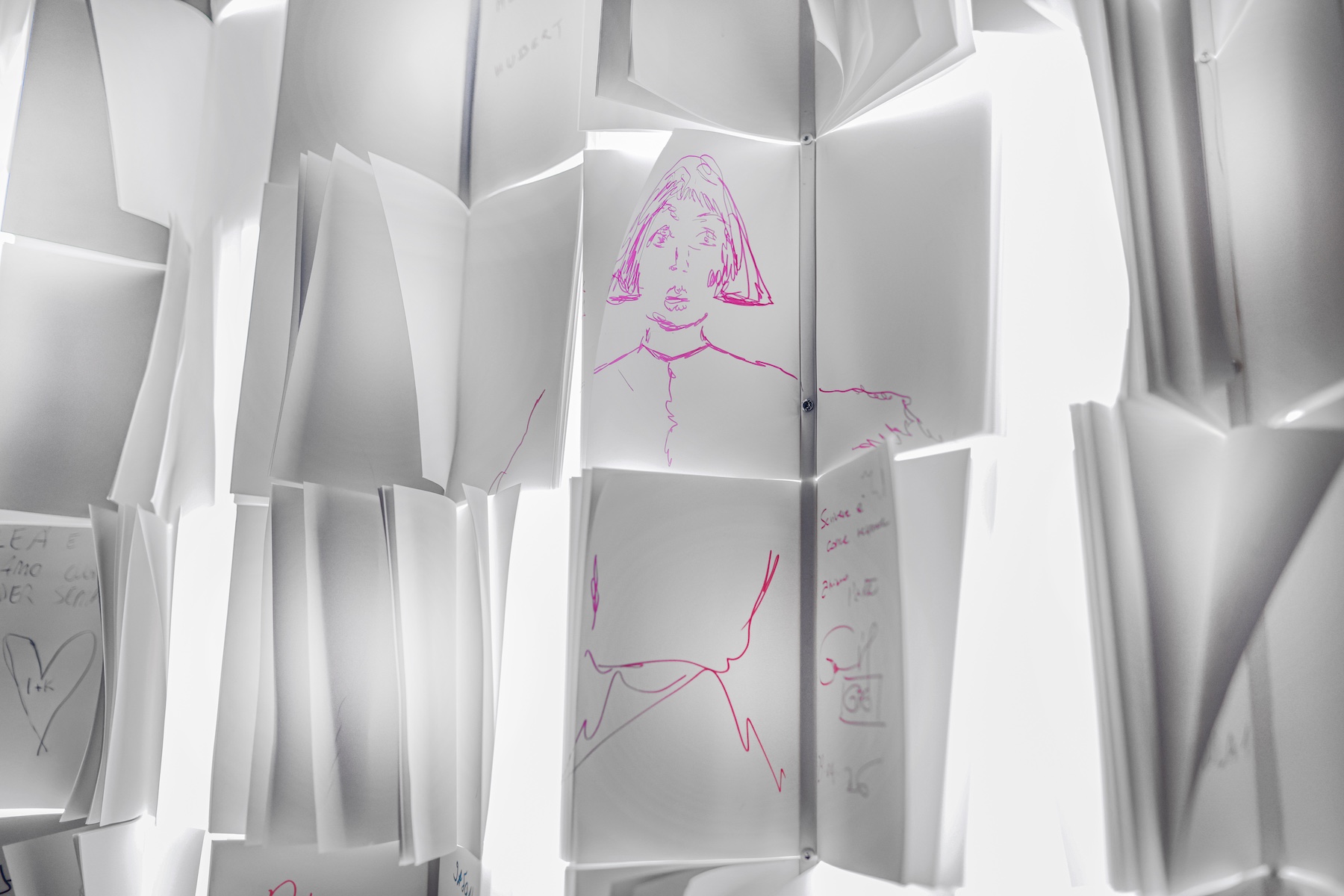
Over the course of the festival, contributions accumulated progressively. Words, drawings, and messages covered the pages, creating a large collage of anonymous and intimate interventions. The occasional action of the wind moved the sheets and altered the reading of the whole, allowing the installation to constantly offer new compositions to those who visited it. For this version, we used an ecological water-resistant paper capable of withstanding the weather conditions throughout the festival without any problems.

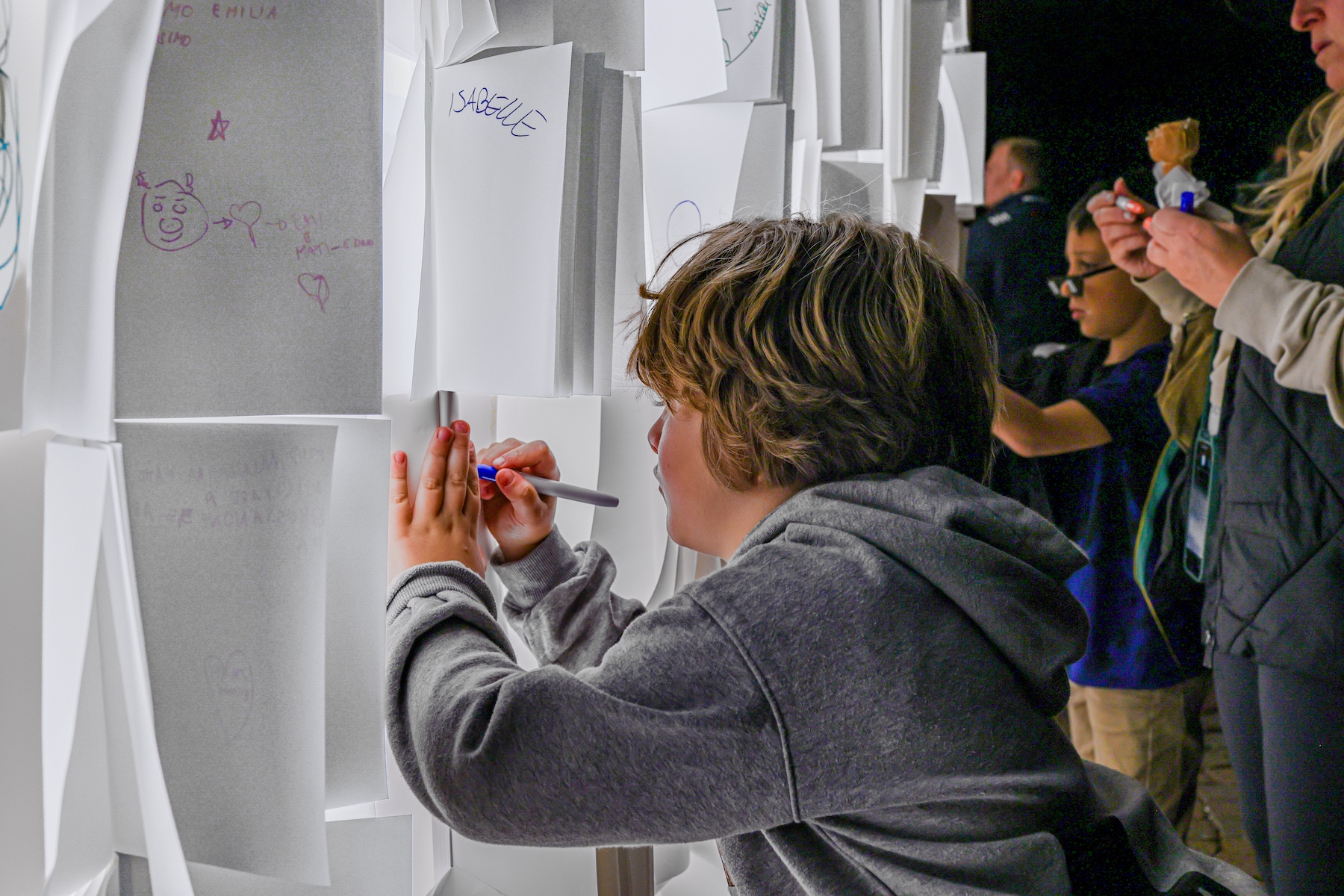
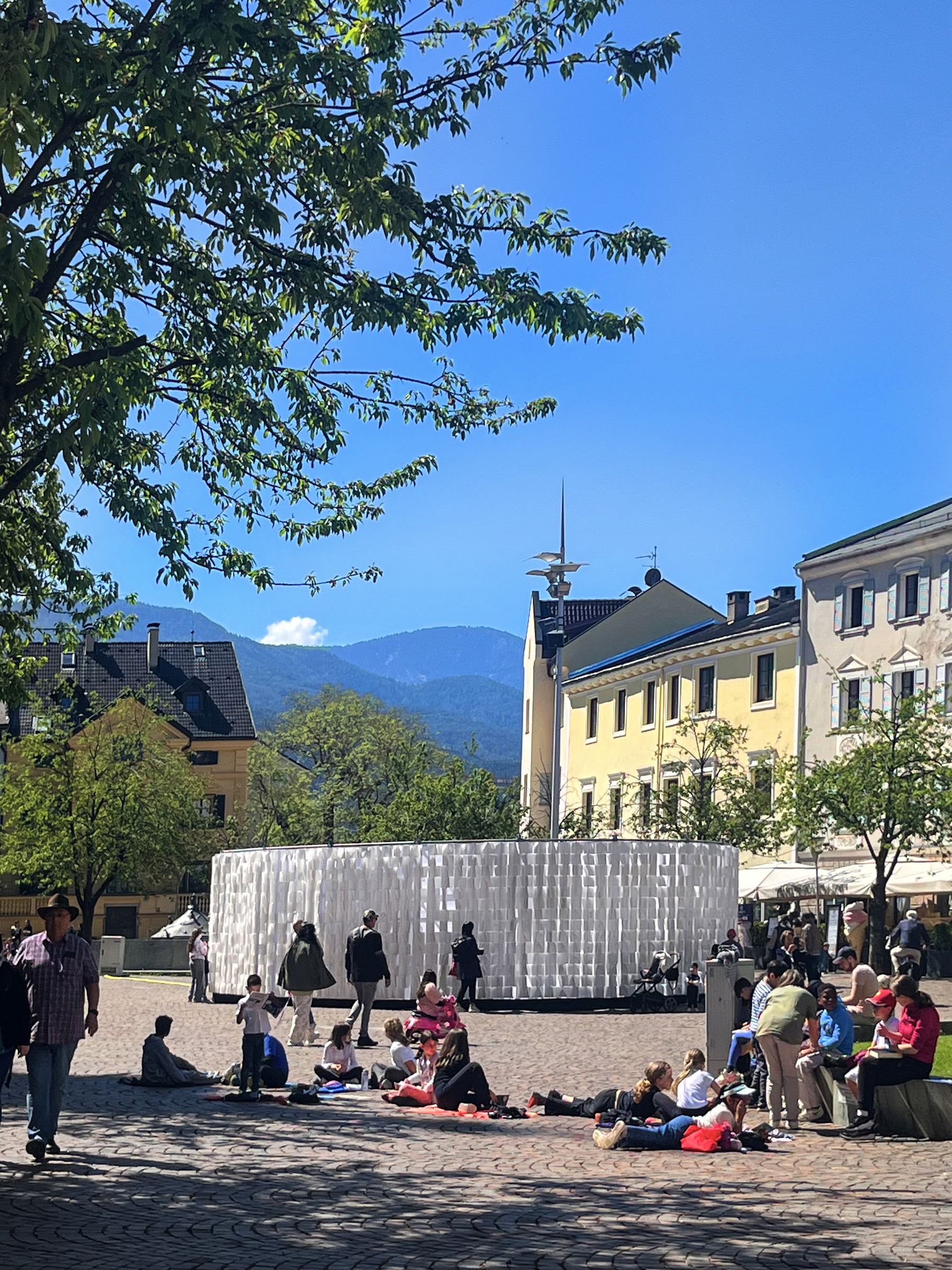
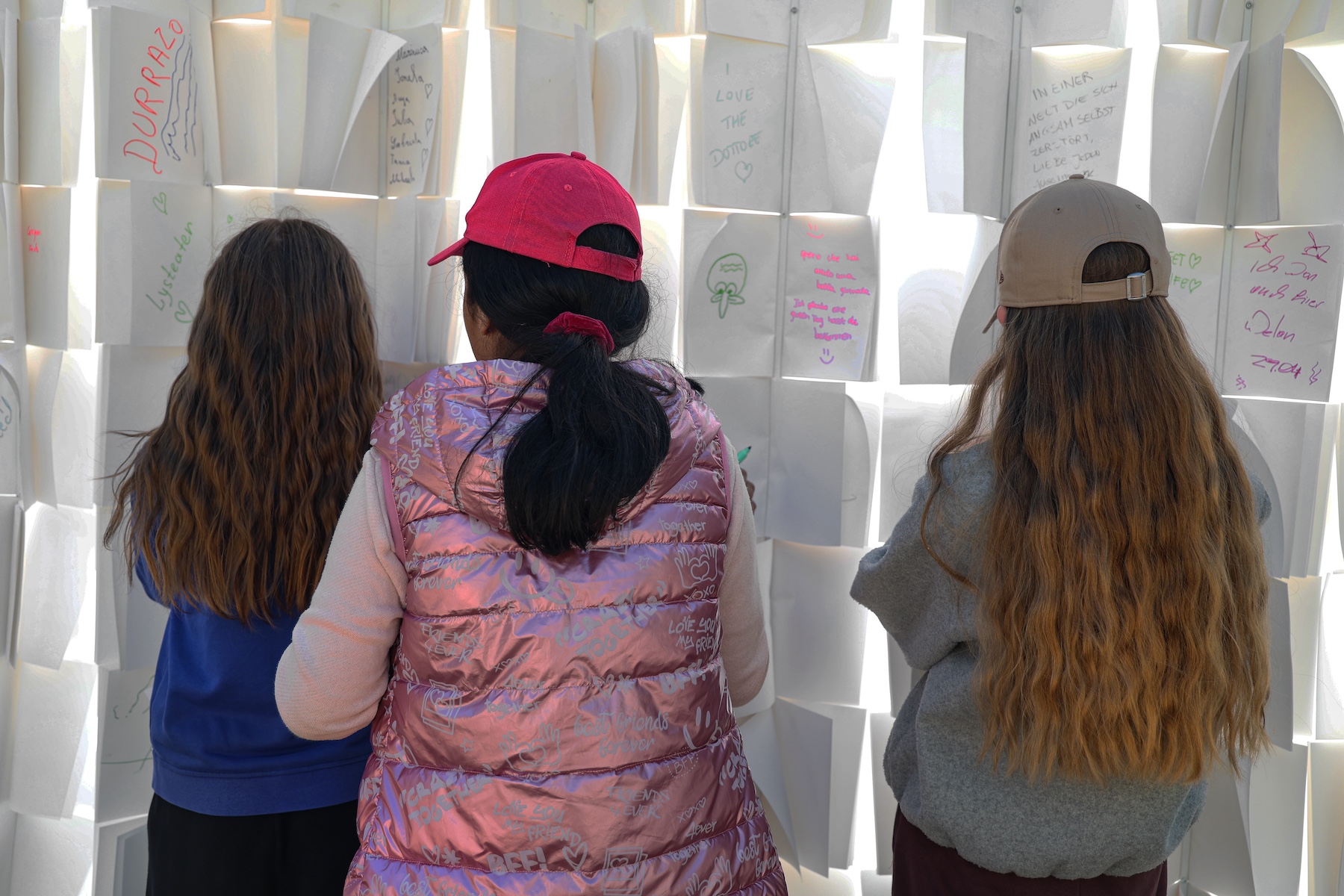
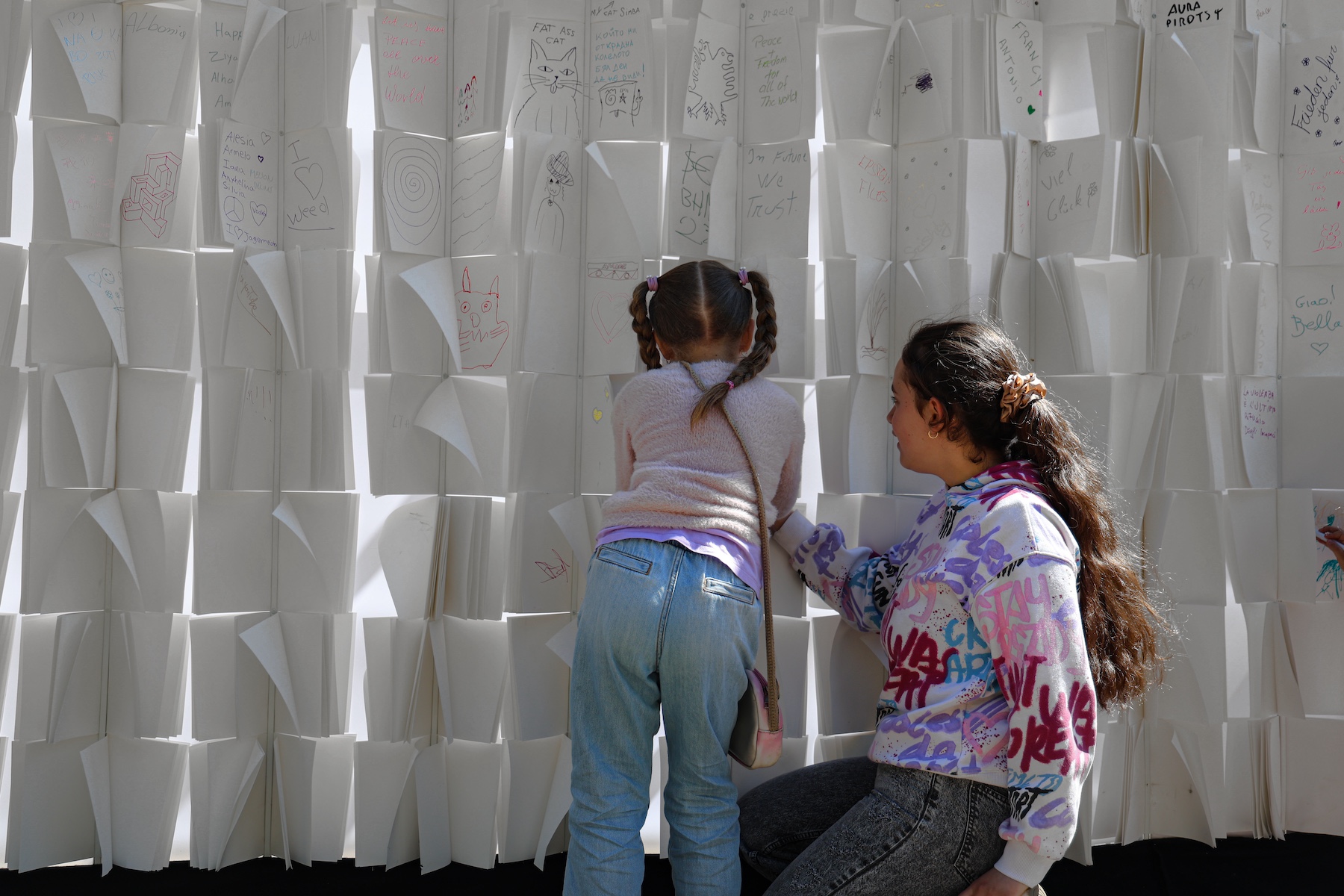
As is often the case with this piece, participation began in the early morning and continued well into the night. The lighting transformed the installation after dark, but during the day the written pages continued to attract visitors in the same way. On this occasion, the installation coincided with numerous activities organized in the square, which encouraged many children to approach and intervene the notebooks. Their drawings, messages, and spontaneous ideas brought a special energy to the piece and entertained us throughout the festival.

On Blank Pages is a piece that we have carried out in numerous cities and countries over the years. Each new version incorporates the concerns and sensibilities of the people who inhabit it. In Brixen, the pages ended up gathering hundreds of reflections around a question as complex as it is necessary: how to imagine peace.

We would like to thank the entire Water Light Festival team for inviting us to take part in this edition and for accompanying us throughout the process. Special thanks to Nika, Hanna and Simon for their trust, support and help in bringing the project to life.

We would also like to thank the City of Brixen for welcoming the installation into such an extraordinary setting, the technical team for their excellent work and dedication, and all the residents and visitors who filled the pages with their contributions and helped build this collective archive of thoughts and wishes. And, of course, special thanks to Melisa Hernández for the photographic report.

Installation time: 3 days.
Damages: none.
Exhibition period: 17 days.

—————————–

El pasado mes de mayo participamos en el Water Light Festival 2026 de Brixen (Italia) con nuestra pieza «En hojas blancas».

La instalación se presentó frente a la catedral de la ciudad, dentro de una edición dedicada a reflexionar sobre la paz bajo el lema «Imagine Peace». Para ello construimos un gran muro circular de libre expresión de 12 metros de diámetro y 3 metros de altura, recubierto por miles de páginas en blanco iluminadas desde el interior, sobre las que los visitantes podían escribir y dibujar libremente.

Como en anteriores versiones de la pieza, queríamos crear un espacio donde las personas pudieran compartir libremente opiniones, preguntas, inquietudes o propuestas relacionadas con el tema planteado por el festival. Poco a poco, las páginas fueron llenándose de textos y dibujos sobre la paz, la convivencia, los conflictos contemporáneos y la manera en que imaginamos un futuro mejor.

A lo largo de los días, las intervenciones fueron acumulándose de manera progresiva. Palabras, dibujos y mensajes fueron cubriendo las páginas y creando un gran collage de aportaciones anónimas e íntimas. La acción ocasional del viento movía las hojas y alteraba la lectura del conjunto, haciendo que la instalación ofreciera continuamente nuevas composiciones ante los ojos de quienes la visitaban. Para esta versión utilizamos un papel ecológico resistente al agua, capaz de soportar sin problemas las condiciones meteorológicas durante todo el festival.

Como suele ocurrir con esta pieza, la participación comenzó desde las primeras horas de la mañana y continuó hasta bien entrada la noche. La iluminación transformaba la instalación al anochecer, pero durante el día las páginas escritas seguían ejerciendo la misma atracción sobre los visitantes. En esta ocasión coincidió además con numerosas actividades organizadas en la plaza, lo que hizo que muchos niños se acercaran a intervenir los cuadernos. Sus dibujos, mensajes y ocurrencias aportaron una energía especial a la pieza y nos divirtieron especialmente a lo largo de todo el festival.

«En hojas blancas» es una pieza que hemos llevado a cabo en numerosas ciudades y países a lo largo de los últimos años. Cada nueva versión incorpora las preocupaciones y sensibilidades de quienes la habitan. En Brixen, las páginas acabaron reuniendo cientos de reflexiones en torno a una cuestión tan compleja como necesaria: cómo imaginar la paz.

Queremos dar las gracias a todo el equipo del Water Light Festival por invitarnos a formar parte de esta edición y por acompañarnos durante todo el proceso. Gracias especialmente a Nika, Hanna y Simon por su confianza y apoyo.

También queremos agradecer a la ciudad de Brixen por acoger la instalación en un entorno tan extraordinario, al equipo técnico por su excelente trabajo, y a todos los habitantes y visitantes que llenaron las páginas con sus aportaciones y ayudaron a construir este archivo colectivo de pensamientos y deseos. Y, por supuesto, a  Melisa Hernández por el reportaje fotográfico.

Tiempo de montaje: 3 días.
Daños ocasionados: 0.
Permanencia de la intervención: 17 días.


Caressing Zone / Zona de acaricias

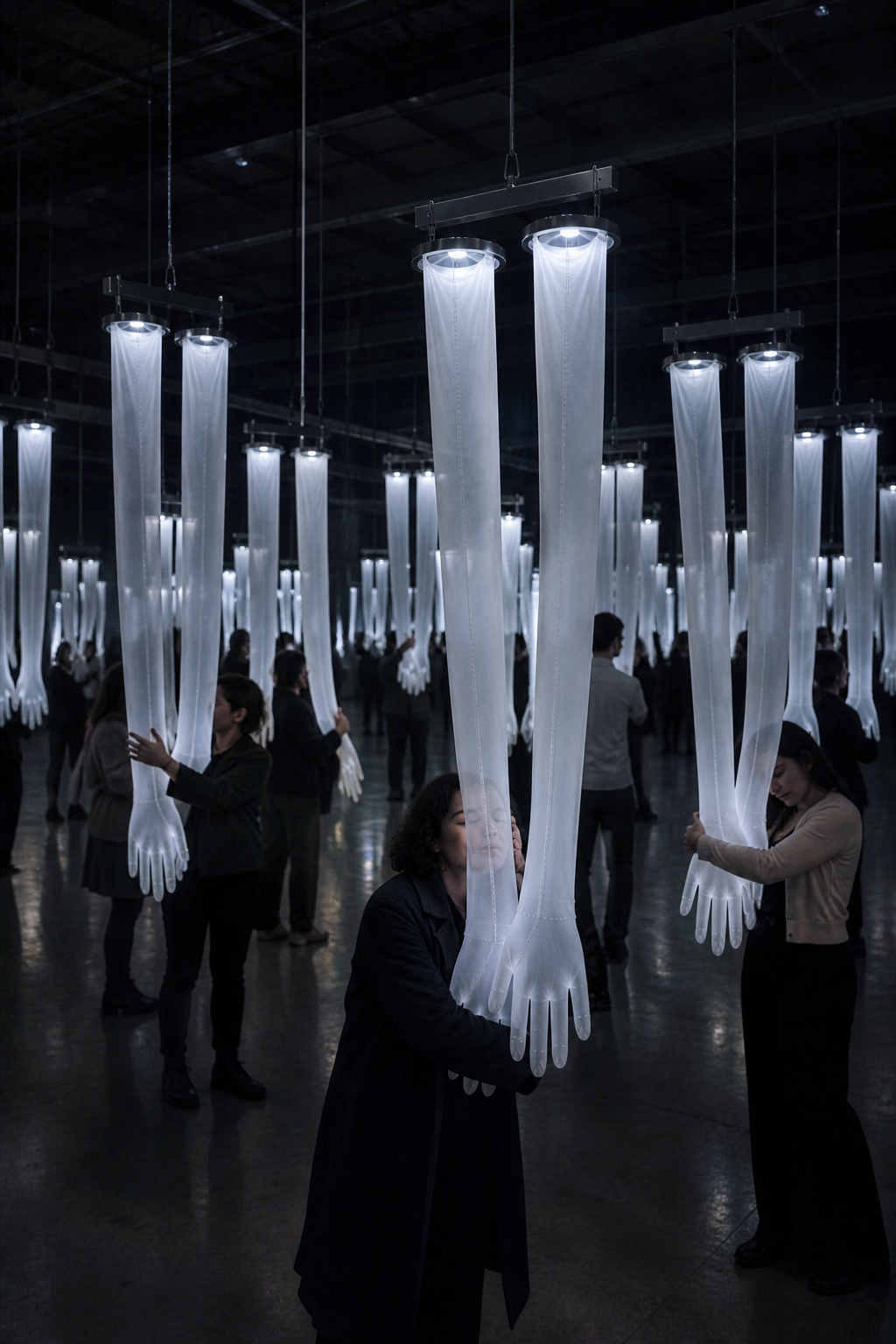
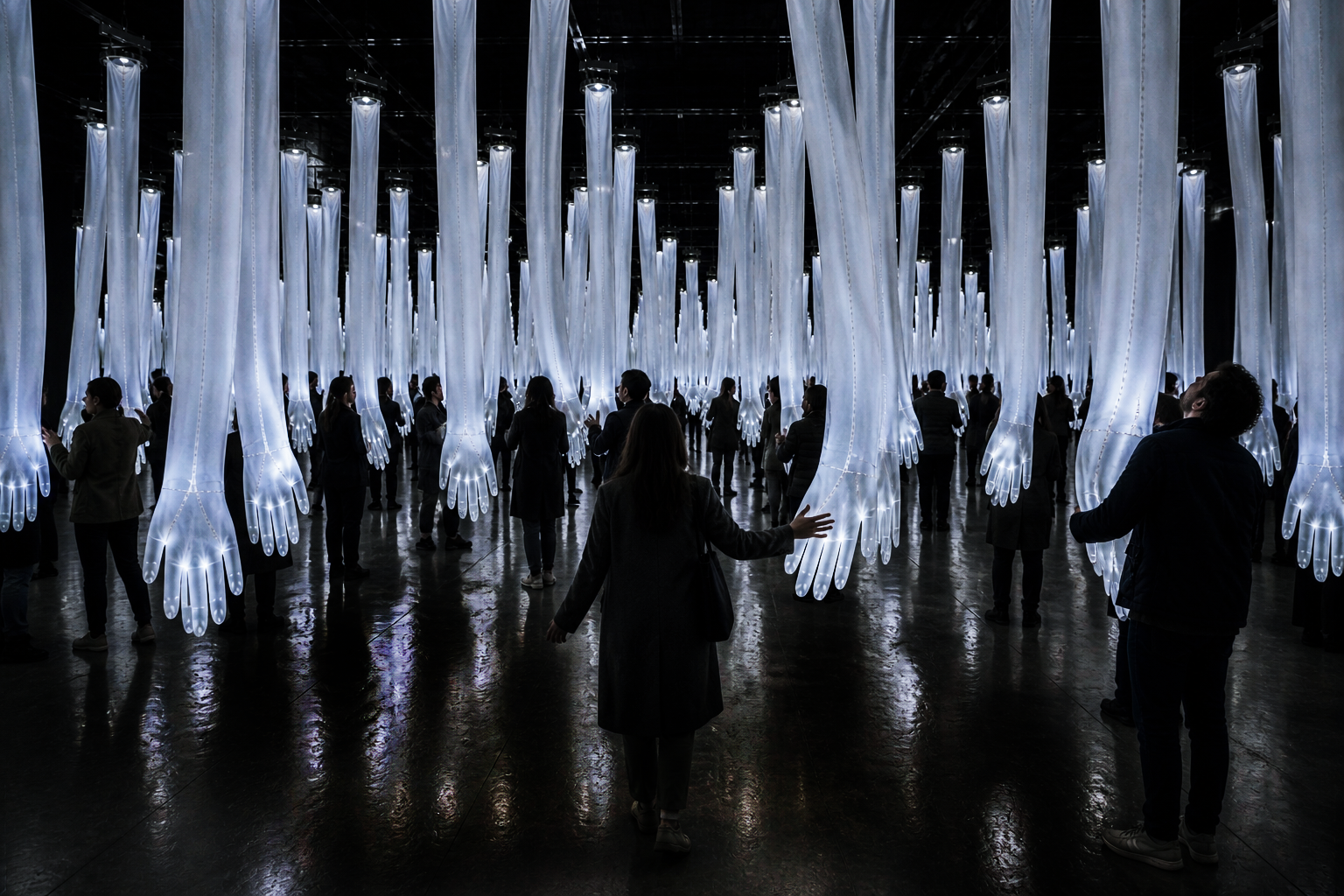
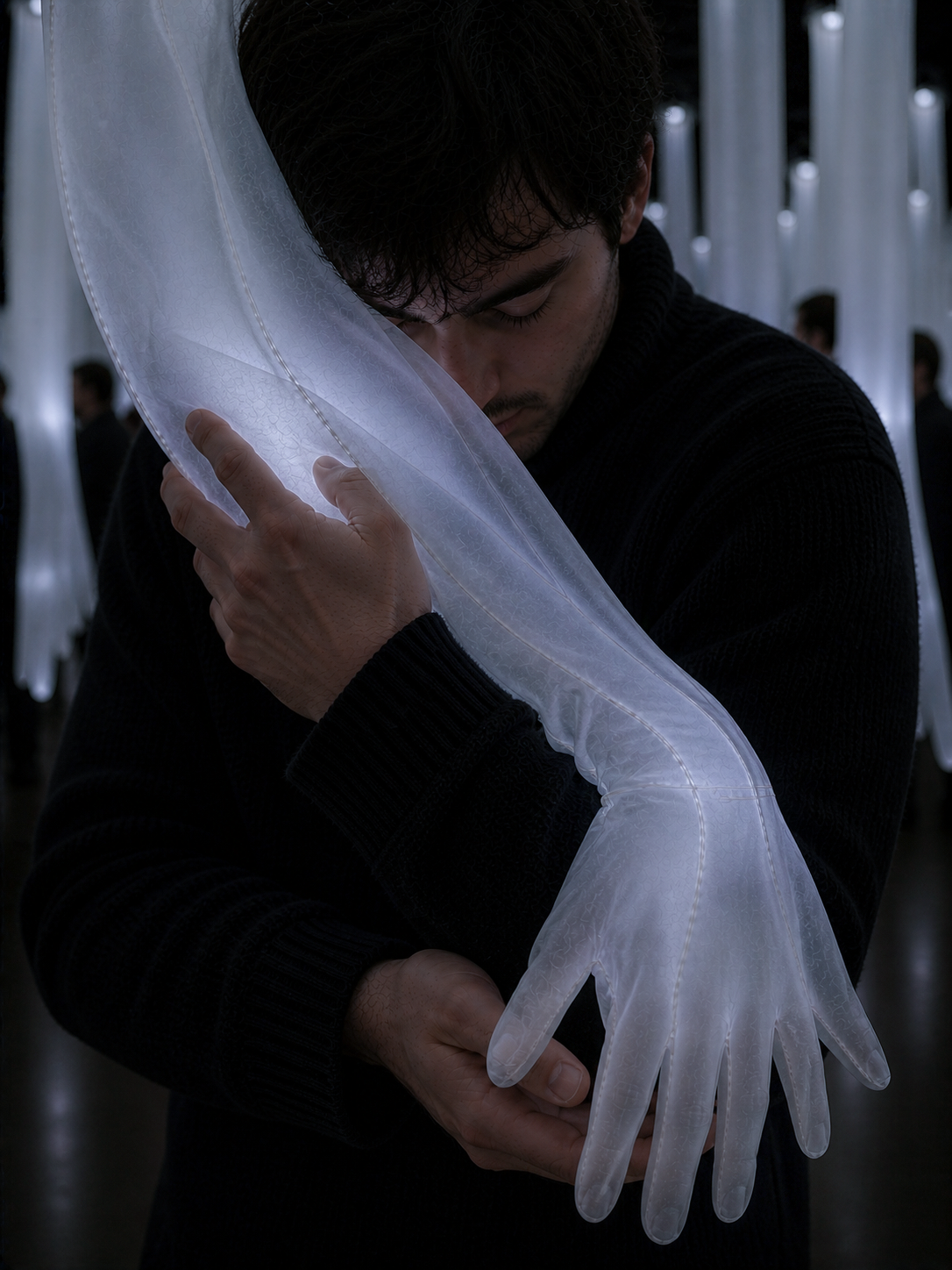
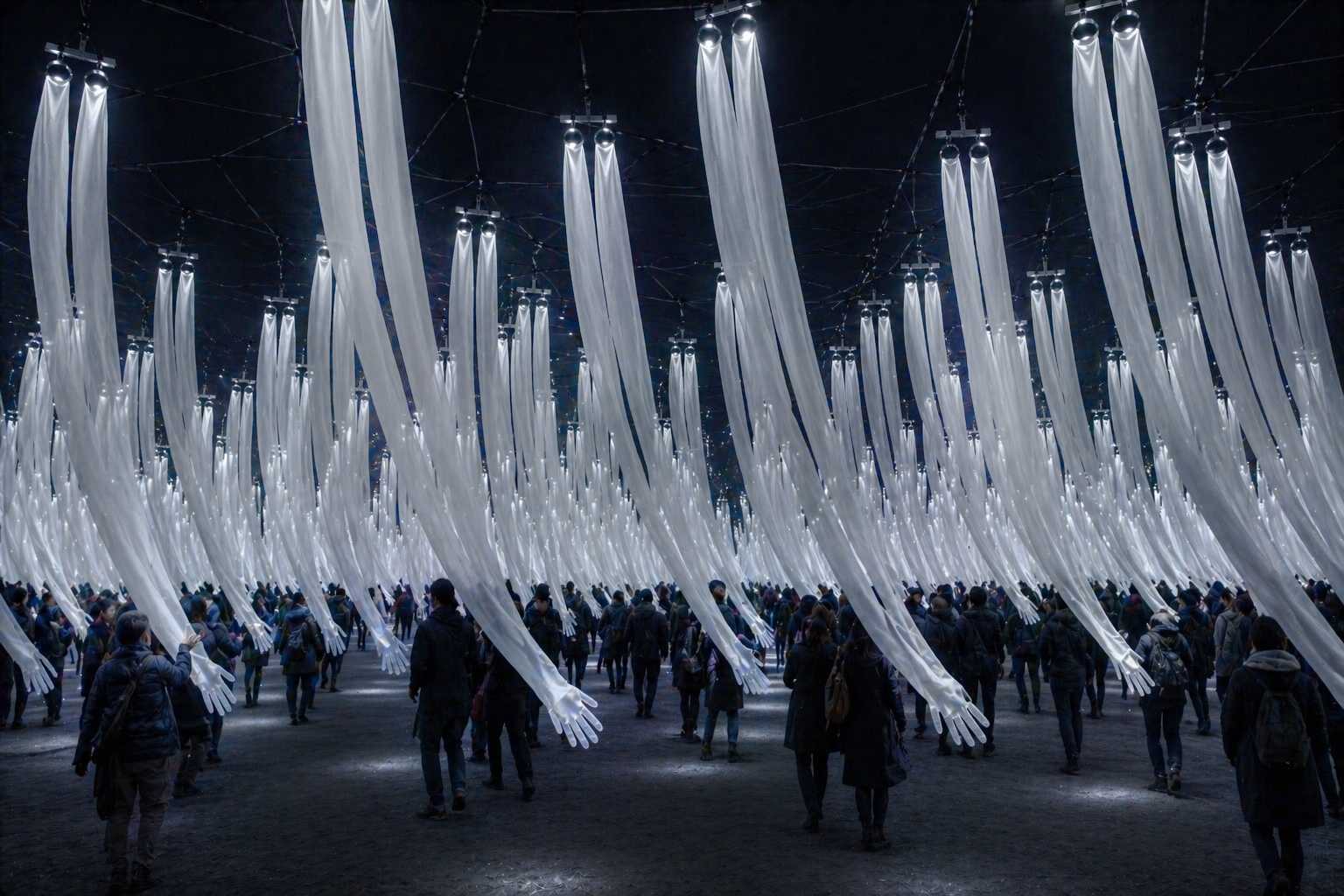
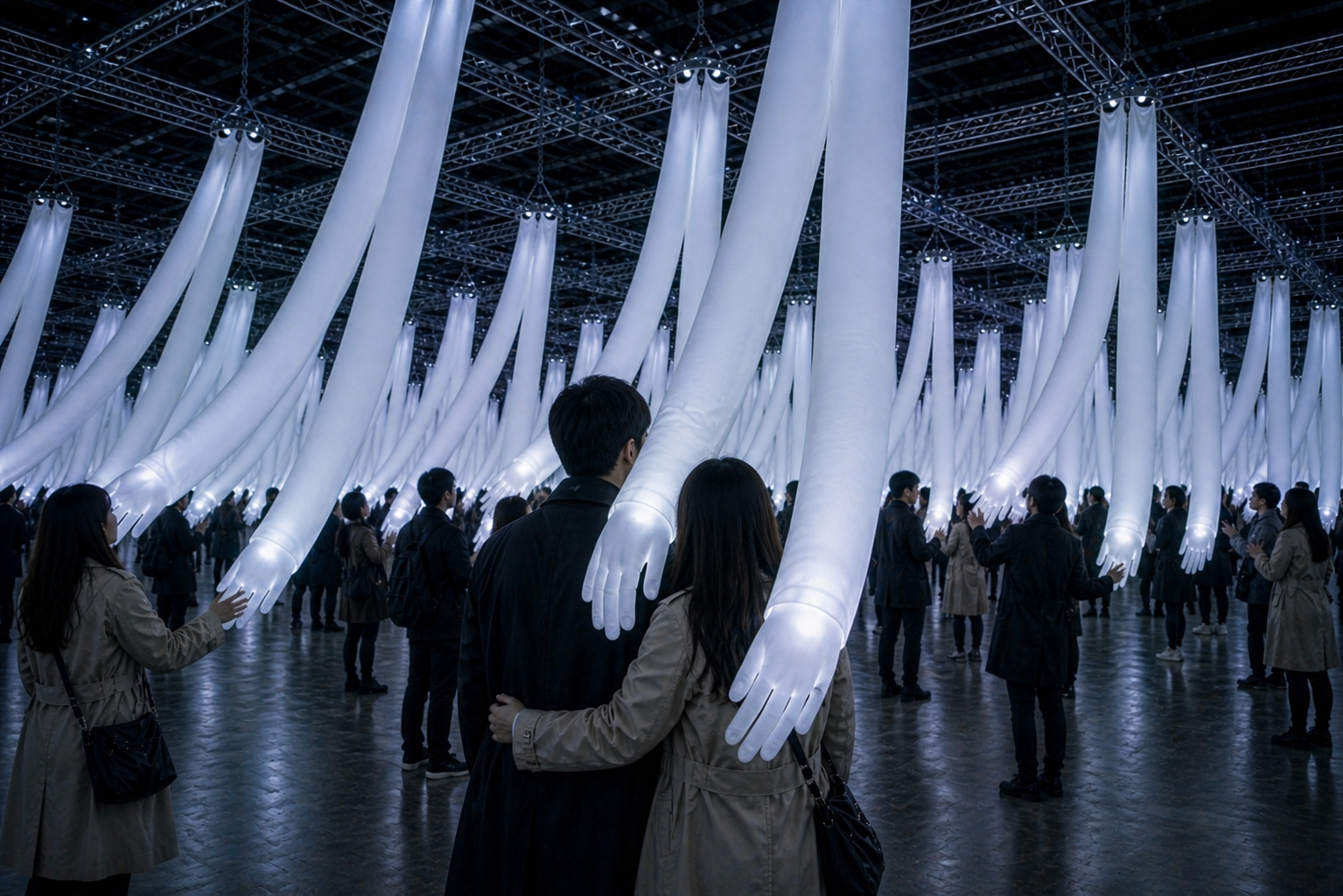
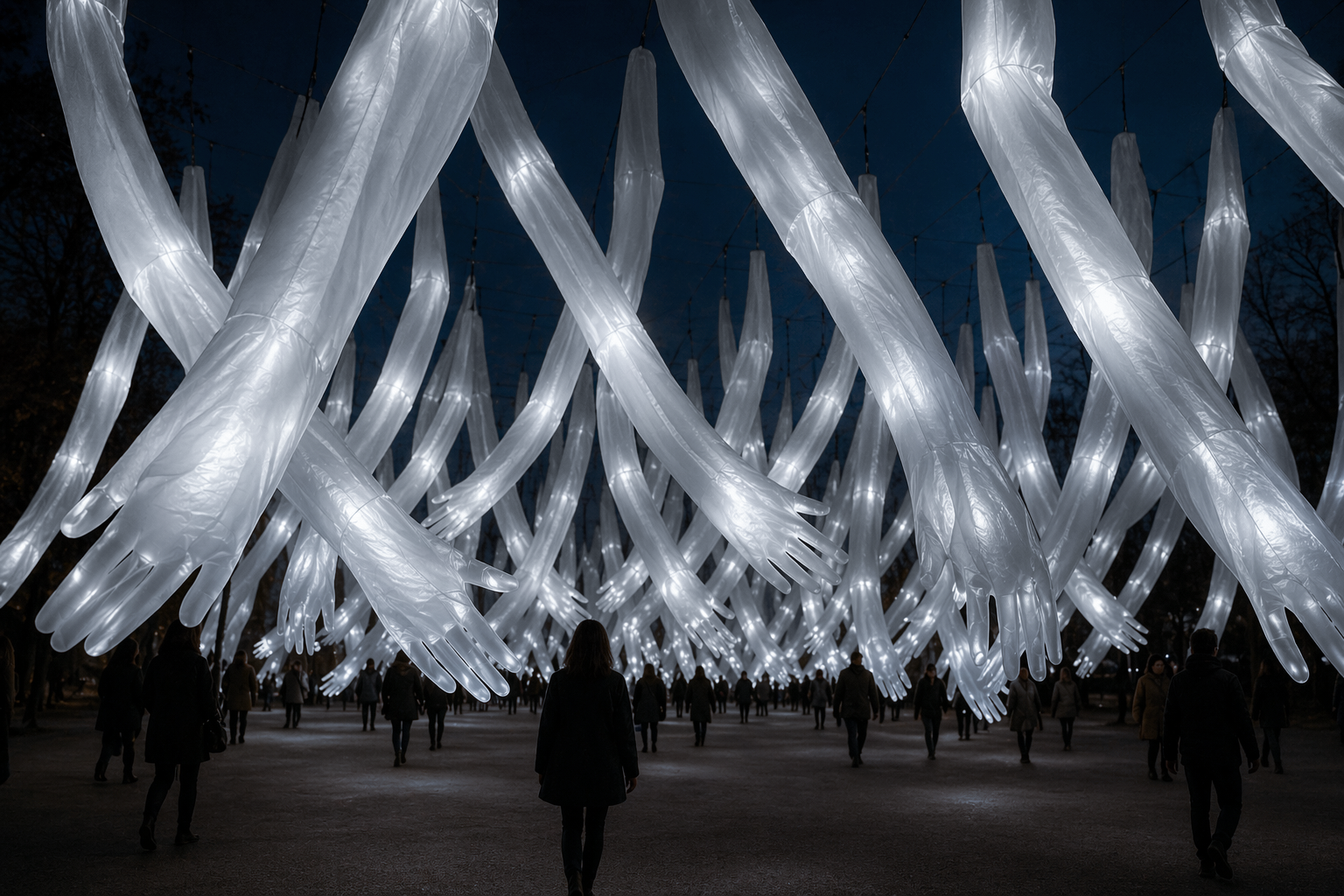
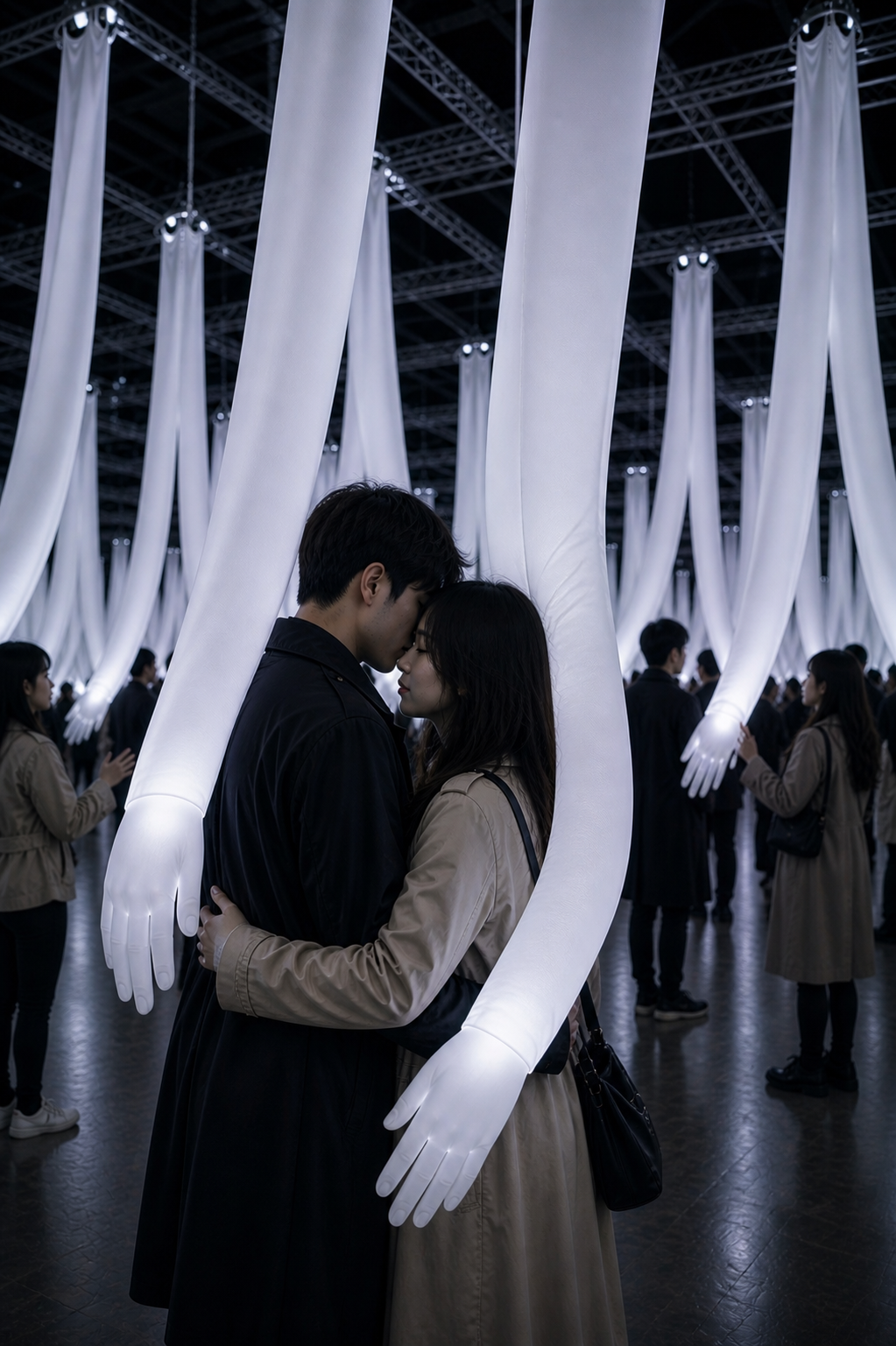
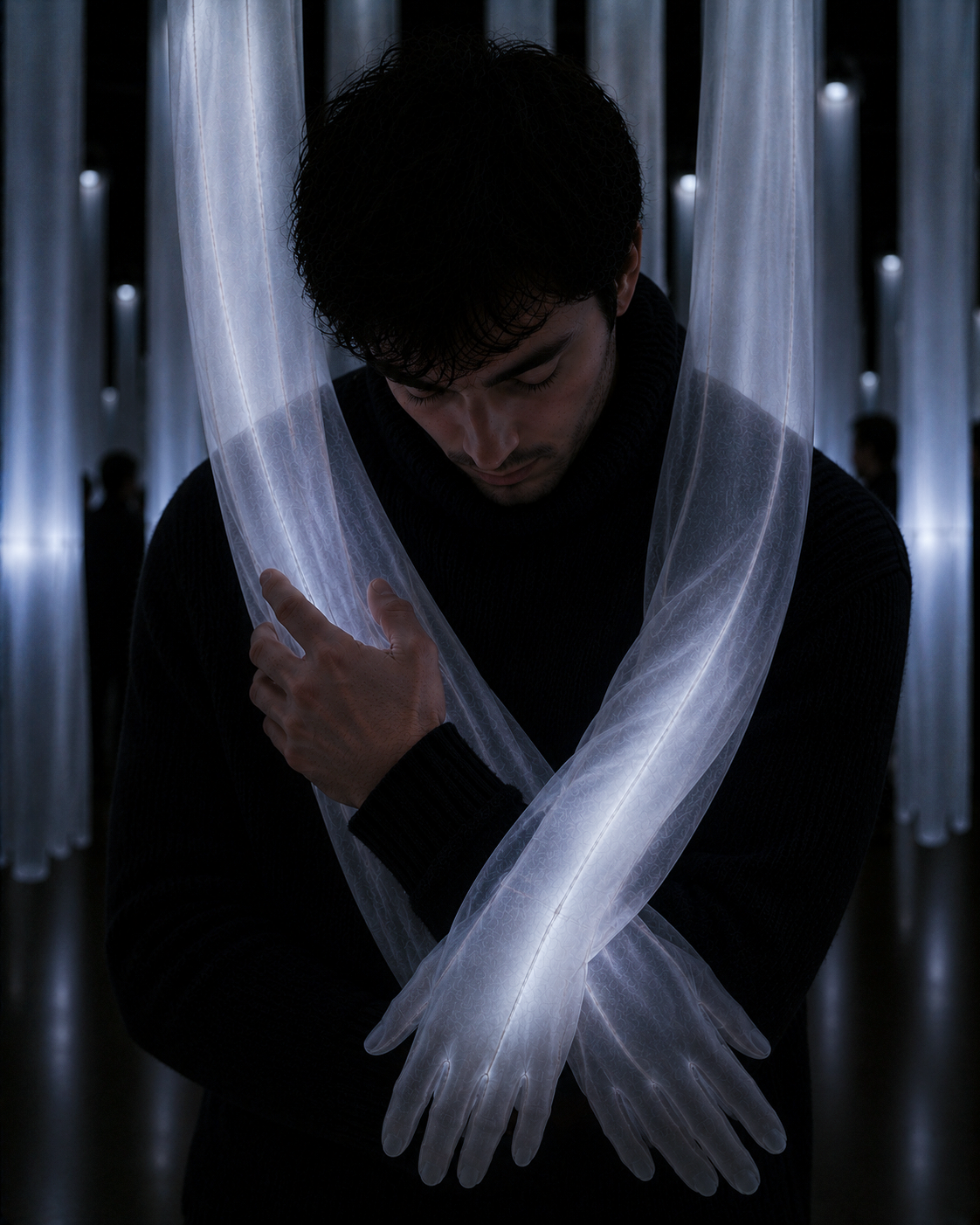
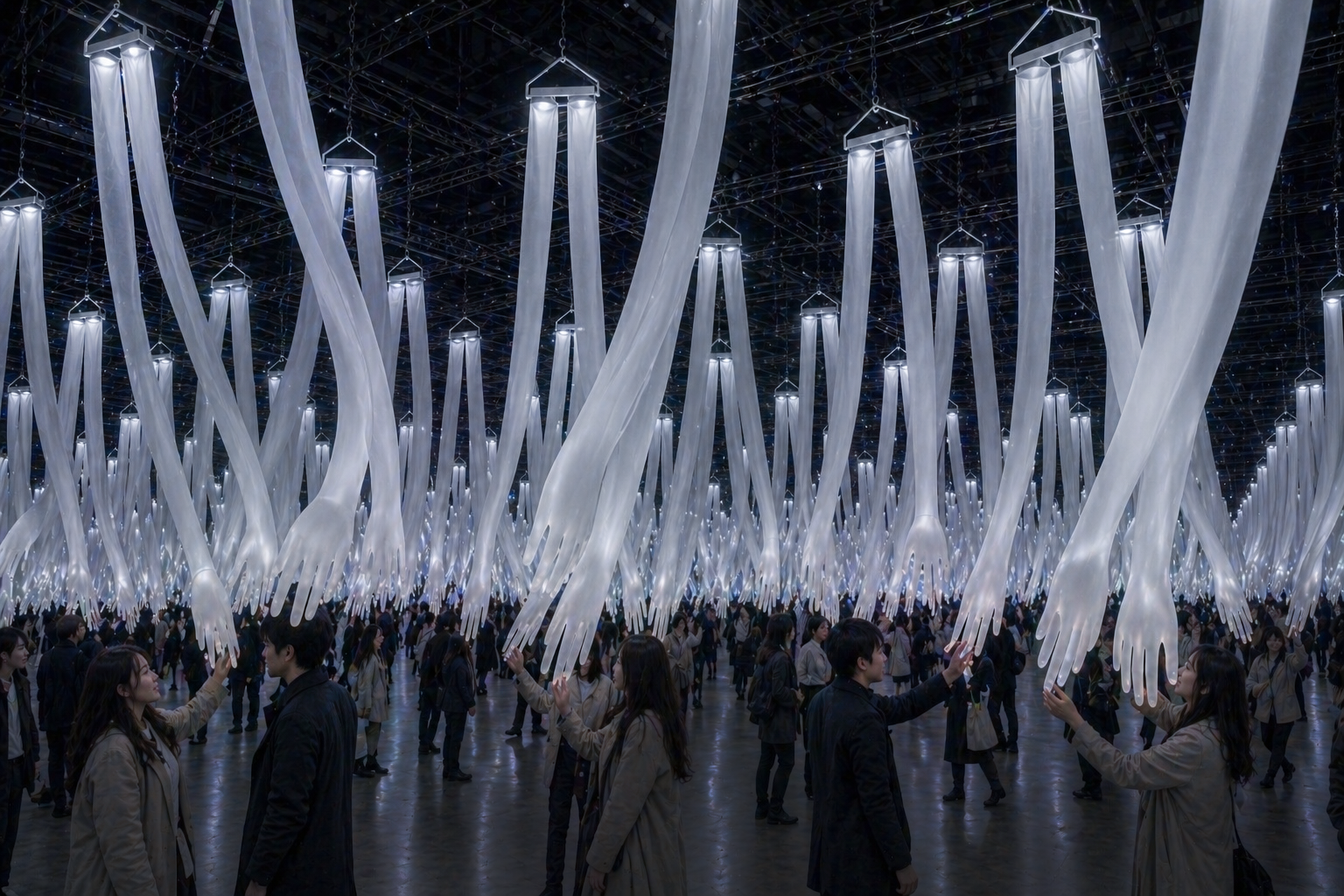
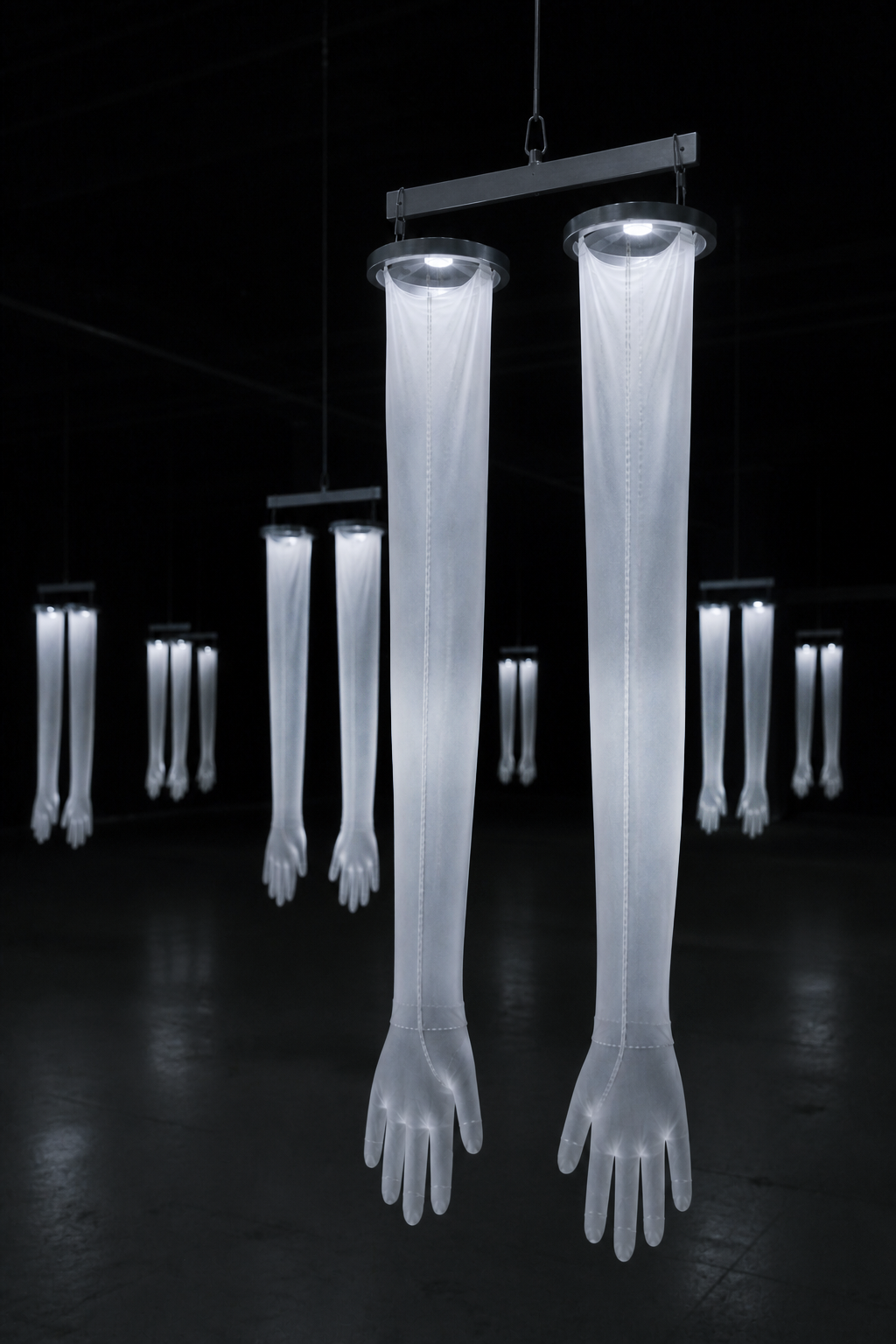
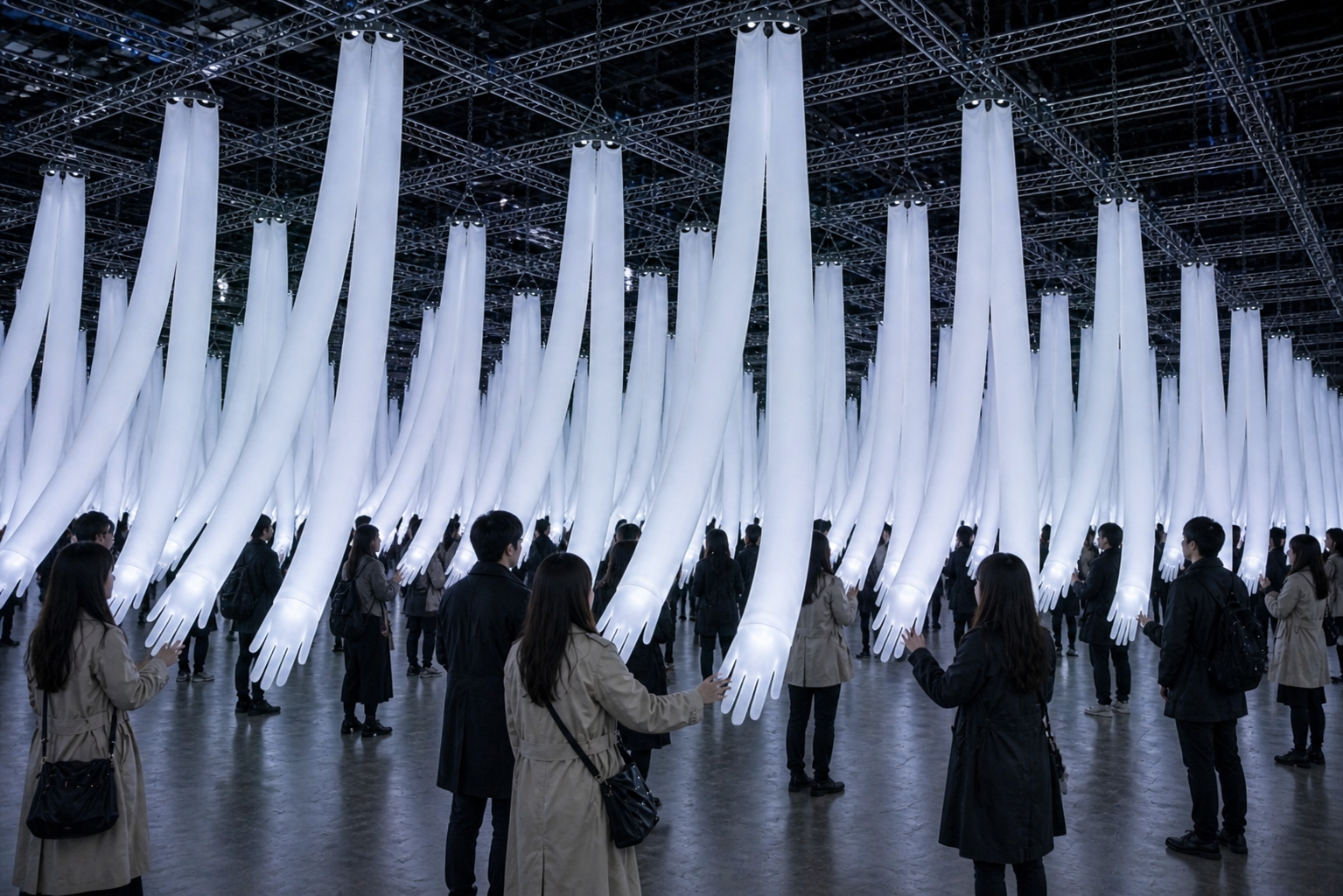
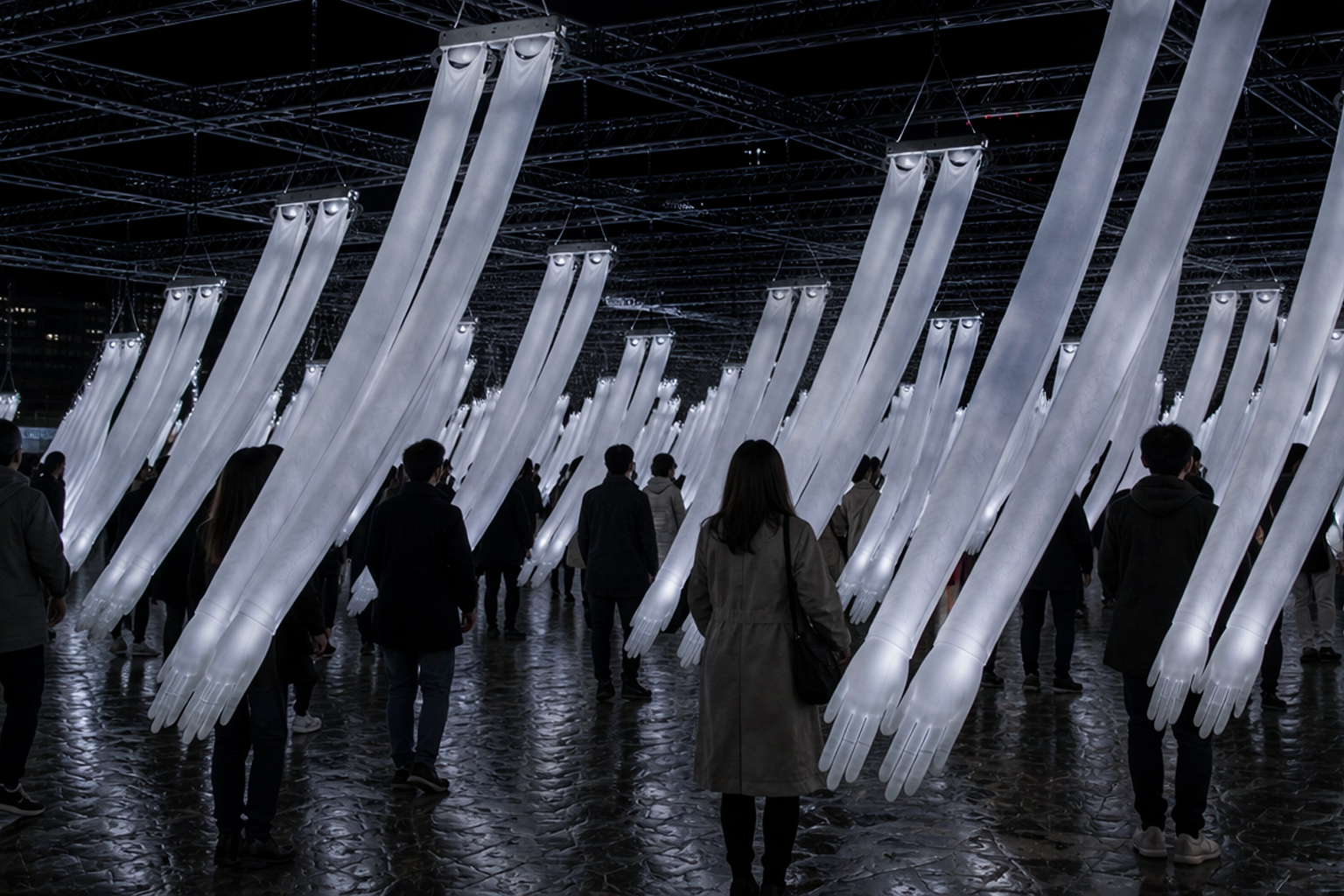
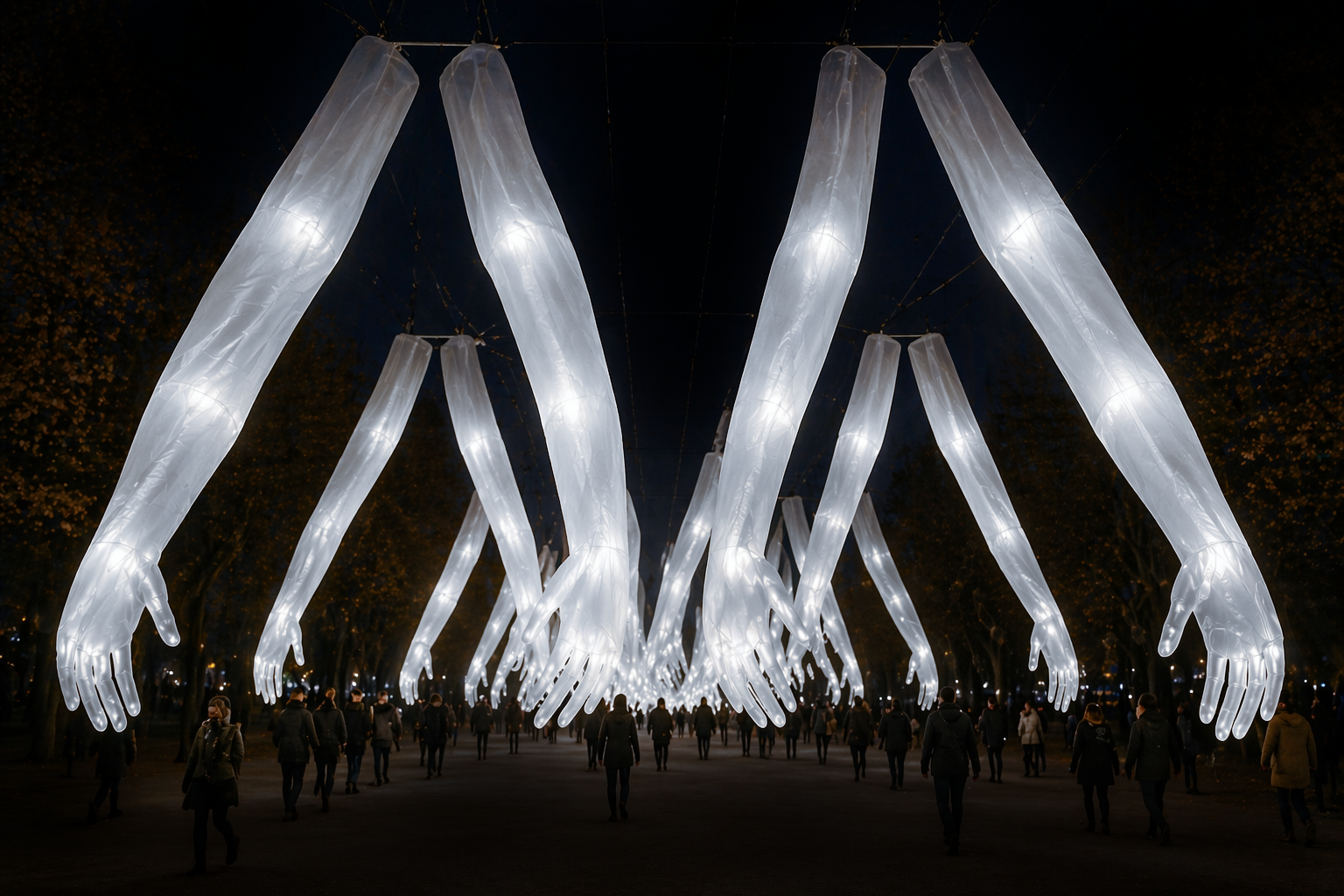
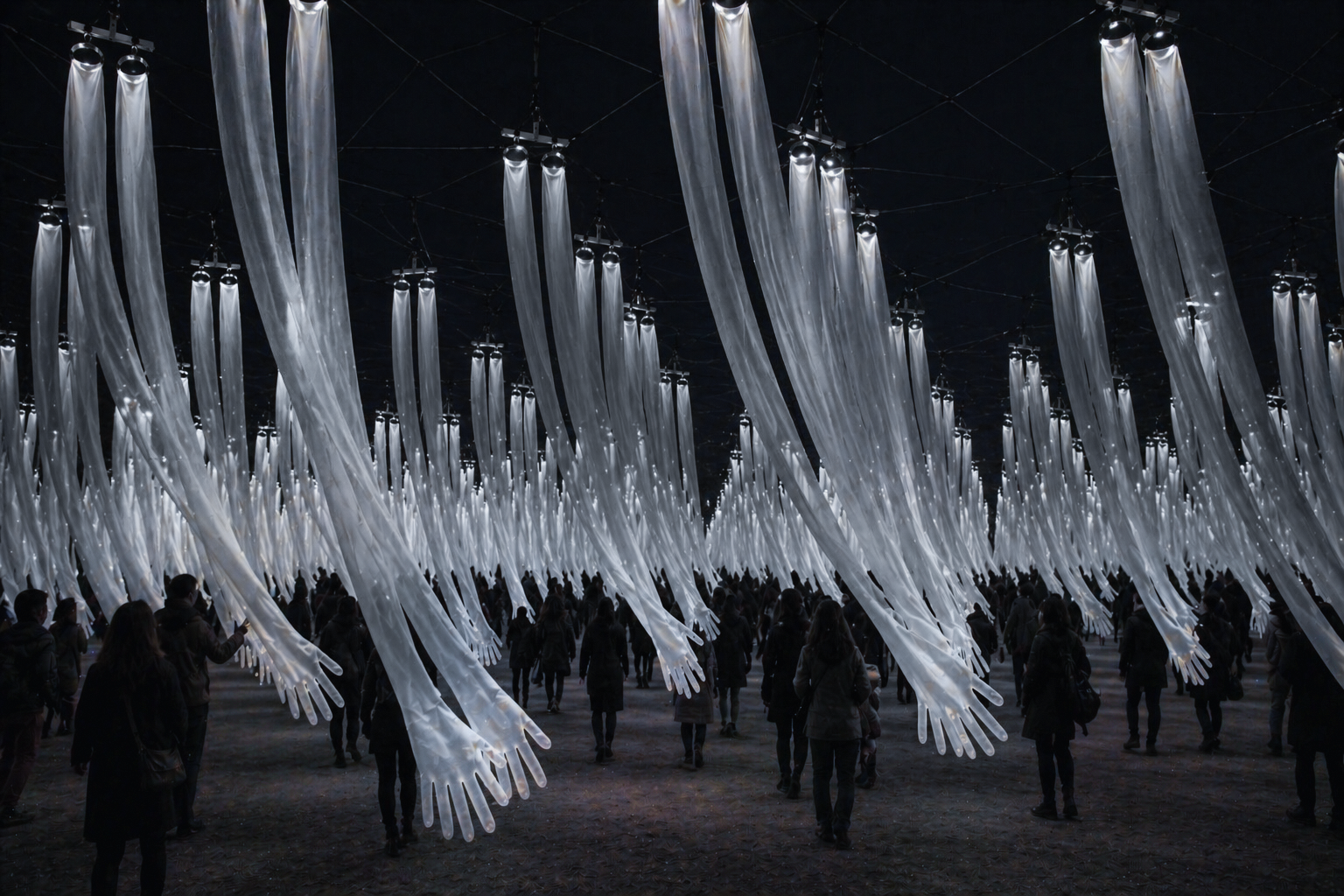
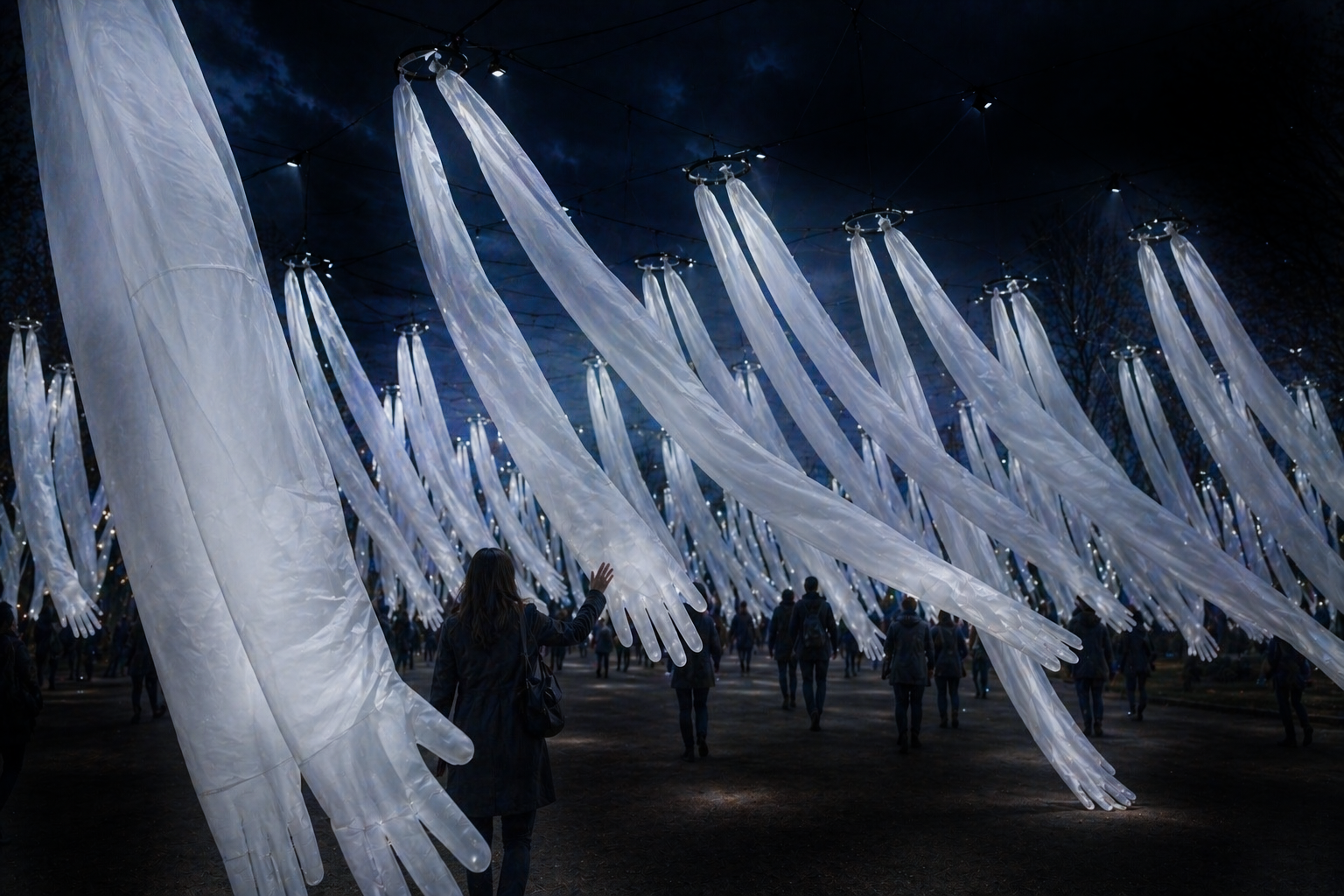
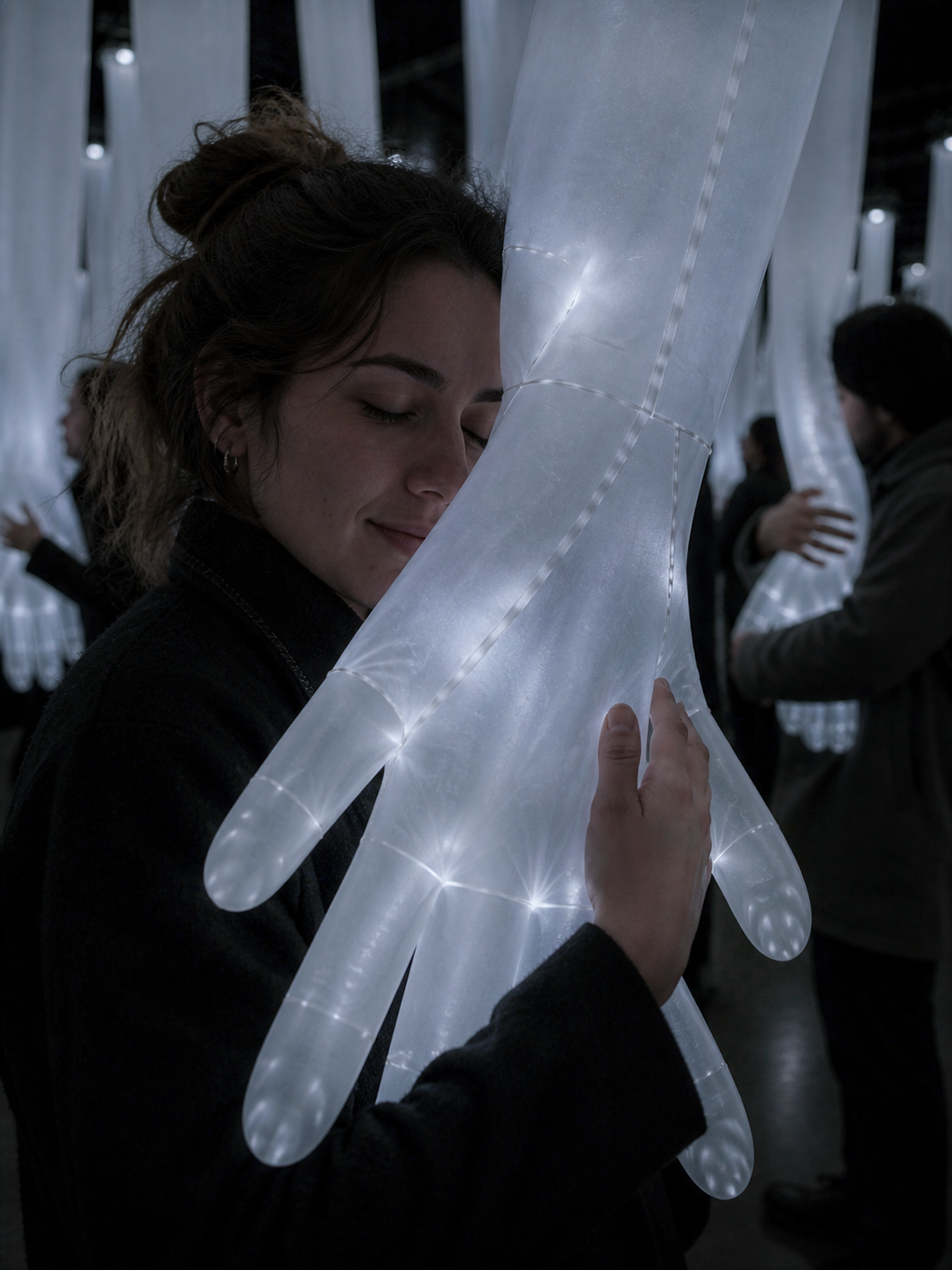
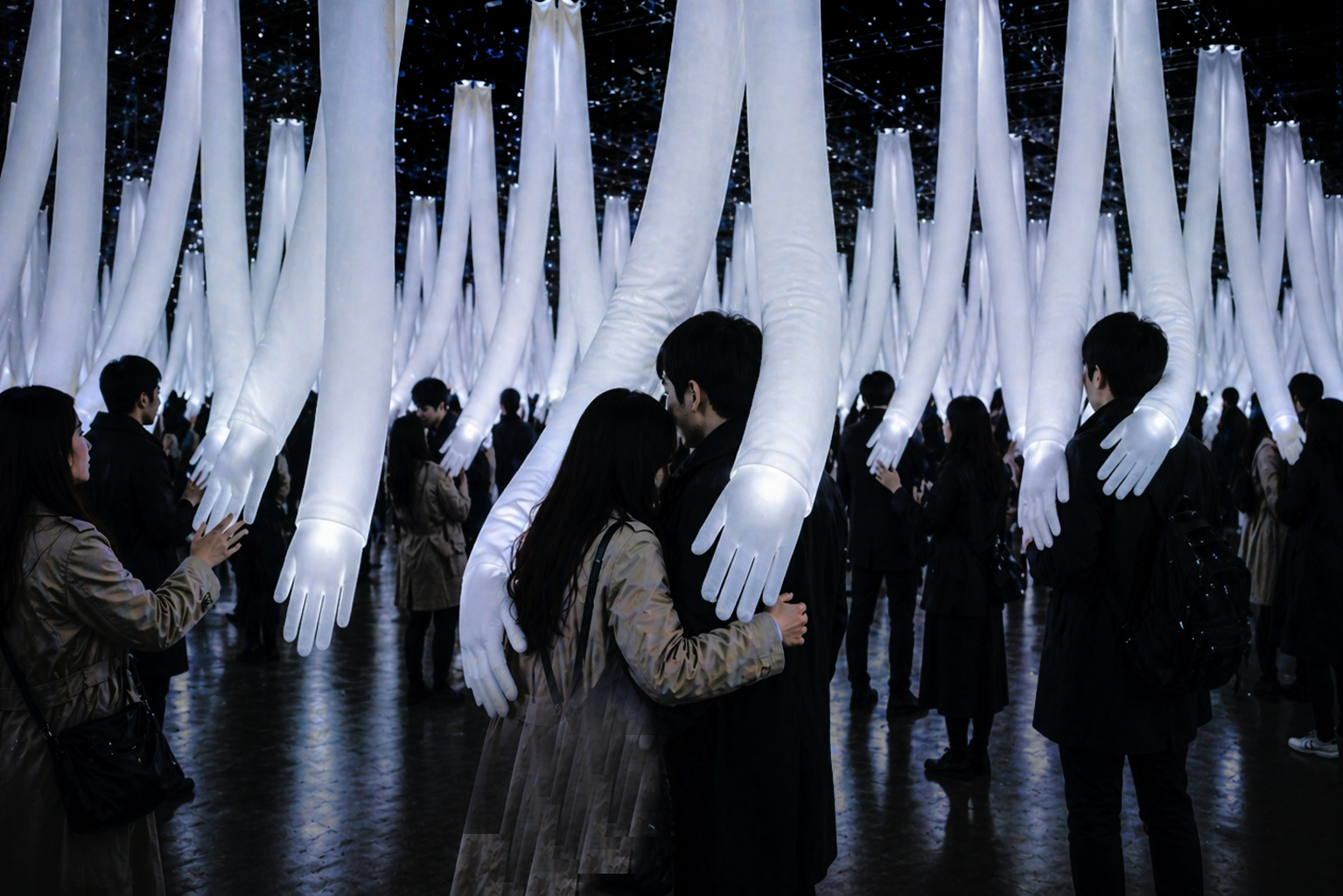
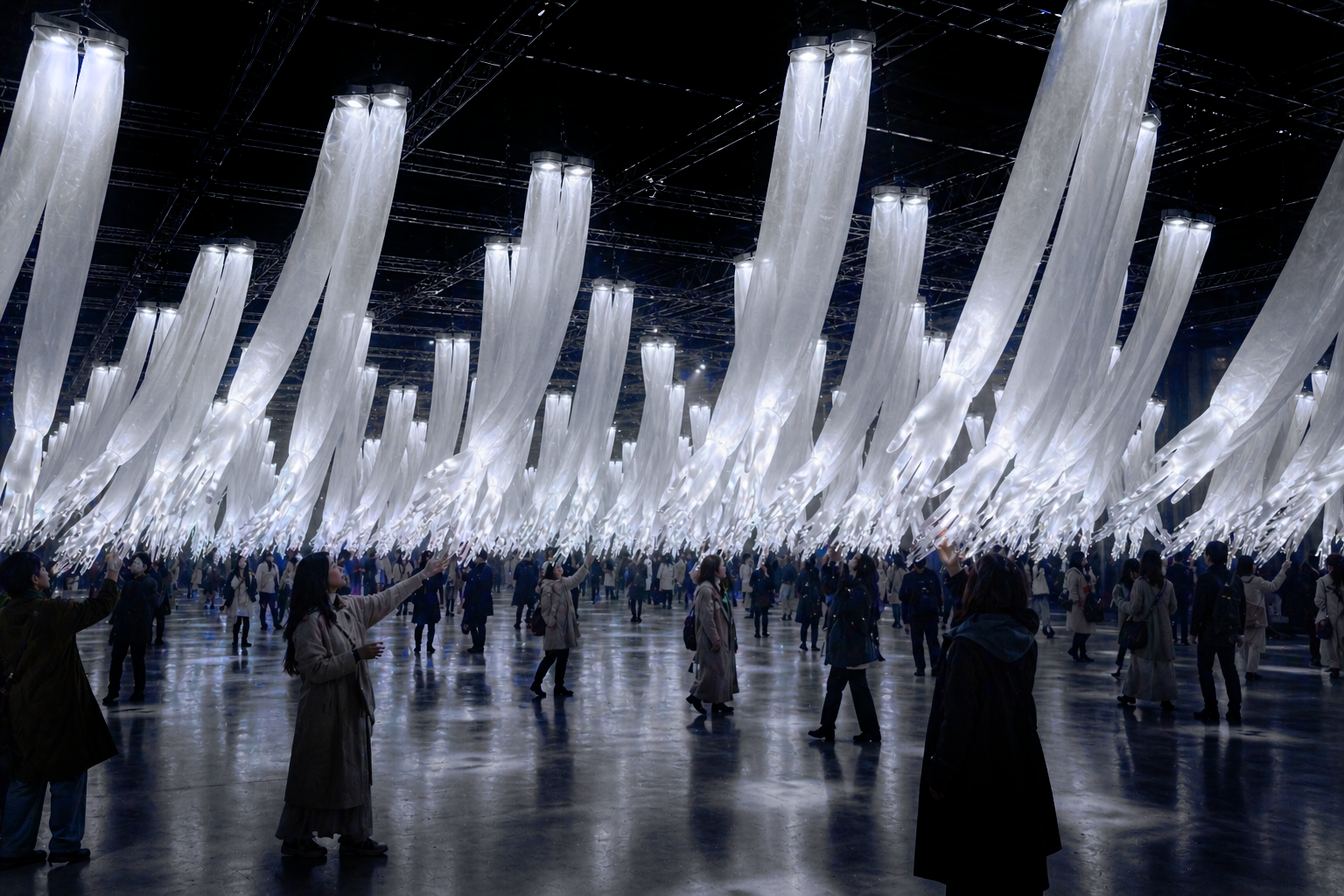
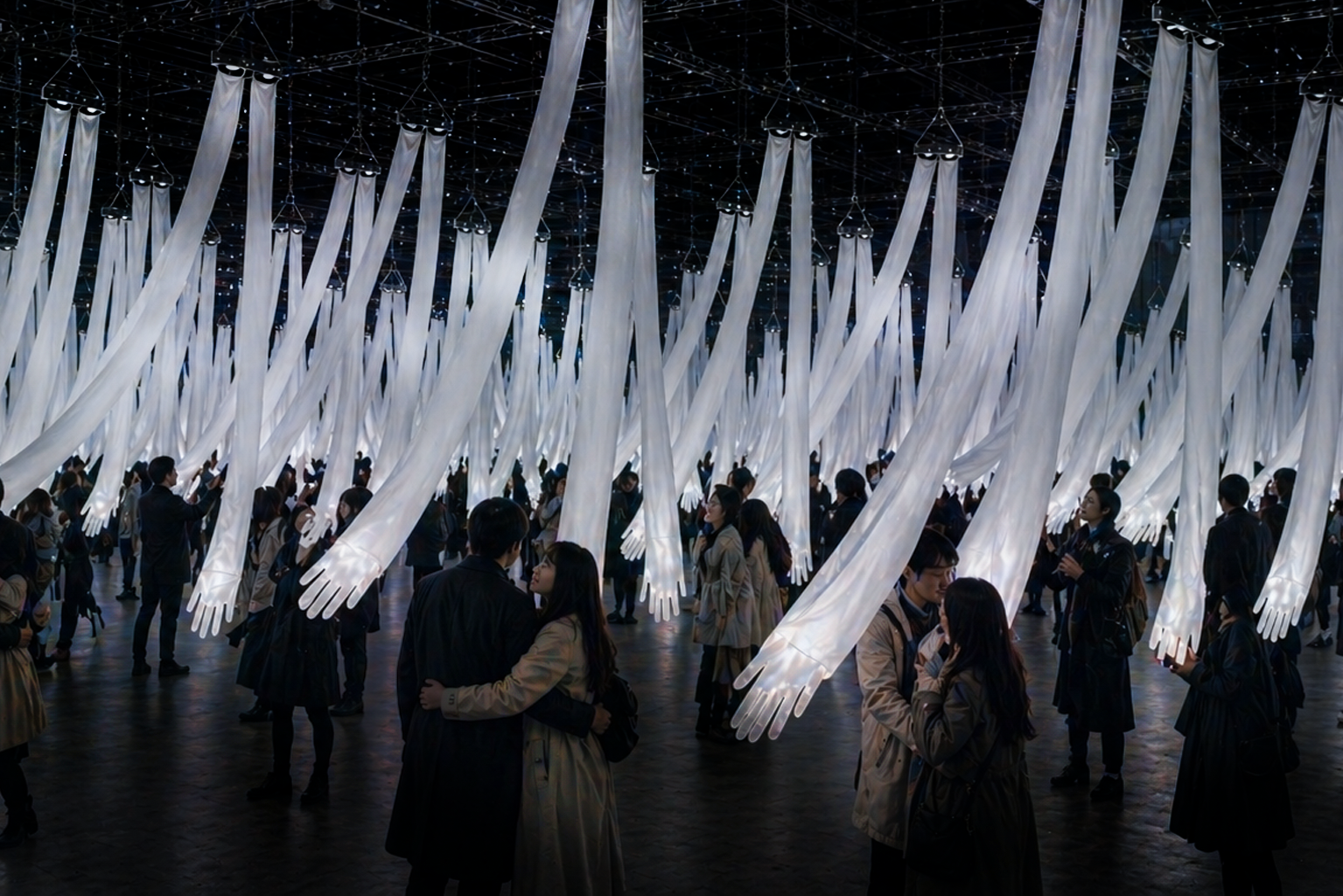
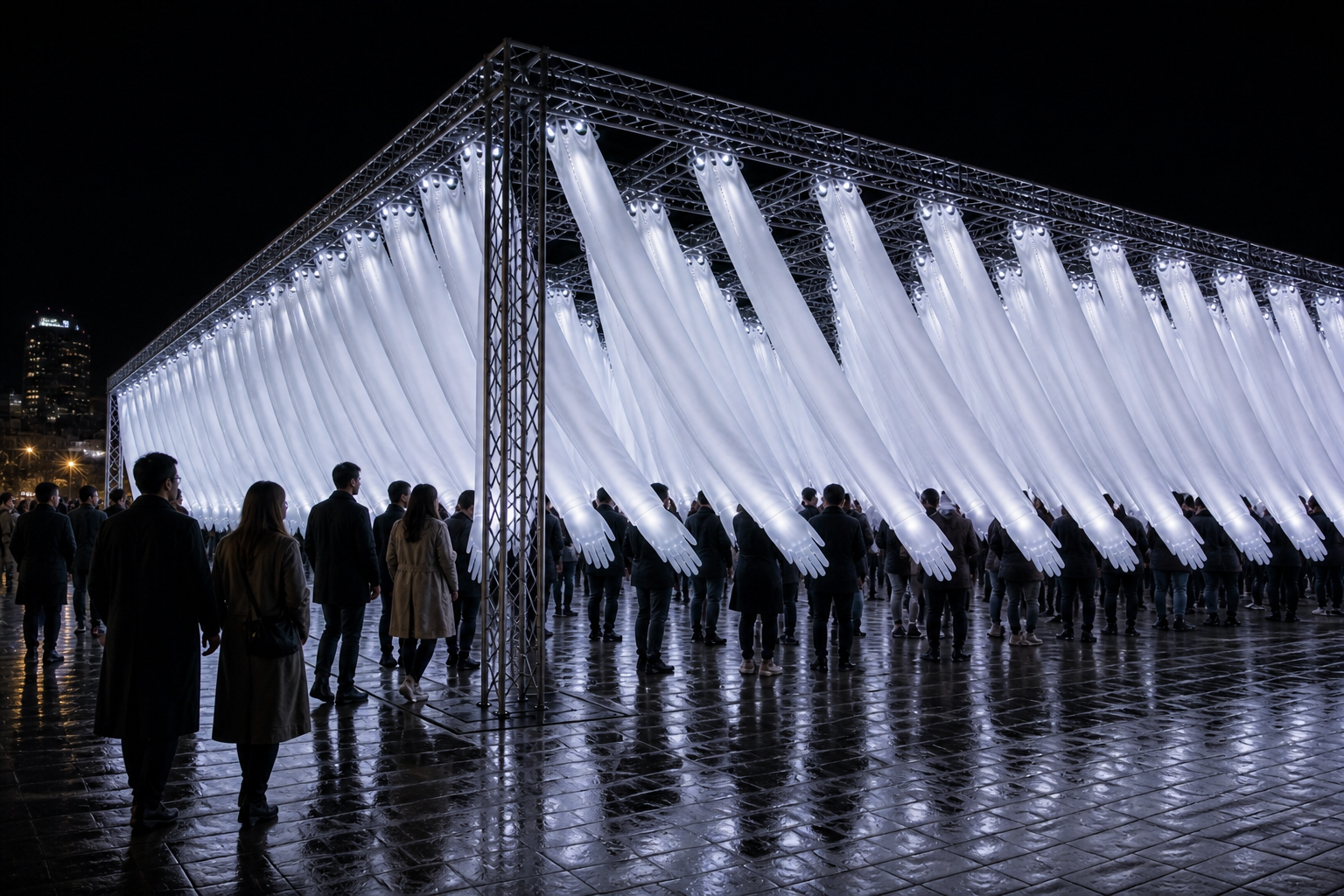
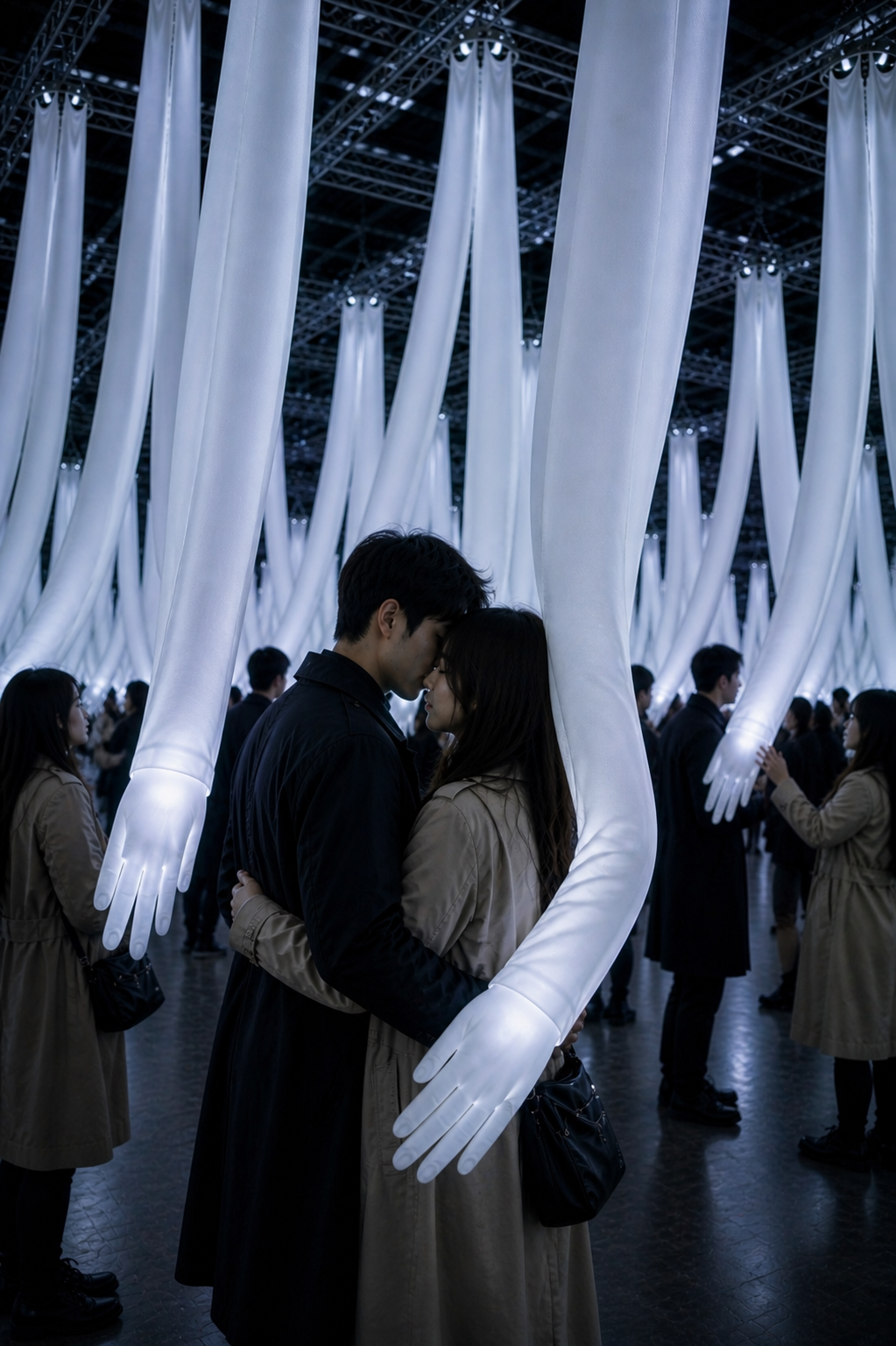
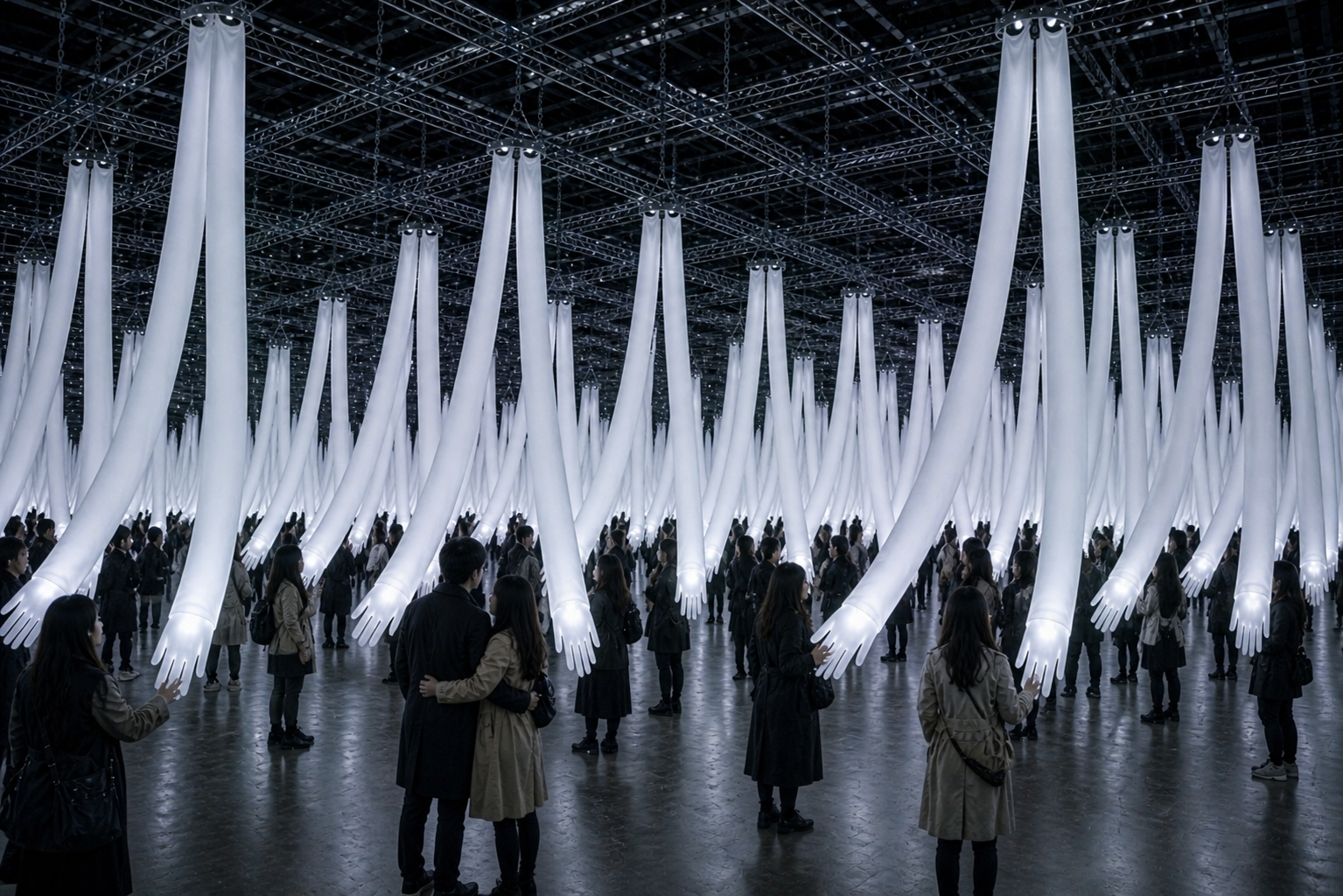
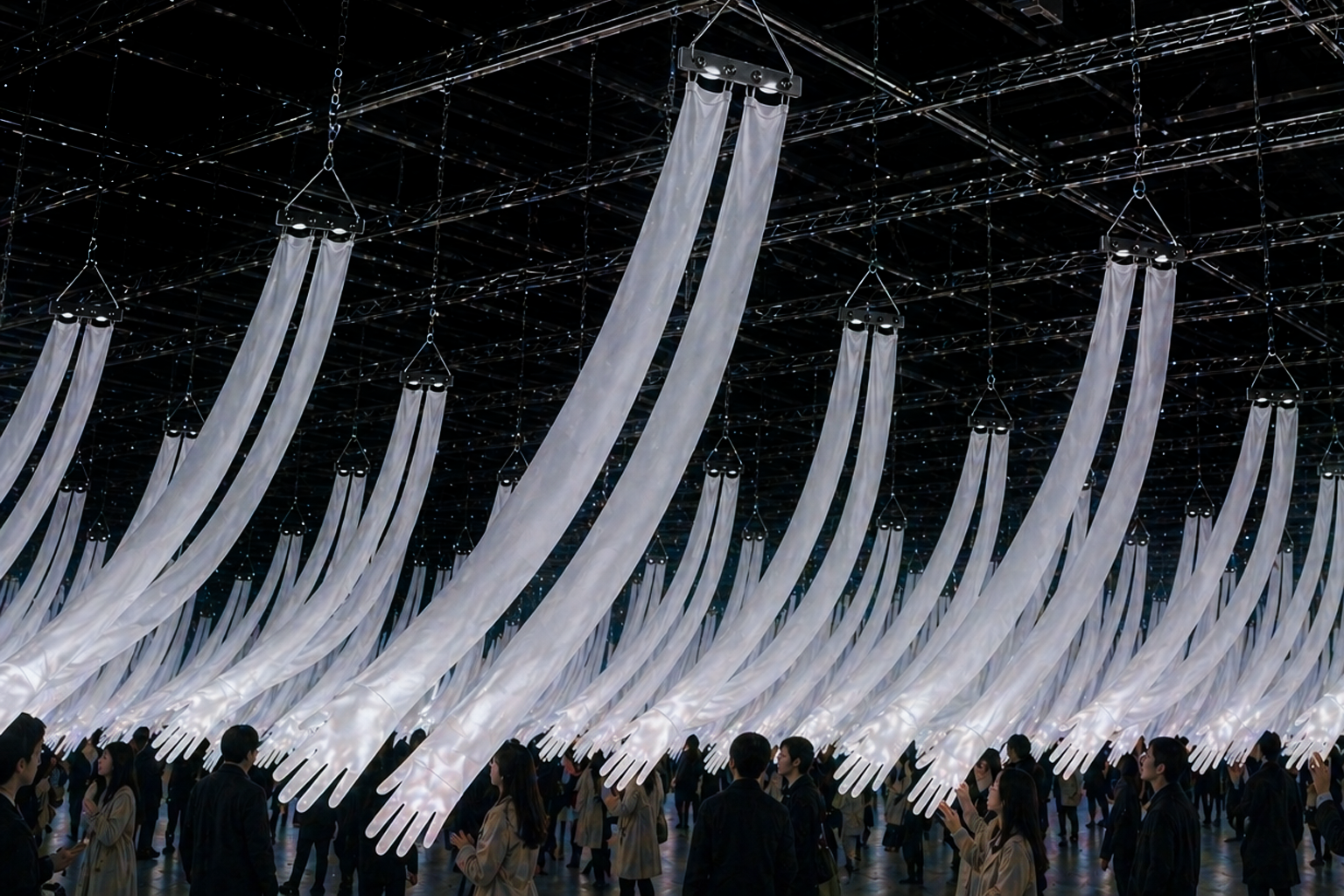
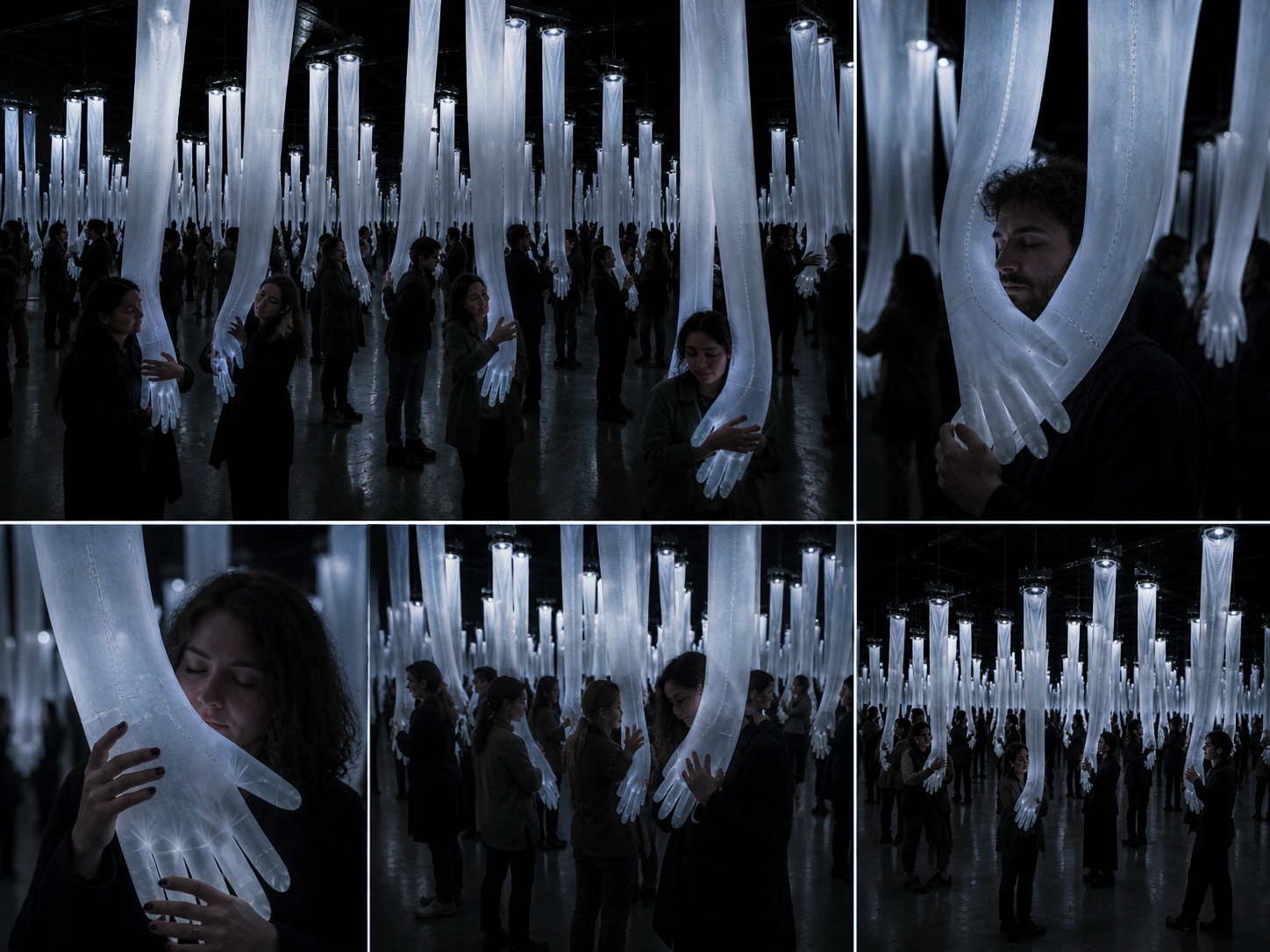
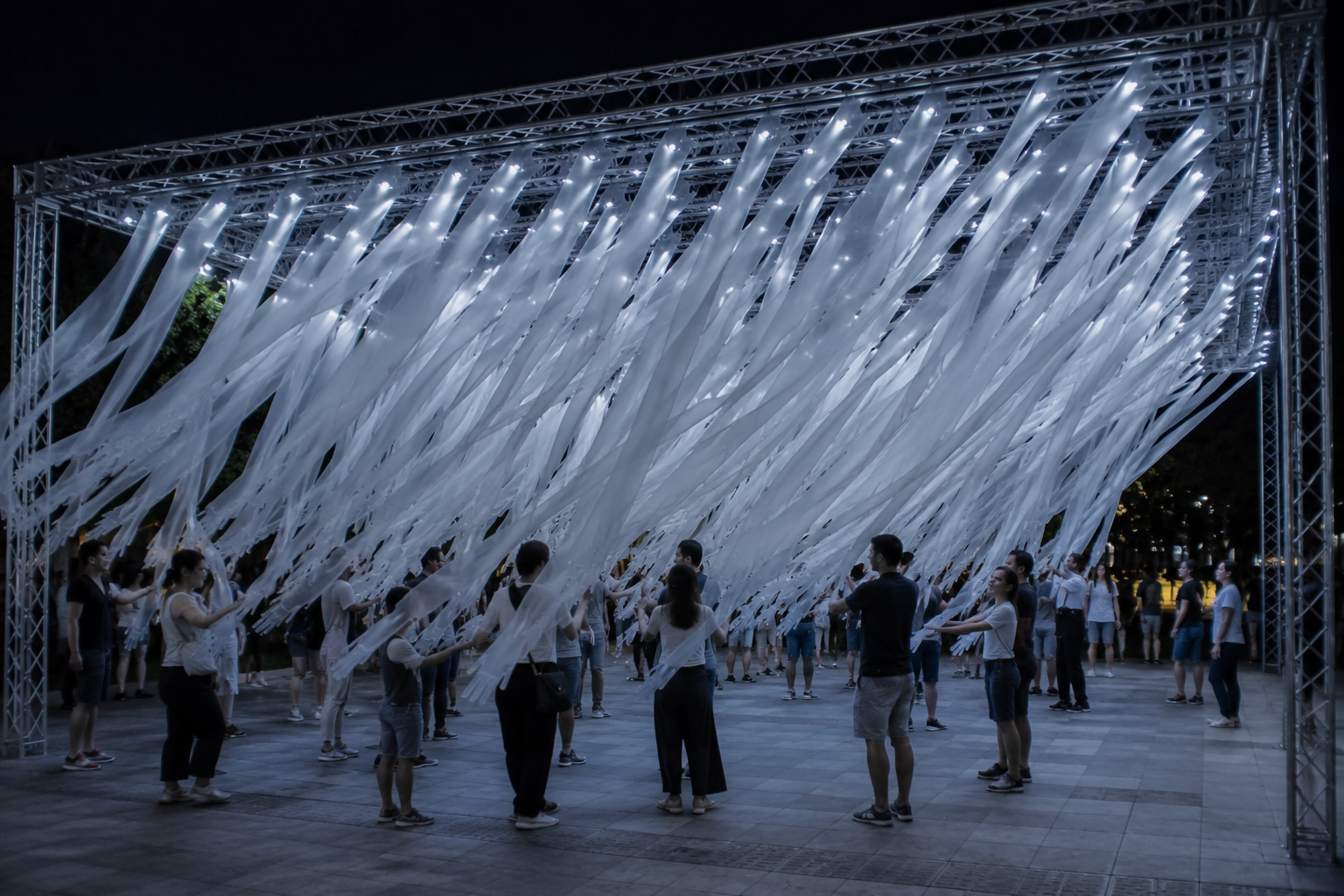
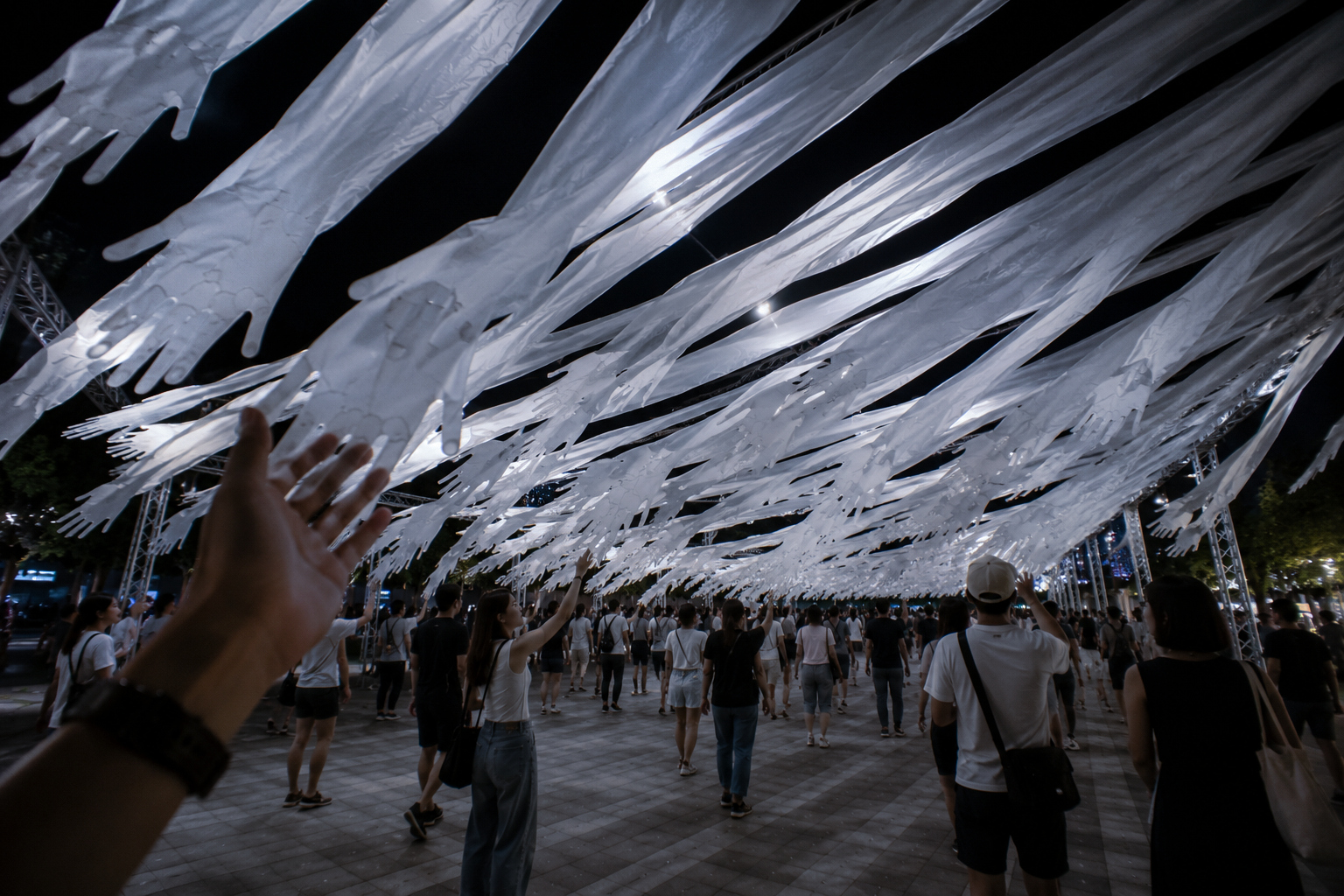
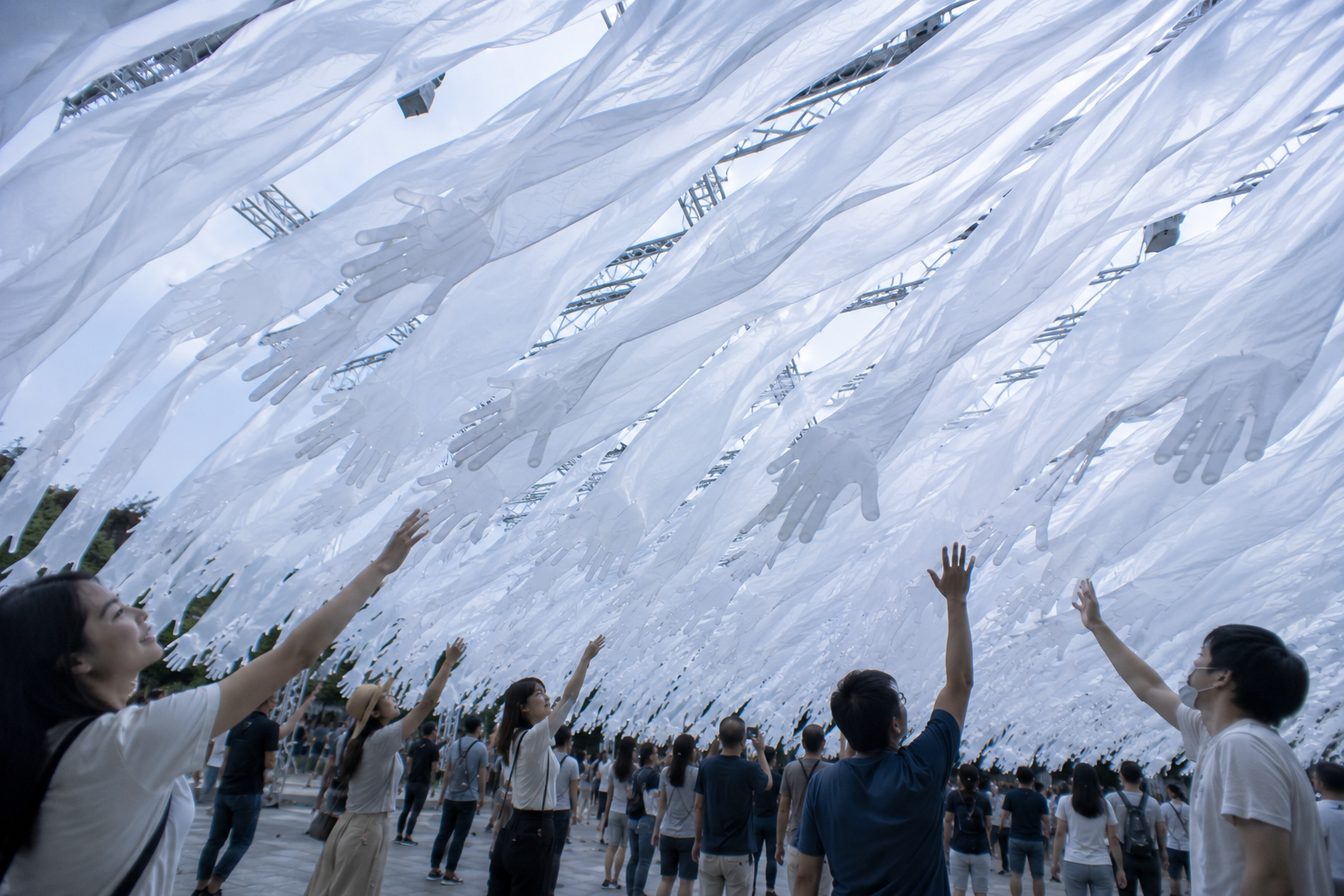
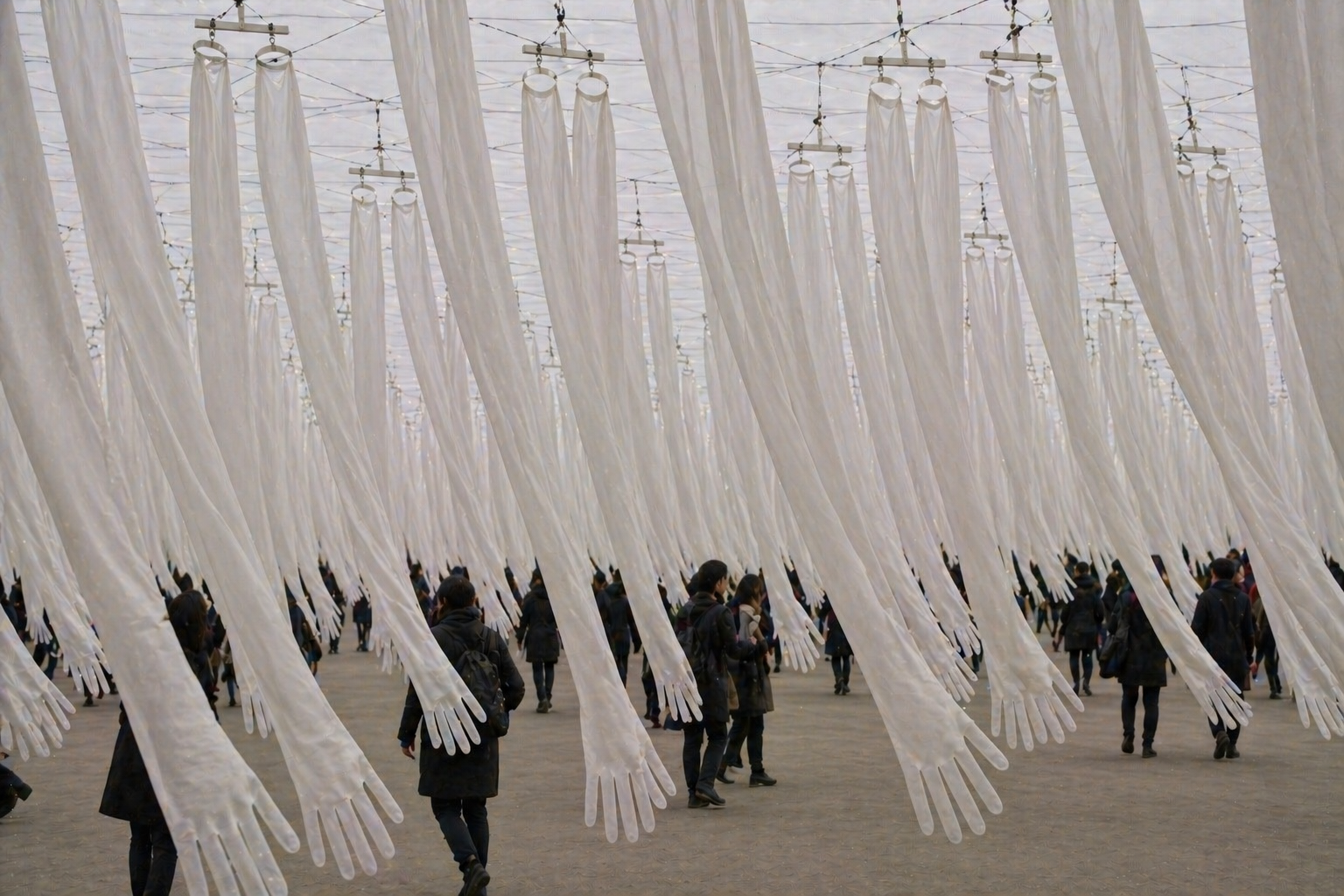
With this installation we want to temporarily transform public space into a place of contact and shared softness. Caressing Zone is made up of hundreds of translucent arms and hands suspended above the audience, moving slowly with the wind and brushing against those who walk through the space. We are interested in introducing into the city an action normally reserved for intimacy: the caress.

The installation revisits ideas we have already explored in other works involving fragmented bodies, textile materials, light, and the sensitive occupation of urban space. In contrast to architectures shaped by hardness, speed, or control, we are interested in introducing soft, unstable elements connected to physical contact.

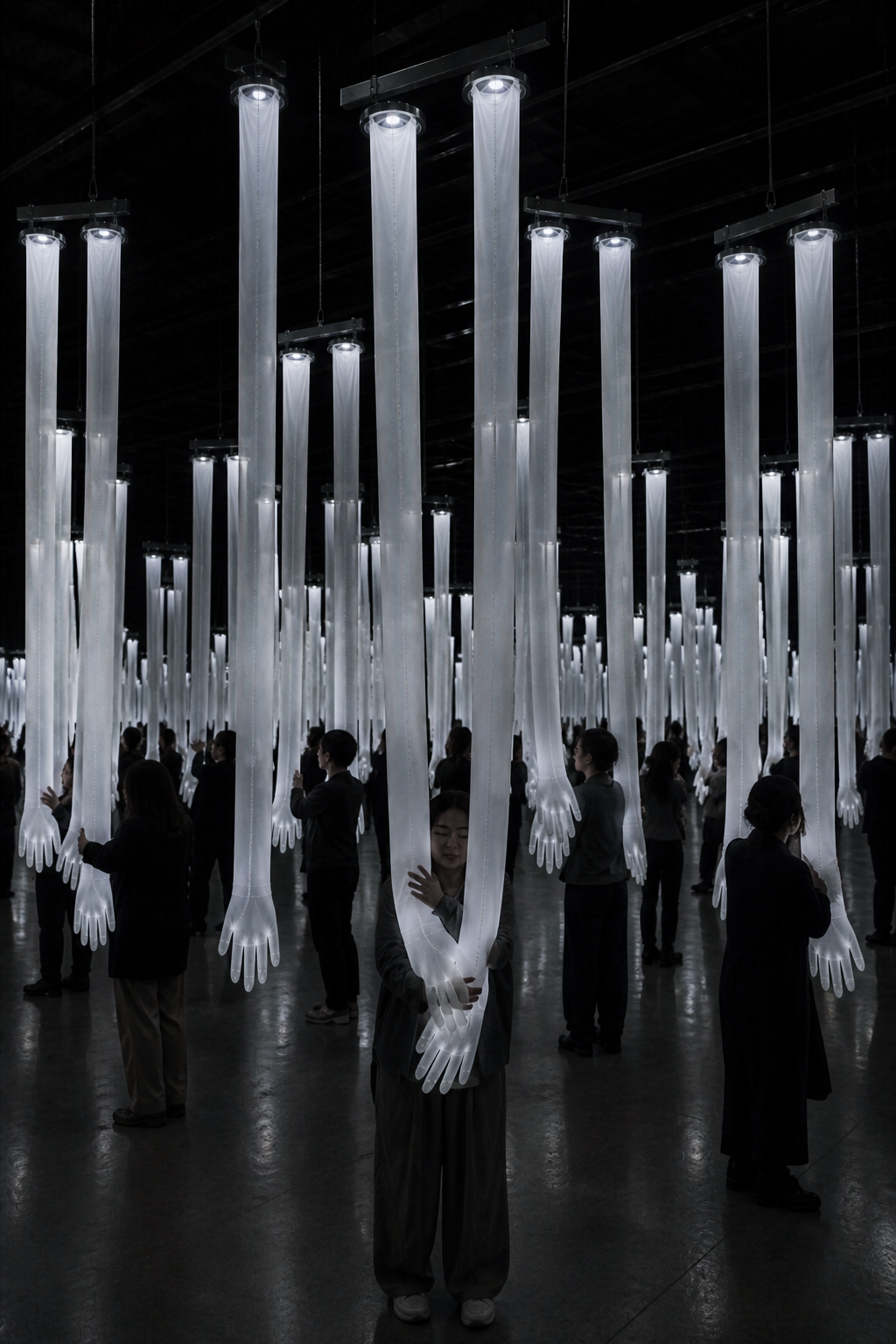
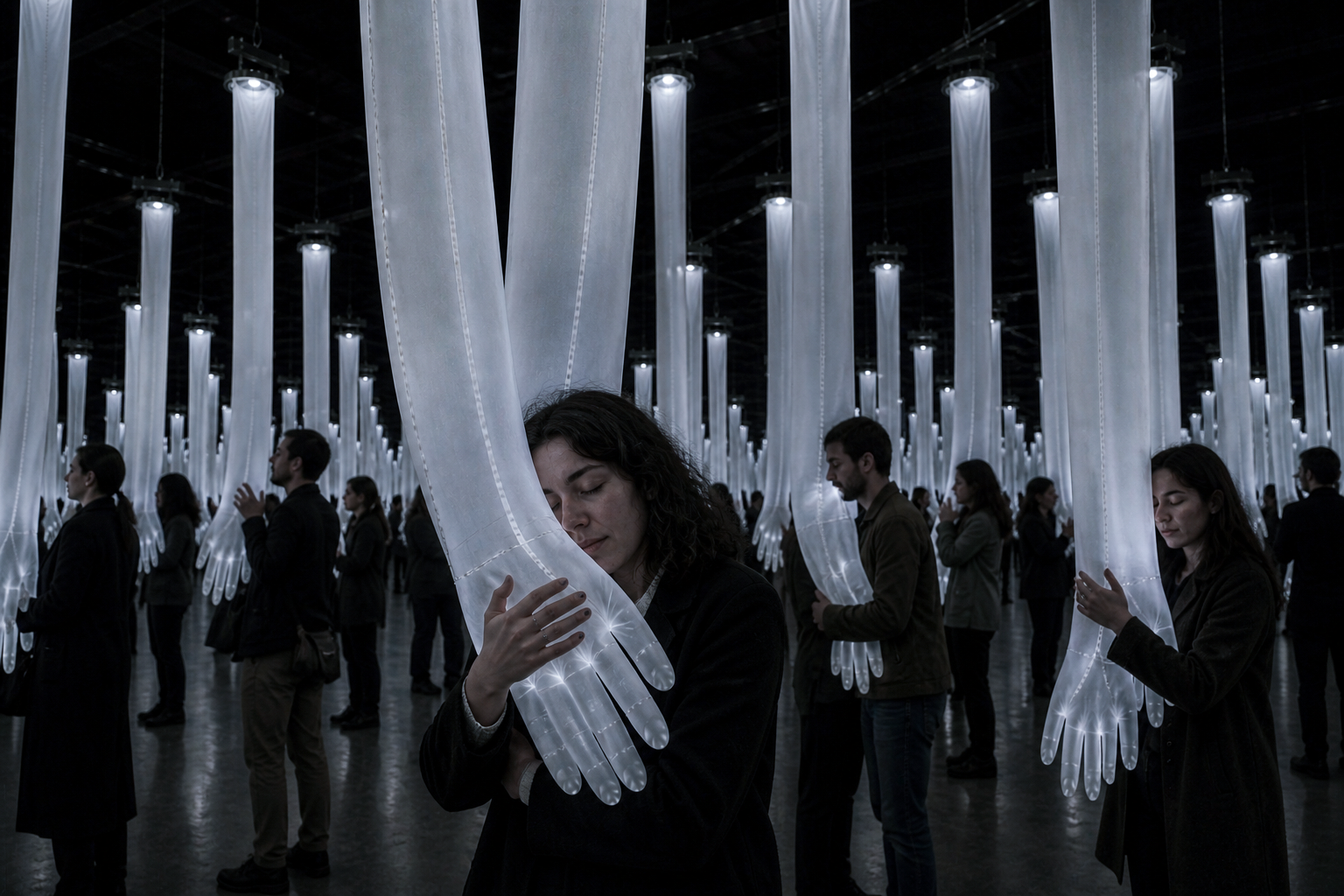
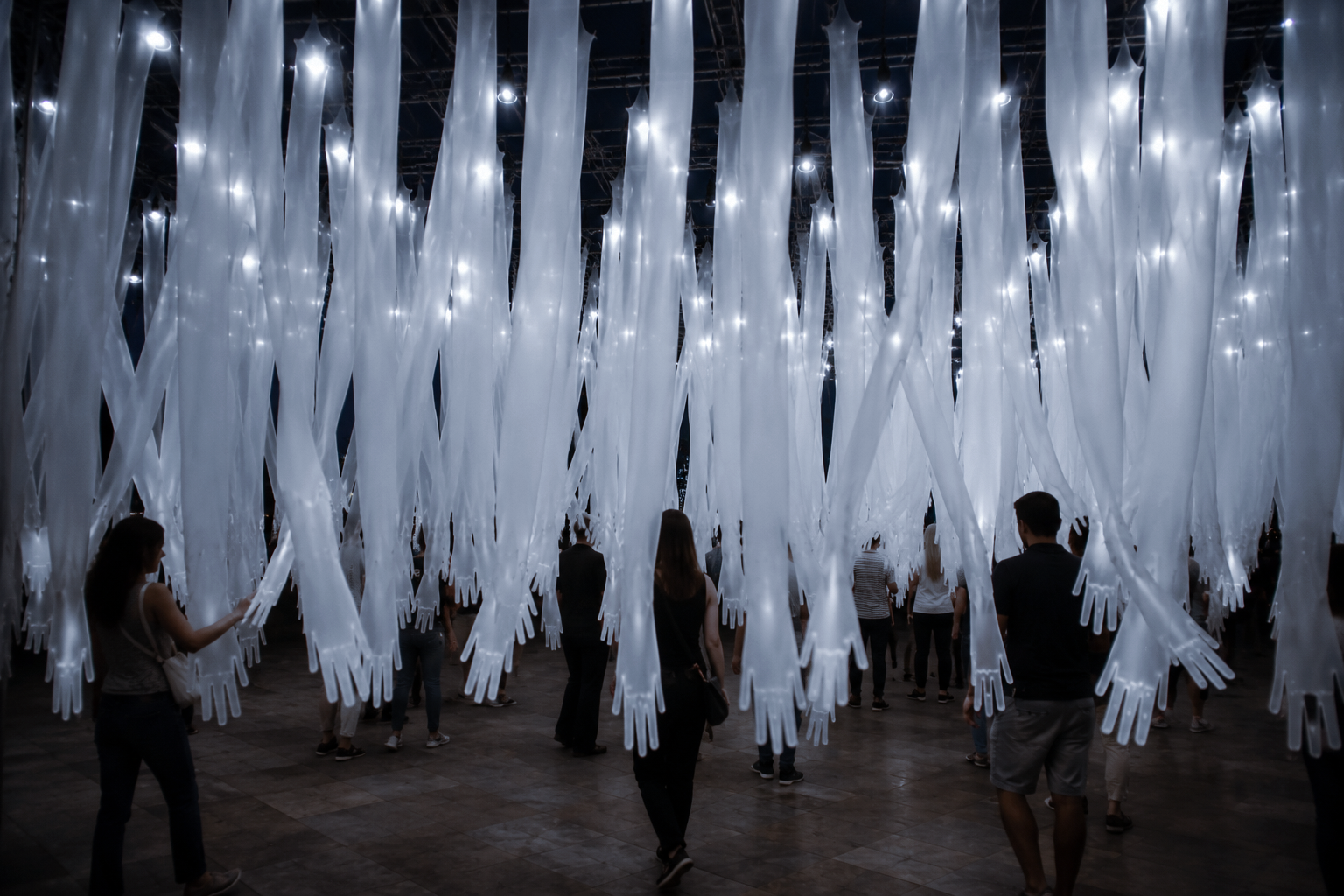
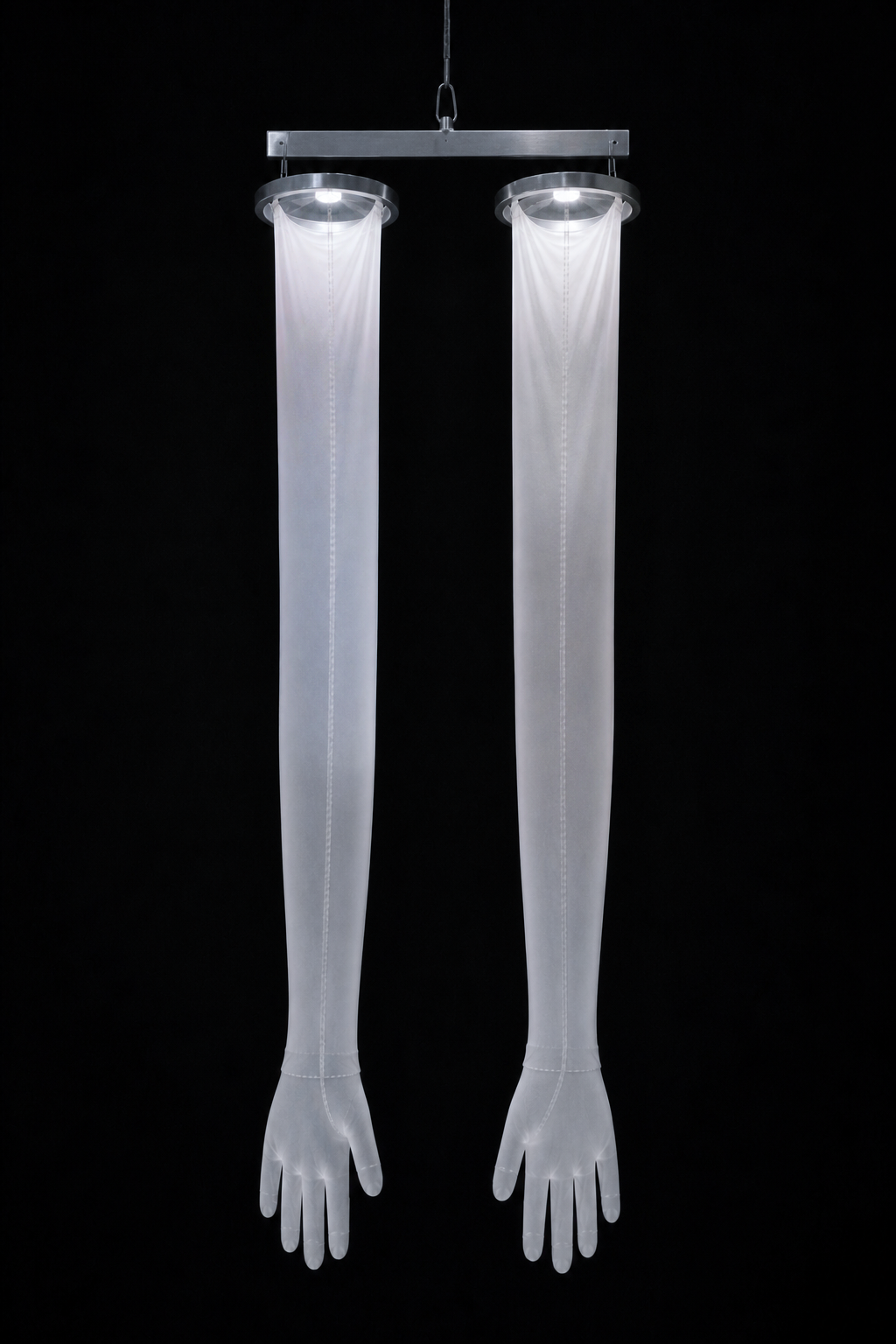
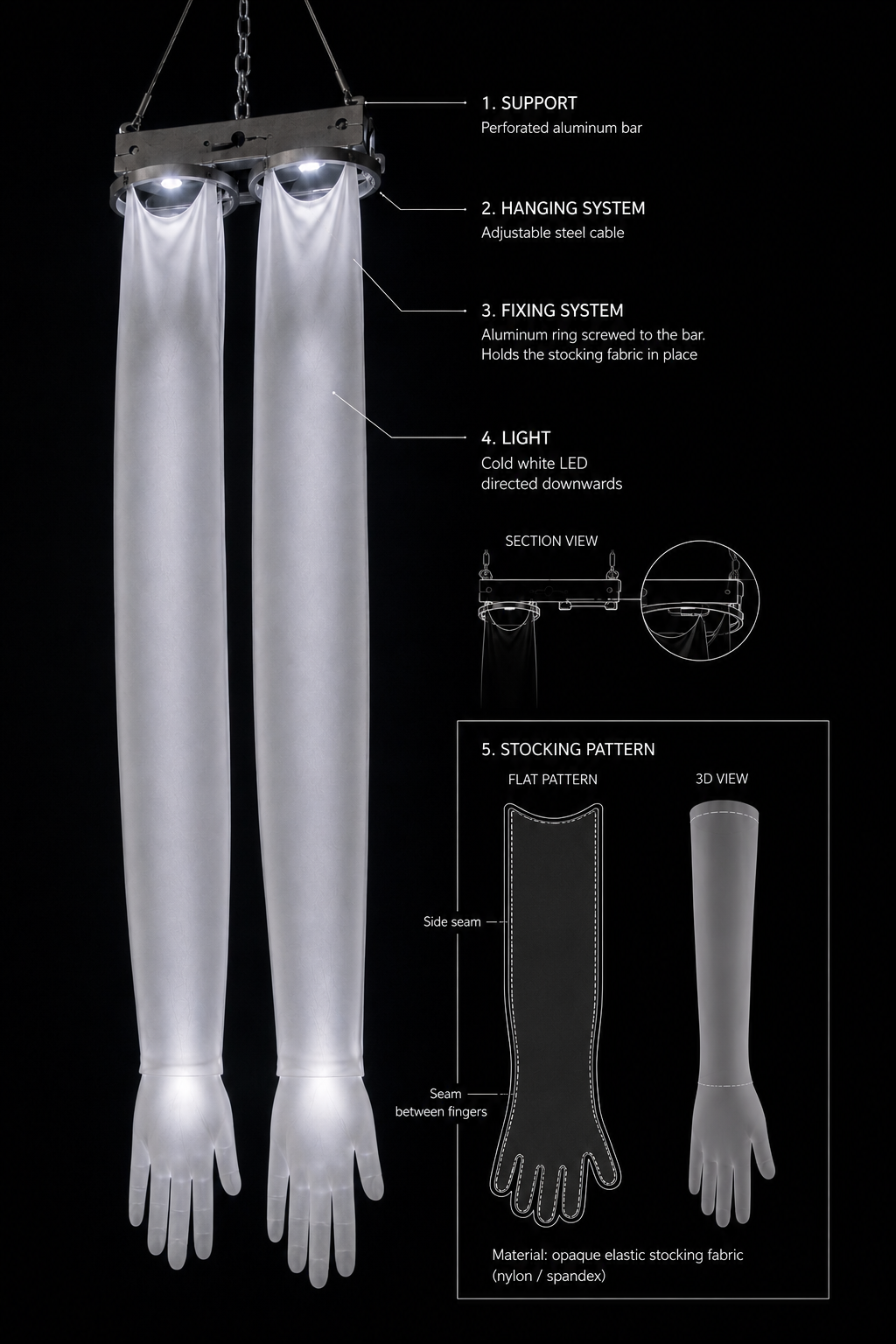
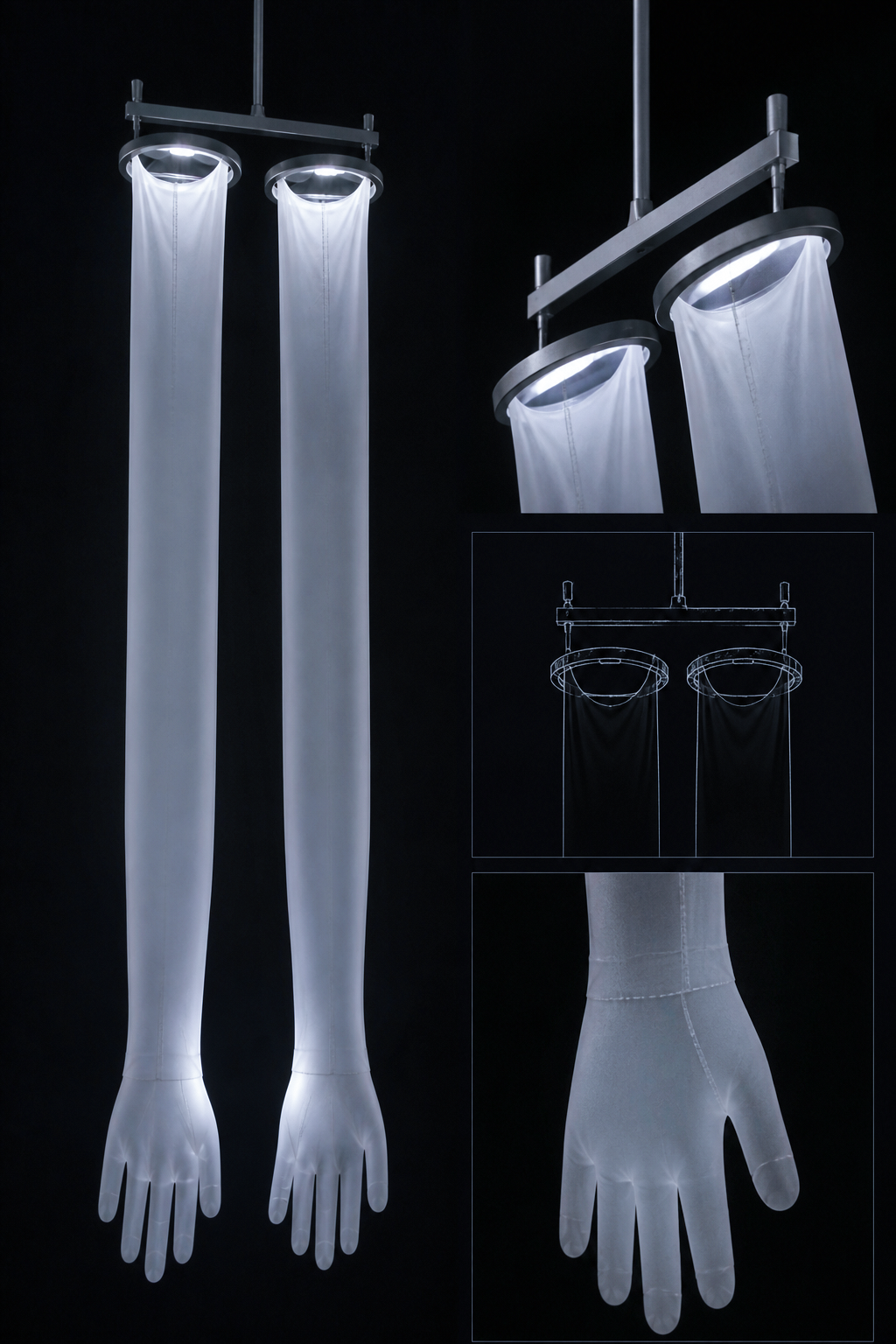
The arms are made from translucent fabrics similar to white women’s stockings. We chose this material for its fragility, lightness, and its ability to constantly react to air and light. We are not interested in creating perfect anatomical forms, but rather soft and changing textile presences activated by the wind and by the movement of visitors. The cold light placed in the upper part of each arm passes through the fabric, revealing seams, folds, and small deformations produced by movement and use.

We are also interested in working with materials historically associated with feminine, domestic, or invisible worlds. Here, the stockings are used as both structural and luminous elements, leaving the private sphere to occupy a monumental and collective structure within the city.

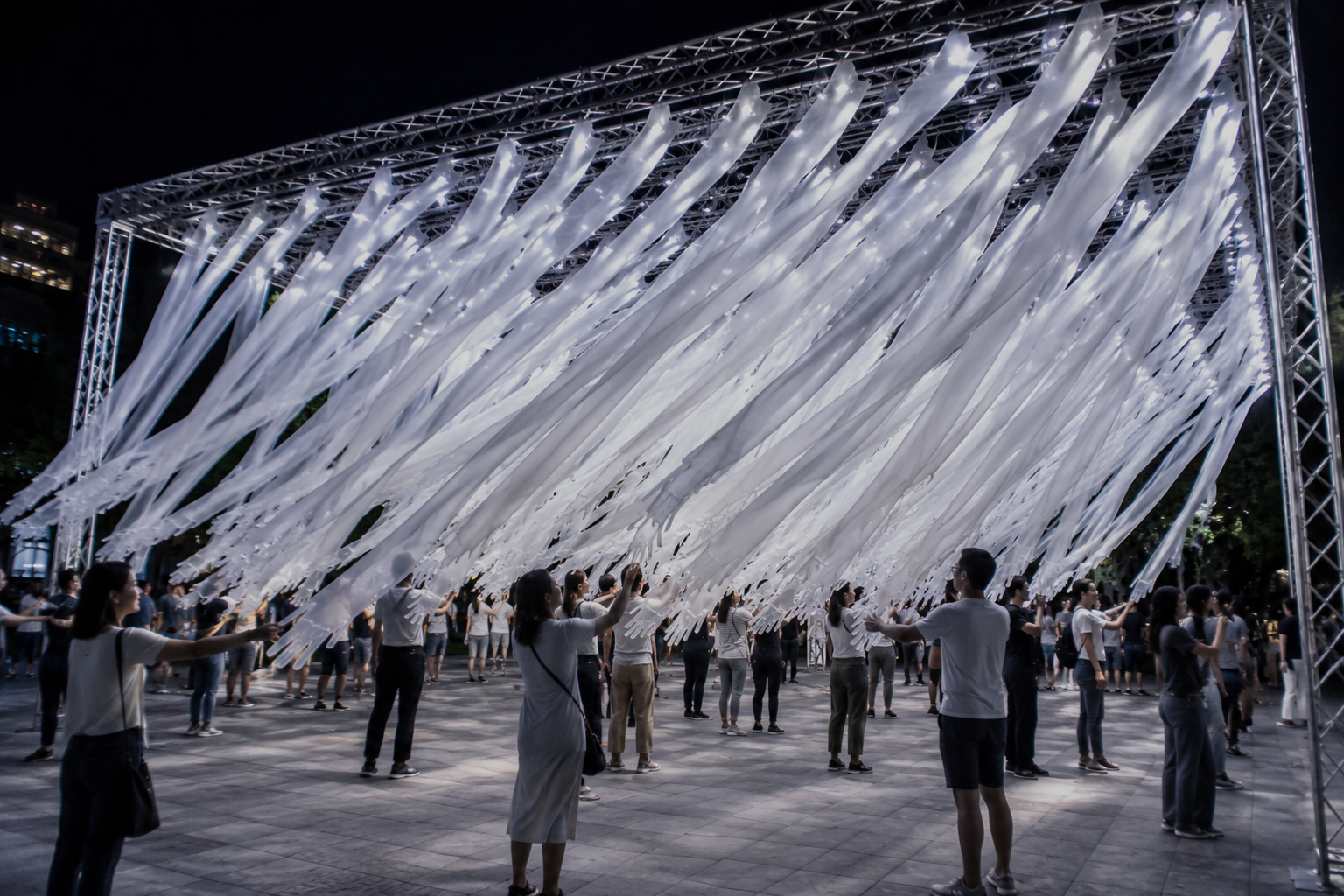
The installation clearly alters the behaviour of the audience. People slow down, look upwards, and move through the space differently, accepting the continuous brushing of the moving fabrics. The wind never moves the arms in exactly the same way, so the piece is constantly reacting to the environment and to the bodies passing through it.

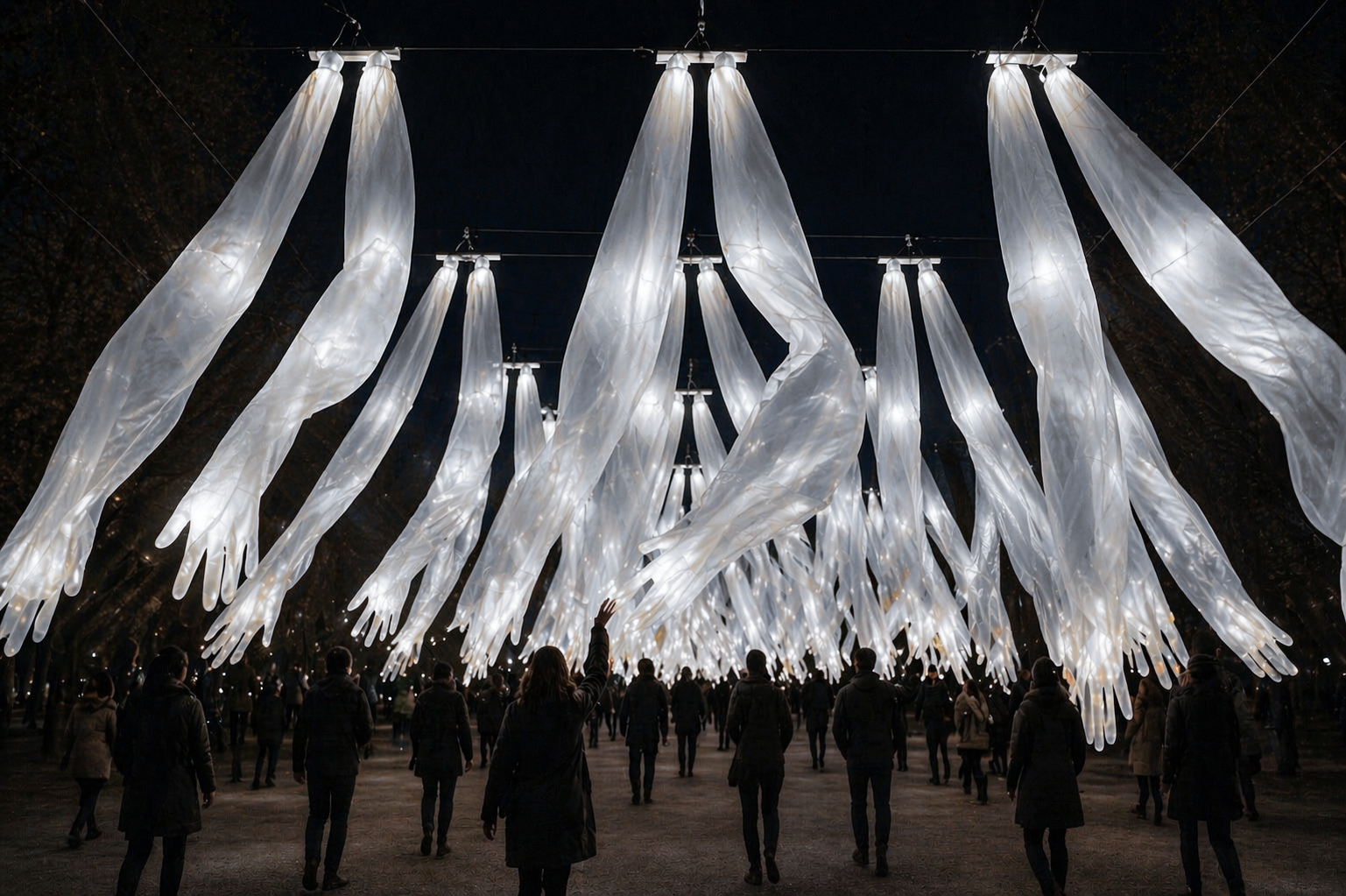
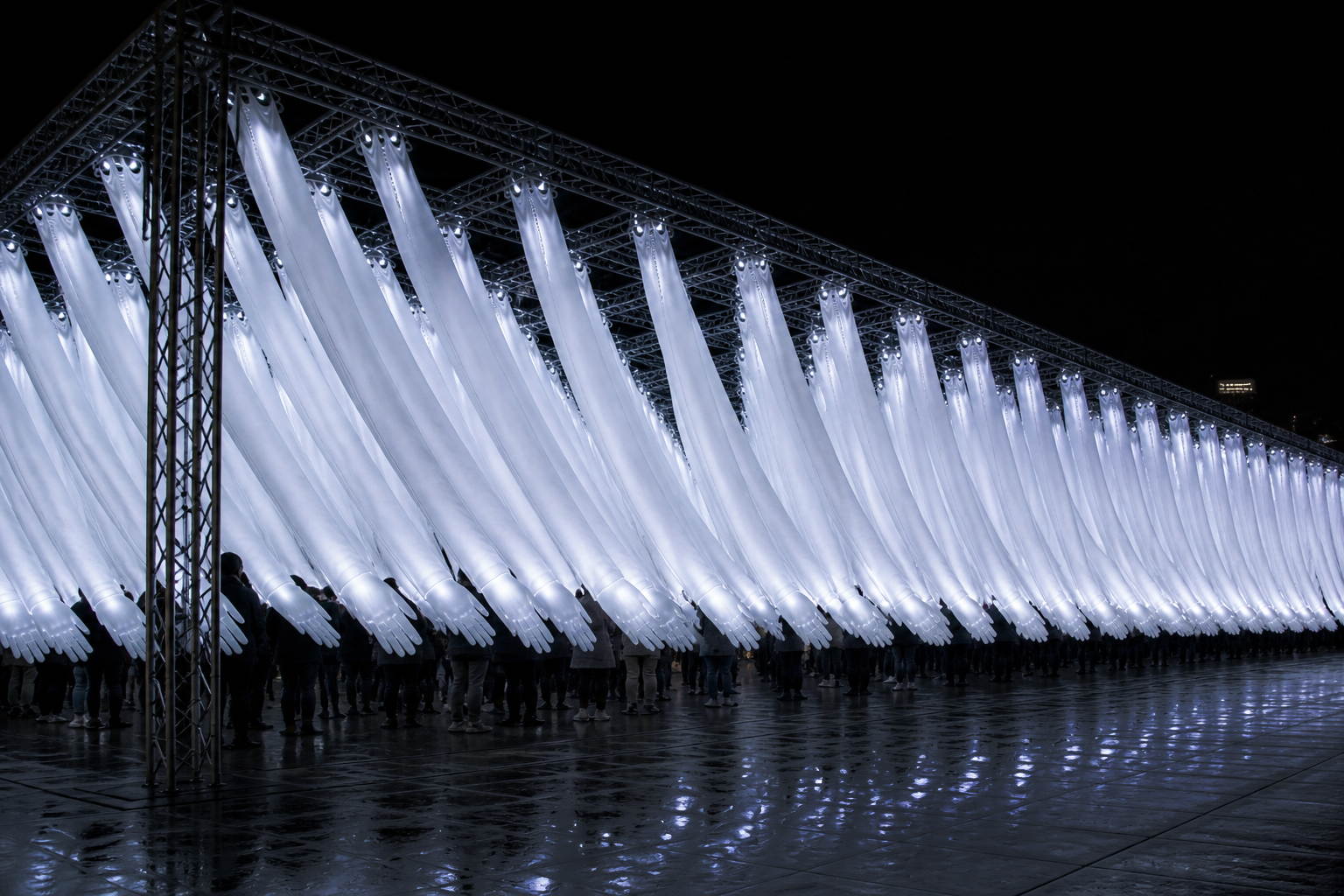
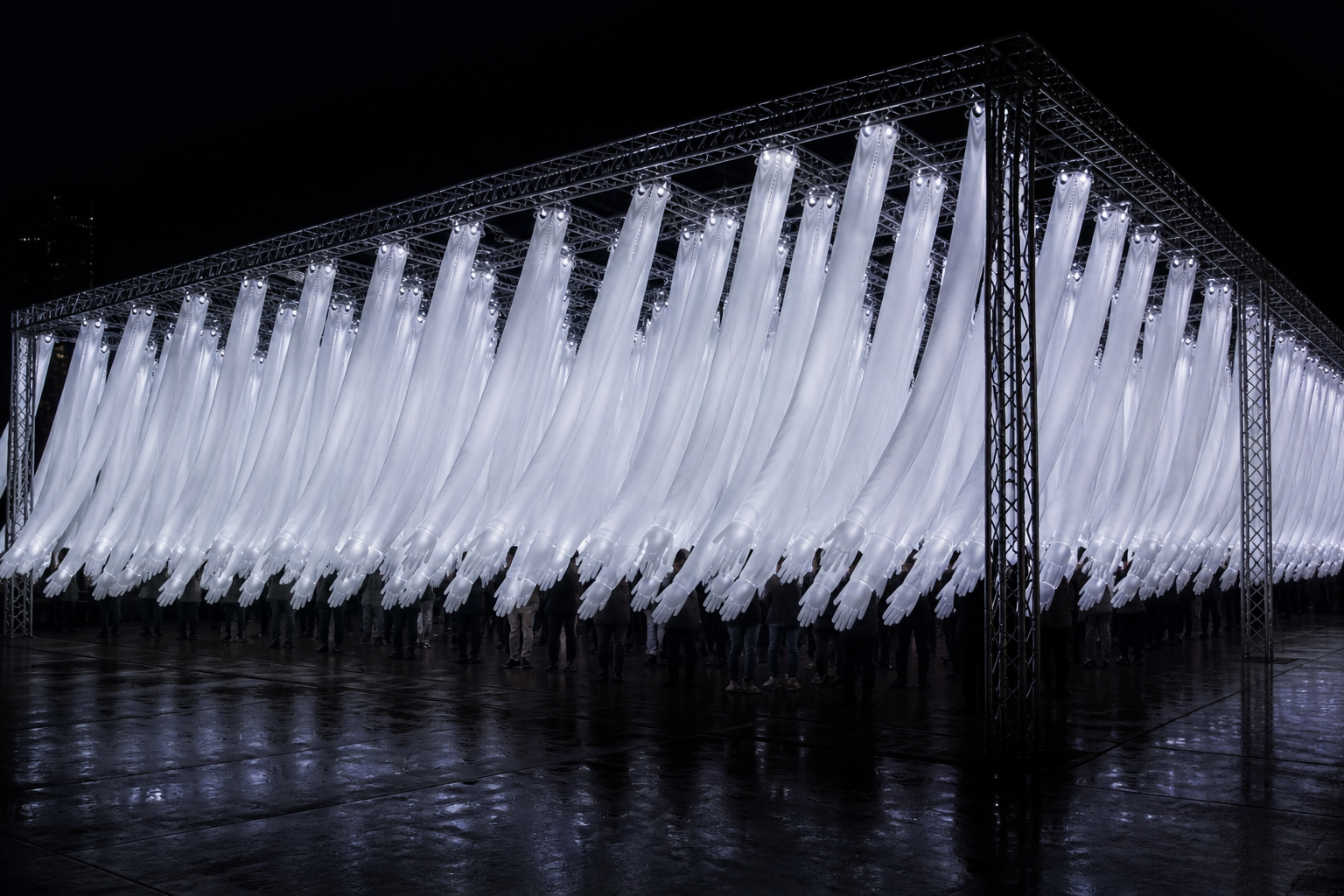
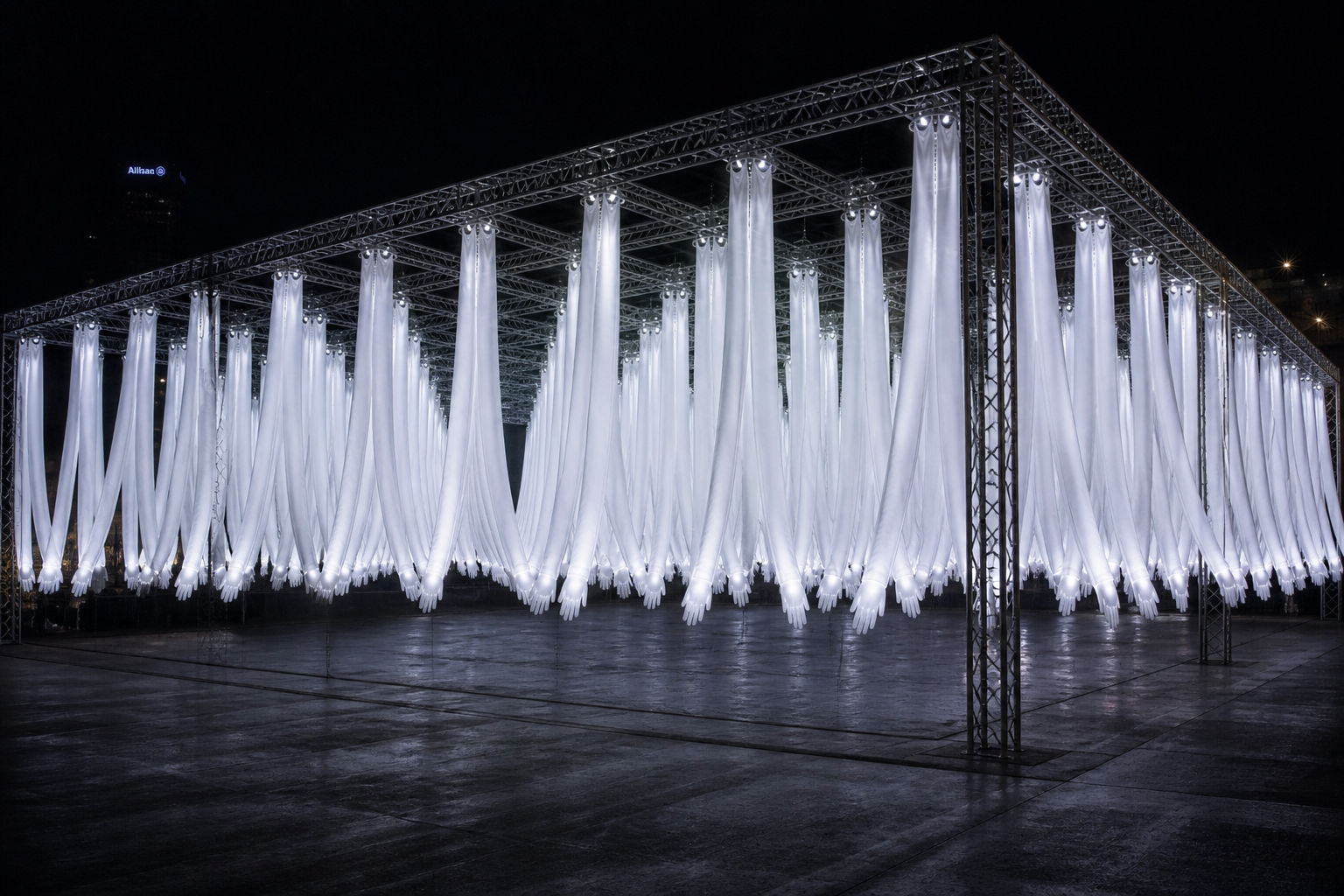
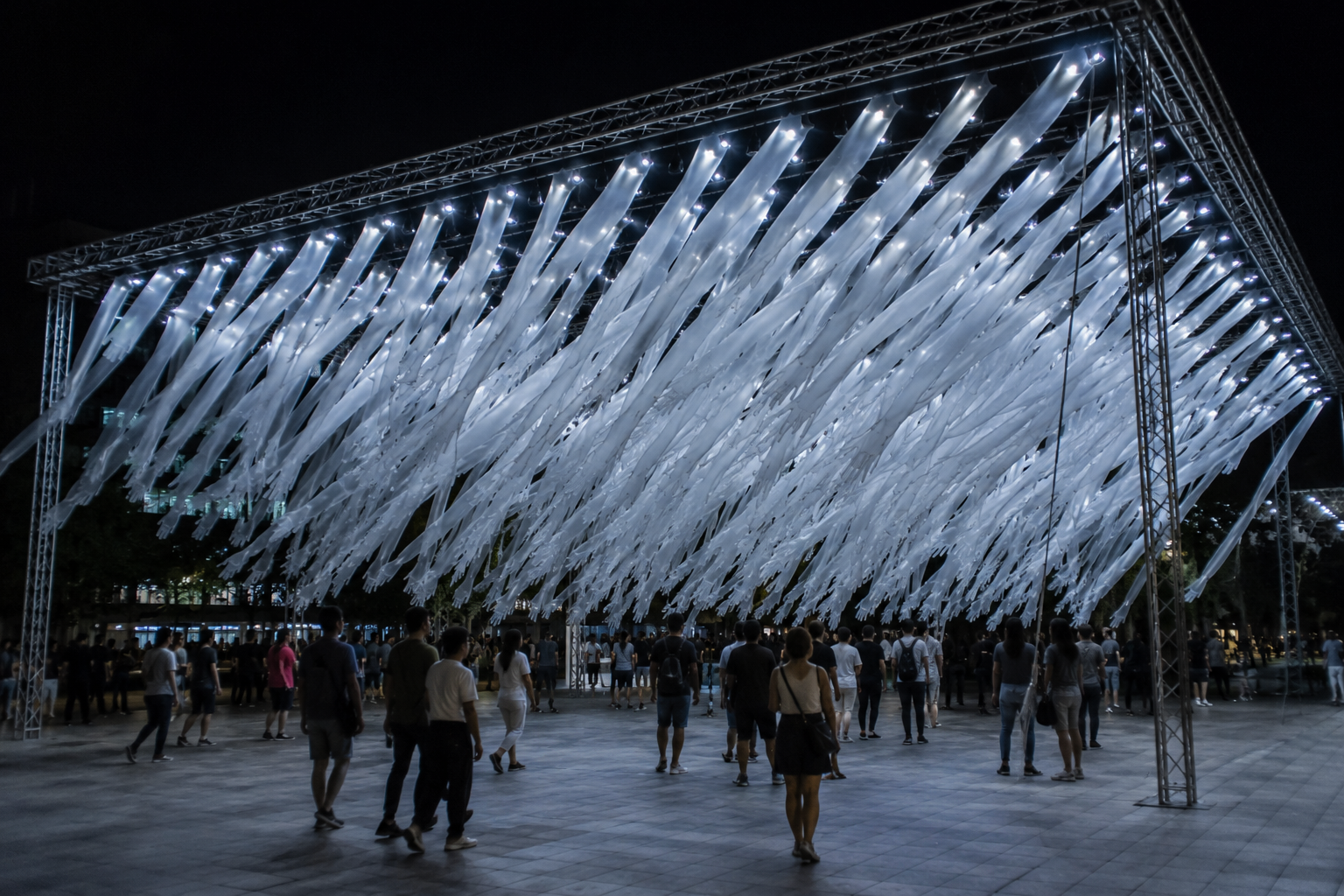
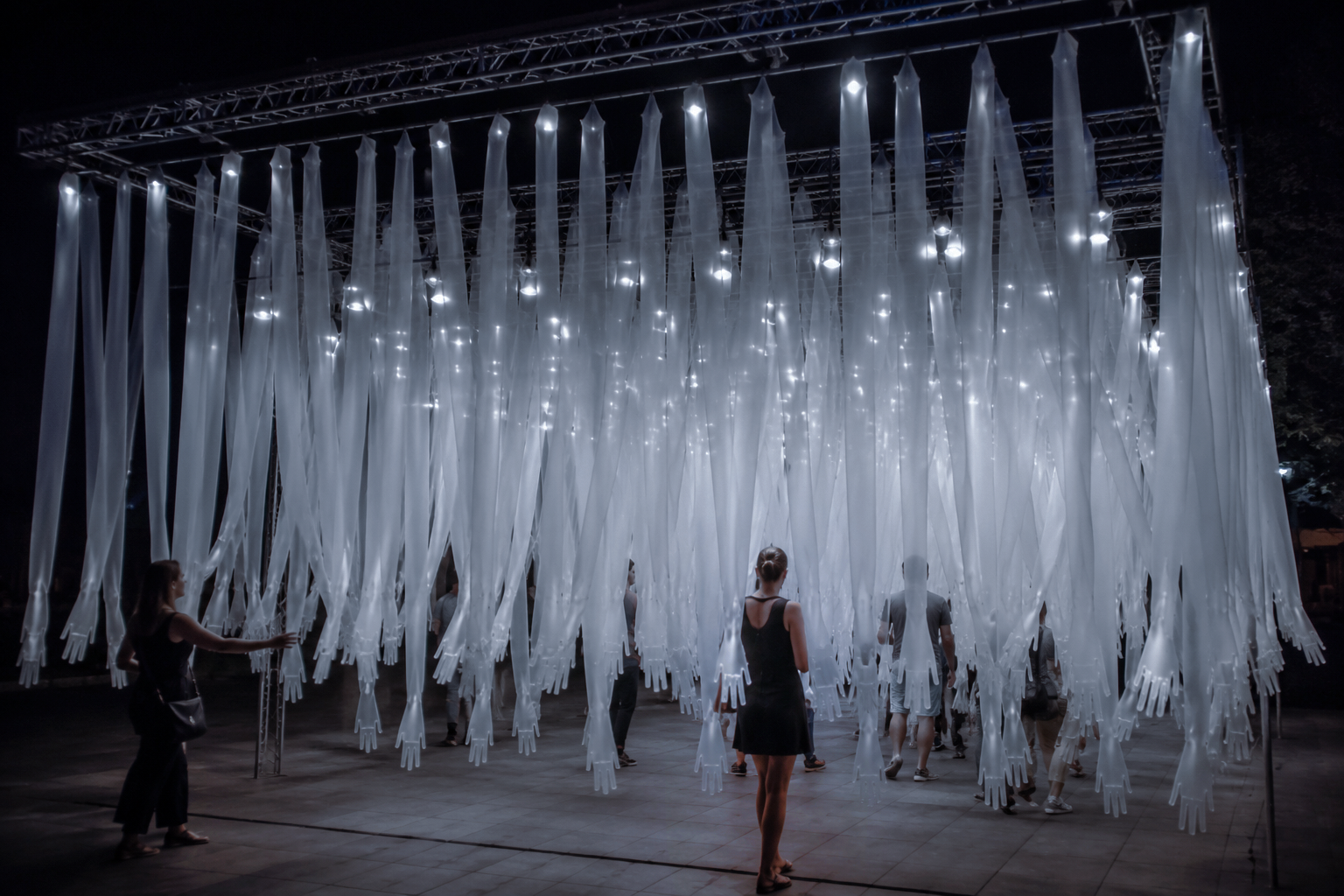
Formally, the work is built using a large truss or scaffolding structure from which hundreds of pairs of arms are suspended. Each arm is made from a sewn textile sleeve stretched open at the top by a circular metal frame. Two frames are connected by a simple horizontal metal piece, similar to a small industrial hanger, allowing each pair of arms to hang from the main structure using a single suspension point.

Inside each arm we place a small cold light source, technically simple and easily accessible, which illuminates the fabric evenly from within without producing visible glare. We are not interested in technological spectacle, but in creating a faint, almost bodily presence. The fabric remains open thanks to the upper frame while the rest of the arm hangs freely and moves with the air.

The installation can adapt to different scales and configurations: immersive corridors, open squares, circular structures, or large walkable environments. Depending on the site, the density and height of the arms can be adjusted to create different levels of interaction with the public.

At night, Caressing Light feels like a large suspended organism floating above the city. From a distance, the arms appear as a luminous mass slowly moving with the wind; from inside, the experience becomes far more physical and tactile.

At a time like this, filling public space with gestures of care and caresses almost starts to feel like a subversive act.

We hope to see this installation come to life soon.


Con esta instalación queremos transformar temporalmente el espacio público en un lugar de contacto y suavidad compartida. Zona de caricias está formada por centenares de brazos y manos translúcidas suspendidas sobre el público, moviéndose lentamente con el viento y rozando a quienes atraviesan el espacio. Nos interesa introducir en la ciudad una acción normalmente reservada a la intimidad: la caricia.

La obra retoma ideas que ya hemos desarrollado en otras piezas alrededor del cuerpo fragmentado, los materiales textiles, la luz y la ocupación sensible del espacio urbano. Frente a arquitecturas pensadas desde la dureza, la velocidad o el control, nos interesa introducir elementos blandos, inestables y ligados al contacto físico.

Los brazos están realizados con tejidos translúcidos similares a medias femeninas blancas. Elegimos este material por su fragilidad, su ligereza y su capacidad para reaccionar constantemente al aire y a la luz. No buscamos formas anatómicas perfectas, sino presencias textiles suaves y cambiantes que se activan con el viento y con el movimiento de los visitantes. La luz fría situada en la parte superior atraviesa las telas y deja visibles costuras, pliegues y pequeñas deformaciones producidas por el uso y el movimiento.

También nos interesa trabajar con materiales asociados históricamente a universos femeninos, domésticos o invisibilizados. Las medias, utilizadas aquí como elemento estructural y lumínico, abandonan el ámbito privado para ocupar una estructura monumental y colectiva dentro de la ciudad.

La instalación modifica claramente el comportamiento del público. La gente reduce el ritmo, levanta la mirada y atraviesa el espacio de otra manera, aceptando el roce continuo de las telas en movimiento. El viento nunca mueve los brazos igual, de modo que la pieza está constantemente reaccionando al entorno y a los cuerpos que la recorren.

Formalmente, la obra se construye mediante una gran estructura metálica de truss o andamio de la que cuelgan centenares de parejas de brazos. Cada brazo está formado por una funda textil cosida y tensada en la parte superior mediante un bastidor circular metálico. Dos bastidores se unen mediante una sencilla pieza metálica horizontal, similar a una pequeña percha industrial, que permite colgar la pareja de brazos de la estructura principal con un único punto de suspensión.

En el interior de cada brazo colocamos una pequeña fuente de luz fría, sencilla y accesible técnicamente, que ilumina homogéneamente el tejido desde dentro sin producir destellos visibles. No buscamos espectacularidad tecnológica, sino una presencia tenue y casi corporal. Las telas permanecen abiertas gracias al bastidor superior mientras el resto del brazo cae libremente y se mueve con el aire.

La instalación puede adaptarse a distintas escalas y configuraciones: corredores inmersivos, plazas abiertas, estructuras circulares o grandes superficies transitables. Dependiendo del lugar, la densidad y altura de los brazos se ajusta para generar distintos niveles de interacción con el público.

Durante la noche, Luz que acaricia produce la sensación de un gran organismo suspendido sobre la ciudad. Desde lejos, los brazos aparecen como una masa luminosa moviéndose lentamente con el viento; desde dentro, la experiencia se vuelve mucho más física y táctil.

En un momento como el actual, llenar el espacio público de gestos de cuidado y caricias empieza casi a parecer un acto subversivo.

Esperamos poder ver esta instalación hecha realidad muy pronto.

Signage of Care / Señaletica de los cuidados

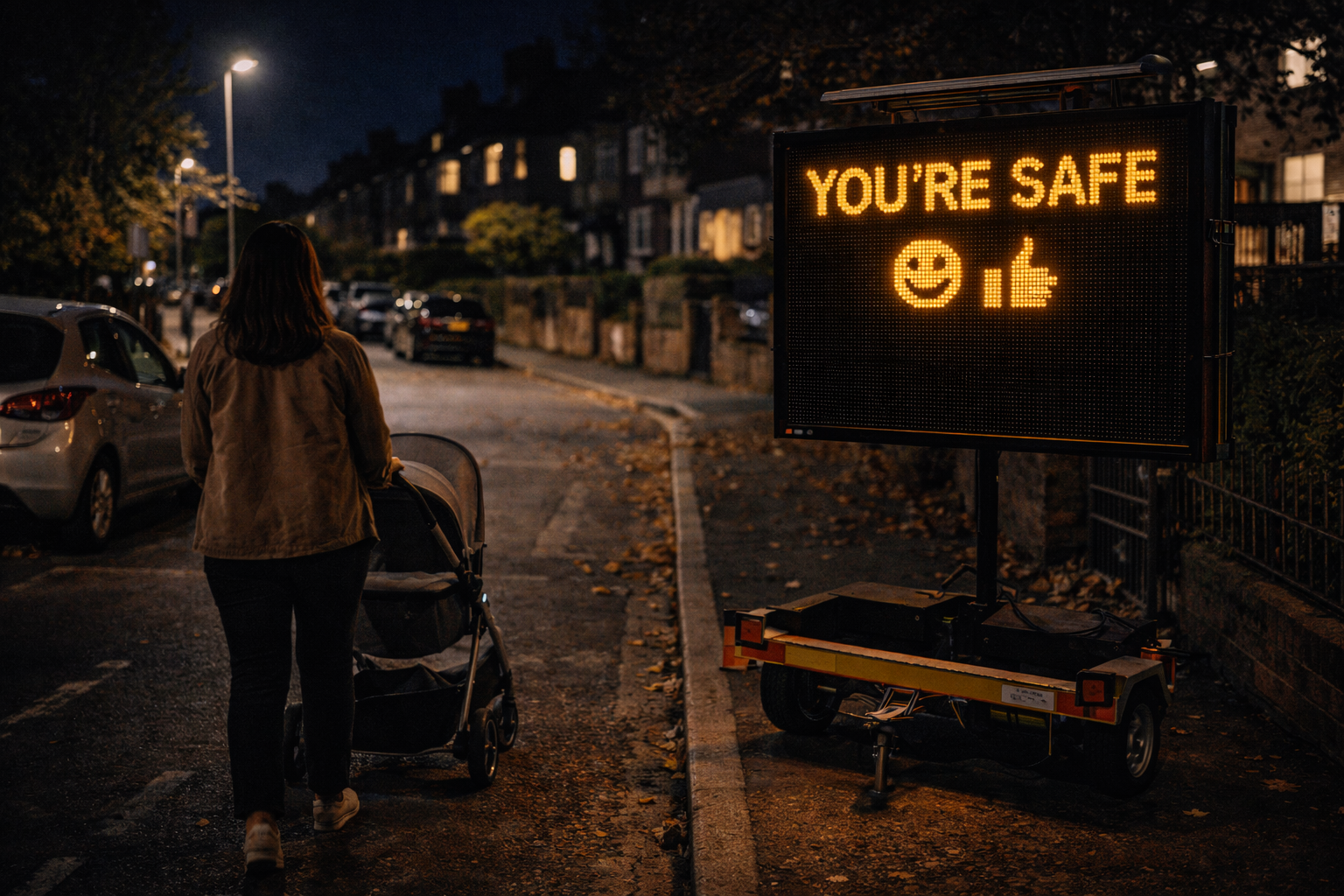
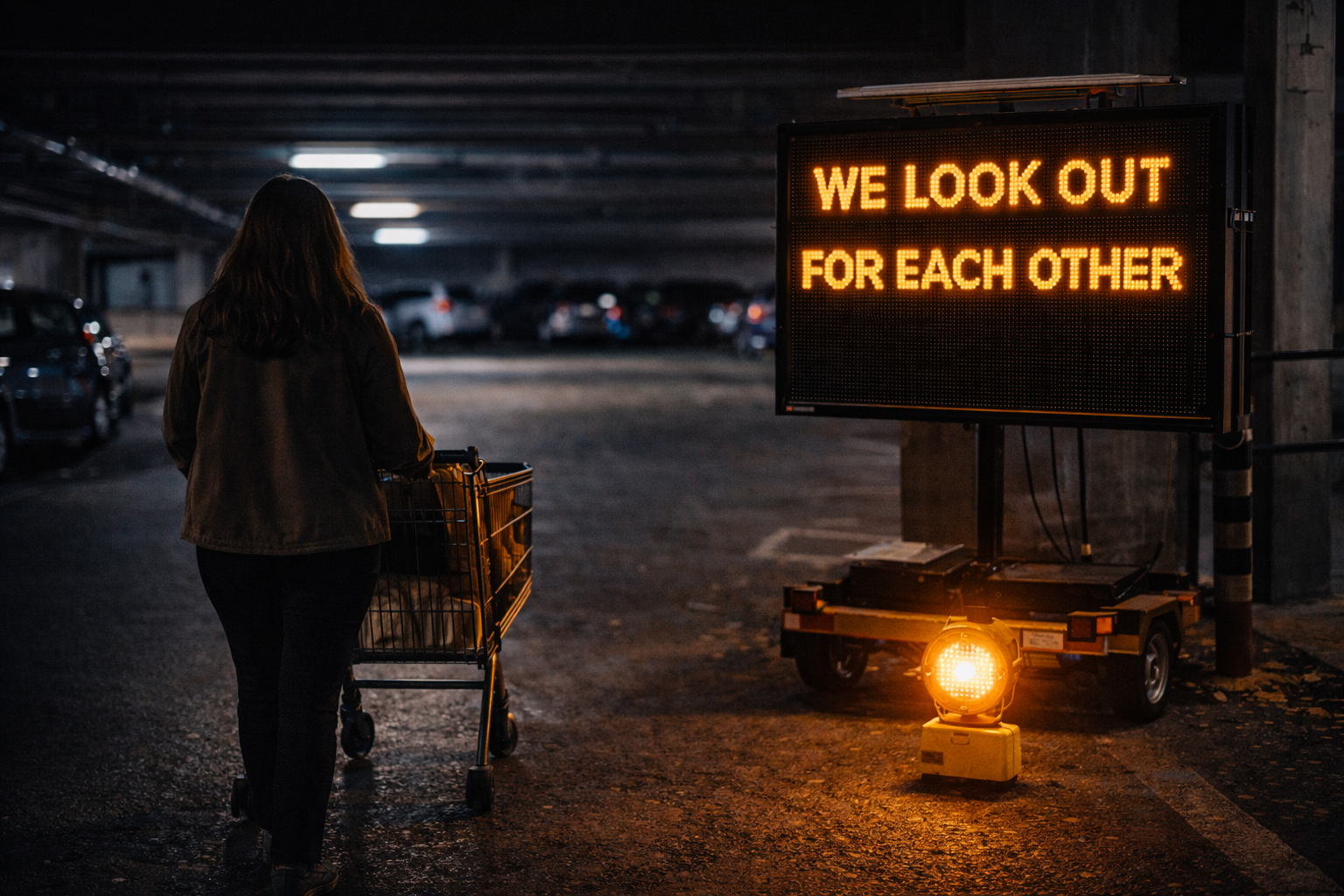
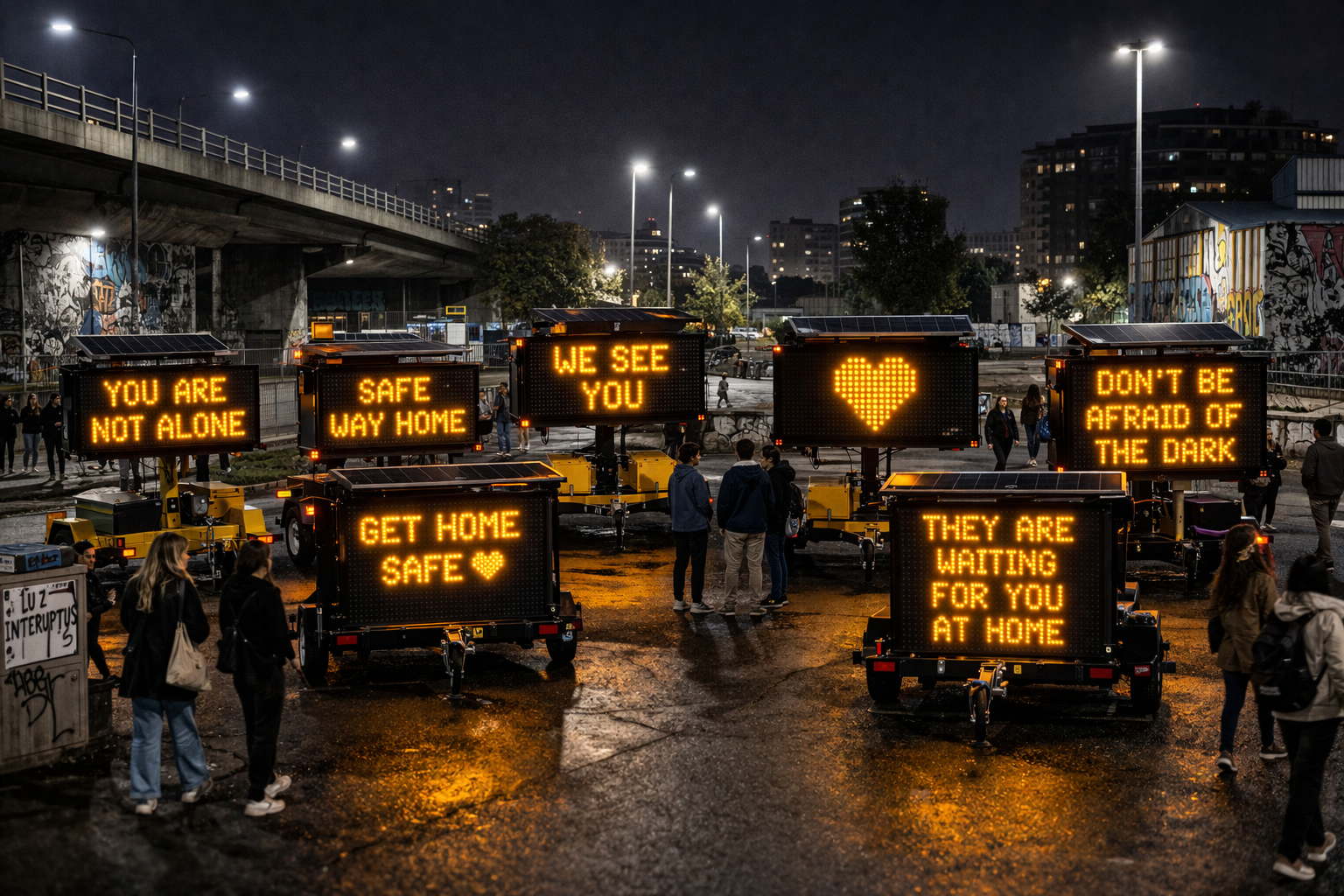
Some years ago we were invited to imagine proposals that could help women feel safer in the city through small interventions in those residual spaces where a sense of insecurity often appears: poorly lit streets, forgotten corners, or places that lie outside the usual routes.

The invitation was not accidental. For some time we had already been developing pieces that addressed different forms of inequality affecting women, often through small guerrilla interventions in public space. At that time we were frequently asked to respond to this kind of artistic challenge; it seems as if an eternity has passed since then.

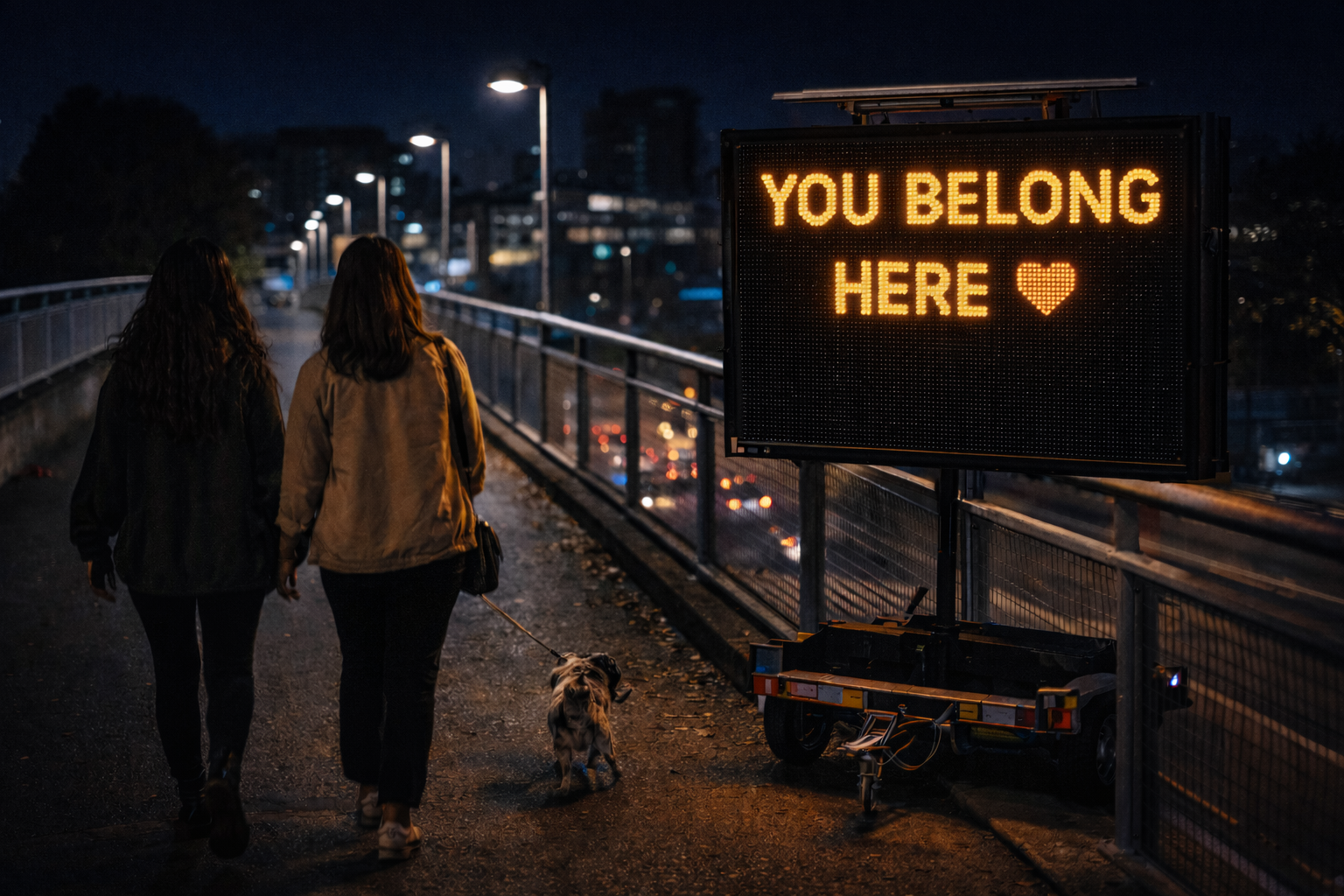
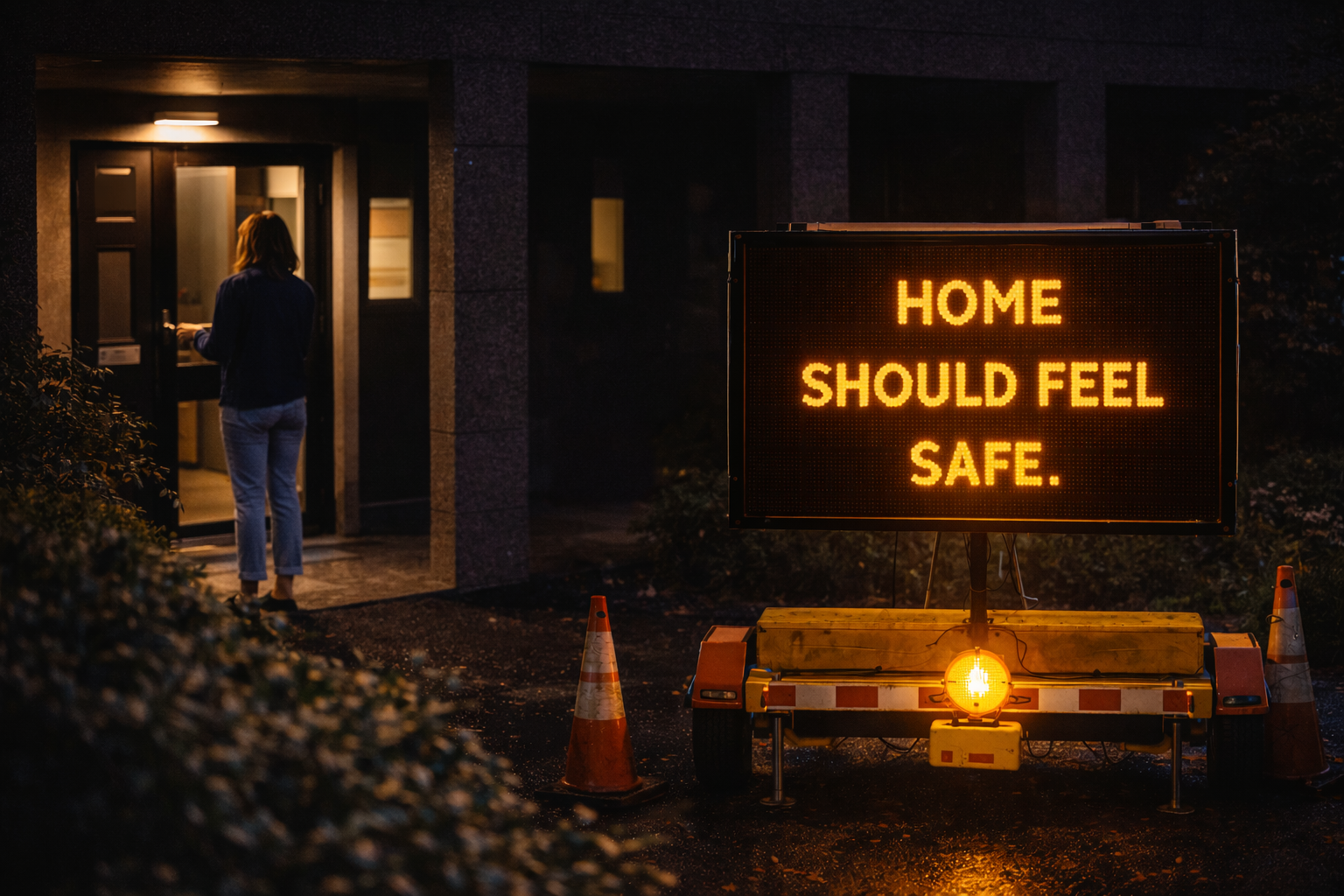
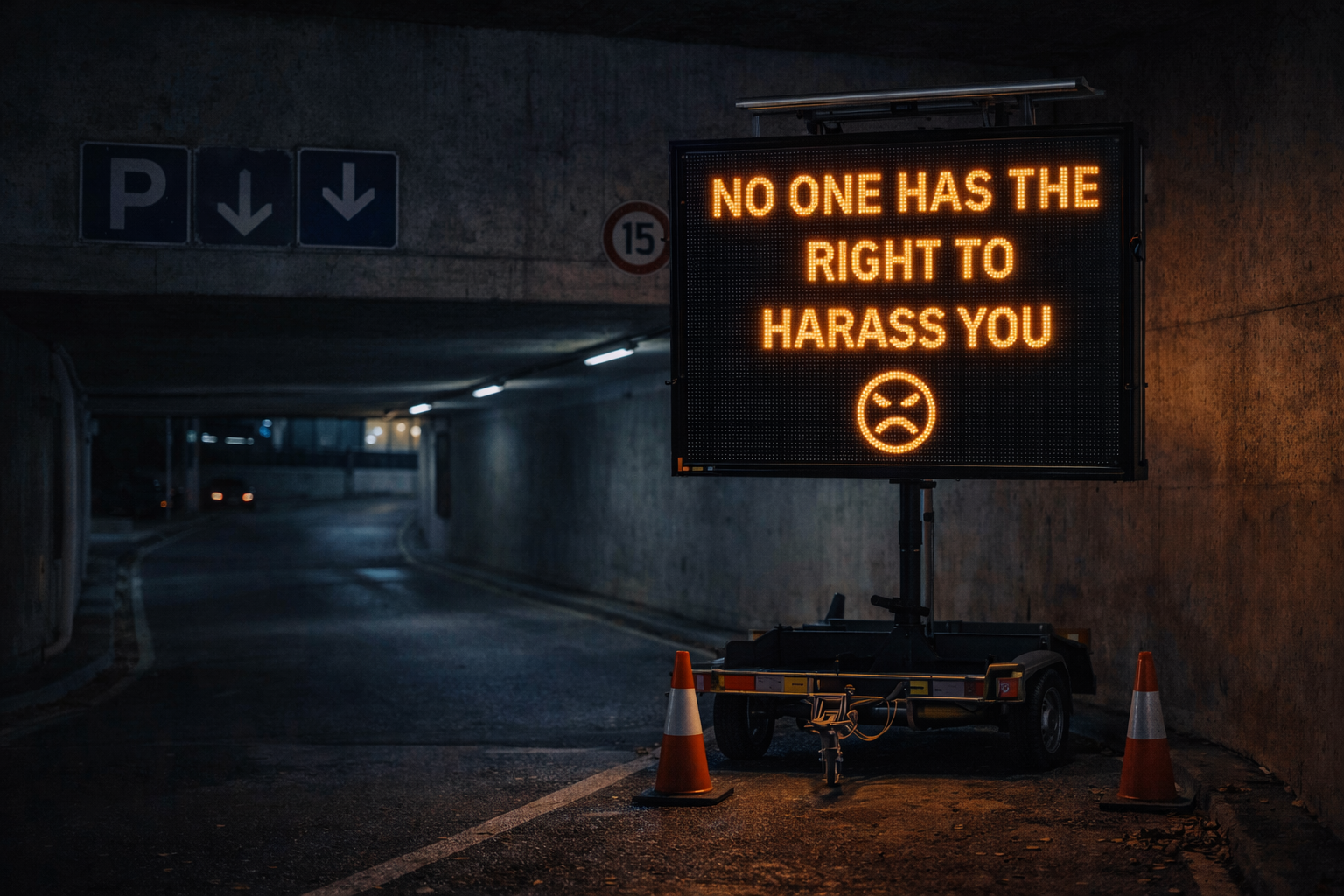
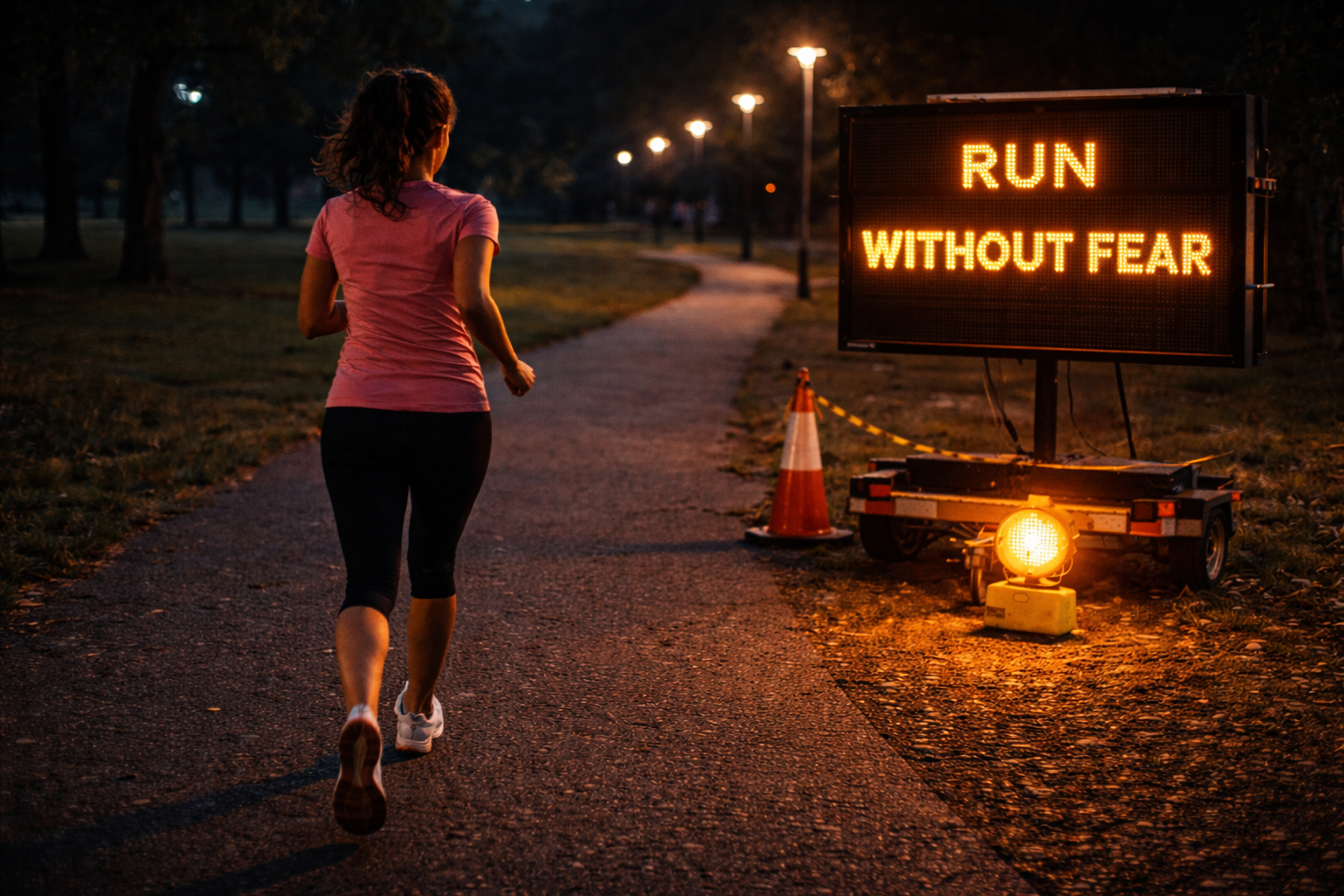
From that reflection emerged the idea of “Signage of Care”, a proposal that suggests using common elements of urban signage to introduce brief messages of support for women into the city.

The question was simple: how can we act in those places without large infrastructures, through minimal gestures capable of activating the space and making it visible?

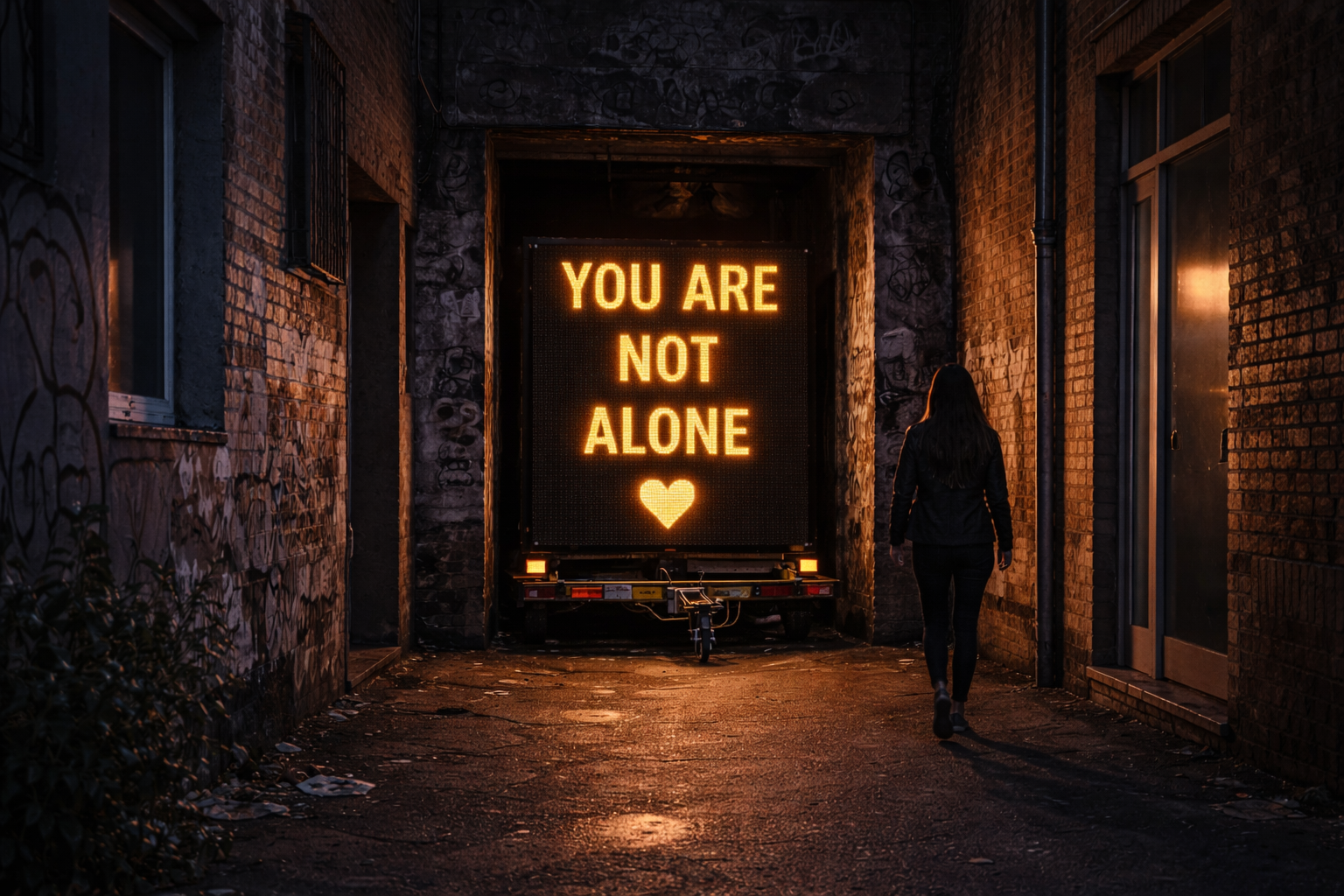
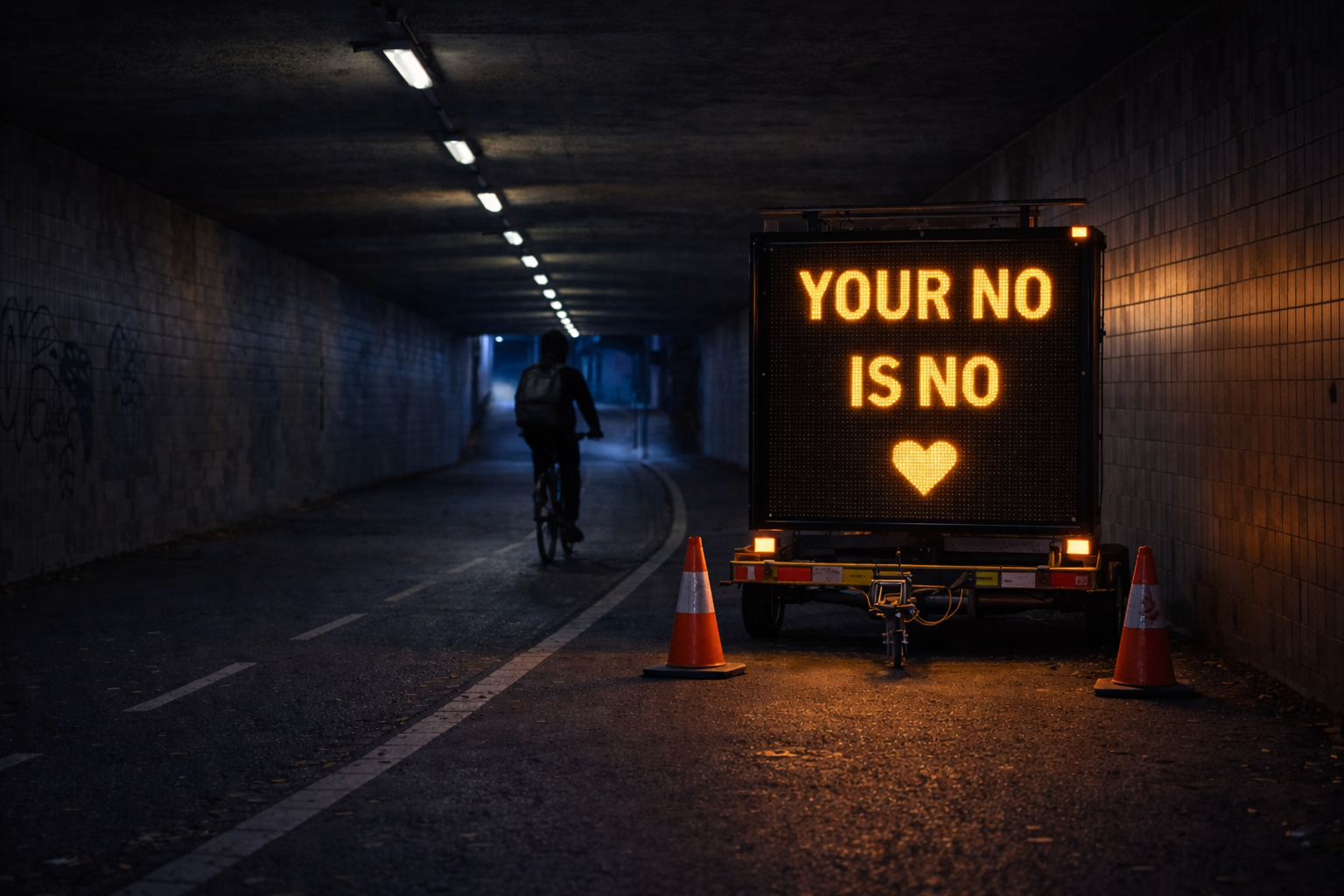
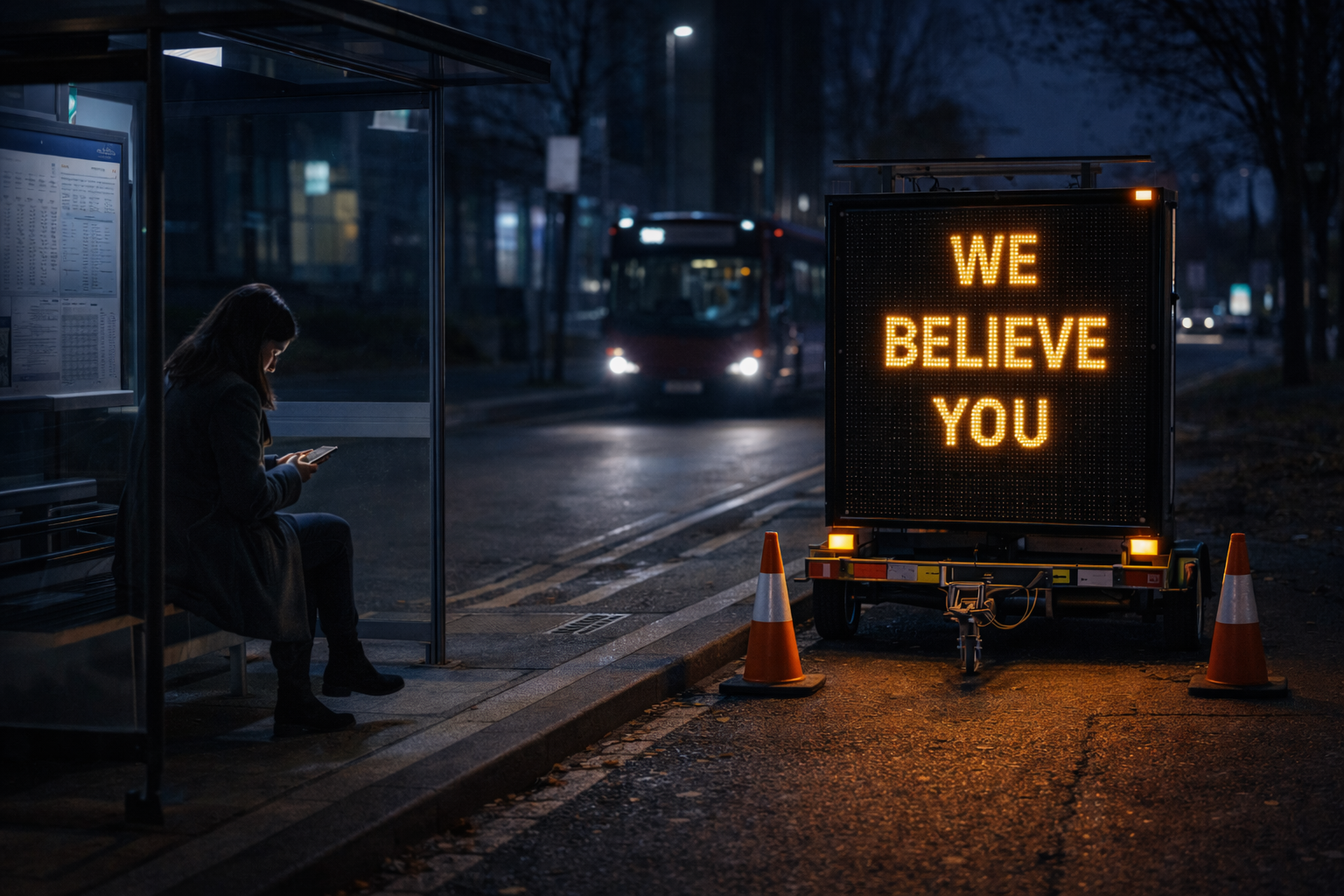
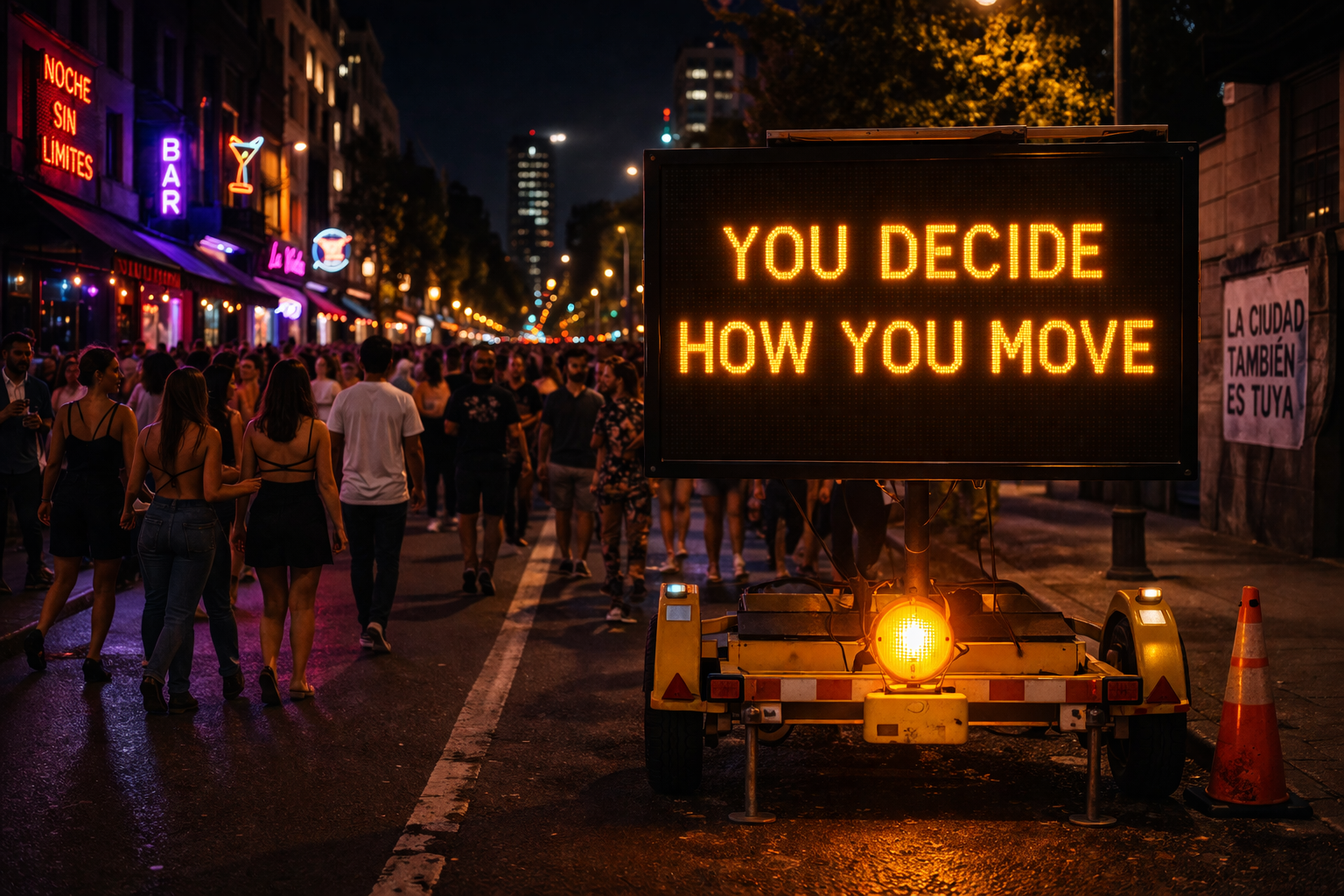
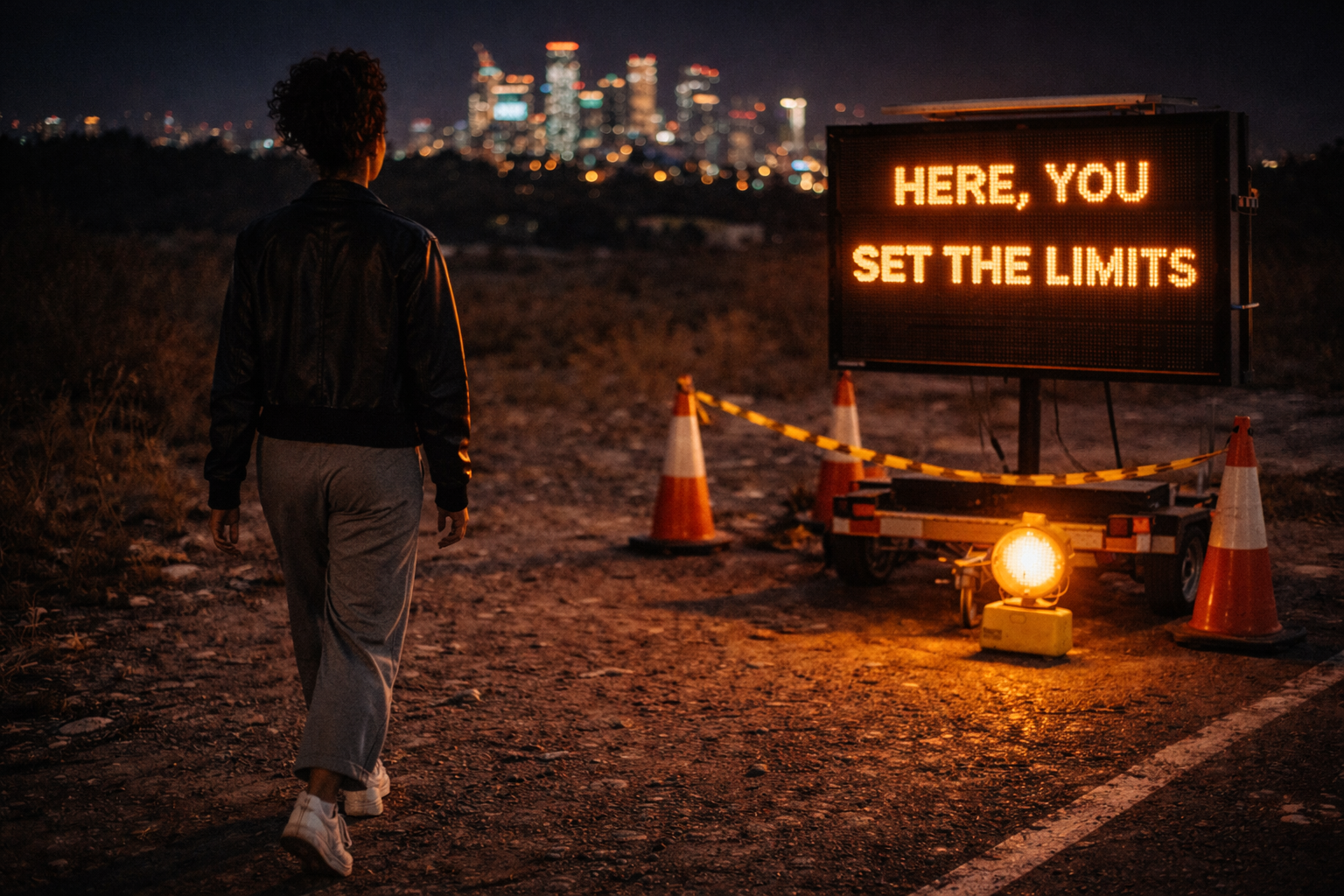
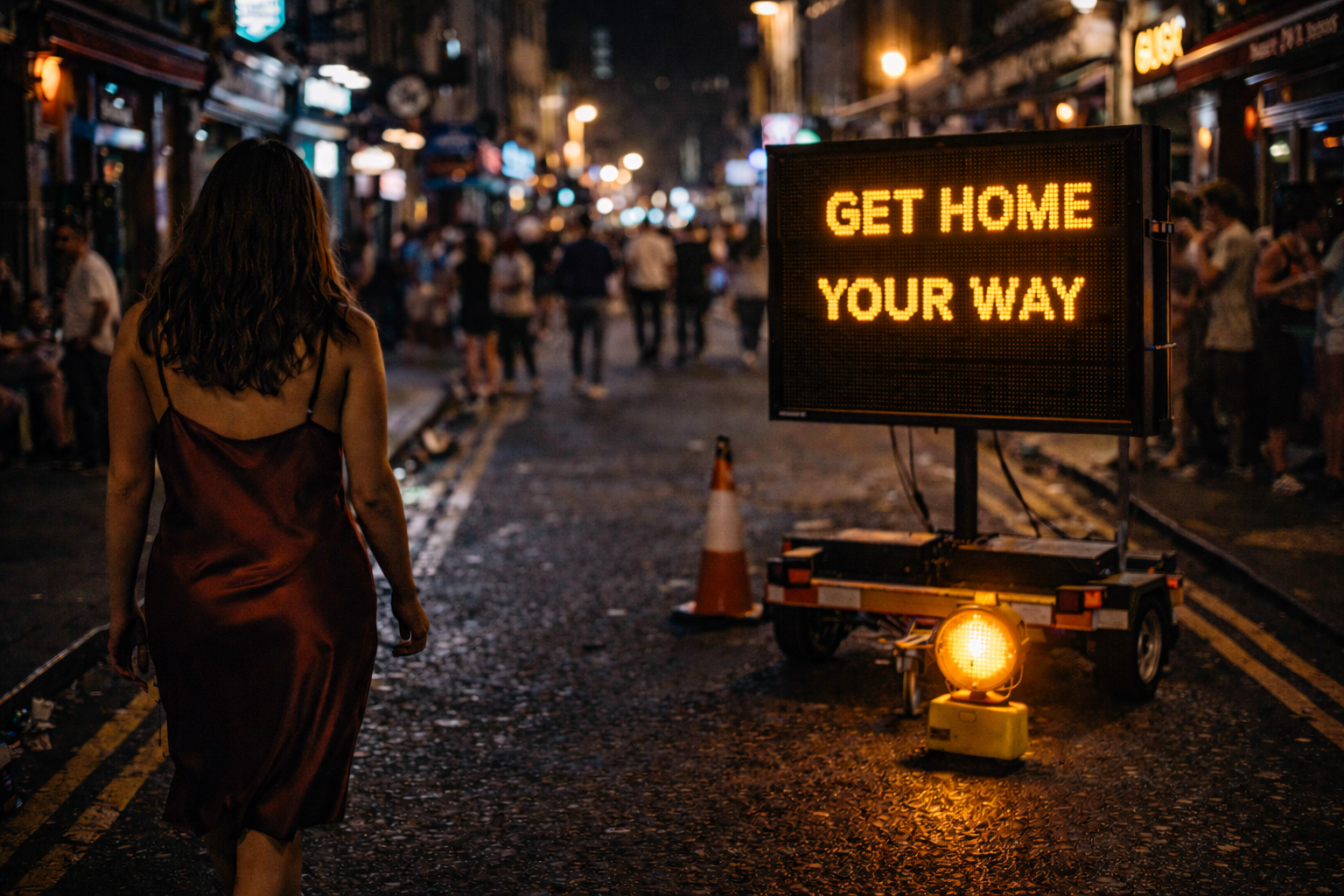
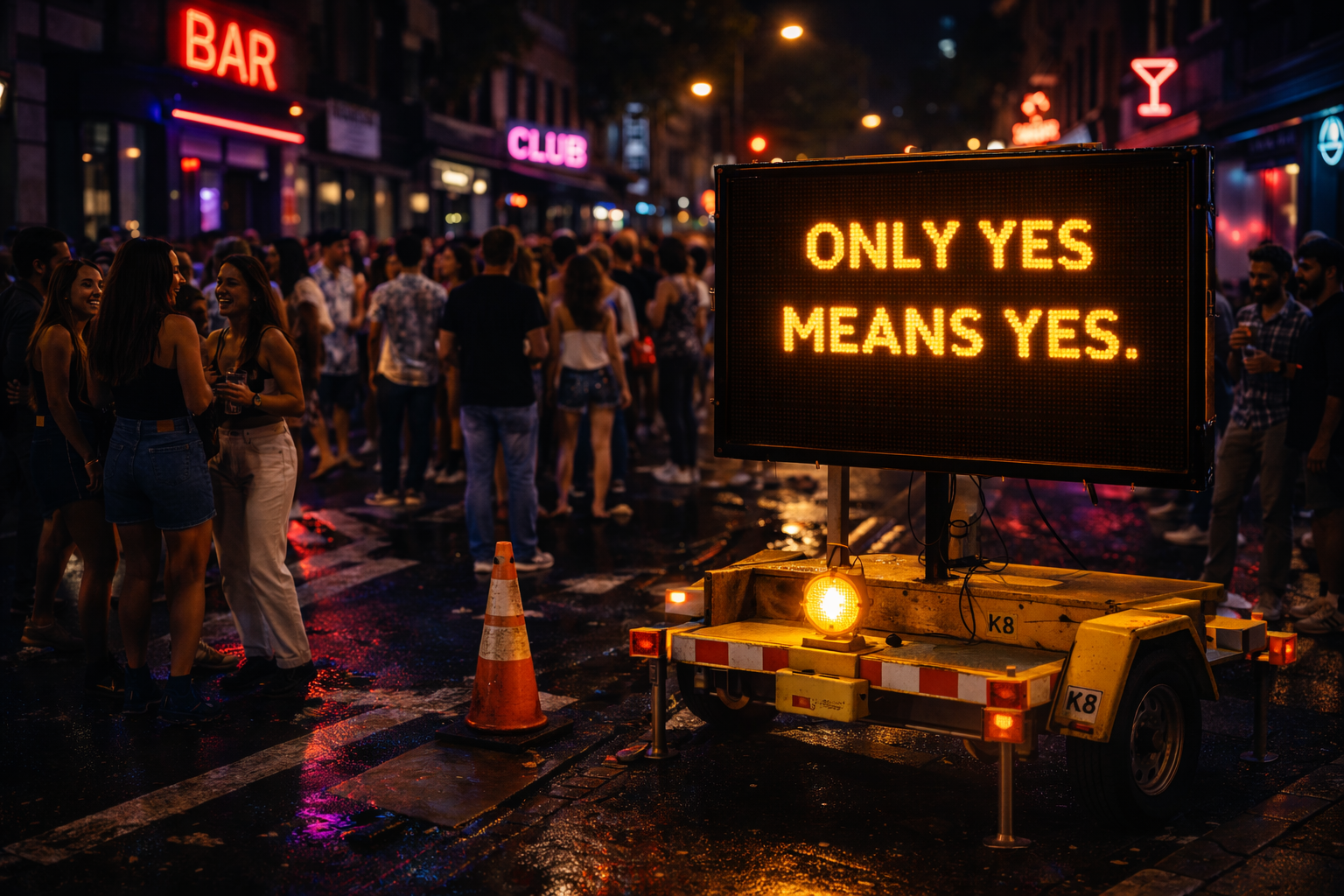
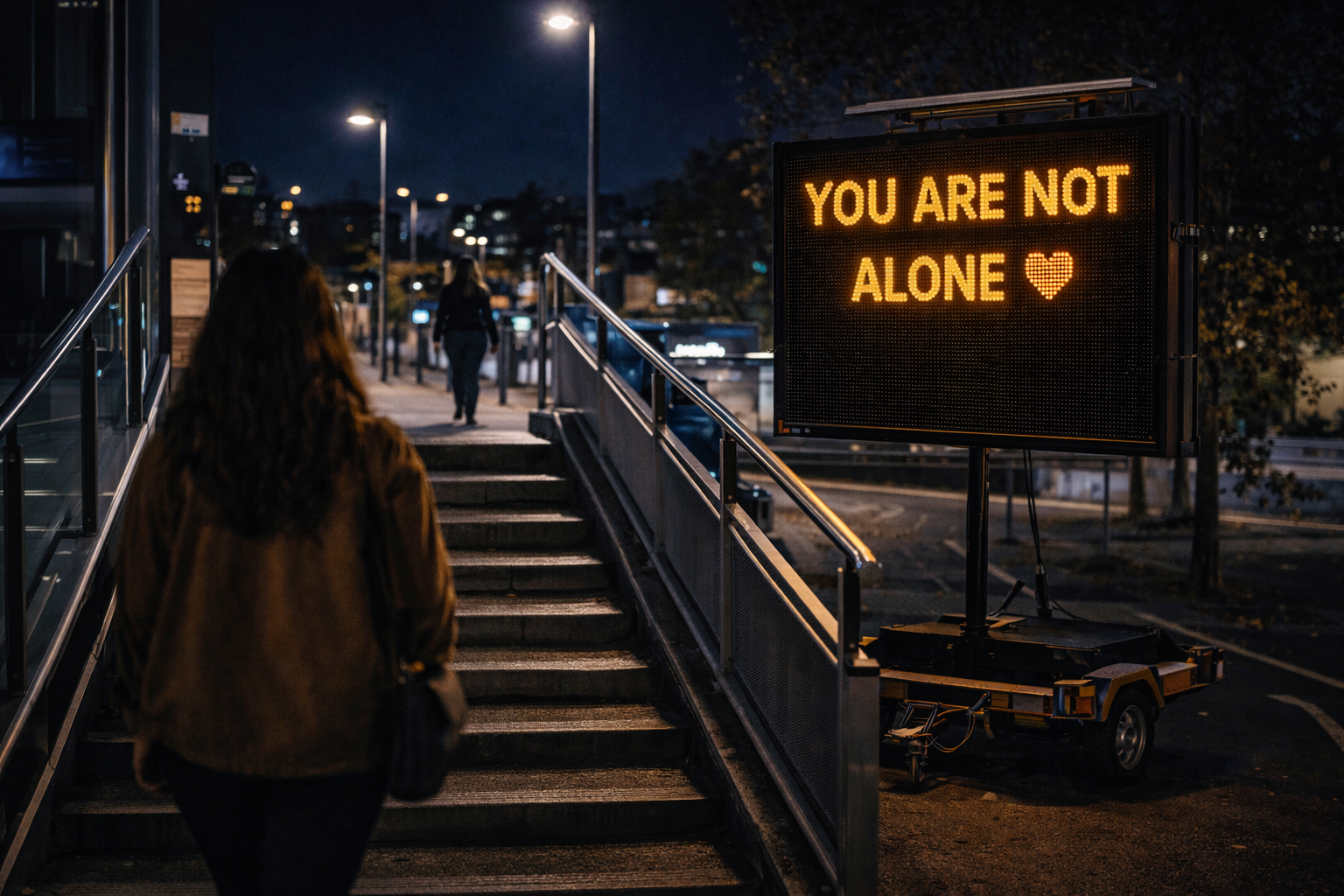
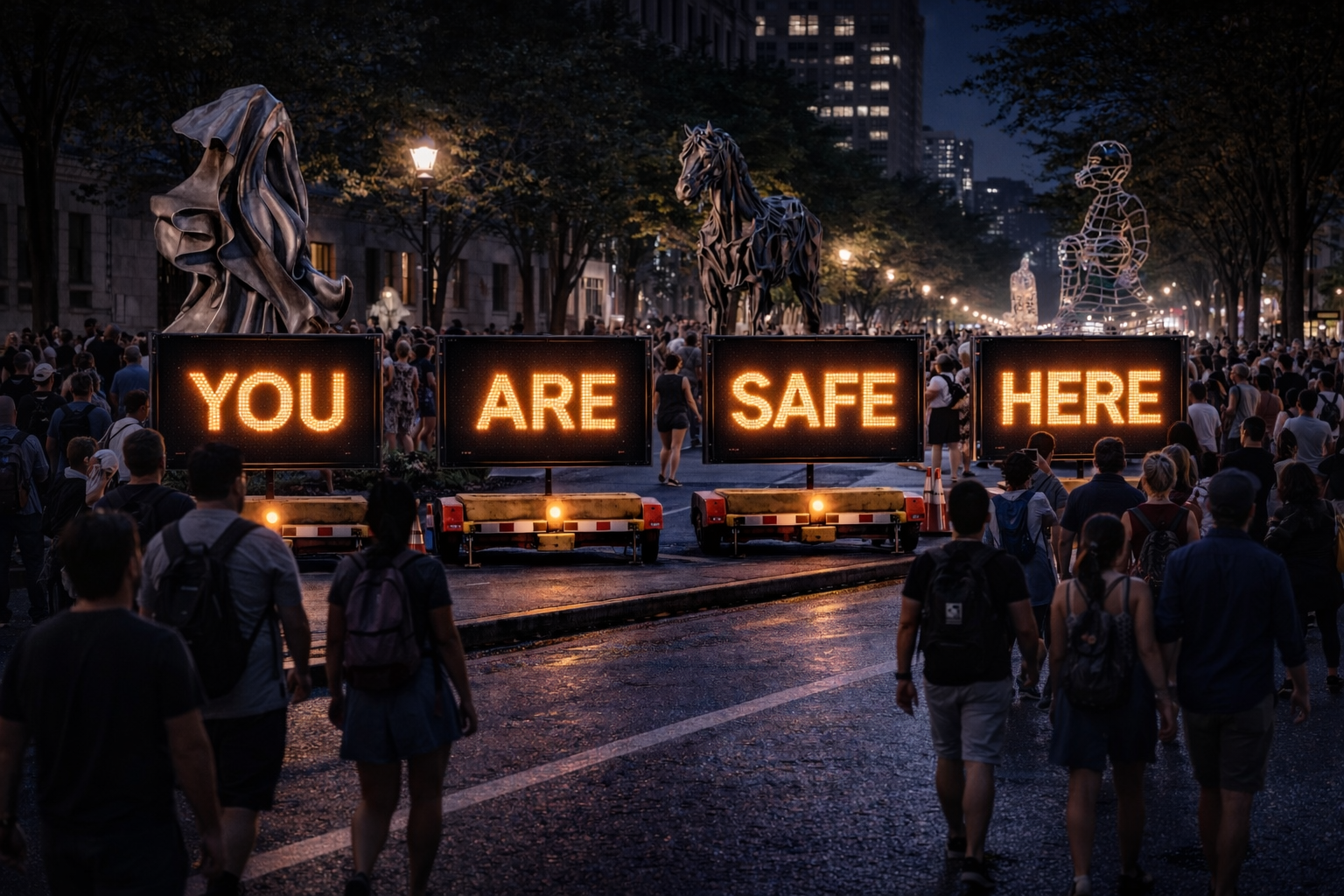
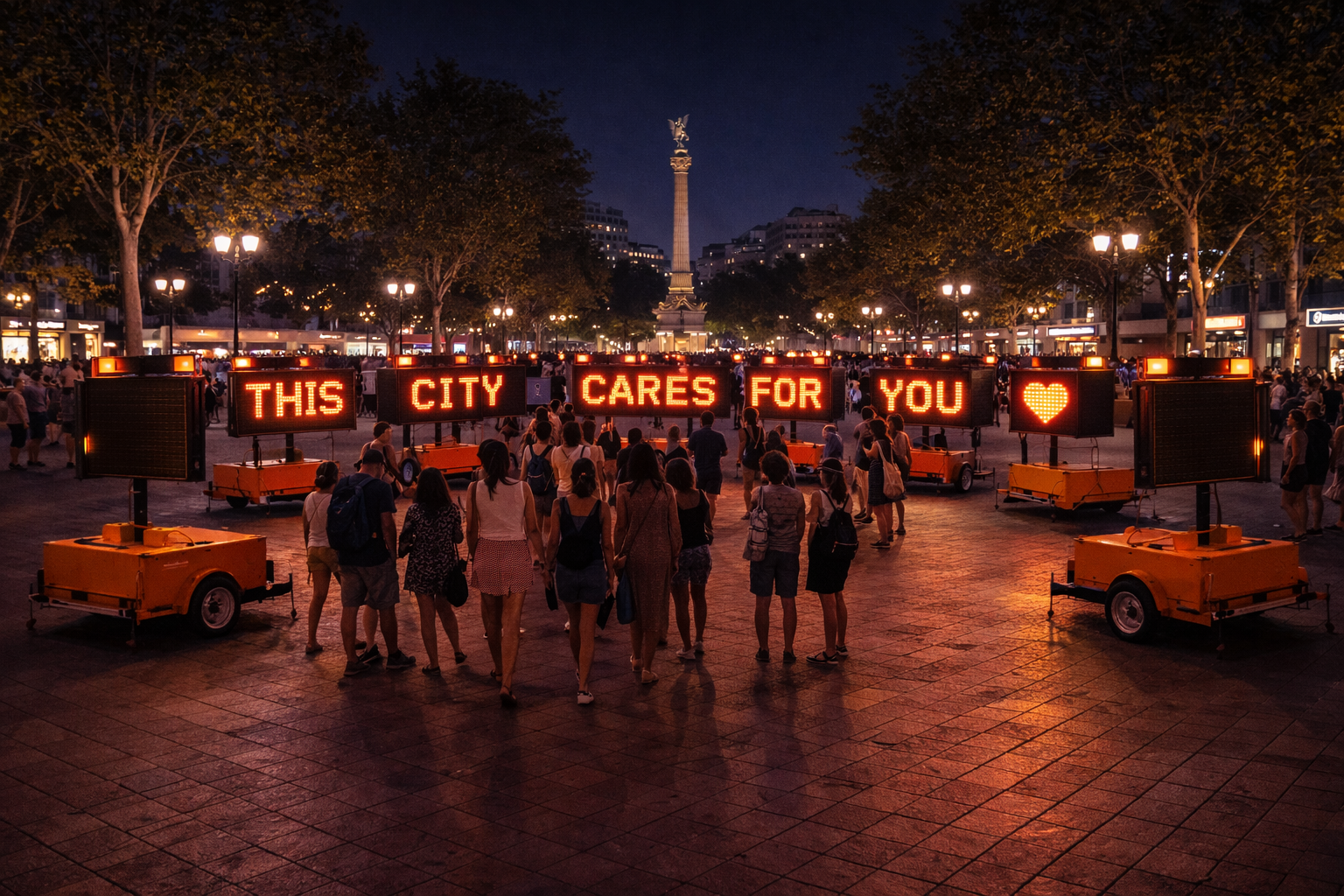
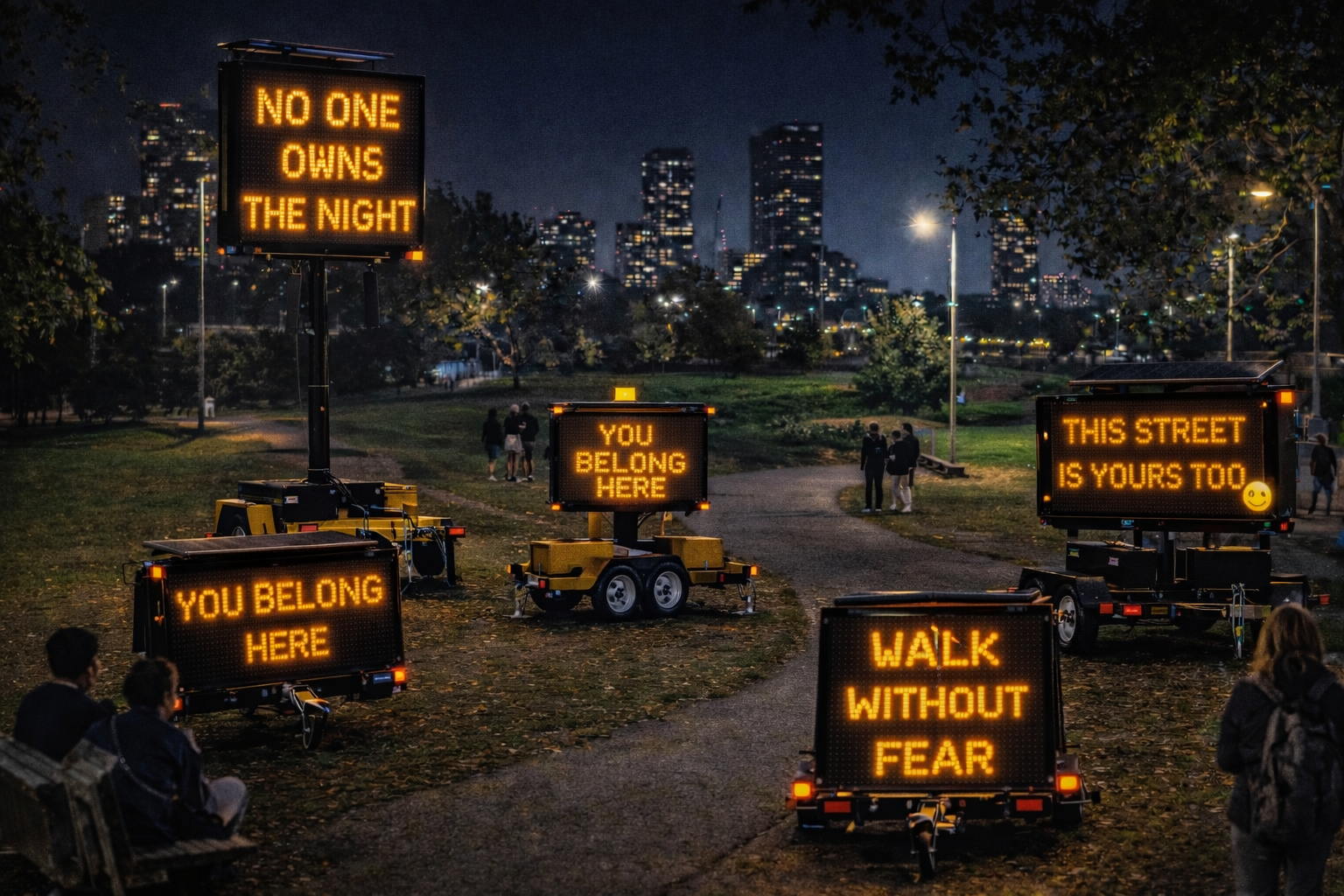
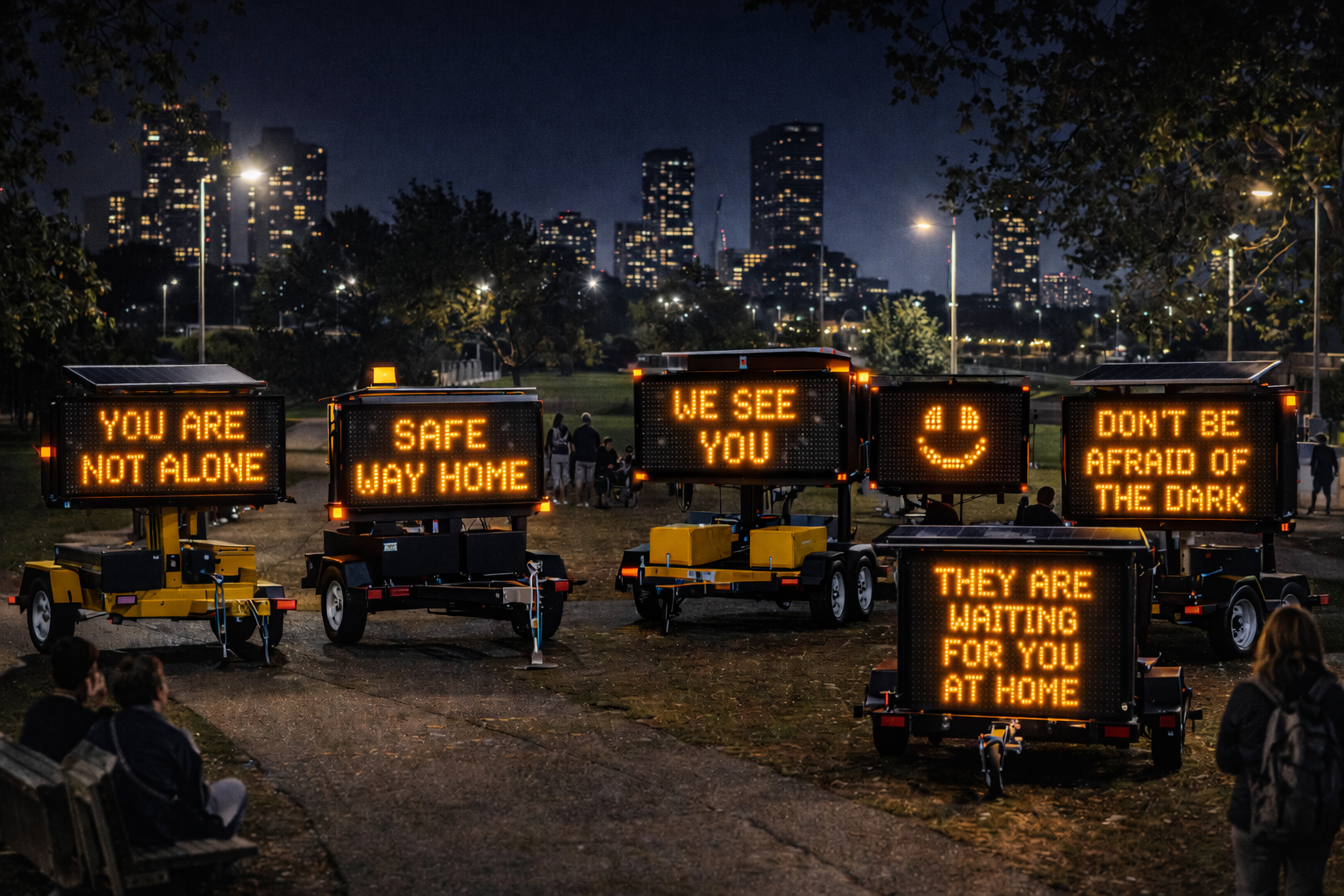
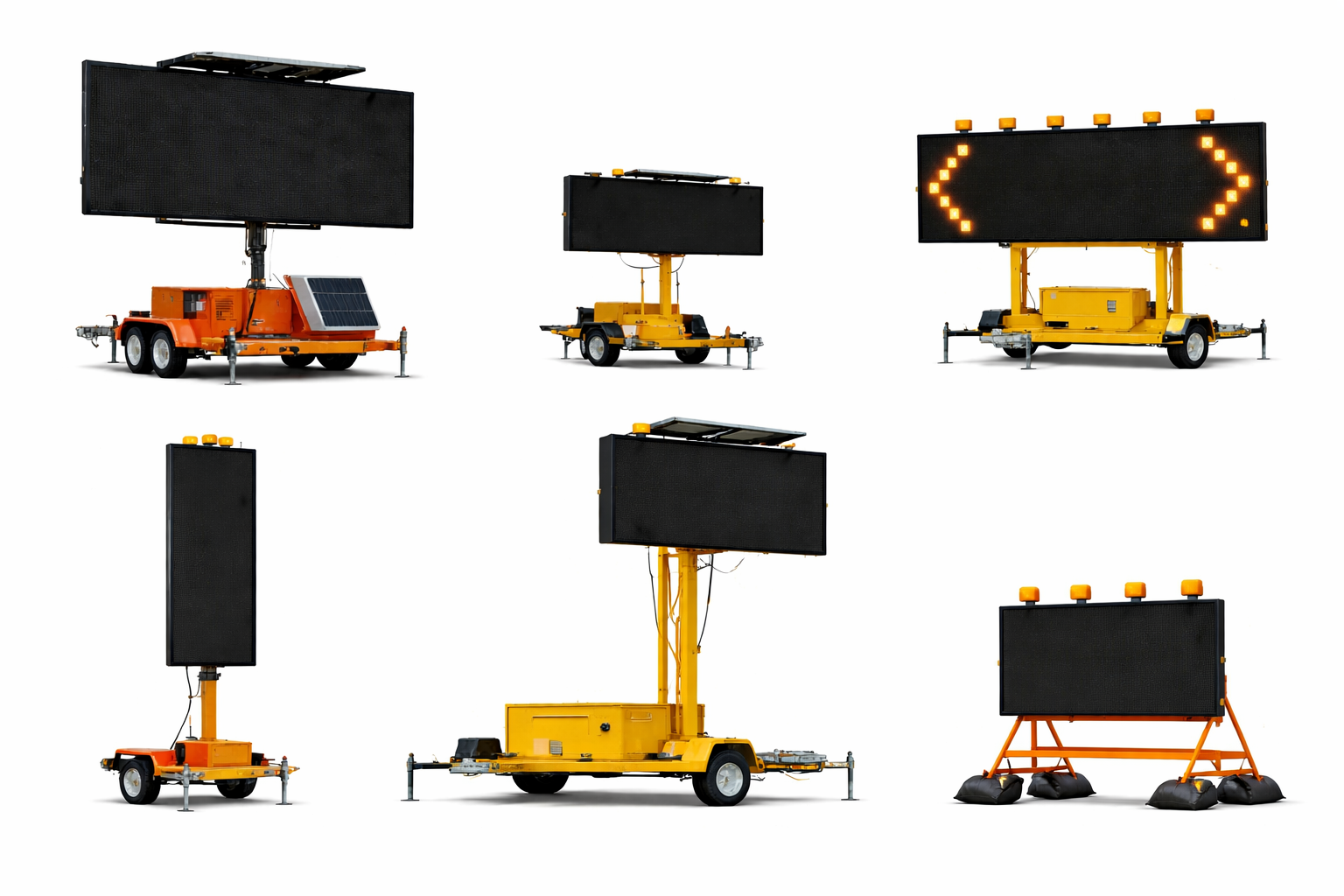
From there we began to think about a very common element of the urban landscape: variable electronic message panels, those mobile devices normally used to announce road works, detours or warnings in public space. We were interested in reversing their usual function so that, instead of warning of danger, they could transmit words of support directed at women.

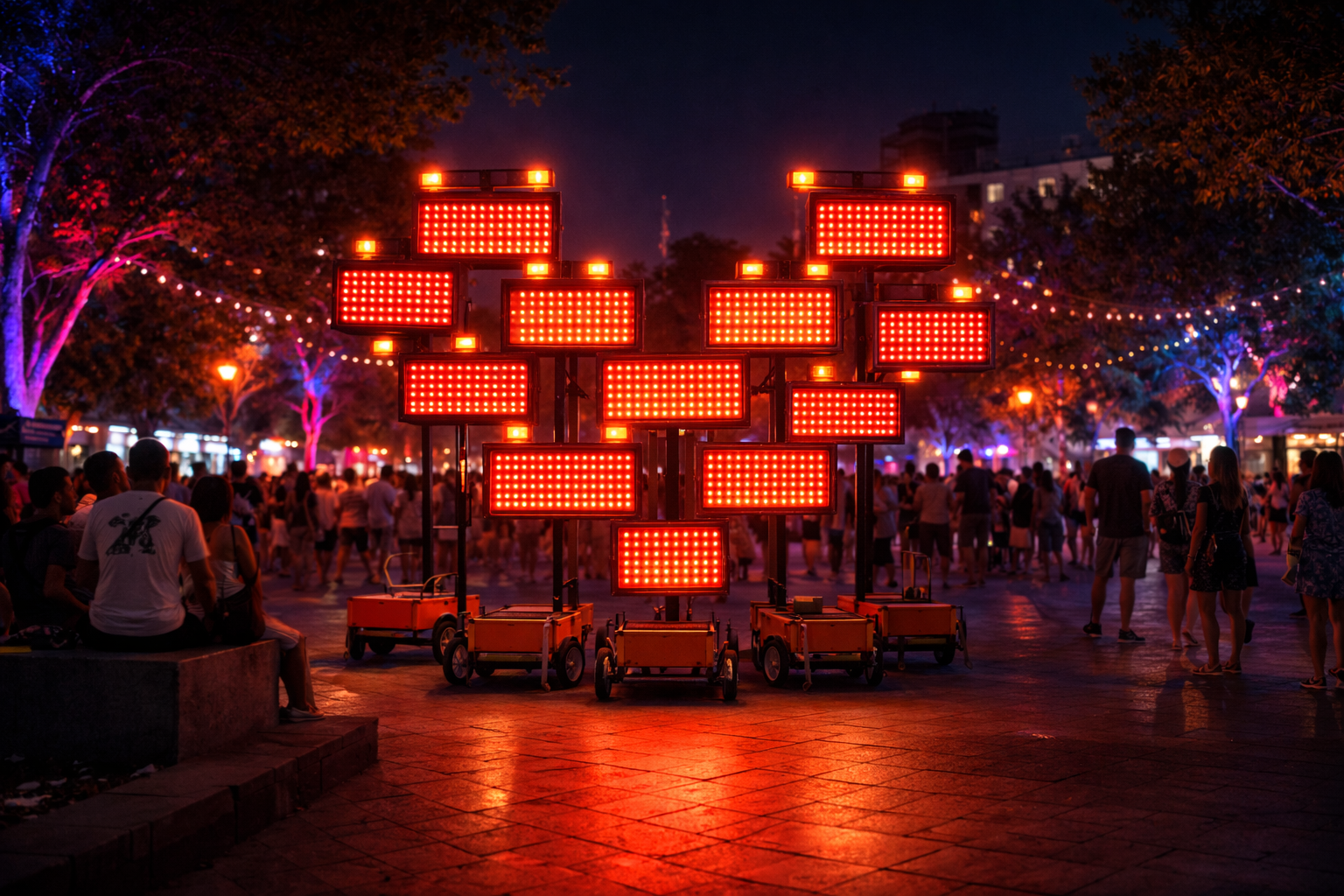
We then imagined a mobile system made up of signalling trailers equipped with programmable luminous panels, capable of being temporarily placed in different points of the urban space and emitting very short messages.

These messages could arise from conversations and workshops with women from the city itself, where they would point out the places they avoid or cross with unease and decide which words they would like to encounter there. The very format of the panel —with very limited space— would force those ideas to be condensed into very short phrases, almost like signs.

This is a proposal that we have never managed to materialize, but one that we still feel very close to. Perhaps because we ourselves are women and know well the feeling that sometimes appears when walking alone through the city. When imagining this piece we inevitably place ourselves within that experience: we think about what it might mean to find, in the middle of an inhospitable place, an unexpected sign of care.

The original idea is to place words and short phrases chosen by women in those places in the city that many of them perceive as unsafe. Each trailer would display one of these short messages, functioning as a luminous sign of support at specific points in the urban space.

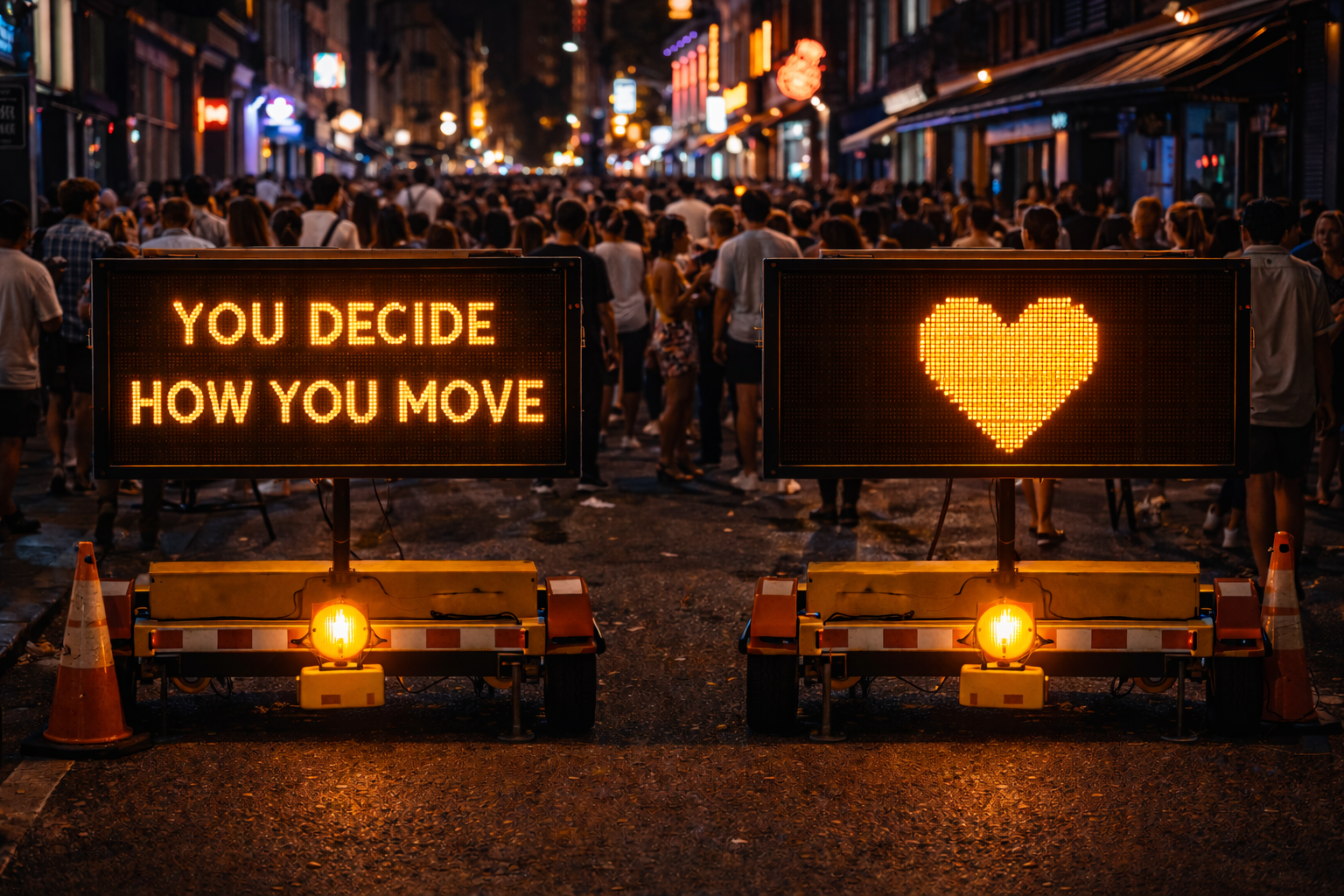
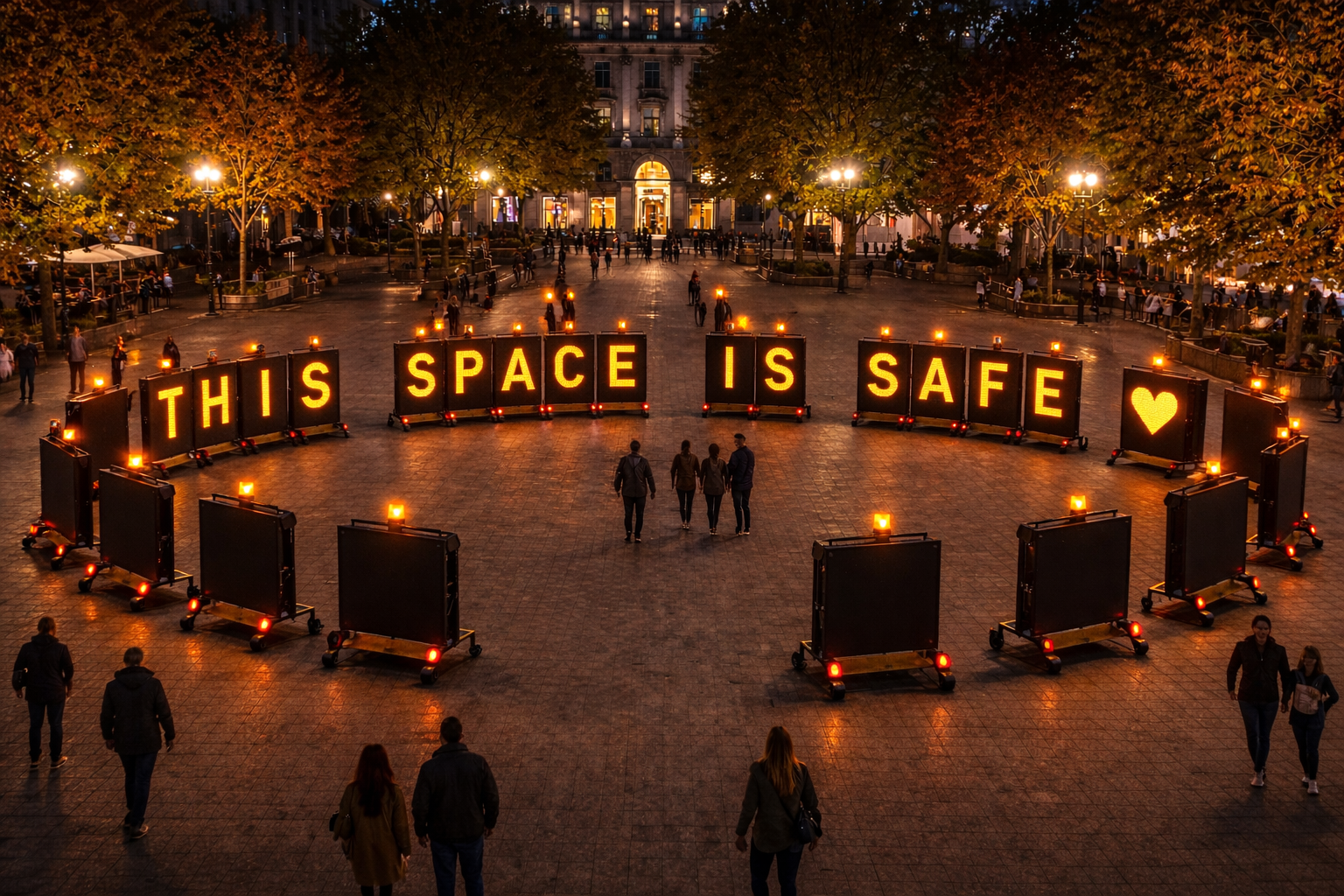
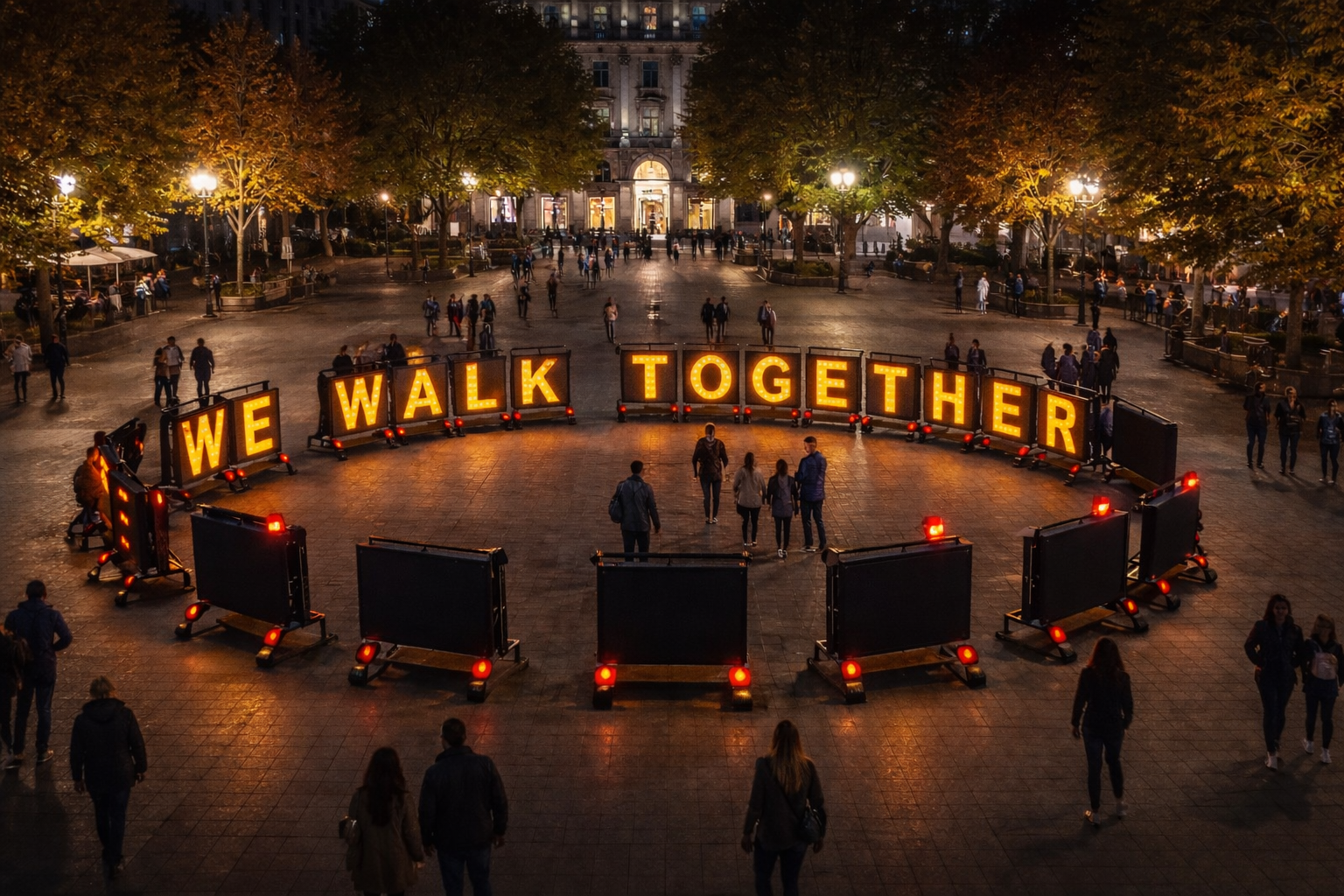
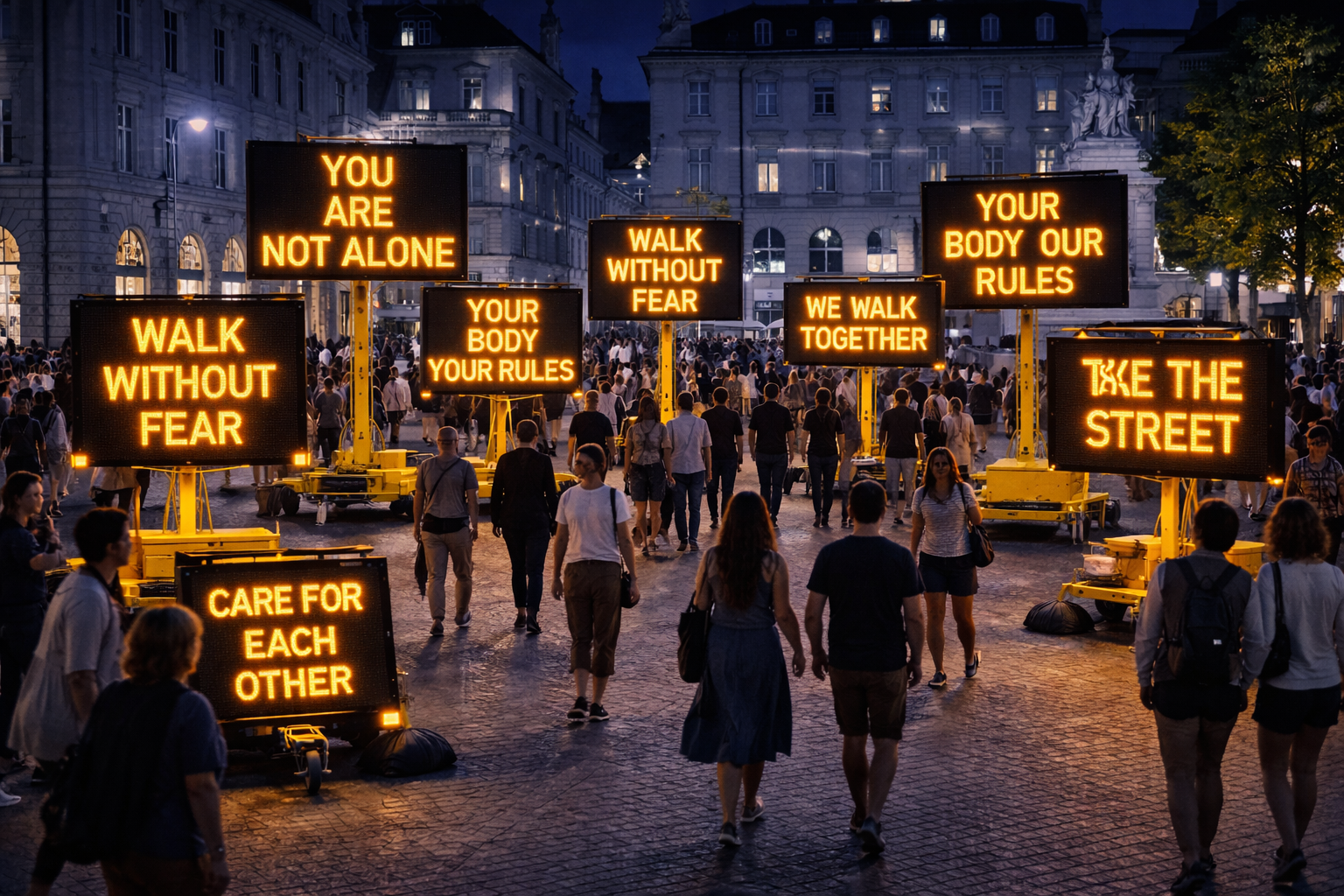
However, in contexts such as festivals or events of limited duration, where interventions must be perceived immediately, it may be more appropriate to condense those ideas into a single installation visible all at once.

In these cases, the devices could gather in a single place, forming a large collective piece: a temporary architecture of words and phrases emerging from the experience of other women. Seen together, those voices would acquire another scale, composing a set of supportive messages that also functions as a call for attention to the way we inhabit the city.

Another possibility would be to deploy the trailers along a street or square, composing new related messages. In this configuration each panel would display a single letter, so that the full phrase would only be revealed while walking through the space. The intervention could thus extend along an urban route, amplifying the message and turning each device into a piece within a large-scale sentence.

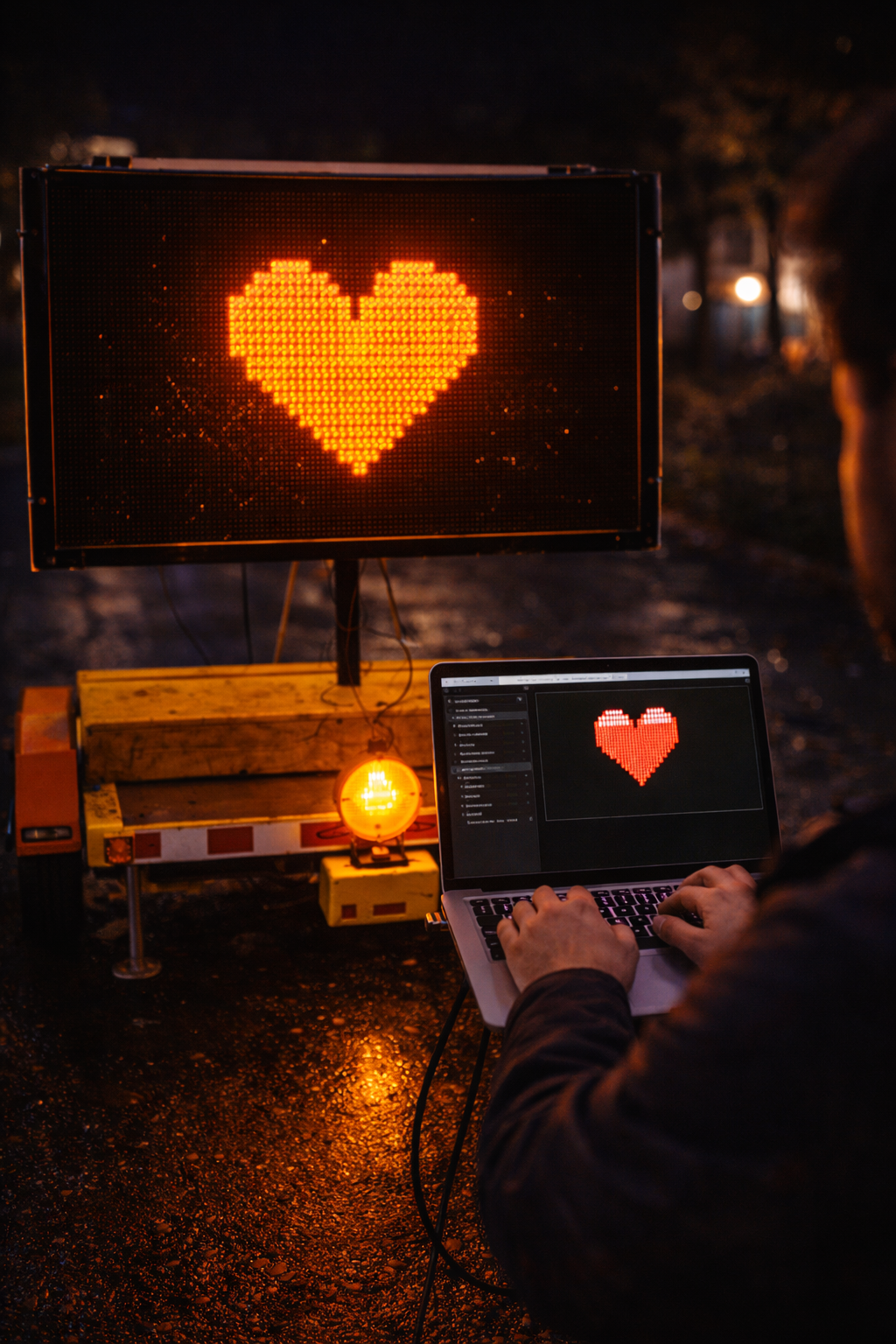
From a technical point of view, the system is deliberately simple. Messages can be easily programmed from a computer, allowing the texts to be modified or the intervention reorganized when the trailers change position.

The devices we imagine using do not need to be manufactured specifically for the artwork. They are the same signalling trailers commonly used in road works and traffic diversions and can easily be rented in many cities. This condition especially interests us: working with existing elements, designed for the street, and giving them a different use.

Equipped with low-consumption LED panels and rechargeable batteries —often assisted by small solar panels— they allow quick, mobile and reusable installations.

As happens in many of our projects, we are interested in working with simple solutions, accessible materials and reusable structures, transforming ordinary tools of the city into devices capable of generating conversation, presence and care.

We would like to be able to materialize this proposal and take advantage of the amplifying capacity offered by large public events to talk about issues that concern us, such as the mobility of women in urban environments often designed without taking into account their ways of inhabiting the city or their needs. We also believe that safety does not necessarily have to be resolved simply by adding more lighting, but by rethinking spaces through other logics of attention, presence and care.

We also believe that the context of light festivals, developed at night in public space, could offer a particularly appropriate framework to deploy these luminous messages.

Friends, see you in the streets, at any hour and under the circumstances we choose, but safe and calm. It may seem obvious, but in these times even the most obvious things still need to be claimed.


———————————–

Hace algunos años nos invitaron a imaginar propuestas que pudieran ayudar a que las mujeres se sintieran más seguras en la ciudad mediante pequeñas intervenciones en esos espacios residuales donde suele aparecer la sensación de inseguridad: calles mal iluminadas, rincones olvidados o lugares que quedan fuera de los recorridos habituales.

El encargo no era casual. Desde hacía tiempo veníamos desarrollando piezas que abordaban distintas formas de desigualdad que afectan a las mujeres, a menudo a través de pequeñas intervenciones de guerrilla en el espacio público. En aquel momento nos planteaban con frecuencia este tipo de retos artísticos; parece que haya pasado una eternidad desde entonces.

De esa reflexión surgió la idea de «Señalética de los cuidados», una propuesta que plantea utilizar elementos habituales de señalización urbana para introducir en la ciudad breves mensajes de apoyo dirigidos a las mujeres.

La pregunta era sencilla: ¿cómo actuar en esos puntos sin grandes infraestructuras, con gestos mínimos capaces de activar el lugar y hacerlo visible?

A partir de ahí empezamos a pensar en un elemento muy común del paisaje urbano: los paneles electrónicos de señalización variable, esos dispositivos móviles que normalmente anuncian obras, desvíos o advertencias en la vía pública. Nos interesaba invertir su función habitual para que, en lugar de advertir de un peligro, pudieran transmitir palabras de apoyo dirigidas a las mujeres.

Imaginamos entonces un sistema móvil formado por carritos de señalización equipados con paneles luminosos programables, capaces de situarse temporalmente en distintos puntos del espacio urbano y emitir mensajes muy breves.

Estos mensajes podrían surgir de conversaciones y talleres con mujeres de la propia ciudad, donde ellas mismas señalarían los lugares que evitan o atraviesan con inquietud y decidirían qué palabras les gustaría encontrar allí. El propio formato del panel —con un espacio muy limitado— obligaría a condensar esas ideas en frases muy cortas, casi como señales.

Esta es una propuesta que nunca hemos llegado a materializar, pero que seguimos sintiendo cercana. Quizá porque nosotras mismas somos mujeres y conocemos bien esa sensación que aparece a veces al caminar solas por la ciudad. Al imaginar esta pieza inevitablemente nos situamos en esa experiencia: pensamos en lo que podría significar encontrar, en medio de un lugar inhóspito, una señal inesperada de cuidado.

La idea original parte de situar palabras y pequeñas frases elegidas por mujeres en aquellos lugares de la ciudad que muchas de ellas perciben como inseguros. Cada carrito mostraría uno de esos mensajes, funcionando como una señal luminosa de apoyo en puntos concretos del espacio urbano.

Sin embargo, en contextos como festivales o eventos de duración limitada, donde las intervenciones deben percibirse de manera inmediata, puede resultar más adecuado condensar esas ideas en una única instalación visible de una sola vez.

En estos casos, los dispositivos podrían reunirse en un único lugar, formando una gran pieza colectiva: una arquitectura temporal de palabras y frases surgidas de la experiencia de otras mujeres. Al verse juntas, esas voces adquirirían otra escala, componiendo un conjunto de mensajes solidarios que funciona también como una llamada de atención sobre la forma en que habitamos la ciudad.

Otra posibilidad sería desplegar los carritos a lo largo de una calle o una plaza, componiendo nuevos mensajes relacionados entre sí. En esta configuración, cada panel mostraría una sola letra, de modo que la frase completa solo se revelaría al recorrer el espacio. La intervención podría así extenderse a lo largo de una vía urbana, amplificando el mensaje y convirtiendo cada dispositivo en una pieza dentro de una frase de gran escala.

Desde el punto de vista técnico, el sistema es deliberadamente sencillo. Los mensajes se programan fácilmente desde un ordenador, lo que permite modificar los textos o reorganizar la intervención cuando los carritos cambian de posición.

Los dispositivos que imaginamos utilizar no necesitan fabricarse específicamente para la obra. Son los mismos carritos de señalización que se emplean habitualmente en obras y desvíos de tráfico y que pueden alquilarse fácilmente en muchas ciudades. Esa condición nos interesa especialmente: trabajar con elementos existentes, diseñados para la calle, y darles un uso distinto.

Equipados con paneles LED de bajo consumo y baterías recargables —a menudo asistidas por pequeños paneles solares— permiten instalaciones rápidas, móviles y reutilizables.

Como ocurre en muchos de nuestros proyectos, nos interesa trabajar con soluciones simples, materiales accesibles y estructuras reutilizables, transformando herramientas ordinarias de la ciudad en dispositivos capaces de generar conversación, presencia y cuidado.

Nos gustaría poder materializar esta propuesta y aprovechar la capacidad de amplificación que ofrecen los eventos públicos multitudinarios para hablar de cuestiones que nos preocupan, como la movilidad de las mujeres en entornos urbanos muchas veces diseñados sin tener en cuenta sus formas de habitar la ciudad ni sus necesidades. Pensamos además que la seguridad no tiene por qué resolverse únicamente añadiendo más iluminación, sino repensando los espacios desde otras lógicas de atención, presencia y cuidado.

Creemos además que el contexto de festivales de luz, desarrollados de noche en el espacio público, podría ofrecer un marco especialmente adecuado para desplegar estos mensajes luminosos.

Amigas, nos vemos en las calles, a cualquier hora y en las circunstancias que elijamos, pero seguras y tranquilas. Parece algo obvio, pero en estos tiempos incluso lo más obvio necesita ser reclamado.

Hanging Landscapes. A low-tech intervention made with white fabric, wind, light and the scent of clean laundry / Paisajes Tendidos. Intervención bajamente tecnológica hecha con tela blanca, viento, luz y olor a limpio


Last March we presented in Madrid Hanging Landscapes. A low-tech intervention made with white fabric, wind, light and the scent of clean laundry, as part of the LuzMadrid 2026 festival. It gave us particular pleasure to do it in the city where we live and where we have been working since the beginning.

Hanging Landscapes brings back an image that belongs to the collective imagination: white sheets stirred by the wind, hanging in the sun, carrying the scent of clean laundry and crossed by clear light. A scene linked to childhood, to the home and to everyday life.

But this image also allows us to remember those who for generations worked under hard and almost always invisible conditions: the washerwomen of the Manzanares River.

Well into the twentieth century, many women from Madrid washed clothes by hand in the river or in public washhouses. They walked from their homes carrying large baskets. They spent hours standing or kneeling, scrubbing in cold water, and then hung the laundry out in the sun. It was physically demanding work, poorly paid and rarely acknowledged, yet essential for sustaining the everyday life of the city.

The piece did not attempt to represent this history directly, but rather to recreate the environment that once belonged to it: white laundry in the wind, movement, light and the sound of fabric moving in the air.

During the days of the installation something especially beautiful happened: children understood the piece immediately. They turned it into their playground, running between the sheets as if it were a small labyrinth. In many cases they even encouraged their parents to join in, inviting them to behave like big children for a while.

More than 15,000 people enjoyed the installation during the three days of the festival, a notable figure considering that visitors were invited to stay and enjoy the piece for as long as they wished.

The installation consisted of a large clothesline holding nearly one hundred backlit white sheets, creating a light and ever-changing landscape that constantly transformed with the wind. The structure was built using a simple Layher scaffolding system, whose industrial appearance contrasted with the lightness of the sheets moving in the air.

No artificial ventilation system was necessary: the piece was placed in an especially windy open area, allowing the sheets to move naturally throughout the intervention.

With very few elements —fabric, wind and light— Hanging Landscapes sought to recover a simple image filled with memory, returning to the urban landscape something that for decades had been part of the everyday life of the river.

And so, a multitude of sheets that could also be white flags in the wind, bandages, diapers or banners… became, for a few days, a comfortable and safe space for play.

We would like to thank the direction of the LuzMadrid festival for their trust and for allowing us to defend something that seems increasingly rare: that a piece can stand without technical spectacle, relying on low technology, simple resources and a clear idea.

Thanks to our producer Burna, to our photographer Melisa Hernández, to Tres Elefantas, to the entire technical team who accompanied us during the installation, and to the security and logistics staff. Together they managed to turn the space into a luminous, comfortable and safe place.

Very special thanks to the visitors who understood and made the piece their own, and to all the friends who joined us and allowed themselves to be photographed tangled among white fabric without fear of looking ridiculous.

Susana, Meli, Delia, Cristina, Martina… as always, a pleasure.

Time of installation: 2 days.
Damage caused: 0.
Duration of the intervention: 3 days.

——–

El pasado mes de marzo presentamos en Madrid Paisajes Tendidos. Intervención bajamente tecnológica hecha con tela blanca, viento, luz y olor a limpio, dentro del festival LuzMadrid 2026. Nos hacía especial ilusión hacerlo en la ciudad en la que vivimos y sobre la que llevamos trabajando desde que empezamos.

Paisajes Tendidos recupera una imagen que forma parte del imaginario colectivo: sábanas blancas agitadas por el viento, colgadas al sol, con olor a limpio y atravesadas por una luz clara. Una escena ligada a la infancia, al hogar y a la vida cotidiana.

Pero esa imagen también permite recordar a quienes durante generaciones trabajaron en condiciones duras y casi siempre invisibles: las lavanderas del río Manzanares.

Hasta bien entrado el siglo XX, muchas mujeres madrileñas lavaron la ropa a mano en el cauce del río o en lavaderos públicos. Caminaban desde sus casas cargando grandes cestos. Pasaban horas de pie o de rodillas, frotando en agua fría, y tendían después la ropa al sol. Un trabajo físico, mal remunerado y sin reconocimiento, pero indispensable para sostener la vida cotidiana de la ciudad.

La pieza no pretendía representar directamente esa historia, sino recrear el entorno que fue suyo: ropa blanca al viento, movimiento, luz y el sonido de las telas agitándose.

Durante los días de la instalación ocurrió algo que nos pareció especialmente bonito: los niños entendieron la pieza de inmediato. La convirtieron en su campo de juego, corriendo entre las sábanas como si se tratara de un pequeño laberinto. En muchos casos incluso arrastraron a sus padres a participar, invitándoles a comportarse durante un rato como niños grandes.

La pieza fue disfrutada por más de 15.000 personas durante los tres días que duró el festival, una cifra reseñable si se tiene en cuenta que los visitantes estaban invitados a permanecer y disfrutar de la instalación todo el tiempo que quisieran.

La instalación estaba formada por un gran tendedero con cerca de un centenar de sábanas blancas retroiluminadas, creando un paisaje ligero y cambiante que se transformaba constantemente con el viento. El montaje se resolvió con una estructura sencilla de andamio Layher, cuyo aspecto industrial contrastaba con la ligereza de las sábanas agitadas por el viento.

No fue necesario ningún sistema artificial de ventilación: la pieza se situó en un espacio abierto especialmente ventoso, lo que permitió que las sábanas se movieran de forma natural durante toda la intervención.

Con muy pocos elementos —tela, viento y luz— Paisajes Tendidos buscaba recuperar una imagen sencilla pero cargada de memoria, devolviendo al paisaje urbano algo que durante décadas formó parte de la vida cotidiana del río.

Y así, un montón de sábanas que también podrían ser banderas blancas al viento, vendas, pañales o estandartes… se convirtieron por unos días en un espacio confortable y seguro para el juego.

Queremos agradecer a la dirección del festival LuzMadrid por la confianza y por permitirnos defender algo cada vez menos habitual: que una pieza pueda sostenerse sin espectáculo técnico, desde la baja tecnología, con recursos sencillos y una idea clara.

Gracias a nuestra productora Burna, a nuestra fotógrafa Melisa Hernández, a Tres Elefantas, a todo el equipo técnico que nos acompañaron durante el montaje y las personas de seguridad y logística, entre todos consiguieron convertir el espacio en un lugar luminoso, confortable y seguro.

Gracias muy especiales a los visitantes que entendieron e hicieron suya la pieza y a todos los amigos que nos acompañaron y se dejaron fotografiar enredadso entre tela blanca sin miedo al ridículo.

Susana, Meli, Delia, Cristina, Martina… como siempre, un placer.

Tiempo de montaje:  2 días.
Daños ocasionados: 0.
Permanencia de la intervención: 3 días.

On Blank Pages / En hojas blancas. Xi’an 2026